EU REACH Adds PFAS Limits for Industrial RO Membranes




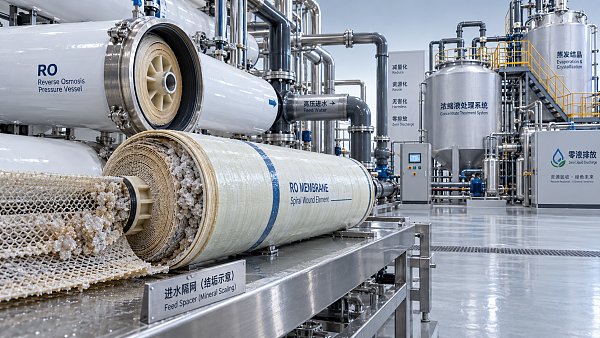
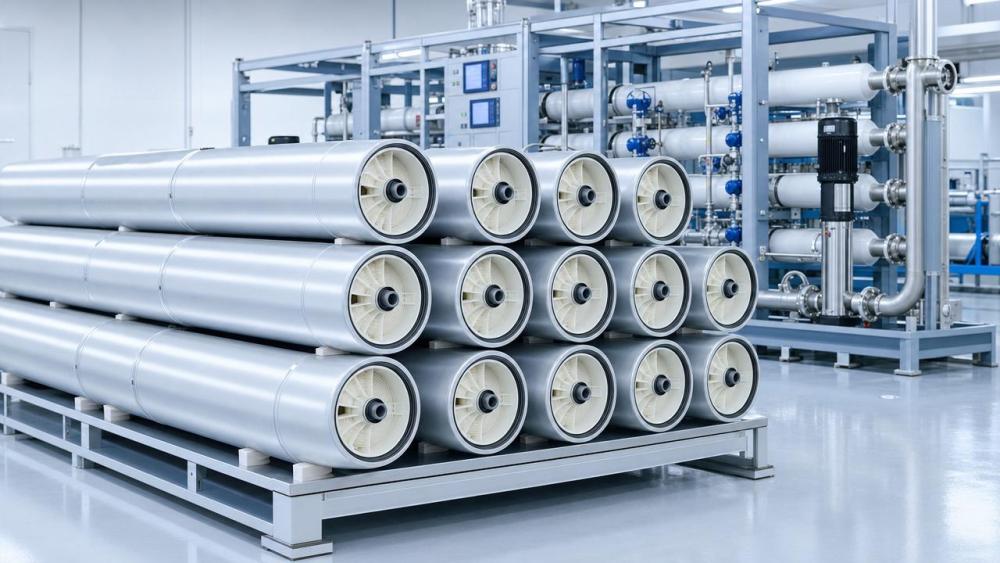
Effective 1 November 2026, the European Union’s REACH Regulation will impose new restrictions on three per- and polyfluoroalkyl substances (PFAS) — perfluorooctanoic acid (PFOA), perfluorohexanesulfonic acid (PFHxS), and their salts — specifically in industrial reverse osmosis (RO) membrane components. Exporters of industrial RO membranes (including spiral-wound and plate-and-frame types) to the EU must now provide updated compliance documentation. This development directly affects manufacturers, exporters, and supply chain actors involved in water treatment membrane production and trade.
Event Overview
On 29 May 2026, the European Chemicals Agency (ECHA) published the Annex XVII revision to the REACH Regulation, introducing concentration limits of ≤25 ppb for PFOA, PFHxS, and their salts in RO membrane components. The restriction enters into force on 1 November 2026. As of that date, all industrial RO membranes placed on the EU market must be accompanied by a Declaration of Conformity, a SCIP (Substances of Concern In Products) notification, and a third-party PFAS testing report.
Industries Affected by the Restriction
Direct Exporters of Industrial RO Membranes
Exporters supplying industrial RO membranes to the EU face immediate documentation and verification obligations. Non-compliant shipments may be denied entry or subject to customs review, delaying delivery and increasing administrative burden.
RO Membrane Manufacturers (Especially Based in China)
Manufacturers must verify material composition across all layers — including support layers, active polyamide layers, and adhesives — as PFAS may be present unintentionally or as processing aids. The requirement triggers material traceability, supplier audits, and reformulation efforts.
Raw Material and Chemical Suppliers to Membrane Producers
Suppliers of polymers, surfactants, coating agents, or crosslinking reagents used in membrane fabrication may be asked to provide updated substance declarations and analytical data. Any PFAS-containing additives previously accepted without scrutiny now require full disclosure and validation.
Supply Chain Compliance Service Providers
Third-party testing labs, SCIP registrars, and regulatory consultants will see increased demand for PFAS-specific analytical services (e.g., LC-MS/MS testing per OECD 443 or ISO 21675), documentation support, and technical gap assessments — particularly for non-EU-based clients.
Key Actions for Relevant Enterprises and Practitioners
Monitor official ECHA and EU Commission guidance updates
While the restriction text is published, implementation details — such as acceptable test methods, sampling protocols, or transitional arrangements for existing stock — remain pending. Stakeholders should track ECHA’s Q&A documents and national enforcement authority notices.
Prioritize verification for high-risk membrane formats and supply tiers
Spiral-wound membranes often involve more complex lamination and adhesive systems than plate-and-frame designs, increasing potential PFAS exposure points. First-tier suppliers to major OEMs are likely to face earlier contractual demands for PFAS declarations.
Distinguish between regulatory signal and enforceable obligation
The 25 ppb limit applies only to PFOA, PFHxS, and their salts *in RO membrane components*, not to broader PFAS categories or other water treatment equipment. Current scope does not extend to residential RO units or nanofiltration membranes unless explicitly covered under future revisions.
Initiate material sourcing reviews and alternative validation now
Given typical lead times for polymer reformulation and performance validation (often 6–12 months), manufacturers should begin evaluating PFAS-free alternatives for critical process chemicals — especially fluorinated surfactants and release agents — and initiate comparative testing against performance benchmarks.
Editorial Perspective / Industry Observation
Observably, this restriction marks a targeted application-level enforcement of the EU’s broader PFAS strategy — not a blanket ban, but a precedent-setting use-case limitation. Analysis shows it reflects growing regulatory focus on PFAS in “intentionally added” but functionally embedded applications, where alternatives exist and exposure pathways (e.g., leaching into purified water streams) are well-characterized. From an industry perspective, this is less a finalized endpoint and more a signal: it confirms that PFAS restrictions will increasingly move beyond consumer goods into industrial filtration infrastructure. Continued attention is warranted as ECHA prepares its broader PFAS restriction proposal (expected late 2026), which may propose wider scope and lower thresholds.
Conclusion
This REACH amendment establishes a concrete, time-bound compliance requirement for industrial RO membrane exports to the EU — not a general warning or policy draft. Its significance lies in operational specificity: it defines measurable limits, required documentation, and enforcement timing. It is best understood not as an isolated update, but as the first enforceable milestone in a tightening regulatory trajectory for PFAS in water treatment materials.
Source Attribution
Main source: European Chemicals Agency (ECHA), Annex XVII revision published 29 May 2026; effective date 1 November 2026.
Points requiring ongoing observation: ECHA’s forthcoming technical guidance on analytical methodology, enforcement coordination among EU Member States, and potential alignment with the proposed EU-wide PFAS restriction dossier (not yet adopted).
Related News
 When does self-cleaning filtration technology reduce maintenance downtime?Separation Tech FellowFiltration technology can reduce maintenance downtime when solids are predictable, cleaning is automated, and reject handling is reliable. Learn how to select the right system.
 How fluid control digitalization improves valve maintenance planningProcess Control ArchitectFluid control digitalization helps teams prioritize valve maintenance, reduce unplanned downtime, and improve reliability with actionable condition data.
 What drives industrial wastewater treatment cost per cubic meter?Dr. Alistair VaughnIndustrial wastewater treatment cost per cubic meter depends on influent load, effluent targets, energy, technology, and sludge disposal. Explore the key cost drivers.
 How to verify CE compliance for fluid separation equipmentDr. Alistair VaughnFluid separation equipment CE verification made practical: learn how to check declarations, risk assessments, technical files, pressure safety, and installation readiness.
 How smart valve positioners improve process control valve accuracyProcess Control ArchitectDiscover how smart positioners improve process control valve accuracy, reduce friction-related errors, enhance stability, and enable predictive maintenance.
 Motor energy efficiency comparison for variable-speed compressor selectionPneumatic Power StrategistMotor energy efficiency comparison for variable-speed compressor selection: compare package power, load profiles, controls, and lifecycle savings.
 How fluid dynamics analysis helps size a chemical process pumpFluid Dynamics ScientistFluid dynamics analysis helps engineers size chemical process pumps for reliable flow, NPSH margin, efficiency, and safer long-term operation.
 Separation equipment trends reshaping industrial wastewater treatmentDr. Alistair VaughnSeparation equipment trends are reshaping industrial wastewater treatment through smarter membranes, modular systems, digital monitoring, and resource recovery strategies.
 Which valve technology standards apply to pneumatic diaphragm valves?Process Control ArchitectValve technology standards for pneumatic diaphragm valves: explore design, testing, actuator safety, hygienic compliance, and specification guidance for reliable selection.
 When stainless steel separation equipment is the right choice for hygienic processesDr. Alistair VaughnStainless steel separation equipment: discover when hygienic design, corrosion resistance, CIP cleanability, and lifecycle reliability make it the smart choice.
 When ZLD fouling in RO membranes requires more than cleaningSeparation Tech FellowZLD fouling in RO membranes: learn when CIP is no longer enough, how to identify irreversible damage, and which process changes protect recovery and reduce replacement costs.
 What to verify before choosing a self cleaning filtration systems supplierSeparation Tech FellowChoose a self cleaning filtration systems supplier with confidence. Verify flow capacity, cleaning performance, materials, automation, support, and lifecycle value.