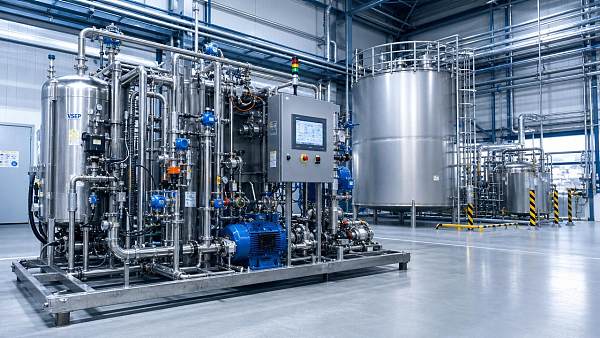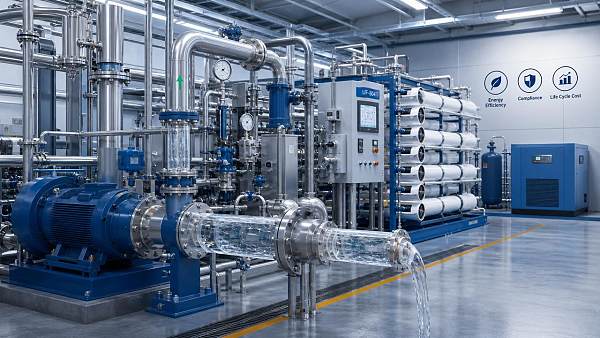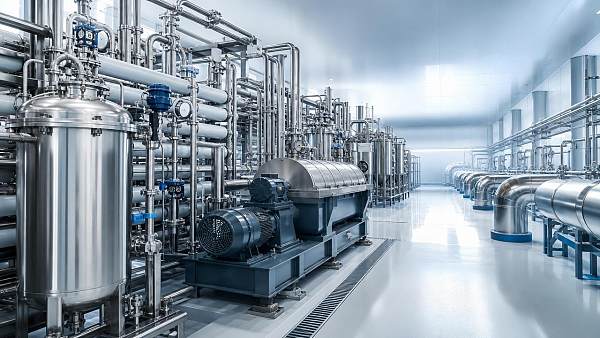
Separation Equipment Trends Shaping 2026 Plants




As 2026 plant strategies take shape, separation equipment trends are moving from back-end compliance tools to board-level performance drivers.
Filtration, membranes, centrifuges, and liquid-solid separation now influence energy cost, water security, emissions reduction, and operational resilience.
Understanding these separation equipment trends early helps plants select systems that improve lifecycle reliability, ZLD readiness, and competitive capital efficiency.
Separation Equipment Trends Shaping 2026 Plants
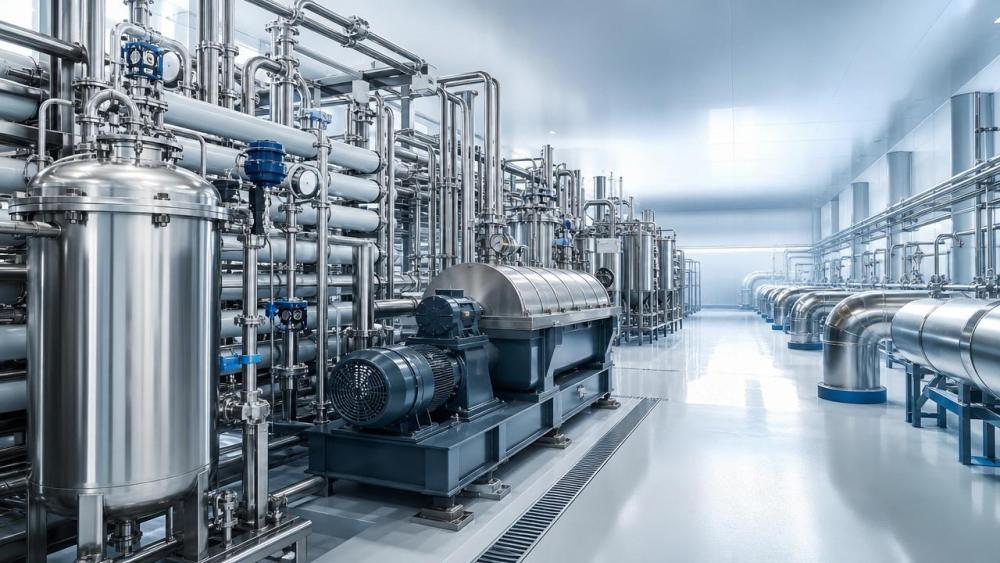
Industrial separation is no longer a single equipment purchase.
It is a connected strategy spanning pumps, valves, membranes, controls, energy recovery, and predictive maintenance.
The strongest separation equipment trends for 2026 reflect three pressures: tighter discharge rules, rising utility costs, and volatile feed quality.
Plants that treat separation as a core process layer can reduce downtime, protect downstream assets, and capture reusable water or valuable solids.
Why Separation Equipment Trends Need a Checklist Approach
A checklist prevents fragmented decisions.
A filter skid, membrane train, centrifuge, or clarifier may look efficient alone, but fail when feed chemistry changes.
Checklist-based evaluation connects separation equipment trends with real plant constraints, including fouling risk, automation maturity, cleaning frequency, and sludge handling.
It also supports better comparison between capital expenditure and total cost of ownership.
For 2026 planning, this disciplined method is essential because separation choices affect utilities, environmental compliance, and production stability.
Core Checklist for 2026 Separation Equipment Trends
- Map the full fluid path before selection, including upstream pumps, dosing points, temperature swings, solids loading, and downstream discharge limits.
- Verify feed variability with real samples, not only design averages, because unstable particle size or salinity can destroy expected separation efficiency.
- Compare energy intensity per cubic meter treated, then include compressed air, backwash pumps, vacuum systems, and cleaning circulation loads.
- Prioritize modular separation skids when production expansion, feed diversification, or phased ZLD investment may occur within three years.
- Specify sensors for pressure differential, turbidity, conductivity, vibration, temperature, and flow to support condition-based maintenance.
- Assess membrane fouling control through pretreatment, crossflow velocity, anti-scalant strategy, clean-in-place access, and brine concentration targets.
- Match centrifuge bowl design, scroll torque, and wear protection to abrasive solids rather than relying on nominal throughput claims.
- Review material compatibility for chlorides, solvents, acids, caustics, heat, and erosive slurry before confirming wetted components.
- Integrate separation equipment trends with plant control architecture, ensuring alarms, historian data, and remote diagnostics are available.
- Calculate disposal, reuse, and recovery value for filtrate, concentrate, cake, oil phase, or recovered process chemicals.
Trend 1: Smarter Filtration Moves Beyond Simple Solids Capture
One of the strongest separation equipment trends is the shift toward self-optimizing filtration.
Automatic backwash filters, cartridge monitoring, and depth media systems are being evaluated by pressure profile, not only micron rating.
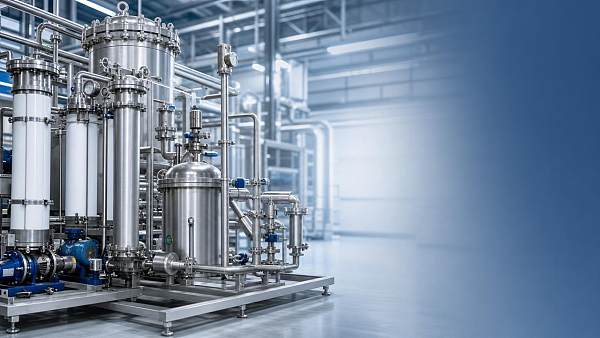
In water reuse, cooling loops, food processing, and metalworking fluids, filtration now protects membranes, pumps, control valves, and heat exchangers.
The practical goal is fewer manual interventions and more stable downstream performance.
Trend 2: Membrane Systems Become Energy and Water Assets
Membrane-based separation equipment trends are accelerating because water scarcity and discharge restrictions are tightening across industrial regions.
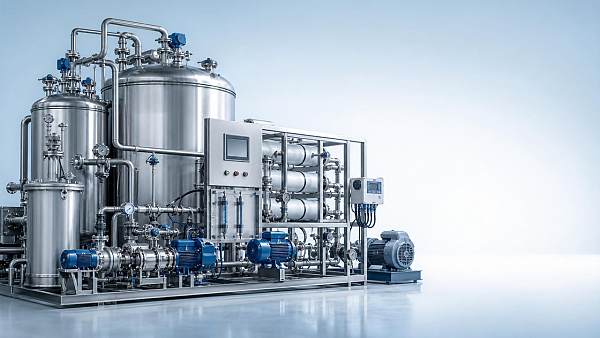
RO, NF, UF, and MBR systems are increasingly paired with better pretreatment and high-efficiency pumps.
Energy recovery devices, variable-frequency drives, and smarter flushing sequences are becoming central to membrane economics.
For high-salinity wastewater, the winning design is rarely a single membrane stage.
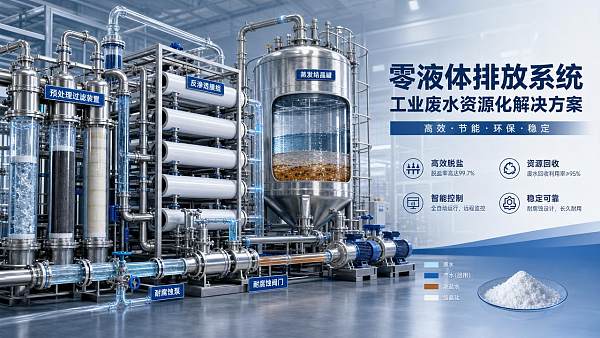
It usually combines clarification, filtration, chemical conditioning, membrane concentration, and thermal polishing where ZLD is required.
Trend 3: Centrifugation Gains Precision Through Digital Control
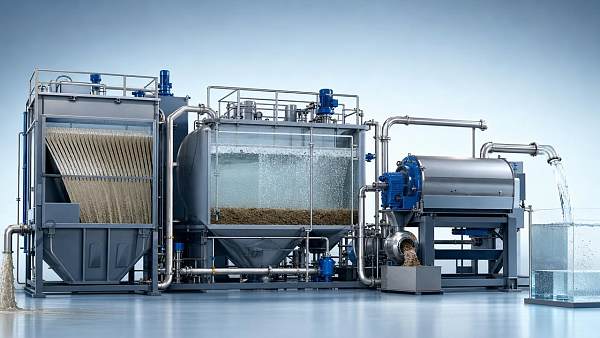
Centrifuges remain critical for sludge, fermentation broth, mineral slurry, oily waste, and chemical solids recovery.
However, 2026 separation equipment trends point toward torque monitoring, adaptive feed control, and vibration analytics.
These functions help maintain cake dryness and centrate clarity when incoming solids fluctuate.
The best results come from treating centrifugation as a dynamic process, not a fixed-speed mechanical operation.
Trend 4: ZLD Readiness Enters Mainstream Plant Planning
Zero Liquid Discharge is no longer limited to extreme water-stressed projects.
Many plants now design pretreatment and concentration stages so future ZLD expansion is possible.
This makes separation equipment trends closely linked with crystallizers, evaporators, brine management, and heat integration.
A phased ZLD path can reduce financial risk while preserving compliance flexibility.
The key is avoiding undersized pretreatment and poor brine chemistry control at the earliest stage.
Application Notes for Different Industrial Scenarios
Chemical and Petrochemical Processing
In chemical plants, separation equipment trends focus on corrosion resistance, solvent compatibility, and explosion-safe instrumentation.
Filtration and centrifugation often support catalyst recovery, polymer clarification, and wastewater pretreatment.
Material selection is decisive.
Duplex stainless steel, PTFE-lined components, special alloys, and seal design can determine uptime more than rated capacity.
Food, Beverage, and Bioprocessing
For hygienic production, separation equipment trends emphasize cleanability, gentle product handling, and microbial control.
Membranes and centrifuges are used for concentration, clarification, protein recovery, and wastewater load reduction.
CIP validation should be evaluated early.
Dead legs, gasket compatibility, surface finish, and drainability directly affect product safety and cleaning chemical consumption.
Mining, Metals, and Heavy Slurry Service
Abrasive solids make separation equipment trends more focused on wear life and maintainability.
Thickeners, filter presses, hydrocyclones, and decanter centrifuges must be matched to particle shape and settling behavior.
Rubber lining, ceramic protection, hardened metallurgy, and accessible wear parts reduce shutdown frequency.
Water recovery value should be included in tailings and process water calculations.
Municipal and Industrial Wastewater
Wastewater projects connect separation equipment trends with regulation, odor control, sludge volume, and energy use.
MBR, dissolved air flotation, tertiary filtration, and dewatering equipment must work as a coordinated treatment chain.
The strongest designs balance effluent quality with operator simplicity.
Overly complex systems may meet laboratory targets but struggle under daily variable loads.
Commonly Overlooked Risks in Separation Equipment Trends
Ignoring pretreatment: Membranes, centrifuges, and fine filters cannot compensate for unstable feed without proper conditioning, screening, pH control, and solids management.
Underestimating cleaning demand: CIP chemicals, rinse water, downtime, and waste neutralization can change the real economics of separation equipment trends.
Choosing by peak capacity only: Equipment sized for rare peaks may operate inefficiently at normal loads, especially in membrane and centrifuge systems.
Missing instrumentation gaps: Without differential pressure, conductivity, turbidity, vibration, and flow data, predictive maintenance becomes guesswork.
Overlooking concentrate handling: Every separation process creates another stream, such as sludge, brine, cake, oil phase, or reject water.
Separating equipment from controls: Smart valves, pumps, compressors, and separation skids must share data to stabilize flow and reduce energy waste.
Practical Execution Guide for 2026 Projects
- Start with a mass balance covering water, solids, dissolved salts, chemicals, heat, and recovered materials across the entire process.
- Run pilot testing when feed variability is high, especially for membranes, oily wastewater, biological streams, and abrasive slurry.
- Build a lifecycle cost model including power, consumables, cleaning chemicals, membranes, wear parts, labor, downtime, and disposal.
- Define digital maintenance requirements before procurement, including sensor tags, alarm logic, data historian access, and remote support.
- Review separation equipment trends annually, because regulations, energy prices, membrane chemistry, and automation standards are changing quickly.
Execution should not stop after commissioning.
Baseline performance curves must be recorded during stable operation.
These curves help identify fouling, wear, air entrainment, chemical imbalance, or pump control problems before output quality declines.
Summary and Next Action
The leading separation equipment trends for 2026 share one theme: separation is becoming intelligent, integrated, and financially strategic.
Plants that evaluate filtration, membranes, centrifuges, ZLD systems, pumps, and controls together will gain stronger resilience.
The next step is to audit existing separation assets against feed variability, energy intensity, digital readiness, and waste stream value.
Use the checklist above to prioritize upgrades, define pilot tests, and align separation equipment trends with long-term process performance.
Related News
 Separation Technology Options for High-Solids WastewaterSeparation Tech FellowSeparation technology options for high-solids wastewater: compare DAF, centrifuges, presses, and clarifiers to improve compliance, cut sludge costs, and support reuse or ZLD.
![]() How to Choose Fluid Separation Equipment for Slurry and WastewaterSeparation Tech FellowFluid separation equipment selection for slurry and wastewater starts with process goals, feed variability, and lifecycle cost. Learn how to compare technologies and avoid costly mistakes.
How to Choose Fluid Separation Equipment for Slurry and WastewaterSeparation Tech FellowFluid separation equipment selection for slurry and wastewater starts with process goals, feed variability, and lifecycle cost. Learn how to compare technologies and avoid costly mistakes. Industrial Wastewater Treatment Plant Design: Key Cost FactorsSeparation Tech FellowIndustrial wastewater treatment plant design explained: discover the key cost drivers, hidden OPEX risks, and smart equipment choices that improve compliance, ROI, and long-term plant performance.
 Fluid Separation Equipment: How to Compare Throughput, Fouling, and Maintenance NeedsSeparation Tech FellowFluid separation equipment selection starts with real-world throughput, fouling trends, and maintenance workload. Learn how to compare options smarter and reduce lifecycle cost.
 Zero Liquid Discharge Systems: Key Selection RisksSeparation Tech FellowZero liquid discharge systems selection often fails due to hidden process risks, not price alone. Learn how to compare designs, avoid fouling, and choose stable, cost-effective ZLD solutions.
 Fluid Separation Equipment: How to Compare Output, Downtime, and CostSeparation Tech FellowFluid separation equipment buyers: compare real output, downtime risk, and lifecycle cost to choose reliable filters, centrifuges, membranes, or hybrid systems with confidence.
 Industrial Wastewater Treatment Costs to Watch in 2026Separation Tech FellowIndustrial wastewater treatment costs are shifting in 2026—learn key drivers, equipment risks, and budget checks to protect margins and compliance.
 Separation Equipment Trends Shaping 2026 PlantsSeparation Tech FellowSeparation equipment trends for 2026 reveal how smarter filtration, membranes, centrifuges and ZLD-ready systems cut costs, improve compliance and boost plant resilience.
 Fluid Separation Technology: Cost Risks to Check FirstSeparation Tech FellowFluid separation technology cost risks: uncover energy, fouling, downtime, compliance, and service factors before approval to cut lifecycle costs and protect production.
 OGU 2026 Ends: Gearbox & Babbitt Bearing Orders Shift to Chinese SuppliersSeparation Tech FellowGearbox & Babbitt bearing orders shift to Chinese suppliers post-OGU 2026—discover why Central Asian NOCs are prioritizing performance over legacy in sour gas applications.
 Industrial Filtration Separation: Common Sizing Mistakes to AvoidSeparation Tech FellowIndustrial filtration separation sizing mistakes can quietly raise costs and cut performance. Learn the most common errors to avoid and make smarter, more reliable equipment decisions.
 Fluid Separation Technology for Higher Filter Press YieldSeparation Tech FellowFluid separation technology boosts filter press yield by shortening cycles, lowering cake moisture, and improving solids recovery. Explore practical strategies to cut costs and raise plant efficiency.