2026 Fluid Control Trends for Safer Plants




Why 2026 Fluid Control Trends Matter for Plant Safety
As plants face tighter safety rules, energy targets, and reliability expectations, 2026 fluid control trends are moving beyond isolated equipment upgrades.
The focus is shifting toward intelligent, system-wide risk reduction across pumps, valves, compressors, and separation assets.

A safer plant is no longer defined only by stronger hardware or stricter inspection routines.
It is increasingly defined by how early a system can detect instability, leakage, cavitation, pressure deviation, or contamination.
This is why fluid control trends now sit close to operational strategy, capital planning, and sustainability targets.
For process industries, fluids and gases carry production value, heat, pressure, chemicals, waste streams, and safety risks.
When these flows are poorly controlled, small deviations can become shutdowns, emissions events, equipment damage, or compliance failures.
The Global Fluid Control & System Machinery perspective treats pumps, valves, compressors, and separation systems as connected industrial organs.
This connected view is central to the most important fluid control trends for safer plants in 2026.
From Equipment Control to System Integrity
The traditional approach to fluid control often started with component performance.
A pump had to deliver rated flow, a valve had to throttle accurately, and a compressor had to maintain pressure.
Those basics still matter, but 2026 fluid control trends ask a broader question.
Can the whole fluid network remain stable, efficient, and safe under changing loads and harsher operating conditions?
This system integrity mindset links hydraulic behavior, thermodynamic conversion, actuator response, filtration performance, and maintenance data.
It also recognizes that failures rarely begin as dramatic incidents.
They often start as vibration drift, rising compressor discharge temperature, valve hunting, seal wear, or membrane fouling.
Fluid control trends are therefore becoming more diagnostic and predictive.
The goal is to connect early symptoms with operational decisions before safety margins narrow.
Digital Monitoring Becomes a Safety Layer
Digital monitoring is one of the clearest fluid control trends shaping plant safety in 2026.
Sensors, smart positioners, edge devices, and analytics platforms are moving closer to the equipment itself.
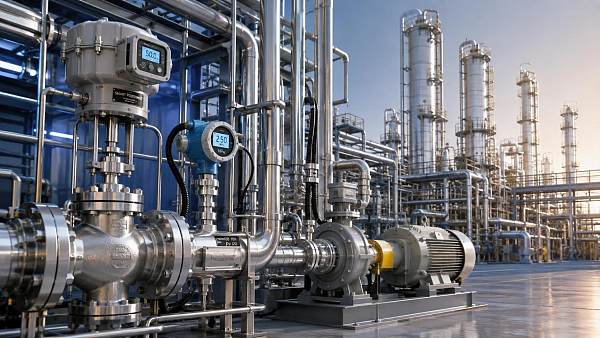
For centrifugal pumps, this means tracking vibration, suction pressure, flow deviation, bearing temperature, and cavitation signatures.
For pneumatic control valves, it means watching actuator response, stem friction, position error, and abnormal throttling behavior.
For compressors, monitoring expands to discharge pressure, rotor temperature, energy consumption, air quality, and leakage patterns.
In separation systems, pressure differential, membrane flux, turbidity, and contaminant load become safety and reliability signals.
The value lies not in collecting more data, but in turning data into trustworthy warnings.
That distinction will define mature fluid control trends over the next planning cycle.
Predictive maintenance moves from optional to expected
Predictive maintenance is no longer limited to flagship assets or high-risk production lines.
It is becoming a practical expectation for pumps, compressors, valves, and filtration trains.
The best programs combine equipment history, process context, and physics-based interpretation.
For example, a pump vibration alarm means little without knowing suction conditions and impeller loading.
Similarly, valve position deviation needs context from pressure drop, trim design, and flow regime.
This is where fluid control trends favor integrated intelligence over simple alarm dashboards.
Energy Efficiency and Safety Are Converging
Energy efficiency is often discussed as a cost or carbon issue.
In 2026, it is also part of the safety conversation.
Inefficient systems run hotter, cycle harder, and operate farther from their best efficiency points.
That raises the probability of wear, leakage, pressure instability, and emergency intervention.
Many fluid control trends now connect low-carbon design with equipment health and process resilience.
Permanent magnet variable frequency compressors are a clear example.
They reduce wasted energy while improving pressure stability under changing air demand.
Two-stage compression can also lower thermal stress and improve operating consistency.
For pumps, better hydraulic matching helps avoid excessive throttling, cavitation, and seal fatigue.
For valves, correctly selected trim reduces noise, erosion, and critical-flow damage.
These examples show why fluid control trends should be assessed through lifecycle performance, not purchase price alone.
Core Assets Behind Safer Fluid Networks
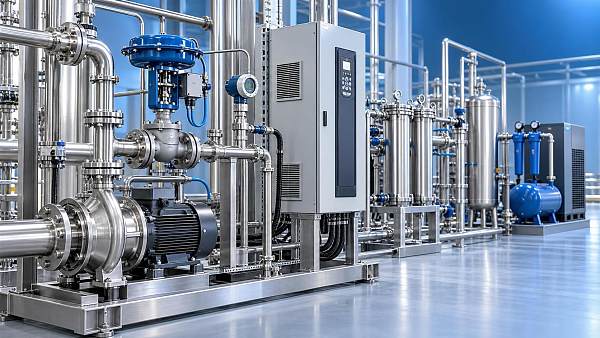
A safer plant depends on several equipment families working as one control environment.
Each asset has its own risk profile, but their interactions shape total system safety.
The following view summarizes how fluid control trends affect major industrial machinery groups.
This comparison shows why fluid control trends cannot be evaluated by a single specification sheet.
The better approach is to examine how equipment behavior affects process risk under real operating conditions.
Application Areas Where Risk Reduction Is Most Visible
Fluid control trends become most concrete when viewed through plant scenarios.
In chemical processing, corrosive media and temperature swings increase the importance of zero-leakage pump design.
Control valves must maintain stable throttling while resisting erosion, sticking, and unpredictable response.
In water treatment and SWRO, high-pressure plunger pumps and membranes face continuous efficiency pressure.
A small loss in volumetric efficiency can raise energy demand and stress downstream separation stages.
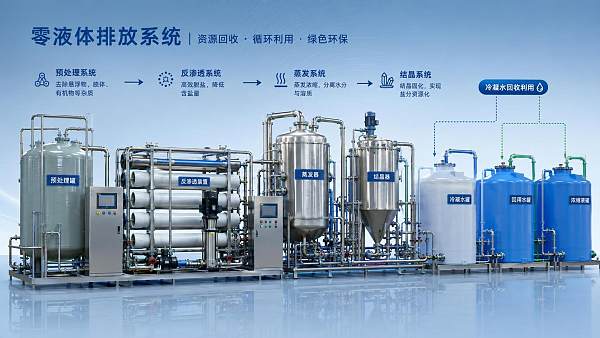
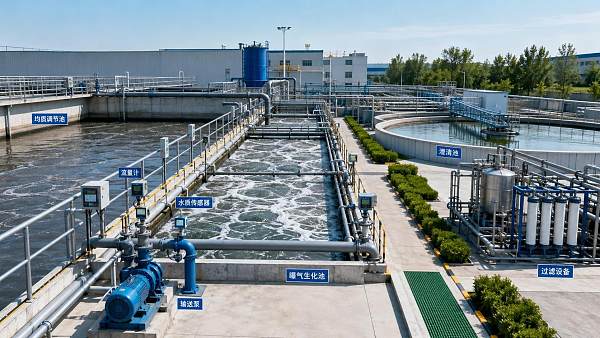
In municipal and industrial wastewater, filtration systems are increasingly connected to ZLD objectives.
Here, safer operation means preventing overload, bypass, unplanned discharge, and membrane failure.
In automated factories, compressed air behaves like a hidden utility risk.
Leaks, pressure drops, oil contamination, and poor compressor sequencing can disrupt production quality.
These examples explain why fluid control trends are relevant across general industry, not only heavy process sectors.
High-integrity design reduces incident pathways
High-integrity fluid systems are designed to reduce the number of ways a failure can escalate.
That may involve redundant sensing, safer valve failure positions, better containment, or verified material compatibility.
It may also involve simpler piping routes, clearer isolation points, and maintainable filtration layouts.
The most useful fluid control trends combine advanced technology with practical maintainability.
What to Assess Before Upgrading Fluid Control Systems
Many plants will review equipment portfolios as 2026 safety and energy goals become more demanding.
The strongest cases usually begin with risk mapping, not catalog comparison.
A practical review should identify where pressure, flow, heat, contamination, or leakage create operational exposure.
It should also reveal where outdated equipment prevents meaningful monitoring or efficient control.
Several questions help turn fluid control trends into actionable investment criteria.
- Which assets create the highest consequence if flow, pressure, or purity moves outside limits?
- Where are alarms frequent, poorly interpreted, or disconnected from maintenance planning?
- Do pumps and compressors operate close to their efficient and stable duty ranges?
- Can valve diagnostics distinguish actuator wear from process instability?
- Are filtration and membrane systems protected against overload and irregular cleaning cycles?
- Does supplier documentation support lifecycle safety, not only installation acceptance?
These questions prevent fluid control trends from becoming abstract technology conversations.
They connect investment decisions with measurable reliability, compliance, and energy outcomes.
The Role of Intelligence in Better Decisions
Industrial fluid systems are becoming too complex for fragmented decision-making.
CFD analysis, valve noise models, compressor thermodynamics, and separation data now influence procurement and modernization plans.
This is where independent technical intelligence has growing value.
Sector news alone is not enough when regulations, metal material supply, and carbon targets are changing together.
Reliable insight must stitch market signals to engineering consequences.
For example, stricter motor efficiency rules can reshape pump and compressor replacement economics.
Special alloy shortages may alter valve lead times or pressure-equipment strategies.
New digital maintenance expectations may change how bids are evaluated.
The most relevant fluid control trends therefore blend engineering evidence, commercial insight, and regulatory awareness.
That combination supports safer choices before projects reach urgent replacement stages.
Building a 2026 Roadmap for Safer Plants
A useful roadmap does not require replacing every asset at once.
It begins by ranking systems according to consequence, instability, maintenance burden, and energy intensity.
Critical pumps, high-pressure circuits, compressor rooms, and separation units often deserve early attention.
Next, the roadmap should define what “safer” means for each system.
For one line, it may mean lower cavitation risk.
For another, it may mean faster valve diagnostics or cleaner compressed air.
For a wastewater facility, it may mean stronger separation control supporting ZLD commitments.
The roadmap should then align technology, maintenance, supplier evaluation, and operator training.
Fluid control trends deliver value only when people can interpret signals and act with confidence.
This makes documentation, diagnostics, lifecycle support, and data transparency important selection factors.
A Practical Way Forward
The defining message of 2026 fluid control trends is straightforward.
Safer plants will rely on connected judgment, not isolated upgrades.
Pumps, valves, compressors, and separation systems should be evaluated as part of one operating risk network.
Digital monitoring, predictive maintenance, energy-efficient design, and high-integrity components all contribute to that network.
The next step is to review current assets against real failure pathways and future compliance demands.
From there, modernization priorities become clearer, more defensible, and easier to connect with business outcomes.
Tracking fluid control trends through technical evidence and market intelligence can support stronger planning.
It also helps establish selection standards for safer, lower-carbon, and more resilient industrial operations.
Related News
 What drives industrial wastewater treatment cost per cubic meter?Dr. Alistair VaughnIndustrial wastewater treatment cost per cubic meter depends on influent load, effluent targets, energy, technology, and sludge disposal. Explore the key cost drivers.
 How to verify CE compliance for fluid separation equipmentDr. Alistair VaughnFluid separation equipment CE verification made practical: learn how to check declarations, risk assessments, technical files, pressure safety, and installation readiness.
 Separation equipment trends reshaping industrial wastewater treatmentDr. Alistair VaughnSeparation equipment trends are reshaping industrial wastewater treatment through smarter membranes, modular systems, digital monitoring, and resource recovery strategies.
 When stainless steel separation equipment is the right choice for hygienic processesDr. Alistair VaughnStainless steel separation equipment: discover when hygienic design, corrosion resistance, CIP cleanability, and lifecycle reliability make it the smart choice.
 What to assess before choosing a process industry automation supplierDr. Alistair VaughnChoose a process industry automation supplier with confidence. Assess engineering depth, lifecycle reliability, digital integration, energy performance, and safety before you buy.
 How process control innovation in refineries reduces unplanned shutdownsDr. Alistair VaughnDiscover how process control innovation in refineries detects early deviations, improves valve and equipment reliability, and helps prevent costly unplanned shutdowns.
 What should a zero liquid discharge systems integrator include in its proposal?Dr. Alistair VaughnZero liquid discharge systems integrator proposal checklist: compare guarantees, utilities, scope, controls, waste handling, and lifecycle risk before award.
 Industrial wastewater treatment plant design: sizing for flow and loadDr. Alistair VaughnIndustrial wastewater treatment plant design guide: size systems for peak flow, pollutant loads, reliability, compliance, and lower lifecycle costs.
 Can predictive maintenance and machinery diagnostics prevent downtime?Dr. Alistair VaughnPredictive maintenance machinery diagnostics help reduce unplanned downtime by detecting early equipment issues, improving reliability, and enabling smarter maintenance decisions.
 Can a digital transformation machinery platform cut unplanned downtime?Dr. Alistair VaughnDiscover how a digital transformation machinery platform connects asset data, maintenance workflows, and process insights to reduce unplanned downtime.
 How water treatment equipment sizing affects operating costsDr. Alistair VaughnWater treatment equipment sizing shapes energy, chemical, and maintenance costs. Learn how to balance flow, pressure, recovery, and reliability for efficient operation.
 When does food processing automation justify the upfront investment?Dr. Alistair VaughnIndustrial automation solutions for food processing: discover when automation delivers measurable ROI through higher throughput, lower waste, reliable utilities, and stronger food safety control.