Can predictive maintenance and machinery diagnostics prevent downtime?




Yes, predictive maintenance and machinery diagnostics can prevent a significant share of unplanned downtime, but they do not make equipment failure impossible. Their value is earlier warning: they help a team recognize that a pump is developing bearing damage, a compressor is running hotter than normal, a valve is sticking, or a filter is loading faster than expected. That warning creates time to inspect, plan work, order parts, and intervene before a developing condition becomes a production-stopping failure.
The distinction matters. A sensor system does not repair a machine. It prevents downtime only when the data is relevant, the warning is understood, and someone acts before the remaining operating margin is exhausted. For fluid-control equipment, this approach is most effective when it combines machine-condition signals with process performance rather than relying on a single alarm.
What predictive maintenance actually prevents
Predictive maintenance machinery diagnostics are designed to find change. A machine has a normal operating pattern: a typical vibration level, temperature range, pressure response, power demand, flow rate, and operating sound. When one of these begins to drift, the equipment may be entering an early failure stage.
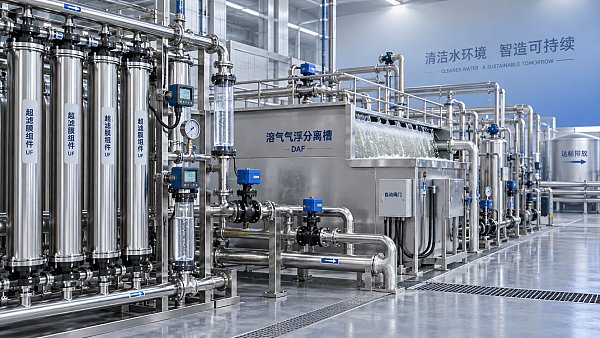
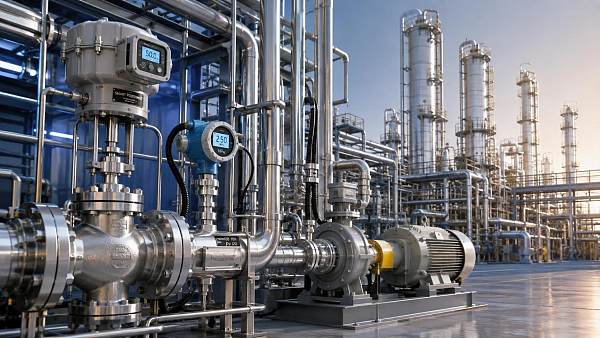
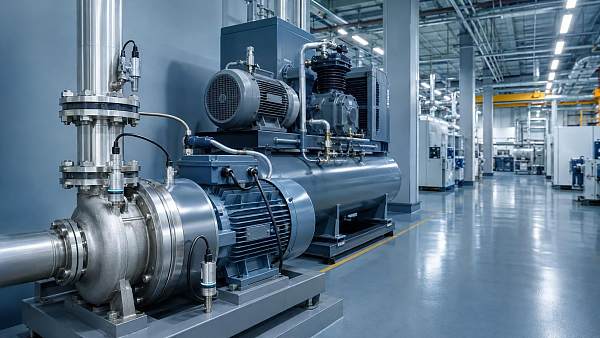
In a centrifugal pump, that drift may be caused by bearing wear, shaft misalignment, imbalance, cavitation, seal degradation, blocked suction conditions, or operation far from the pump’s preferred duty point. In an air compressor, it may appear as increasing discharge temperature, abnormal vibration, deteriorating lubricant condition, unstable pressure control, or a growing difference between delivered air and energy consumed. A control valve may show slow travel, excessive position error, recurring stiction, or air-supply problems. In filtration and separation equipment, rising differential pressure, reduced throughput, declining permeate quality, or repeated cleaning cycles can signal fouling, media damage, or an upstream process issue.
These are not identical faults, and they should not be treated as identical alarms. The practical purpose of diagnostics is to narrow the problem: identify what changed, determine whether it is a machine issue or a process issue, and decide how urgently the asset needs attention.
That makes predictive maintenance especially useful for failures that develop over hours, days, or weeks. It is less effective against events with no measurable warning period, such as sudden external damage, an immediate power-quality event, an operator error, or a component that fails abruptly without prior symptoms. A sensible maintenance strategy still includes inspections, safeguards, critical spares, operating procedures, and contingency planning.
Downtime is often preceded by a smaller performance problem
Unexpected shutdowns are rarely the first sign that something is wrong. A process may compensate for a weakening machine before it fails outright. A pump may need more energy to maintain the same flow. A compressor may run longer to hold header pressure. A valve may reach its target eventually, but respond too slowly during process changes. A filtration unit may meet output requirements while cleaning frequency steadily increases.
Those conditions can be dismissed because production continues. That is a common mistake. The growing energy use, unstable control, leakage, heat, noise, or declining capacity may be the earlier and more useful warning. By the time a high-high temperature trip or low-flow shutdown occurs, the decision window may be gone.
Good machinery diagnostics therefore compare condition data with the operating context. For example, elevated pump vibration means something different at a stable duty point than it does during frequent flow changes. A high filter differential pressure may be normal after a long run, but concerning if it rises rapidly just after cleaning. A compressor temperature trend must be interpreted alongside ambient conditions, loading pattern, cooling performance, and lubricant condition.
Use the right signals for the failure mode
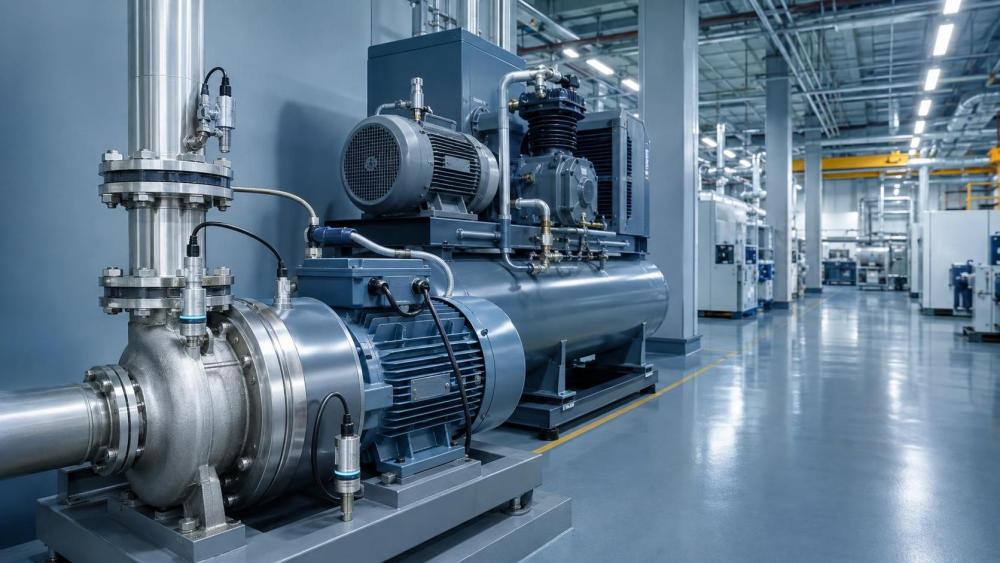
Adding more sensors is not automatically better. A diagnostic program works when each measurement answers a maintenance question. Start with the failure modes that can stop production, create a safety concern, damage connected equipment, or consume substantial maintenance time.
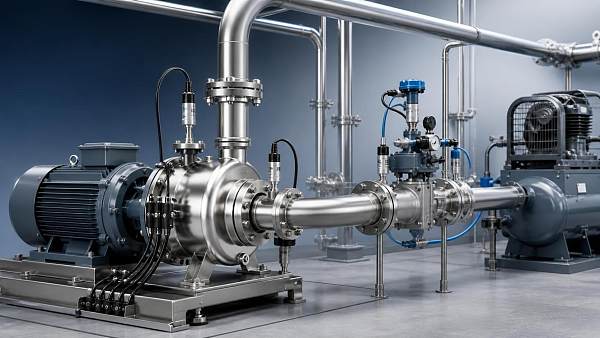
Vibration analysis is valuable for rotating machinery, but it is not a universal answer. It can identify many mechanical faults in pumps, motors, and compressors, yet it will not reliably diagnose every hydraulic, pneumatic, control, or separation problem on its own. Pressure, flow, temperature, electrical data, and control-system feedback often provide the missing context.
For a smart pneumatic control valve, for example, a positioner can show that the valve is not following its command. That does not immediately prove the valve trim is faulty. The cause could be friction in the valve stem, weak actuator pressure, contaminated instrument air, a linkage issue, or a control-loop problem. Diagnostic data should guide inspection, not replace it.
Why alerts fail to prevent downtime
Most failed predictive maintenance efforts do not fail because the technology is incapable. They fail because the maintenance response is not designed around the information.
The first failure is alert overload. If every minor fluctuation generates an alarm, operators learn to ignore alarms or silence them. Alarm thresholds should reflect the machine’s actual operating range and the consequence of failure. A warning that says “inspect during the next planned window” should not be treated the same way as a condition that requires an immediate controlled shutdown.
The second failure is using a fixed threshold without a baseline. Two identical pumps may have different normal vibration signatures because of foundation stiffness, piping loads, motor condition, speed, fluid properties, or installation quality. An acceptable baseline is built from healthy operation in known duty conditions. The most useful diagnostic insight is often a sustained deviation from that baseline, not a single reading above a generic limit.
The third failure is separating maintenance data from production data. If a compressor appears inefficient, the team needs to know whether demand changed, a dryer introduced pressure loss, control sequencing shifted, or an air leak developed elsewhere. If a pump loses flow, the answer may lie in suction conditions, upstream level, process viscosity, a partially closed valve, or impeller wear. Machine condition and process conditions need to be reviewed together.
Finally, a diagnosis has no downtime-prevention value if it does not lead to an owner, a work order, and a deadline. “Monitor it” can be appropriate for a low-risk trend, but it should state what would trigger action and when the condition will be reassessed.
Build a program around critical assets, not around available technology
A practical starting point is a short list of equipment whose loss would interrupt production, compromise product quality, create an environmental or safety issue, or force an expensive emergency response. The list should include supporting assets that may not look critical until they fail: cooling-water pumps, instrument-air compressors, recirculation pumps, booster systems, and filtration trains.
For each asset, answer four operational questions:
- What failure would stop or severely constrain the process?
- What measurable condition is likely to change before that failure?
- How much time is normally needed to inspect, obtain parts, and complete the repair?
- What action should follow a warning, an alarm, or a confirmed fault?
This is more useful than beginning with a broad request for “predictive maintenance sensors.” The appropriate monitoring method follows the failure mechanism and the available intervention time.
Consider a duty/standby pump arrangement. Monitoring can reveal deteriorating vibration on the duty unit, but downtime prevention depends on whether the standby unit is proven ready, the isolation valves operate, the controls transfer correctly, and the process can tolerate the changeover. In this case, diagnostics should be paired with routine functional testing of the standby path. Monitoring the failing pump alone does not prove resilience.
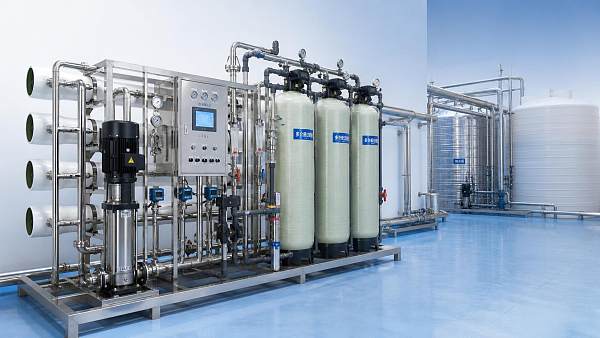
Similarly, a filtration skid may have parallel trains. Rising differential pressure can prompt cleaning before throughput is affected, but only if cleaning capacity, isolation capability, and operating procedures allow a train to be removed without disrupting the process. Predictive maintenance must fit the way the plant actually operates.
Choose the level of diagnostics that matches the asset
Not every asset needs continuous online monitoring. For lower-consequence equipment with predictable wear and easy access, periodic route-based checks may be sufficient. A technician can collect vibration, temperature, ultrasound, or lubricant information at intervals that match the rate at which the likely fault develops.
Continuous monitoring is more appropriate where failure develops quickly, access is difficult, a shutdown is highly disruptive, or a machine runs continuously with limited opportunities for manual checks. It can also be justified for equipment that is mechanically simple but operationally critical, such as a compressor that supports controls and automation across an entire area.
The best choice is not necessarily the most connected system. A modest monitoring arrangement that produces clear, acted-on information is more valuable than a complex platform filled with unreviewed data. Before selecting hardware or software, establish who will review the data, how often it will be reviewed, and how findings will enter the maintenance workflow.
Diagnostics should improve operating decisions, not only repair timing
Predictive maintenance is often described as a way to schedule repairs. It also helps teams operate equipment in conditions that reduce future damage. Repeated pump cavitation signals may point to poor suction conditions, inappropriate flow control, entrained gas, or an unsuitable operating point. Recurrent compressor overheating may point to ventilation restrictions or cooling-system problems rather than an internal mechanical defect. Frequent valve stiction may reveal poor air quality, excessive packing friction, or an application that needs a different trim or actuator arrangement.
This is where machinery diagnostics become a reliability tool rather than just an alarm system. The aim is to remove the condition that keeps creating the failure, not merely replace the damaged component on the next outage.
For fluid machinery, performance monitoring can also reveal energy waste before it becomes an availability issue. A machine that still runs but requires more power, cycles excessively, or struggles to maintain pressure is consuming operating margin. Correcting the underlying cause may improve both reliability and efficiency.
FCSM’s coverage of pumps, control valves, compressors, and separation systems reflects this connection between equipment health and process behavior. The useful question is not simply whether a sensor can detect a fault. It is whether the measured change can be tied to fluid dynamics, operating conditions, maintenance action, and the risk of lost production.
What to do when a warning appears
A diagnostic alert should trigger a disciplined response rather than an automatic shutdown or a casual decision to wait. Confirm the signal first. Check whether the sensor is secure, the reading is plausible, and the operating condition is comparable to the normal baseline. Then look for corroborating evidence: temperature, pressure, noise, leakage, control behavior, power draw, lubrication condition, or process trend.
Next, assess consequence and rate of change. A stable abnormal condition on a redundant asset may be managed until a planned maintenance window. A rapidly worsening trend on a single critical pump may require immediate preparation for a controlled intervention. The maintenance decision should include the availability of a standby machine, spare parts, isolation arrangements, production constraints, and the risk of secondary damage if operation continues.
Record the final diagnosis after inspection or repair. This closes the loop. Over time, the team learns which signals were early indicators, which thresholds were useful, and which alarms did not correspond to meaningful conditions. That feedback is how a diagnostics program becomes more accurate instead of more complicated.
Can it eliminate downtime completely?
No. It can reduce avoidable unplanned downtime, improve the quality of maintenance decisions, and give teams more control over when work happens. It cannot compensate for a missing spare, a failed backup arrangement, poor installation, unsuitable operating conditions, or a response process that is too slow for the fault.
The strongest results come from treating predictive maintenance machinery diagnostics as part of reliability management: monitor the assets that matter, establish meaningful baselines, connect condition changes to process data, define actions before alarms occur, and investigate recurring patterns at their source. When those conditions are in place, downtime becomes less of a surprise and more of a manageable operating decision.
Related News
 What drives industrial wastewater treatment cost per cubic meter?Dr. Alistair VaughnIndustrial wastewater treatment cost per cubic meter depends on influent load, effluent targets, energy, technology, and sludge disposal. Explore the key cost drivers.
 How to verify CE compliance for fluid separation equipmentDr. Alistair VaughnFluid separation equipment CE verification made practical: learn how to check declarations, risk assessments, technical files, pressure safety, and installation readiness.
 Separation equipment trends reshaping industrial wastewater treatmentDr. Alistair VaughnSeparation equipment trends are reshaping industrial wastewater treatment through smarter membranes, modular systems, digital monitoring, and resource recovery strategies.
 When stainless steel separation equipment is the right choice for hygienic processesDr. Alistair VaughnStainless steel separation equipment: discover when hygienic design, corrosion resistance, CIP cleanability, and lifecycle reliability make it the smart choice.
 What to assess before choosing a process industry automation supplierDr. Alistair VaughnChoose a process industry automation supplier with confidence. Assess engineering depth, lifecycle reliability, digital integration, energy performance, and safety before you buy.
 How process control innovation in refineries reduces unplanned shutdownsDr. Alistair VaughnDiscover how process control innovation in refineries detects early deviations, improves valve and equipment reliability, and helps prevent costly unplanned shutdowns.
 What should a zero liquid discharge systems integrator include in its proposal?Dr. Alistair VaughnZero liquid discharge systems integrator proposal checklist: compare guarantees, utilities, scope, controls, waste handling, and lifecycle risk before award.
 Industrial wastewater treatment plant design: sizing for flow and loadDr. Alistair VaughnIndustrial wastewater treatment plant design guide: size systems for peak flow, pollutant loads, reliability, compliance, and lower lifecycle costs.
 Can predictive maintenance and machinery diagnostics prevent downtime?Dr. Alistair VaughnPredictive maintenance machinery diagnostics help reduce unplanned downtime by detecting early equipment issues, improving reliability, and enabling smarter maintenance decisions.
 Can a digital transformation machinery platform cut unplanned downtime?Dr. Alistair VaughnDiscover how a digital transformation machinery platform connects asset data, maintenance workflows, and process insights to reduce unplanned downtime.
 How water treatment equipment sizing affects operating costsDr. Alistair VaughnWater treatment equipment sizing shapes energy, chemical, and maintenance costs. Learn how to balance flow, pressure, recovery, and reliability for efficient operation.
 When does food processing automation justify the upfront investment?Dr. Alistair VaughnIndustrial automation solutions for food processing: discover when automation delivers measurable ROI through higher throughput, lower waste, reliable utilities, and stronger food safety control.