Custom Industrial Automation: Key Design Pitfalls




Custom industrial automation solutions can unlock major gains in efficiency, reliability, and lifecycle cost control—but poor design choices often create delays, safety risks, and costly retrofits. For project managers and engineering leaders, understanding the most common design pitfalls is essential to aligning process performance, digital integration, and long-term maintainability from the very start.
Why custom industrial automation solutions fail before commissioning
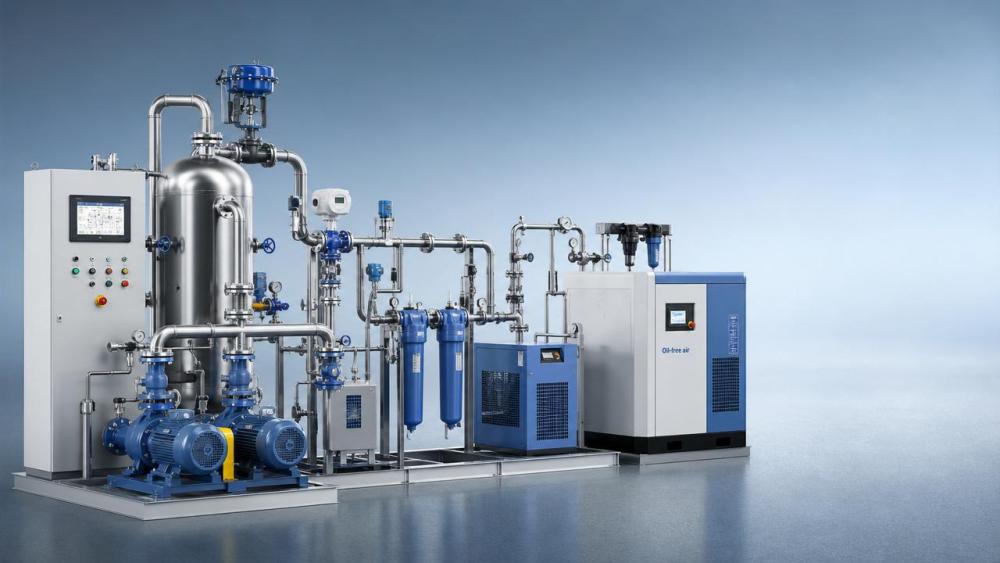
Many automation projects do not fail because the hardware is weak. They fail because early design assumptions are incomplete, fragmented, or disconnected from real process conditions. In fluid handling, compressed air, valve control, and separation systems, that gap becomes expensive very quickly.
For project managers, the biggest risk is not only technical underperformance. It is scope drift, integration delay, and unplanned modification after procurement. A custom industrial automation solution may look complete on paper, yet still miss pressure fluctuation behavior, cavitation risk, valve response time, compressor load profile, or wastewater variability.
This is where sector-specific intelligence matters. FCSM focuses on pumps, control valves, air compressor systems, and filtration equipment, so design review goes beyond generic PLC architecture. It connects fluid dynamics, energy efficiency, process stability, and digital maintenance logic in one engineering view.
- Process assumptions are often based on average operating data rather than transient conditions such as startup, cleaning, pressure spikes, or seasonal feed changes.
- Control architecture is sometimes designed separately from mechanical equipment selection, creating mismatch between instrumentation logic and actual equipment behavior.
- Lifecycle serviceability is neglected, which means maintenance teams inherit systems with poor accessibility, weak diagnostics, and difficult spare part planning.
What are the most common design pitfalls in industrial projects?
When evaluating custom industrial automation solutions, project leaders should first map the typical design failure points. The table below highlights the most common pitfalls seen across integrated machinery and process control projects.
These pitfalls are not isolated. In many projects, one weak design decision triggers several downstream problems. An underspecified pump duty can alter valve behavior, force compressor cycling, and distort energy consumption assumptions used in project approval.
Pitfall 1: Designing around average conditions
Average values rarely protect industrial operations. Pumping slurries, corrosive chemicals, process water, or compressed air requires visibility into minimum, normal, and upset conditions. A custom industrial automation solution must consider startup load, cleaning cycles, bypass modes, and degraded supply quality.
Pitfall 2: Treating controls and machinery as separate packages
A control loop is only as good as the mechanical response behind it. Poorly selected control valves can hunt near low openings. Centrifugal pumps can drift from best efficiency point. Compressors may short-cycle if logic ignores real consumption variation. Integration should start from process physics, not from panel drawings.
Pitfall 3: Ignoring service conditions over lifecycle
Many teams optimize capital cost but overlook replacement intervals, seal compatibility, filter fouling, actuator calibration access, and digital diagnostics. For project owners, this often turns a fast procurement win into a long operating burden.
How should project managers evaluate design readiness?
Before freezing specifications for custom industrial automation solutions, use a structured readiness review. The goal is to validate whether process data, control logic, utility conditions, and compliance requirements are mature enough for procurement and fabrication.
- Confirm the full operating envelope, including abnormal and intermittent conditions rather than steady-state duty only.
- Review mechanical and automation interfaces together, including valve Cv assumptions, pump NPSH margins, compressor turndown, and sensor placement.
- Check maintainability in layout drawings, with enough access for seal change, membrane cleaning, calibration, and isolation procedures.
- Define digital architecture early, covering communication protocol, alarm philosophy, historian tags, cybersecurity boundaries, and predictive maintenance signals.
- Align compliance review with application risk, especially when pressure systems, hazardous media, wastewater discharge, or energy efficiency targets are involved.
FCSM’s industry lens is useful here because fluid machinery automation is not a single-discipline exercise. It blends hydraulic behavior, thermodynamic loading, materials compatibility, instrumentation reliability, and efficiency regulation pressure into one decision framework.
Selection matrix: matching custom industrial automation solutions to process realities
A practical selection matrix helps teams compare custom industrial automation solutions by process condition, not by headline price. This is especially important in projects involving pumps, smart pneumatic control valves, compressor systems, and filtration stages.
This matrix improves procurement quality because it shifts conversation from generic capability claims to measurable project fit. It also helps engineering teams explain why a cheaper option may create higher power cost, more downtime, or extra compliance risk later.
Where fluid and gas systems need deeper caution
Projects involving centrifugal pumps, plunger pumps, control valves, and compressors carry specific hidden risks. Cavitation margins, valve noise at critical velocity, compressed air leak sensitivity, and membrane fouling rates can all reshape automation behavior. That is why custom industrial automation solutions in these sectors should be reviewed with both controls and machinery specialists.
Cost control: where cheap design choices become expensive later
Project budgets are real, but low initial spend often hides larger lifecycle exposure. In automation projects, the most expensive cost is usually not the component itself. It is the cost of late redesign, downtime, unstable performance, and operating inefficiency across years of service.
- Oversized pumps and compressors may pass capacity review but consume more energy under partial load and reduce control stability.
- Underspecified valves or instruments may require frequent calibration, trim replacement, or emergency bypass operation.
- Limited diagnostic design reduces predictive maintenance value and keeps teams in reactive mode.
- Poor skid layout can add labor cost every time filters, actuators, or seals need service.
For engineering leaders, the better question is not “What is the cheapest custom industrial automation solution?” It is “Which design gives the lowest risk-adjusted lifecycle cost within the project’s operating envelope?”
Standards, compliance, and digital integration cannot be late-stage tasks
Compliance issues often surface too late, after P&IDs are fixed or equipment is already sourced. Depending on region and application, project teams may need to consider pressure equipment rules, electrical safety, machine safety, wastewater discharge obligations, motor efficiency regulations, and plant cybersecurity expectations.
Even when no single certification dominates the project, the design should still document instrument traceability, alarm philosophy, shutdown logic, material compatibility, and energy performance assumptions. This is increasingly important in decarbonization-driven projects, where efficiency claims must be defensible.
Digital planning checkpoints
- Define what data is truly actionable for operators, maintenance teams, and management before specifying sensors.
- Separate control-critical signals from analytics-only signals to avoid unnecessary complexity.
- Plan communication and interoperability early if the project will connect compressors, pumps, control valves, filtration skids, and plant-level software.
FCSM’s strategic intelligence approach is valuable because global machinery projects are increasingly shaped by energy efficiency legislation, material supply volatility, and digital maintenance expectations, not only by core throughput requirements.
FAQ: what project teams ask before finalizing a custom automation design
How early should we define custom industrial automation solutions in a project?
Earlier than many teams expect. Basic design should start once process objectives, media characteristics, utility conditions, and operating scenarios are known. Waiting until procurement compresses engineering review time and increases the chance of mismatch between automation logic and machinery behavior.
What should project managers prioritize during vendor evaluation?
Prioritize process understanding, not only equipment list completeness. Ask how the supplier evaluates flow variability, cavitation risk, control valve authority, compressor load profile, filtration fouling behavior, maintainability, and digital integration boundaries. Strong custom industrial automation solutions are built on these specifics.
Are custom solutions always better than standardized packages?
Not always. Standardized packages can work well when duty conditions are stable and interfaces are simple. Customization becomes more valuable when the process includes variable load, corrosive or abrasive media, strict energy targets, complex site integration, or unusual compliance requirements.
How can we reduce commissioning risk?
Reduce commissioning risk by validating control narratives early, checking sensor locations against real process behavior, reviewing maintainability in 3D or layout models, and confirming data mapping before site startup. A factory-level simulation or staged FAT logic review can also expose issues before they become field delays.
Why choose us for project-stage decision support
FCSM supports project managers and engineering leaders who need more than catalog information. Our value lies in connecting automation design decisions with pump hydraulics, valve control behavior, compressor efficiency, filtration realities, and the wider shift toward digitalized and lower-carbon industrial operations.
If you are comparing custom industrial automation solutions, we can help you clarify design assumptions before they become procurement problems. That includes parameter confirmation, equipment selection logic, likely delivery constraints, maintainability concerns, digital integration checkpoints, and practical compliance considerations.
- Discuss operating parameters such as flow range, pressure window, media properties, control accuracy, and utility conditions.
- Review product selection pathways for pumps, smart pneumatic valves, compressors, and filtration equipment in one coordinated process.
- Assess delivery schedule sensitivity, spare strategy, and critical integration risks before final vendor lock-in.
- Clarify documentation needs related to standards, testing expectations, and site acceptance preparation.
- Start quotation discussions with a clearer technical scope, reducing revision cycles and hidden cost.
For teams facing tight schedules, budget pressure, or complex fluid and gas processes, informed early review can prevent the most common design pitfalls and improve the long-term value of custom industrial automation solutions.
Related News
 What drives industrial wastewater treatment cost per cubic meter?Dr. Alistair VaughnIndustrial wastewater treatment cost per cubic meter depends on influent load, effluent targets, energy, technology, and sludge disposal. Explore the key cost drivers.
 How to verify CE compliance for fluid separation equipmentDr. Alistair VaughnFluid separation equipment CE verification made practical: learn how to check declarations, risk assessments, technical files, pressure safety, and installation readiness.
 Separation equipment trends reshaping industrial wastewater treatmentDr. Alistair VaughnSeparation equipment trends are reshaping industrial wastewater treatment through smarter membranes, modular systems, digital monitoring, and resource recovery strategies.
 When stainless steel separation equipment is the right choice for hygienic processesDr. Alistair VaughnStainless steel separation equipment: discover when hygienic design, corrosion resistance, CIP cleanability, and lifecycle reliability make it the smart choice.
 What to assess before choosing a process industry automation supplierDr. Alistair VaughnChoose a process industry automation supplier with confidence. Assess engineering depth, lifecycle reliability, digital integration, energy performance, and safety before you buy.
 How process control innovation in refineries reduces unplanned shutdownsDr. Alistair VaughnDiscover how process control innovation in refineries detects early deviations, improves valve and equipment reliability, and helps prevent costly unplanned shutdowns.
 What should a zero liquid discharge systems integrator include in its proposal?Dr. Alistair VaughnZero liquid discharge systems integrator proposal checklist: compare guarantees, utilities, scope, controls, waste handling, and lifecycle risk before award.
 Industrial wastewater treatment plant design: sizing for flow and loadDr. Alistair VaughnIndustrial wastewater treatment plant design guide: size systems for peak flow, pollutant loads, reliability, compliance, and lower lifecycle costs.
 Can predictive maintenance and machinery diagnostics prevent downtime?Dr. Alistair VaughnPredictive maintenance machinery diagnostics help reduce unplanned downtime by detecting early equipment issues, improving reliability, and enabling smarter maintenance decisions.
 Can a digital transformation machinery platform cut unplanned downtime?Dr. Alistair VaughnDiscover how a digital transformation machinery platform connects asset data, maintenance workflows, and process insights to reduce unplanned downtime.
 How water treatment equipment sizing affects operating costsDr. Alistair VaughnWater treatment equipment sizing shapes energy, chemical, and maintenance costs. Learn how to balance flow, pressure, recovery, and reliability for efficient operation.
 When does food processing automation justify the upfront investment?Dr. Alistair VaughnIndustrial automation solutions for food processing: discover when automation delivers measurable ROI through higher throughput, lower waste, reliable utilities, and stronger food safety control.