Energy Efficient Machinery: What Lowers Total Operating Cost




Why does energy efficient machinery matter so much for total operating cost?
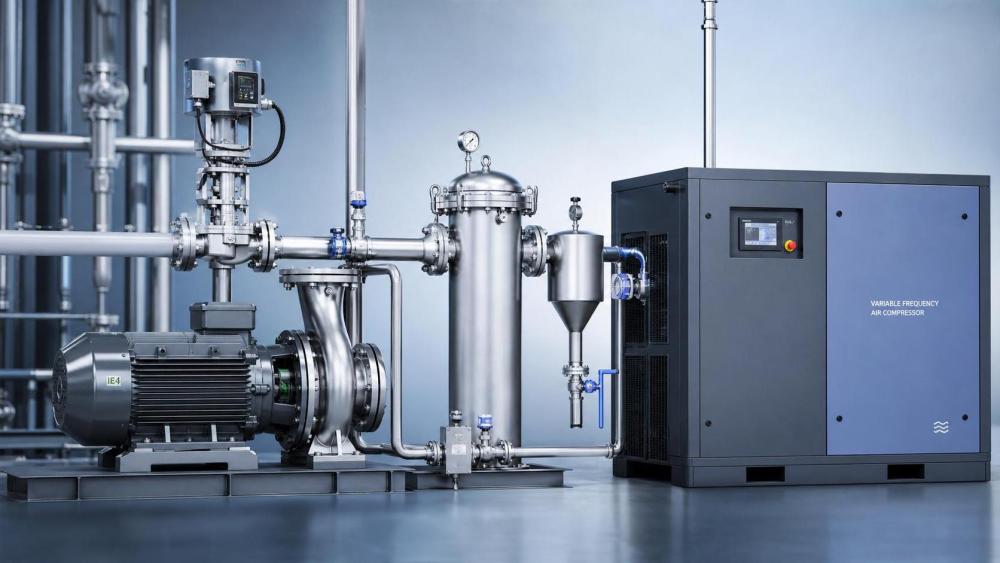
Energy cost rarely stays flat. That is why energy efficient machinery often becomes a financial control decision, not only an engineering upgrade.
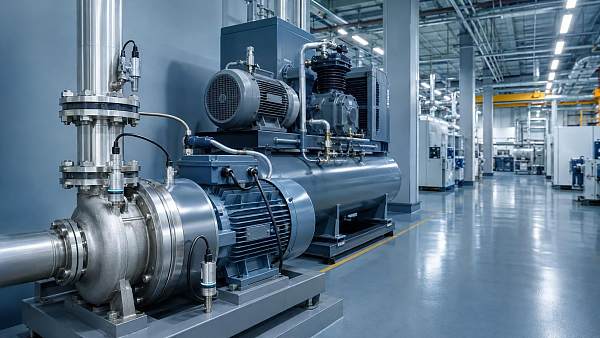
In fluid and gas systems, operating expense builds quietly. Pumps, compressors, valves, and filtration units run for long hours and multiply every inefficiency.
A cheaper machine can look attractive on paper. In practice, the larger bill usually appears later through electricity use, maintenance labor, spare parts, and lost production.
This is especially true in process environments where flow stability, pressure accuracy, and uptime directly affect product quality and utility consumption.
Energy efficient machinery lowers cost because it attacks the biggest lifetime drivers at once. It reduces power draw, heat loss, wear rates, and emergency intervention.
That is the logic followed across the sectors tracked by FCSM. Industrial pumps, smart control valves, compressor systems, and separation equipment all show the same pattern.
The best-performing assets are rarely defined by nameplate price alone. They are defined by stable efficiency under real load, predictable service life, and fewer hidden penalties.
Where do the real savings actually come from?
Most buyers ask whether energy efficient machinery saves enough electricity to justify the premium. That is a fair question, but it is only part of the answer.
The stronger case is total operating cost. Savings usually come from five places working together, not from one headline efficiency number.
- Lower power consumption through better motor efficiency, variable speed control, and reduced internal losses.
- Less throttling waste when pumps and valves are sized around actual duty points.
- Reduced maintenance caused by lower vibration, lower cavitation risk, and more stable thermal performance.
- Fewer unplanned shutdowns because efficient systems often include better monitoring and control accuracy.
- Longer component life in seals, bearings, membranes, valve trim, and compression stages.
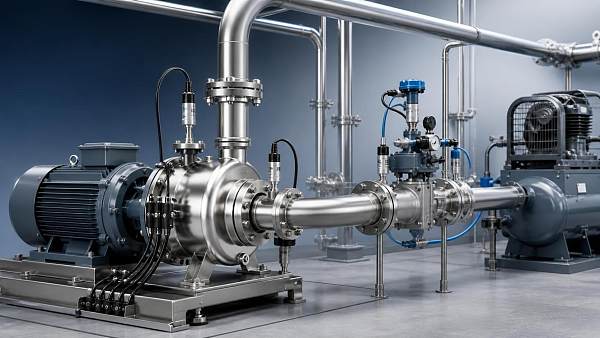
Take centrifugal pumps as an example. A unit operating away from its best efficiency point wastes energy and can accelerate seal and impeller damage.
The same principle applies to air systems. A permanent magnet variable frequency compressor can trim unloaded losses and respond better to demand swings.
In control valves, precision matters too. Better valve trim and smart positioners reduce hunting, overshoot, and process instability that quietly raise utility and scrap costs.
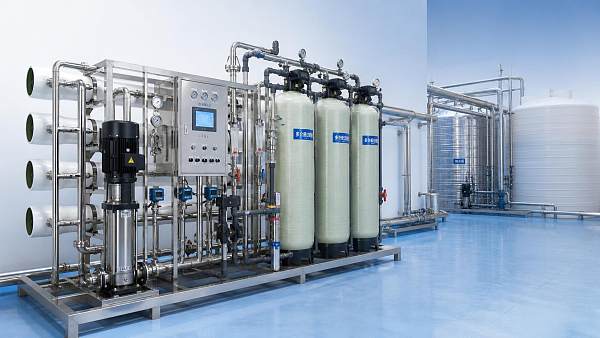
Filtration and separation equipment show another layer of savings. Better membrane or media performance cuts pressure drop, cleaning frequency, and water or chemical waste.
So the question is not only, “How efficient is the machine?” A better question is, “How expensive is inefficiency across the full operating cycle?”
Which equipment categories usually deliver the fastest payback?
Payback speed depends on runtime, load profile, and utility prices. Still, some machinery categories consistently offer faster returns than others.
Continuous-duty assets tend to rise to the top. When a machine runs many hours per year, even a modest efficiency gain scales quickly.
In many facilities, compressors and pumps show the clearest payback. They combine high electricity use with measurable performance data.
That said, fast payback should not be the only filter. A slower return may still be superior if it sharply reduces risk in critical service.
FCSM’s coverage of fluid machinery often highlights this balance. The strongest choices combine efficiency, process reliability, and compliance with tightening motor standards.
How can you tell whether a high-efficiency machine is truly worth the premium?
The premium is worth paying when the operating profile supports it. That means looking beyond brochure efficiency and into actual system behavior.
A useful approach is to test the business case through a small set of decision questions.
- How many annual operating hours will the machine see?
- Will it run near full load, or mostly under variable demand?
- How much does downtime cost per hour in lost output or process disruption?
- Are maintenance events planned and predictable, or reactive and disruptive?
- Will the machine face stricter energy or emissions standards during its service life?
This is where lifecycle evaluation becomes more useful than purchase-price comparison. For many energy efficient machinery projects, the capital delta is recovered earlier than expected.
More common than people assume, the decisive factor is not only electricity savings. It is avoided instability, reduced spare consumption, and better control of shutdown risk.
In actual applications, one incorrect assumption can distort the whole model. An oversized pump, for example, may erase theoretical gains through throttling losses.
For that reason, technical validation matters. FCSM’s intelligence model is relevant here because it follows how cavitation behavior, rotor design, control precision, and system integration affect real performance.
What mistakes make energy efficient machinery underperform after purchase?
A disappointing result usually comes from system decisions, not from the efficiency concept itself. The machine may be efficient, but the installation can still waste money.
One frequent mistake is evaluating equipment in isolation. Pumps, valves, compressors, and separation units behave differently when paired with poor piping, controls, or duty assumptions.
Another mistake is trusting peak ratings without asking for performance under expected load bands. Part-load efficiency often matters more than best-case numbers.
There is also the maintenance trap. Some teams buy advanced machinery but keep old service routines, missing the benefit of condition monitoring and predictive maintenance.
The following checklist is a practical way to avoid underperformance.
- Confirm real duty cycles before sizing.
- Review system pressure losses, not only equipment efficiency.
- Check material compatibility in corrosive or high-temperature service.
- Require monitoring points for power, vibration, flow, and pressure.
- Model maintenance intervals and spare availability before approval.
These points are especially important in sectors handling aggressive media, wastewater, seawater, or high-pressure gas applications, where efficiency and reliability are tightly linked.
What should the next evaluation step look like?
If the goal is lower total operating cost, start by ranking machinery by annual energy spend, downtime exposure, and maintenance burden.
That ranking quickly shows where energy efficient machinery can have the strongest financial effect. In many cases, the answer is not every asset. It is a few high-impact systems.
Next, compare options using lifecycle data rather than quoted price alone. Request part-load curves, service intervals, expected wear components, and control integration requirements.
It also helps to watch market signals. FCSM regularly tracks efficiency regulations, special alloy supply shifts, digital monitoring trends, and replacement demand in pumps and compressors.
That wider view matters because machinery decisions are long-lived. A cheaper asset can become expensive if it struggles with future compliance, utility prices, or reliability expectations.
Put simply, energy efficient machinery lowers total operating cost when the selection process is disciplined. Match the machine to the duty, verify the whole system, and test the savings against actual operating conditions.
The most practical next move is to build a short comparison model for priority assets. Include energy, maintenance, uptime, spare parts, and service life in one view.
That turns a broad efficiency discussion into a clearer investment decision, supported by numbers that remain useful long after purchase.
Related News
 What drives industrial wastewater treatment cost per cubic meter?Dr. Alistair VaughnIndustrial wastewater treatment cost per cubic meter depends on influent load, effluent targets, energy, technology, and sludge disposal. Explore the key cost drivers.
 How to verify CE compliance for fluid separation equipmentDr. Alistair VaughnFluid separation equipment CE verification made practical: learn how to check declarations, risk assessments, technical files, pressure safety, and installation readiness.
 Separation equipment trends reshaping industrial wastewater treatmentDr. Alistair VaughnSeparation equipment trends are reshaping industrial wastewater treatment through smarter membranes, modular systems, digital monitoring, and resource recovery strategies.
 When stainless steel separation equipment is the right choice for hygienic processesDr. Alistair VaughnStainless steel separation equipment: discover when hygienic design, corrosion resistance, CIP cleanability, and lifecycle reliability make it the smart choice.
 What to assess before choosing a process industry automation supplierDr. Alistair VaughnChoose a process industry automation supplier with confidence. Assess engineering depth, lifecycle reliability, digital integration, energy performance, and safety before you buy.
 How process control innovation in refineries reduces unplanned shutdownsDr. Alistair VaughnDiscover how process control innovation in refineries detects early deviations, improves valve and equipment reliability, and helps prevent costly unplanned shutdowns.
 What should a zero liquid discharge systems integrator include in its proposal?Dr. Alistair VaughnZero liquid discharge systems integrator proposal checklist: compare guarantees, utilities, scope, controls, waste handling, and lifecycle risk before award.
 Industrial wastewater treatment plant design: sizing for flow and loadDr. Alistair VaughnIndustrial wastewater treatment plant design guide: size systems for peak flow, pollutant loads, reliability, compliance, and lower lifecycle costs.
 Can predictive maintenance and machinery diagnostics prevent downtime?Dr. Alistair VaughnPredictive maintenance machinery diagnostics help reduce unplanned downtime by detecting early equipment issues, improving reliability, and enabling smarter maintenance decisions.
 Can a digital transformation machinery platform cut unplanned downtime?Dr. Alistair VaughnDiscover how a digital transformation machinery platform connects asset data, maintenance workflows, and process insights to reduce unplanned downtime.
 How water treatment equipment sizing affects operating costsDr. Alistair VaughnWater treatment equipment sizing shapes energy, chemical, and maintenance costs. Learn how to balance flow, pressure, recovery, and reliability for efficient operation.
 When does food processing automation justify the upfront investment?Dr. Alistair VaughnIndustrial automation solutions for food processing: discover when automation delivers measurable ROI through higher throughput, lower waste, reliable utilities, and stronger food safety control.