Fluid Dynamic Cavitation: Benefits, Limits, and Use Cases




Fluid Dynamic Cavitation: Benefits, Limits, and Use Cases
Fluid dynamic cavitation can raise process intensity fast. It can also damage equipment just as quickly.
That contrast is why fluid dynamic cavitation keeps attracting attention across pumps, valves, mixers, and treatment systems.
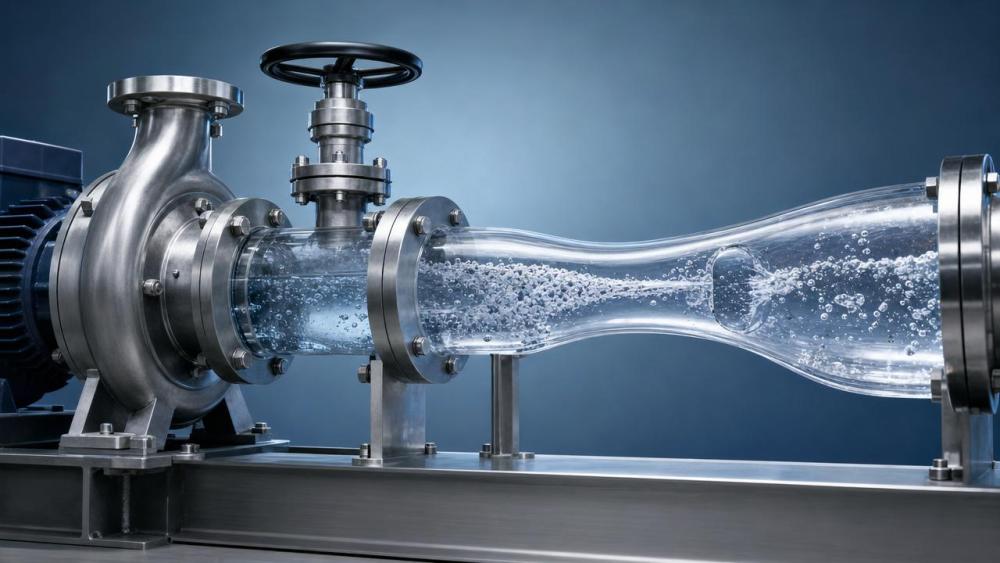
At its core, fluid dynamic cavitation happens when local pressure drops below a liquid’s vapor pressure.
Tiny vapor bubbles then form, move, and collapse when pressure recovers.
Those collapses create micro-jets, shock waves, local heat, and intense shear.
In practical terms, fluid dynamic cavitation can be either a useful tool or a hidden failure mode.
In pumps, it often signals hydraulic stress and reliability risk.
In reactors or water treatment skids, the same effect may support mixing, oxidation, and contaminant breakdown.
So the key question is not whether fluid dynamic cavitation exists.
The real question is when it creates value, and when it starts destroying it.
How fluid dynamic cavitation works in real systems
The mechanism sounds simple, but operating reality is more nuanced.
Fluid velocity rises through a restriction, rotating blade passage, nozzle, or venturi throat.
Pressure drops at the same time.
If the pressure falls low enough, vapor cavities appear in the liquid stream.
When those cavities travel into a higher-pressure zone, they collapse violently.
This is where fluid dynamic cavitation becomes operationally important.
The collapse can strip fouling layers, improve liquid-liquid dispersion, and accelerate mass transfer.
It can also pit stainless steel, excite vibration, and shift system curves.
That dual character explains why design intent matters more than the effect alone.
Common triggers
- High rotational speed in centrifugal pumps
- Sudden throttling across control valves
- Venturi reactors and orifice devices
- Elevated liquid temperature reducing pressure margin
- Poor suction conditions and low NPSH available
The main benefits of fluid dynamic cavitation
When engineered on purpose, fluid dynamic cavitation delivers several process advantages.
The first is stronger mixing without adding many moving parts.
Bubble collapse creates localized turbulence that breaks concentration gradients faster than gentle flow alone.
The second is improved mass transfer.
That matters in oxidation, emulsification, extraction, and some biological pretreatment steps.
The third is surface cleaning.
Micro-jets help dislodge deposits from particles, membranes, and wetted surfaces.
A fourth benefit is reaction enhancement in selected chemistries.
Some systems use fluid dynamic cavitation to speed radical formation or boost reagent contact.
More recently, interest has grown because these gains may reduce chemical dosage or residence time.
Where the benefits show up most clearly
- Wastewater oxidation and pollutant degradation
- Slurry homogenization and particle size reduction support
- Biodiesel and specialty chemical processing
- Cleaning-in-place support for fouled circuits
- Preconditioning before membrane separation
The practical limits of fluid dynamic cavitation
The upside is real, but the limits are just as important.
First, fluid dynamic cavitation is difficult to control if system conditions drift.
Small changes in temperature, viscosity, dissolved gas, or inlet pressure can shift cavitation intensity.
Second, beneficial cavitation can quickly cross into destructive cavitation.
Once collapse occurs near metal surfaces, erosion risk rises sharply.
Third, scale-up is not always linear.
A lab venturi may perform well, while a larger skid behaves differently because of residence time and flow distribution.
Fourth, energy efficiency claims need careful checking.
Some fluid dynamic cavitation setups save chemicals, but may increase pumping or recirculation load.
This also means performance should be judged at system level, not device level.
Typical warning signs
- Rising broadband noise or crackling sounds
- Unexpected vibration at stable throughput
- Loss of pump head or unstable valve behavior
- Premature wear on impellers, trims, or housings
- Inconsistent treatment efficiency over time
Use cases across pumps, valves, and treatment systems
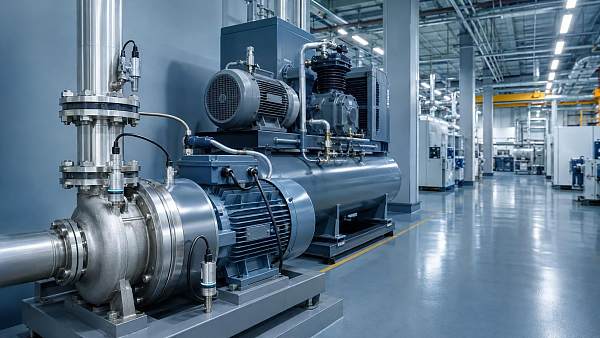
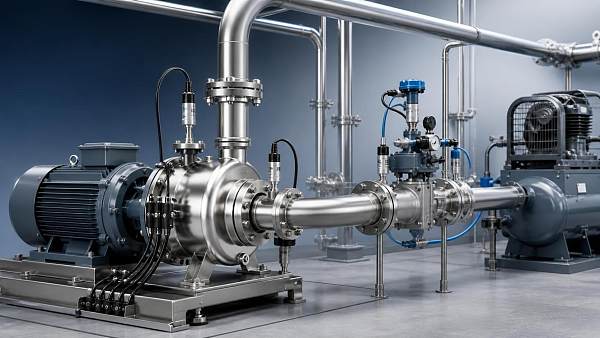
In centrifugal pumps, fluid dynamic cavitation is usually a problem to avoid.
Low suction pressure can trigger vapor formation at the impeller eye.
The result is lower efficiency, head drop, noise, and material loss.
In control valves, fluid dynamic cavitation often appears during heavy pressure letdown.
Severe cases damage trim geometry and reduce control accuracy.
Anti-cavitation valve trims are designed to split pressure drop in stages.
That keeps local pressure above the critical threshold for bubble formation.
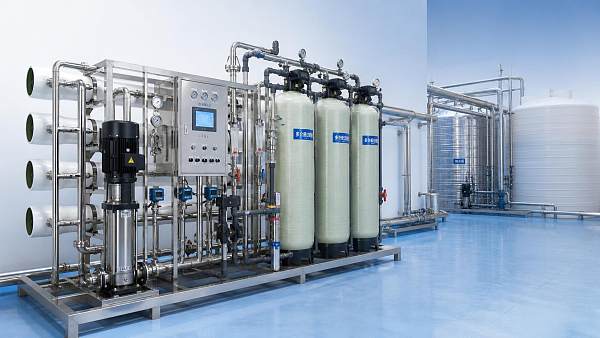
In wastewater and process intensification units, the same phenomenon can be useful.
Hydrodynamic reactors use controlled geometry to generate repeatable fluid dynamic cavitation.
These units support oxidation, disinfection, emulsification, and sludge conditioning.
Quick comparison
How to evaluate fluid dynamic cavitation before adoption
A practical review starts with the business goal, not the phenomenon itself.
If the target is lower fouling, lower chemical use, or faster reaction, define that metric first.
Then check whether fluid dynamic cavitation is the best route to reach it.
From there, evaluate hydraulic margins, materials, and controllability.
In pump systems, NPSH margin and temperature profile deserve early attention.
In valve networks, pressure staging and trim selection matter more.
In process reactors, geometry repeatability and residence time distribution become central.
That is where CFD, pilot tests, and acoustic monitoring can add real decision value.
A simple evaluation checklist
- Define the process outcome you want to improve
- Map pressure, temperature, and flow variability
- Estimate whether cavitation is beneficial or harmful
- Review materials and wear tolerance
- Pilot under realistic duty conditions
- Track energy, noise, and maintenance impact together
Why fluid dynamic cavitation matters now
The topic matters more today because industrial systems are under new pressure.
Plants need higher efficiency, lower emissions, tighter water reuse, and fewer unplanned shutdowns.
Fluid dynamic cavitation sits right at that intersection.
Used intentionally, it can help intensify treatment and reduce process bottlenecks.
Ignored or misunderstood, it can shorten asset life and undermine efficiency goals.
That is why the strongest decisions combine fluid mechanics with lifecycle economics.
In other words, fluid dynamic cavitation should be judged as a system behavior, not a buzzword.
The most useful next step is straightforward.
Review where pressure drops, energy losses, or treatment gaps appear in your process, then assess whether fluid dynamic cavitation should be prevented, controlled, or deliberately applied.
Related News
 What drives industrial wastewater treatment cost per cubic meter?Dr. Alistair VaughnIndustrial wastewater treatment cost per cubic meter depends on influent load, effluent targets, energy, technology, and sludge disposal. Explore the key cost drivers.
 How to verify CE compliance for fluid separation equipmentDr. Alistair VaughnFluid separation equipment CE verification made practical: learn how to check declarations, risk assessments, technical files, pressure safety, and installation readiness.
 Separation equipment trends reshaping industrial wastewater treatmentDr. Alistair VaughnSeparation equipment trends are reshaping industrial wastewater treatment through smarter membranes, modular systems, digital monitoring, and resource recovery strategies.
 When stainless steel separation equipment is the right choice for hygienic processesDr. Alistair VaughnStainless steel separation equipment: discover when hygienic design, corrosion resistance, CIP cleanability, and lifecycle reliability make it the smart choice.
 What to assess before choosing a process industry automation supplierDr. Alistair VaughnChoose a process industry automation supplier with confidence. Assess engineering depth, lifecycle reliability, digital integration, energy performance, and safety before you buy.
 How process control innovation in refineries reduces unplanned shutdownsDr. Alistair VaughnDiscover how process control innovation in refineries detects early deviations, improves valve and equipment reliability, and helps prevent costly unplanned shutdowns.
 What should a zero liquid discharge systems integrator include in its proposal?Dr. Alistair VaughnZero liquid discharge systems integrator proposal checklist: compare guarantees, utilities, scope, controls, waste handling, and lifecycle risk before award.
 Industrial wastewater treatment plant design: sizing for flow and loadDr. Alistair VaughnIndustrial wastewater treatment plant design guide: size systems for peak flow, pollutant loads, reliability, compliance, and lower lifecycle costs.
 Can predictive maintenance and machinery diagnostics prevent downtime?Dr. Alistair VaughnPredictive maintenance machinery diagnostics help reduce unplanned downtime by detecting early equipment issues, improving reliability, and enabling smarter maintenance decisions.
 Can a digital transformation machinery platform cut unplanned downtime?Dr. Alistair VaughnDiscover how a digital transformation machinery platform connects asset data, maintenance workflows, and process insights to reduce unplanned downtime.
 How water treatment equipment sizing affects operating costsDr. Alistair VaughnWater treatment equipment sizing shapes energy, chemical, and maintenance costs. Learn how to balance flow, pressure, recovery, and reliability for efficient operation.
 When does food processing automation justify the upfront investment?Dr. Alistair VaughnIndustrial automation solutions for food processing: discover when automation delivers measurable ROI through higher throughput, lower waste, reliable utilities, and stronger food safety control.