How industrial machinery retrofit trends are shaping energy efficiency




Rising energy costs and decarbonization commitments are prompting industrial companies to rethink aging equipment. Today’s industrial machinery retrofit trends go beyond replacing inefficient components: variable-speed drives, smart controls, predictive maintenance, and system-level optimization can help improve the performance of pumps, compressors, and fluid networks. The challenge is deciding where an upgrade will save energy without creating a reliability problem somewhere else.
For a plant manager facing a narrow shutdown window, a retrofit may be preferable to replacing an entire production line. For a finance team, the question is whether the savings survive changes in output, energy prices, and maintenance requirements. Both views matter. The most promising projects tend to address a measurable operating problem rather than simply introduce a newer piece of equipment.
The market is shifting from component efficiency to system performance
Industrial equipment is often purchased for a design condition that occurs only part of the time. Production changes, safety margins, seasonal temperatures, and later process expansions can leave pumps and compressors operating far from their original duty points. A motor may be efficient on its own while the system around it wastes energy through throttling, bypass flows, leaks, or unnecessarily high pressure.
That is why retrofit discussions increasingly start with operating profiles rather than equipment age. An older machine that runs close to its required duty and receives good maintenance may not be the best first target. A newer machine that spends much of its life fighting a restrictive control valve or supplying an oversized network may offer a better opportunity.
This distinction affects purchasing decisions. Buyers are asking not just for motor efficiency or compressor performance at a single point, but for evidence relevant to their own load profile. Vendors may supply useful performance curves and control options, but plant teams still need to test whether the proposed package fits the process.
Variable speed is valuable when the process can use it
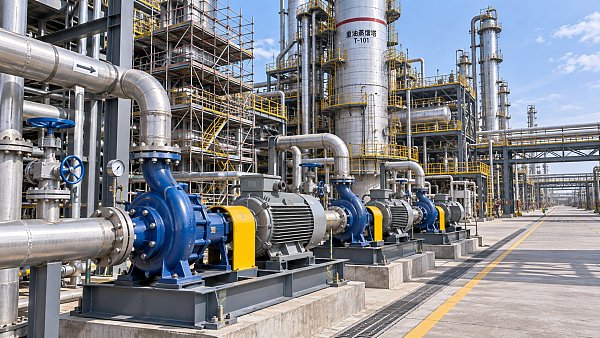
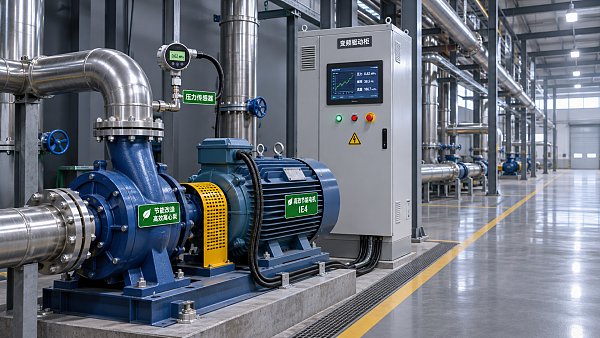
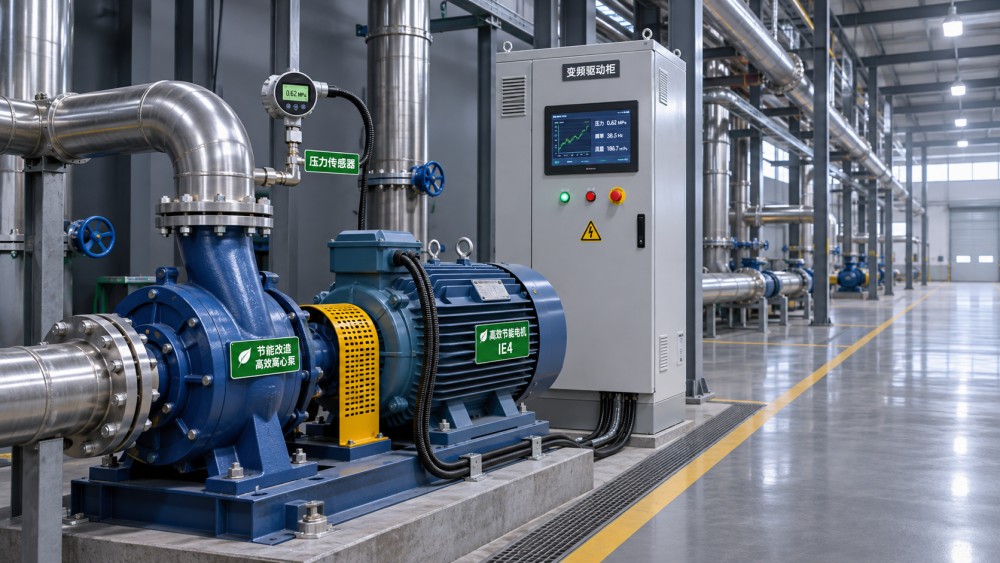
Variable-frequency drives are among the most visible retrofit options for centrifugal pumps and compressors. Where demand fluctuates, adjusting speed can reduce the need to control flow by wasting pressure across a valve or running equipment unloaded. In a suitable centrifugal system, the power required can fall substantially as speed decreases.
That does not make a drive a universal answer. The familiar pump affinity relationships are useful for screening, but real savings depend on the system curve, static head, equipment efficiency, and operating limits. A water-transfer system that must lift liquid to a fixed elevation may have less room to benefit from speed reduction than a circulating loop dominated by friction losses.
The mechanical and electrical details deserve equal attention. A drive may require assessment of motor insulation, bearing currents, harmonics, cooling at low speed, and compatibility with the existing electrical installation. At the pump, engineers should check minimum flow, vibration, seal conditions, and the possibility of operating too far from the preferred range. A speed reduction that looks attractive on a spreadsheet is not a saving if it causes repeated seal failures or unstable flow.
Sometimes an impeller trim, a correctly sized replacement pump, or a change in operating schedule is the simpler choice. The right comparison is not “drive versus no drive”; it is the cost and performance of several feasible ways to meet the same process requirement.
Compressed air projects are becoming network projects
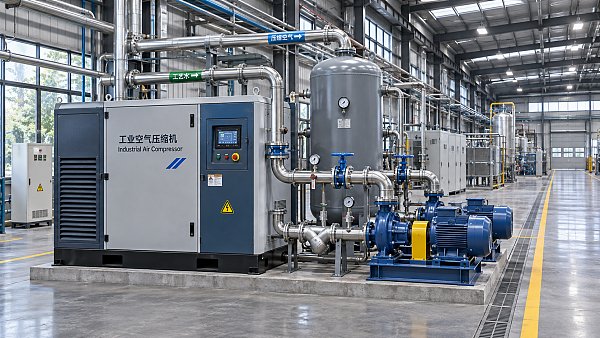
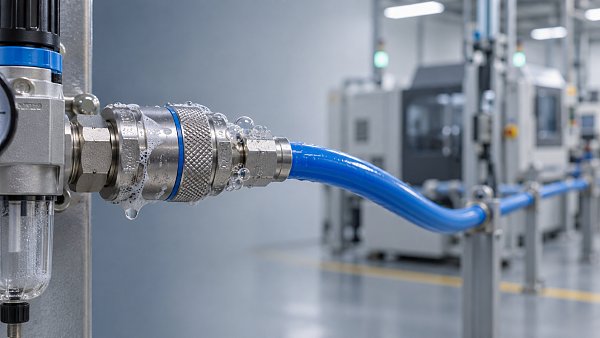
Replacing an aging compressor can improve efficiency, particularly when an existing machine is unreliable or poorly matched to demand. But compressed air is a network service, not just a machine in a compressor room. Leakage, inappropriate uses of air, pressure drops across treatment equipment, and poor sequencing between multiple compressors can erode the benefit of a new unit.
A variable-speed compressor can be effective as a trim machine in a system with fluctuating demand. It is not necessarily the most economical choice for every machine in a station. A steady base load may be better served by appropriately selected fixed-speed equipment, with controls coordinating the rest. The answer depends on the number of compressors, storage capacity, demand variation, and the performance of the machines under part load.
Pressure reduction is another attractive idea that needs a process check. Lowering the header setpoint can reduce compressor work, but only if the most pressure-sensitive users still receive adequate pressure during peak demand. Before changing the setpoint, investigate whether a distant tool is suffering from an undersized branch line, a blocked filter, or a local restriction. Raising pressure for the entire factory to compensate for one problem is expensive; lowering it without finding that problem can interrupt production.
Heat recovery also deserves consideration where there is a nearby, consistent use for low-grade heat. Its value depends on timing, temperature, piping distance, and the cost of integrating the recovered heat—not simply on the amount of heat available from the compressor.
Smarter valves and sensors can expose hidden losses
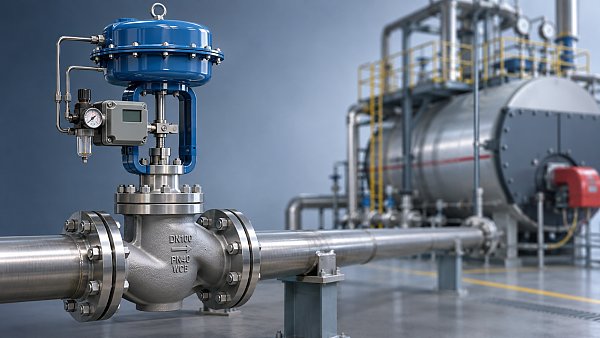
Control valves are not usually purchased as energy-saving devices, yet their condition and sizing shape how a fluid system operates. An oversized valve that controls mostly near its closed position can make stable regulation difficult. A worn trim or a poorly tuned positioner may produce oscillation, forcing upstream equipment to work harder while operators struggle to maintain the setpoint.
Retrofitting a smart positioner can make valve travel and diagnostic information more accessible. That information is useful when it leads to a decision: repair a sticking actuator, review valve sizing, or investigate repeated cycling. It does not eliminate the need to inspect the valve or confirm that the selected trim is suitable for the pressure drop and fluid. In severe service, cavitation, flashing, noise, and erosion may be more consequential than the energy calculation alone.
The same principle applies to predictive maintenance. Vibration, temperature, pressure, and power measurements can reveal deterioration before a failure, but collecting more data is not the same as predicting one. A useful deployment identifies which failure modes matter, who will respond to an alert, and what action is available. If a sensor detects bearing deterioration but the plant has no spare part or planned intervention window, the operational benefit may be limited.
Filtration and high-pressure systems need a different retrofit lens
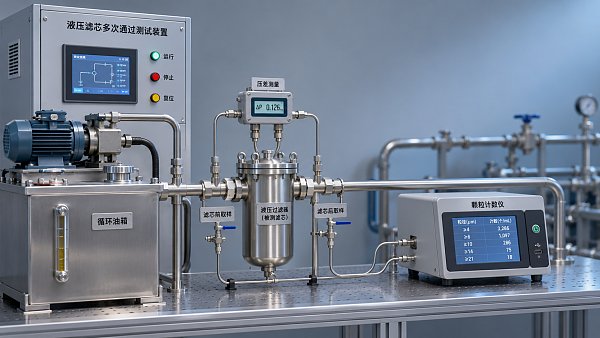
In filtration and separation, energy use is closely tied to differential pressure, fouling, cleaning practices, and the quality of the incoming fluid. A gradual rise in pressure across a filter may indicate loading, but changing elements too early increases consumable and labor costs. Waiting too long can raise pumping demand or compromise process performance. Monitoring differential pressure alongside flow and product quality gives operators a more useful basis for maintenance than a calendar alone.
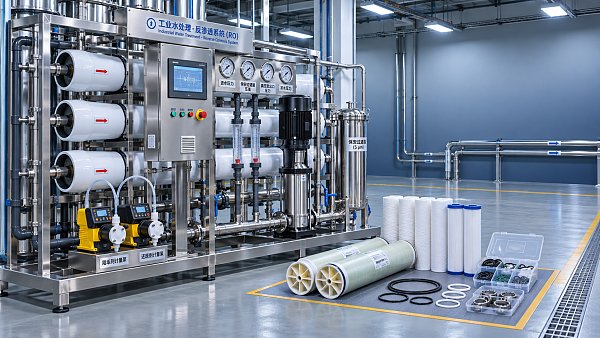
Reverse osmosis adds another layer of complexity. Pretreatment, membrane condition, recovery rate, feedwater characteristics, and pressure all influence the result. For seawater systems, energy recovery equipment can be relevant, but compatibility with the existing process and the condition of the membranes and high-pressure pumps must be assessed. A retrofit that reduces pump power at the expense of water quality or membrane life may be a poor trade.
High-pressure plunger pumps also call for care when applying lessons from centrifugal machinery. Their operating behavior and control options differ, and changes to speed or discharge conditions should be checked against manufacturer limits, pulsation, relief protection, and process requirements. A generic promise of variable-speed savings is not enough.
The business case is only as good as the baseline
A credible retrofit proposal begins with a period of representative operating data. Depending on the system, that may include power, flow, suction and discharge pressure, operating hours, production rate, and relevant quality or reliability measures. Short spot readings can miss night shifts, cleaning cycles, seasonal demand, and periods when standby equipment is running.
Normalize comparisons where practical. If output falls after an upgrade, a lower electricity bill does not automatically demonstrate better efficiency. Energy per unit of acceptable product can be a useful indicator, provided product mix and operating conditions are also considered. For a utility system serving several lines, allocate consumption carefully rather than attributing every change to one retrofit.
Payback calculations should include more than equipment and installation. Engineering, electrical work, controls integration, commissioning, operator training, spare parts, and production disruption can materially change the decision. Where the project affects a critical process, the cost of a failed start-up or an extended shutdown deserves explicit attention. Some upgrades justify themselves partly through reliability or capacity, but those benefits should be separated from measured energy savings rather than bundled into an unsupported number.
Electricity tariffs matter too. A project that reduces consumption during high-cost periods may be more valuable than its annual kilowatt-hour reduction alone suggests. Conversely, projected carbon benefits depend on the applicable emissions accounting method and electricity supply; they should not be treated as a fixed property of the equipment.
Procurement is moving toward integration and verification
Retrofit buyers increasingly have to coordinate mechanical suppliers, electrical contractors, automation teams, and the people responsible for the live process. Interfaces are a frequent source of delay. A drive may be technically compatible with a motor but require changes to the control system; a new positioner may produce diagnostic data that the plant cannot access without additional software or network work.
Before awarding a project, define who owns the control philosophy, cybersecurity review, commissioning tests, and handover documents. Confirm the availability of replacement parts and technical support for the expected operating life. Requirements for motor efficiency, electrical installation, pressure equipment, and safety can vary by location and application, so compliance should be checked against the rules and project specifications that actually apply.
Acceptance criteria should be agreed before installation. They might include stable operation across specified loads, no unacceptable vibration or process disruption, and a method for comparing energy consumption against the baseline. Not every benefit can be demonstrated immediately: seasonal variation or changing production may require a longer measurement period.
FCSM’s focus on pumps, valves, compressors, and separation equipment reflects a useful reality for retrofit planning: these assets interact. A better compressor cannot compensate indefinitely for a leaking air network, and a smarter pump controller cannot fix a poorly understood process requirement. Start with the system that has a measurable problem, establish its operating baseline, and test the proposed change against both energy use and reliability before committing to a wider rollout.
Facing technical bottlenecks in manufacturing or looking for more efficient industrial solutions? Leave your details below and let the engineering experts at FCSM solve them for you.
Related News
 Beijing Plan Calls for Higher Efficiency in Compressors, Pumps and Other EquipmentDr. Alistair VaughnBeijing's zero-carbon factory plan targets higher efficiency in compressors, pumps and other equipment. Explore what buyers and suppliers should verify.
 How does ISO 16889 measure hydraulic filter performance?Dr. Alistair VaughnIndustrial filtration and separation: discover how ISO 16889 measures hydraulic filter efficiency, beta ratios and contaminant capacity to help you compare filters with confidence.
 Sulzer and NABEP Agree to Support Rebuilding of Venezuelan Heavy-Oil UpgraderDr. Alistair VaughnSulzer and NABEP agree to support Venezuela’s Petrocedeño heavy-oil upgrader rebuild. Explore the supply-chain implications and key questions for suppliers.
 How to size control valves for boiler feedwaterDr. Alistair VaughnSize control valves for boiler feed with confidence. Learn to calculate Cv, assess low-load control, and prevent cavitation for reliable operation.
 How to detect leaks in industrial compressed air systemsDr. Alistair VaughnExplore compressed air system leak detection methods for industrial facilities. Find leaks safely, prioritize repairs, and verify results to reduce air loss.
 How to assess an industrial water treatment supplier's after-sales supportDr. Alistair VaughnAssess an industrial water treatment supplier’s after-sales support with practical checks for response times, technical expertise, spare parts and service costs.
 Selecting C20 Ductile Iron Pipe for Buried Water MainsDr. Alistair VaughnC20 ductile iron pipe selection starts with more than pressure class. Explore surge, soil, joint and approval checks to specify buried water mains with confidence.
 How industrial machinery retrofit trends are shaping energy efficiencyDr. Alistair VaughnExplore industrial machinery retrofit trends, from smart controls to system upgrades, and discover how to improve energy efficiency without compromising reliability.
 Gland Packing Market Forecast to Grow Through 2035 on Pump and Valve MaintenanceDr. Alistair VaughnGland packing market growth through 2035 is driven by pump and valve maintenance. Explore demand trends and opportunities in high-performance sealing.
 ComVac ASIA 2026 Opens in Shanghai, Focusing on Compressor IntelligenceDr. Alistair VaughnComVac ASIA 2026 opens in Shanghai, spotlighting intelligent compressors, digitalization and emerging opportunities in compressed air and vacuum technology.
 Industrial Compressor Overheating: Causes and Maintenance ChecksDr. Alistair VaughnIndustrial compressor selection starts with understanding overheating. Explore key causes, safety checks and maintenance tips to prevent recurring shutdowns.
 Industrial Compressor Sizing: Matching Capacity to DemandDr. Alistair VaughnMaster industrial compressor selection with practical guidance on sizing capacity, pressure, duty cycles and storage to meet demand efficiently.