Industrial Automation Solutions for Manufacturing in 2026




As manufacturers prepare for 2026, operational resilience, energy efficiency, and intelligent process control are becoming board-level priorities. Industrial automation solutions for manufacturing now extend beyond robotics and PLCs, integrating smart pumps, pneumatic control valves, compressed air systems, and fluid separation technologies into data-driven production ecosystems. For enterprise decision makers, the opportunity is clear: reduce lifecycle costs, improve uptime, meet decarbonization targets, and build more adaptive factories through smarter fluid control and predictive maintenance.
The next wave of automation is not only about faster machines. It is about connected process assets that sense, regulate, compress, pump, filter, and report operating conditions continuously. For plants in chemicals, water treatment, food processing, pharmaceuticals, metals, energy, and general manufacturing, fluid control has become a strategic automation layer.
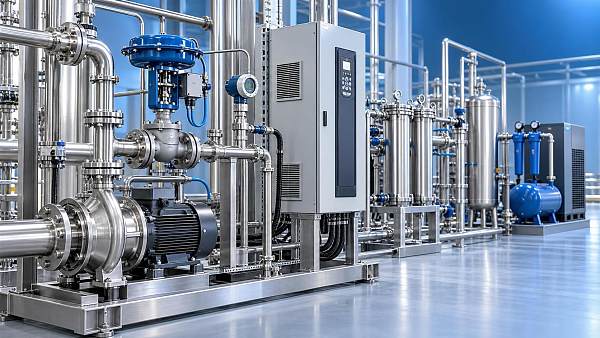
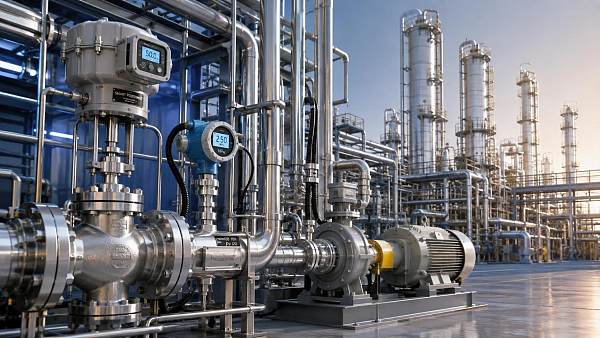
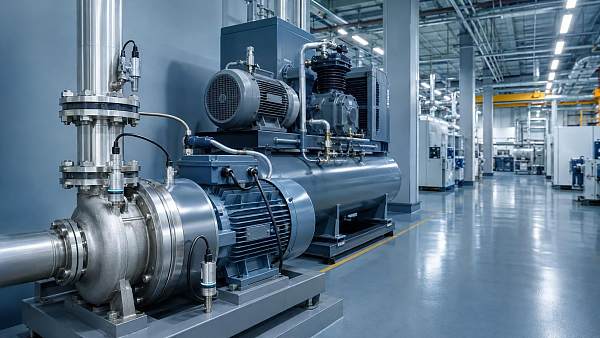
FCSM observes this shift through the “blood vessels and respiratory systems” of modern industry: centrifugal pumps, high-pressure plunger pumps, pneumatic control valves, air compressors, and filtration or separation equipment. These assets often consume significant energy, influence product quality, and determine whether a production line can run reliably for 8,000 hours per year.
Why 2026 Manufacturing Automation Must Include Fluid Control
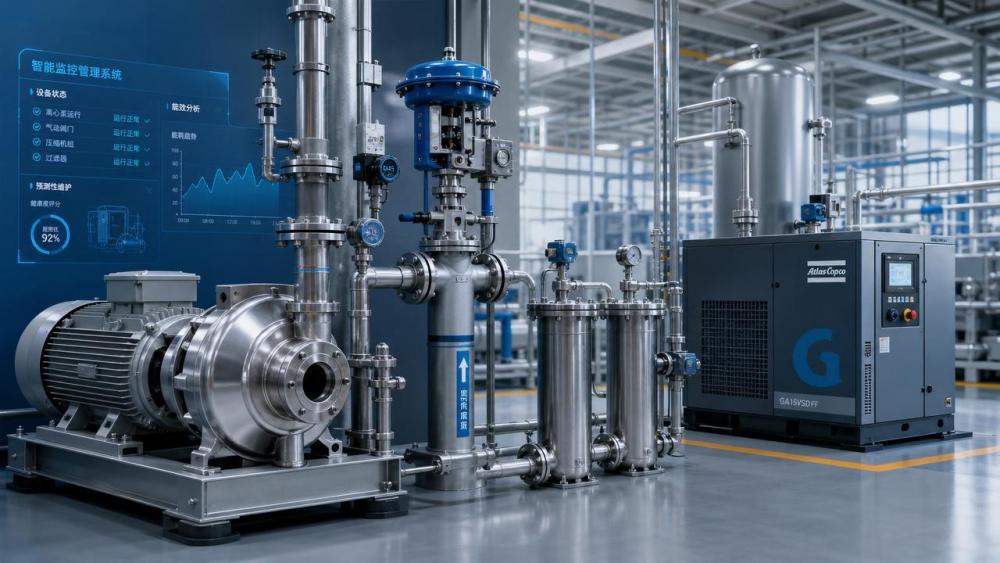
Many enterprises still treat pumps, valves, compressors, and filtration systems as utility equipment. In 2026, that view is becoming outdated. Industrial automation solutions for manufacturing increasingly depend on real-time flow, pressure, temperature, vibration, air demand, and membrane differential pressure data.
A modern production site may operate dozens of pump sets, hundreds of control valves, and compressed air networks running at 6–10 bar. If these systems are not digitally supervised, hidden losses can accumulate through leakage, throttling loss, cavitation, unstable air pressure, and premature filter clogging.
From isolated equipment to connected production infrastructure
Traditional automation projects often focus on PLC cabinets, SCADA screens, and robotic work cells. These remain essential, but process industries also require intelligent mechanical assets. A pump operating outside its best efficiency point by 10–20% can increase energy use, vibration, and seal stress.
Smart pneumatic control valves can regulate flow with position feedback, diagnostic alerts, and configurable trim characteristics. Air compressor systems with permanent magnet variable frequency drives can adjust output to demand instead of wasting energy through unloading cycles.
Board-level drivers: cost, carbon, compliance, and continuity
Enterprise decision makers are asking 4 practical questions: Can the plant reduce energy intensity? Can unplanned downtime fall below critical thresholds? Can equipment data support compliance? Can capital projects deliver measurable payback within 12–36 months?
Industrial automation solutions for manufacturing answer these questions when they connect mechanical performance with business outcomes. The goal is not collecting more data, but converting data into fewer failures, lower lifecycle cost, and more stable production quality.
The following comparison shows how fluid-control automation changes the evaluation of core industrial assets across typical manufacturing environments.
The key conclusion is clear: automation value rises when core machinery is treated as an intelligent node. For decision makers, the strongest projects usually start with energy-heavy and uptime-critical assets rather than with cosmetic digital dashboards.
Core Building Blocks of Industrial Automation Solutions for Manufacturing
Effective industrial automation solutions for manufacturing combine hardware, control logic, data architecture, and lifecycle service. A plant may begin with 1 production line, 3 compressor rooms, or 20 critical pump sets, but the architecture should support expansion across the site.
The most robust systems use layered design. Field instruments capture signals; edge devices process fast alarms; PLC or DCS platforms execute control; supervisory systems visualize trends; maintenance platforms trigger work orders based on abnormal patterns.
1. Smart pumping and pressure management
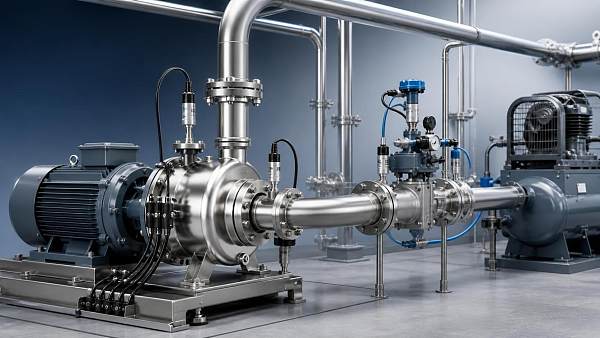
Centrifugal pumps are the hearts of many process plants. Automation should monitor flow, suction pressure, discharge pressure, motor current, vibration, bearing temperature, and seal conditions. Common sampling intervals range from 1 second for control loops to 5–15 minutes for asset health trends.
High-pressure plunger pumps require tighter protection because pressure may reach hundreds or thousands of bars depending on application. Pulsation dampening, overpressure shutdown, lubrication monitoring, and volumetric efficiency checks are essential for safe operation.
2. Pneumatic control valves as precision throttling points
Control valves translate automation signals into physical flow regulation. In corrosive, high-temperature, or high-pressure service, trim geometry, actuator sizing, and positioner performance determine whether the control loop remains stable.
For critical loops, decision makers should require diagnostic functions such as travel deviation alerts, response time monitoring, air supply pressure warnings, and partial stroke testing where safety considerations apply.
3. Compressed air as an automated energy system
Compressed air is often one of the most expensive utilities in a factory. A pressure reduction of 0.5–1.0 bar, when feasible, can reduce waste without compromising pneumatic actuator performance. Leak surveys should be repeated every 6–12 months.
In 2026, air compressor automation should include multi-unit sequencing, pressure band control, dew point monitoring, filter differential pressure, and demand forecasting. Two-stage compression and variable frequency technology are especially relevant for sites with fluctuating load profiles.
Typical control data points to specify
- Pump system: flow rate, pressure, vibration, temperature, motor load, valve position, and cavitation indicators.
- Valve system: command signal, actual travel, response time, air pressure, seat leakage trend, and cycle count.
- Compressor system: discharge pressure, power consumption, dew point, run hours, load percentage, and leak-loss estimation.
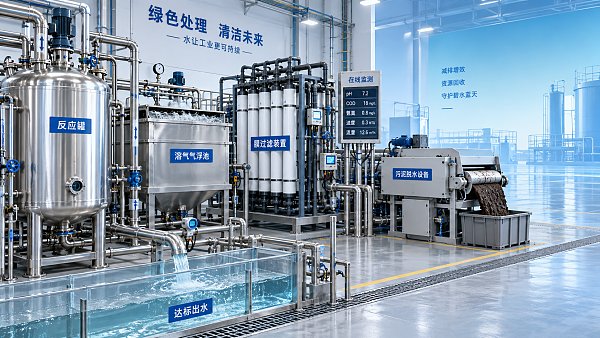
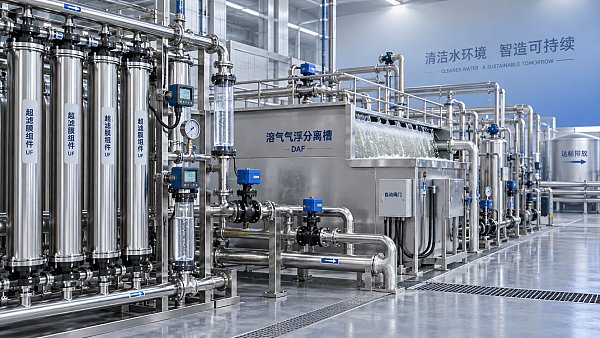
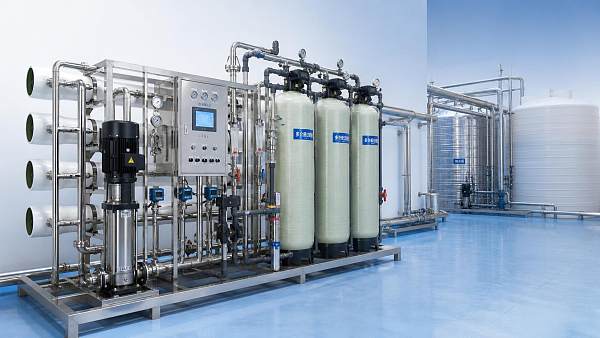
- Separation system: feed pressure, permeate quality, differential pressure, backwash frequency, and membrane cleaning interval.
These data points create a foundation for predictive maintenance. They also help procurement teams compare suppliers based on measurable performance rather than only purchase price.
How Enterprise Decision Makers Should Evaluate Automation Investments
Selecting industrial automation solutions for manufacturing requires a structured assessment. The lowest upfront cost may become expensive if integration is weak, energy data is incomplete, or spare parts are difficult to source during a 3–5 year operating cycle.
A practical evaluation should examine process risk, energy impact, interoperability, maintenance capability, and supplier support. For most facilities, a phased program over 8–24 weeks reduces disruption and provides evidence before wider rollout.
Procurement criteria beyond equipment price
The strongest automation proposals translate technical features into operational outcomes. Instead of asking only for a pump, valve, or compressor quotation, buyers should request a lifecycle automation package with integration boundaries, data protocols, acceptance criteria, and service responsibilities.
The table below outlines a decision framework that supports capital approval, supplier comparison, and risk review across multiple departments.
This framework helps prevent two common mistakes: buying isolated smart devices without data governance, and launching ambitious digital projects without mechanical reliability fundamentals. Both can reduce the return on automation capital.
Five-step implementation roadmap
- Map critical assets and rank them by downtime cost, energy use, safety relevance, and quality impact.
- Establish a baseline using 2–4 weeks of operating data, including pressure, flow, power, and alarm frequency.
- Select pilot systems such as 3 pump sets, 1 compressor room, or 1 filtration train with measurable improvement potential.
- Integrate controls, dashboards, and maintenance alerts, then validate performance through site acceptance testing.
- Scale the architecture in phases, using standardized tags, alarm rules, training modules, and spare parts planning.
A staged approach gives finance, operations, and engineering teams the same evidence base. It also makes industrial automation solutions for manufacturing easier to justify in annual capital planning.
Risk Areas Often Missed in Automation Projects
Automation failure rarely comes from a single controller or sensor. More often, problems arise from poor process understanding, weak commissioning, uncalibrated instruments, or missing maintenance ownership after handover.
For plants with corrosive media, high temperatures, explosive atmospheres, or 24-hour production schedules, risk review should begin before equipment specification. A valve trim mistake or undersized compressor dryer can create months of instability.
Cavitation, leakage, and unstable control loops
Cavitation in centrifugal pumps can damage impellers, increase vibration, and reduce efficiency. Engineers should review net positive suction head margin, suction piping layout, temperature conditions, and operating range before finalizing control logic.
Control valves can suffer from noise, flashing, erosion, or poor rangeability. In severe service, trim selection and actuator response are just as important as the controller tuning parameters.
Compressed air quality and hidden energy waste
A compressor may be automated, but the system can still waste energy if leaks remain unresolved. Plants should inspect hoses, fittings, valves, drains, and point-of-use regulators. Even small leaks can become material when multiplied across hundreds of connections.
Air quality also matters. Poor filtration or unstable dew point can damage pneumatic actuators and instruments. For sensitive production areas, dew point and oil carryover monitoring should be part of the automation scope.
Practical risk-control checklist
- Confirm operating envelopes for at least 3 conditions: startup, normal load, and peak demand.
- Define alarm priorities so operators do not face dozens of low-value alerts during a disturbance.
- Set maintenance triggers for vibration, differential pressure, valve travel deviation, and compressor temperature.
- Review spare parts for 12–18 months of operation, especially seals, bearings, filters, membranes, and valve positioners.
- Document cybersecurity boundaries between production networks, remote service access, and enterprise systems.
The best risk controls are simple, visible, and measurable. They allow plant teams to intervene early instead of discovering problems through emergency shutdowns or quality deviations.
Where FCSM Adds Strategic Value for 2026 Planning
FCSM supports enterprise decision makers by connecting machinery intelligence with the realities of process industry automation. Its focus is not limited to product news. It examines how fluid dynamics, thermodynamics, control architecture, and decarbonization interact in real factories.
For manufacturers evaluating industrial automation solutions for manufacturing, this perspective is valuable because the right decision depends on both equipment science and commercial timing. Energy-efficiency regulations, material supply shocks, and lifecycle service capability all influence project success.
Intelligence for technical and commercial decisions
FCSM’s strategic intelligence approach covers topics such as 3D CFD analysis of pump cavitation, control valve noise at critical flow velocity, and screw compressor rotor profile evolution. These insights help buyers ask better questions before approving specifications.
For suppliers, the same intelligence supports stronger market positioning. Energy-efficient pumps, smart pneumatic valves, and compressor systems can command greater credibility when supported by measurable lifecycle performance and transparent application guidance.
Frequently asked questions for decision makers
How should a manufacturer start if the plant has limited data?
Begin with a baseline audit. Measure 10–20 high-impact assets, review energy bills, collect alarm history, and interview operators. Even 2 weeks of structured data can reveal priority opportunities.
Which assets usually deliver the fastest automation payback?
Compressed air systems, oversized pumps, unstable control valves, and frequently cleaned filtration units often show early returns. Payback depends on operating hours, energy price, maintenance frequency, and downtime cost.
Is full factory automation required from day one?
No. Many successful industrial automation solutions for manufacturing begin with a controlled pilot. A 60–90 day pilot can validate data quality, operator acceptance, and measurable performance improvement.
The 2026 automation agenda is moving toward smarter, cleaner, and more resilient factories. Pumps, valves, compressors, and separation systems are no longer background utilities; they are decision-critical assets in the industrial data network.
For enterprise leaders, the winning approach is to connect capital investment with lifecycle performance: energy intensity, uptime, maintenance predictability, water recovery, and process stability. FCSM helps manufacturers and equipment suppliers understand these links with focused intelligence on fluid control and system machinery.
If your organization is planning industrial automation solutions for manufacturing in 2026, now is the right time to assess critical assets, define measurable targets, and compare solution pathways. Contact us to explore customized insights, discuss product details, and learn more about smarter fluid-control solutions for your next phase of manufacturing transformation.
Related News
 What drives industrial wastewater treatment cost per cubic meter?Dr. Alistair VaughnIndustrial wastewater treatment cost per cubic meter depends on influent load, effluent targets, energy, technology, and sludge disposal. Explore the key cost drivers.
 How to verify CE compliance for fluid separation equipmentDr. Alistair VaughnFluid separation equipment CE verification made practical: learn how to check declarations, risk assessments, technical files, pressure safety, and installation readiness.
 Separation equipment trends reshaping industrial wastewater treatmentDr. Alistair VaughnSeparation equipment trends are reshaping industrial wastewater treatment through smarter membranes, modular systems, digital monitoring, and resource recovery strategies.
 When stainless steel separation equipment is the right choice for hygienic processesDr. Alistair VaughnStainless steel separation equipment: discover when hygienic design, corrosion resistance, CIP cleanability, and lifecycle reliability make it the smart choice.
 What to assess before choosing a process industry automation supplierDr. Alistair VaughnChoose a process industry automation supplier with confidence. Assess engineering depth, lifecycle reliability, digital integration, energy performance, and safety before you buy.
 How process control innovation in refineries reduces unplanned shutdownsDr. Alistair VaughnDiscover how process control innovation in refineries detects early deviations, improves valve and equipment reliability, and helps prevent costly unplanned shutdowns.
 What should a zero liquid discharge systems integrator include in its proposal?Dr. Alistair VaughnZero liquid discharge systems integrator proposal checklist: compare guarantees, utilities, scope, controls, waste handling, and lifecycle risk before award.
 Industrial wastewater treatment plant design: sizing for flow and loadDr. Alistair VaughnIndustrial wastewater treatment plant design guide: size systems for peak flow, pollutant loads, reliability, compliance, and lower lifecycle costs.
 Can predictive maintenance and machinery diagnostics prevent downtime?Dr. Alistair VaughnPredictive maintenance machinery diagnostics help reduce unplanned downtime by detecting early equipment issues, improving reliability, and enabling smarter maintenance decisions.
 Can a digital transformation machinery platform cut unplanned downtime?Dr. Alistair VaughnDiscover how a digital transformation machinery platform connects asset data, maintenance workflows, and process insights to reduce unplanned downtime.
 How water treatment equipment sizing affects operating costsDr. Alistair VaughnWater treatment equipment sizing shapes energy, chemical, and maintenance costs. Learn how to balance flow, pressure, recovery, and reliability for efficient operation.
 When does food processing automation justify the upfront investment?Dr. Alistair VaughnIndustrial automation solutions for food processing: discover when automation delivers measurable ROI through higher throughput, lower waste, reliable utilities, and stronger food safety control.