Industrial Machinery Downtime: 7 Common Causes and Fixes




Industrial Machinery Downtime: 7 Common Causes and Fixes
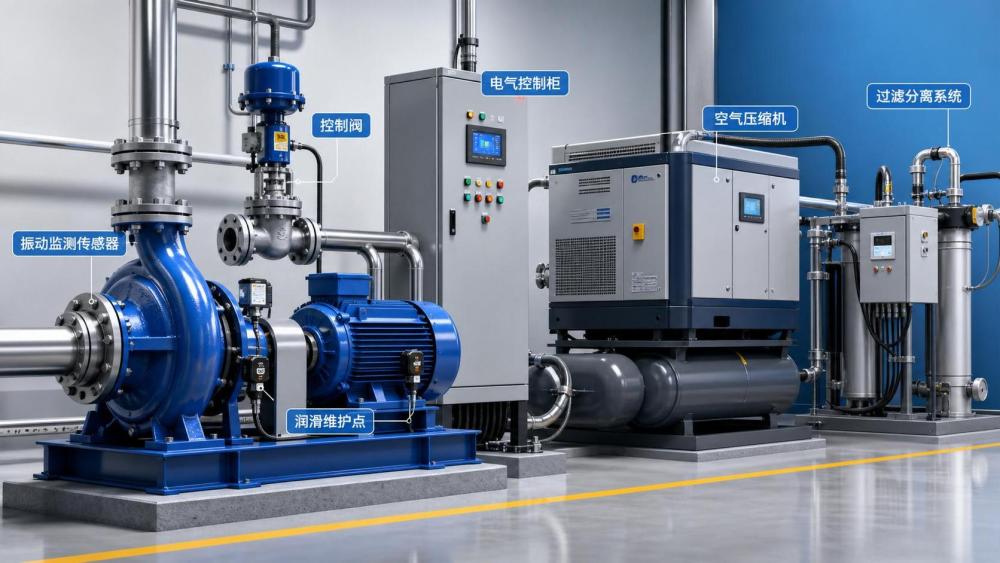
Industrial machinery downtime can quietly drain output, raise maintenance costs, and disrupt safety on the factory floor.
For daily operations, the real challenge is not only fixing failures fast.
It is learning why industrial machinery stops, then removing repeat causes before they spread across shifts, lines, and connected equipment.
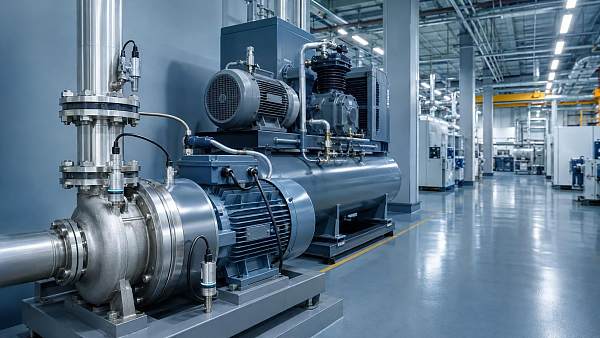
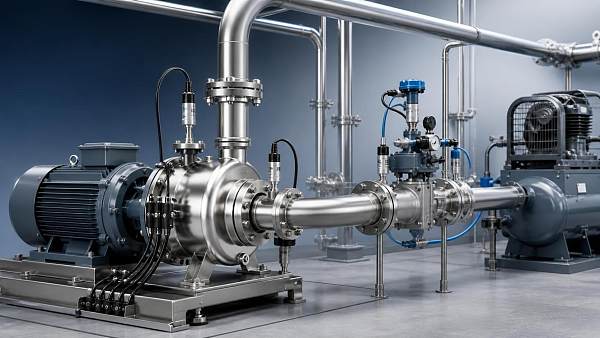
This matters even more in pump sets, control valves, compressors, and separation systems.
These machines support flow, pressure, air supply, and product quality at the same time.
When one asset fails, the effect often reaches upstream and downstream units within minutes.
From a practical maintenance view, most industrial machinery downtime comes from a small group of repeated problems.
Once these patterns are clear, troubleshooting becomes faster and reliability becomes easier to improve.
1. Poor Preventive Maintenance
The most common cause of industrial machinery downtime is still missed routine maintenance.
Filters clog, bearings dry out, seals age, belts loosen, and calibration drifts without obvious warning.
In pumps and compressors, delayed servicing often shows up as vibration, heat, or unstable flow.
In control valves, the signal may be hunting, sticking, or poor response to setpoint changes.
Practical fix
- Build a simple maintenance calendar by runtime hours, not by memory.
- Track lubrication, filter replacement, seal inspection, and alignment checks.
- Use a checklist at shift handover to catch small changes early.
- Review repeat failures monthly and adjust the schedule based on actual wear.
This approach reduces unplanned stops and gives industrial machinery a more stable operating window.
2. Lubrication Problems
Many industrial machinery failures begin with poor lubrication, even in otherwise well-maintained plants.
Too little grease causes friction and wear.
Too much grease can overheat bearings and damage seals.
The wrong oil grade creates film breakdown under load or high temperature.
Contaminated lubricant adds another risk, especially where dust, water, or chemicals are present.
Practical fix
- Match lubricant type to OEM guidance and real operating conditions.
- Label lubrication points clearly to avoid cross-use mistakes.
- Store oil and grease in sealed, clean containers.
- Monitor temperature and noise after relubrication to confirm the result.
A basic lubrication discipline often delivers one of the fastest wins against industrial machinery downtime.
3. Electrical Supply and Control Faults
Electrical issues are a major reason industrial machinery stops without warning.
Voltage imbalance, loose terminals, failed relays, sensor drift, and damaged cables can all trip a machine.
Variable frequency drives and smart positioners improve efficiency, but they also add diagnostic complexity.
In recent years, this has become a more visible source of industrial machinery downtime.
Warning signs
- Unexpected trips during startup
- Intermittent alarms with no obvious mechanical issue
- Slow actuator movement or unstable motor speed
- Heat around panels, terminals, or drives
Practical fix
Inspect power quality, tighten connections, verify grounding, and test sensors against known values.
Keep control drawings current, because troubleshooting slows down when field wiring no longer matches documentation.
4. Misalignment and Excessive Vibration
Misalignment is one of the quietest causes of industrial machinery downtime.
A machine may still run, but the damage grows in couplings, bearings, shafts, and seals.
Vibration then spreads into nearby equipment and shortens component life across the line.
Pumps, fans, and compressors are especially vulnerable after installation, overhaul, or pipework changes.
Practical fix
- Check soft foot, base condition, and coupling alignment after maintenance work.
- Verify pipe strain is not pulling rotating equipment out of position.
- Use vibration trending, even with simple handheld tools.
- Do not ignore small changes in sound, heat, or shaft movement.
This is one of the most cost-effective reliability habits for industrial machinery in continuous service.
5. Contamination and Blockage
Contamination drives a large share of industrial machinery downtime in fluid and gas systems.
Particles, sludge, scale, moisture, and oil carryover can block flow paths and damage internals.
In centrifugal pumps, solids may erode impellers or increase cavitation risk.
In air systems, wet compressed air can upset valves, instruments, and downstream tools.
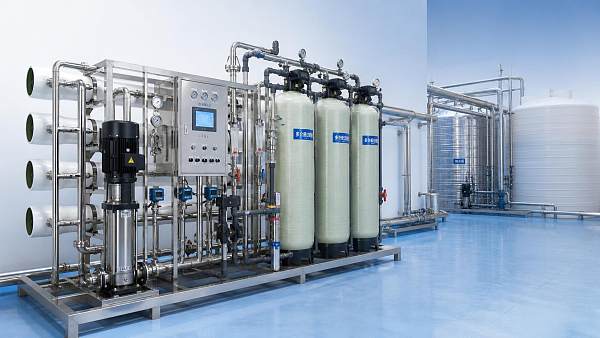
In filtration equipment, blockage often appears first as pressure loss and lower throughput.
Practical fix
Inspect strainers, filters, separators, drains, and suction conditions on a fixed routine.
Track pressure differential across filters, because it reveals clogging earlier than visible inspection.
For industrial machinery handling variable media, contamination control should be treated as a core operating task.
6. Operator Error and Inconsistent Procedures
Not every industrial machinery failure comes from the machine itself.
Unexpected downtime often starts with skipped steps, rushed startup, poor isolation, or wrong setpoint changes.
This is common where procedures exist, but daily practice depends too much on individual habit.
The issue becomes sharper when new staff, temporary labor, or mixed-shift teams are involved.
Practical fix
- Standardize startup, shutdown, cleaning, and fault reset steps.
- Keep instructions short, visible, and tied to the actual machine.
- Use brief refresher training after every major incident or equipment change.
- Record near-misses, not only full breakdowns.
This creates more consistent decisions and lowers avoidable industrial machinery downtime over time.
7. Running Equipment Outside Design Limits
Industrial machinery also fails when it is pushed beyond intended pressure, flow, temperature, or duty cycle.
This can happen during production peaks, process changes, or temporary workarounds that become permanent.
A pump may run far from best efficiency point.
A compressor may cycle too often.
A valve may throttle under severe cavitation or noise conditions.
These are classic paths to industrial machinery downtime and repeated repair costs.
Practical fix
Compare actual operating data with design ratings and process intent.
If overload conditions are normal, the real fix may be resizing, rerating, or upgrading the equipment.
That is often cheaper than repeated breakdown recovery.
A Fast Troubleshooting Checklist
When industrial machinery stops, a structured response saves time and prevents guesswork.
- Confirm the exact symptom, not just the alarm message.
- Check safety status, isolation, and energy sources first.
- Review recent changes in load, material, settings, or maintenance work.
- Inspect lubrication, vibration, temperature, and contamination points.
- Verify electrical and control signals before replacing parts.
- Log the root cause and action taken before restart.
This simple sequence makes industrial machinery troubleshooting more repeatable across teams and shifts.
How to Reduce Future Downtime
The long-term answer to industrial machinery downtime is not one repair.
It is a steady mix of preventive maintenance, operating discipline, clean data, and condition monitoring.
For plants using pumps, valves, compressors, and filtration systems, this also means watching the whole process, not one asset alone.
Flow instability, cavitation, air quality, and separation efficiency often signal equipment stress before a shutdown occurs.
In practice, the most reliable sites treat industrial machinery performance as an operating system, not a maintenance event.
Start with the seven causes above, fix the repeat offenders, and turn each stoppage into a better standard for the next run.
Related News
 What drives industrial wastewater treatment cost per cubic meter?Dr. Alistair VaughnIndustrial wastewater treatment cost per cubic meter depends on influent load, effluent targets, energy, technology, and sludge disposal. Explore the key cost drivers.
 How to verify CE compliance for fluid separation equipmentDr. Alistair VaughnFluid separation equipment CE verification made practical: learn how to check declarations, risk assessments, technical files, pressure safety, and installation readiness.
 Separation equipment trends reshaping industrial wastewater treatmentDr. Alistair VaughnSeparation equipment trends are reshaping industrial wastewater treatment through smarter membranes, modular systems, digital monitoring, and resource recovery strategies.
 When stainless steel separation equipment is the right choice for hygienic processesDr. Alistair VaughnStainless steel separation equipment: discover when hygienic design, corrosion resistance, CIP cleanability, and lifecycle reliability make it the smart choice.
 What to assess before choosing a process industry automation supplierDr. Alistair VaughnChoose a process industry automation supplier with confidence. Assess engineering depth, lifecycle reliability, digital integration, energy performance, and safety before you buy.
 How process control innovation in refineries reduces unplanned shutdownsDr. Alistair VaughnDiscover how process control innovation in refineries detects early deviations, improves valve and equipment reliability, and helps prevent costly unplanned shutdowns.
 What should a zero liquid discharge systems integrator include in its proposal?Dr. Alistair VaughnZero liquid discharge systems integrator proposal checklist: compare guarantees, utilities, scope, controls, waste handling, and lifecycle risk before award.
 Industrial wastewater treatment plant design: sizing for flow and loadDr. Alistair VaughnIndustrial wastewater treatment plant design guide: size systems for peak flow, pollutant loads, reliability, compliance, and lower lifecycle costs.
 Can predictive maintenance and machinery diagnostics prevent downtime?Dr. Alistair VaughnPredictive maintenance machinery diagnostics help reduce unplanned downtime by detecting early equipment issues, improving reliability, and enabling smarter maintenance decisions.
 Can a digital transformation machinery platform cut unplanned downtime?Dr. Alistair VaughnDiscover how a digital transformation machinery platform connects asset data, maintenance workflows, and process insights to reduce unplanned downtime.
 How water treatment equipment sizing affects operating costsDr. Alistair VaughnWater treatment equipment sizing shapes energy, chemical, and maintenance costs. Learn how to balance flow, pressure, recovery, and reliability for efficient operation.
 When does food processing automation justify the upfront investment?Dr. Alistair VaughnIndustrial automation solutions for food processing: discover when automation delivers measurable ROI through higher throughput, lower waste, reliable utilities, and stronger food safety control.