Industrial Predictive Maintenance: 7 Early Failure Signals to Track




Industrial Predictive Maintenance: 7 Early Failure Signals to Track
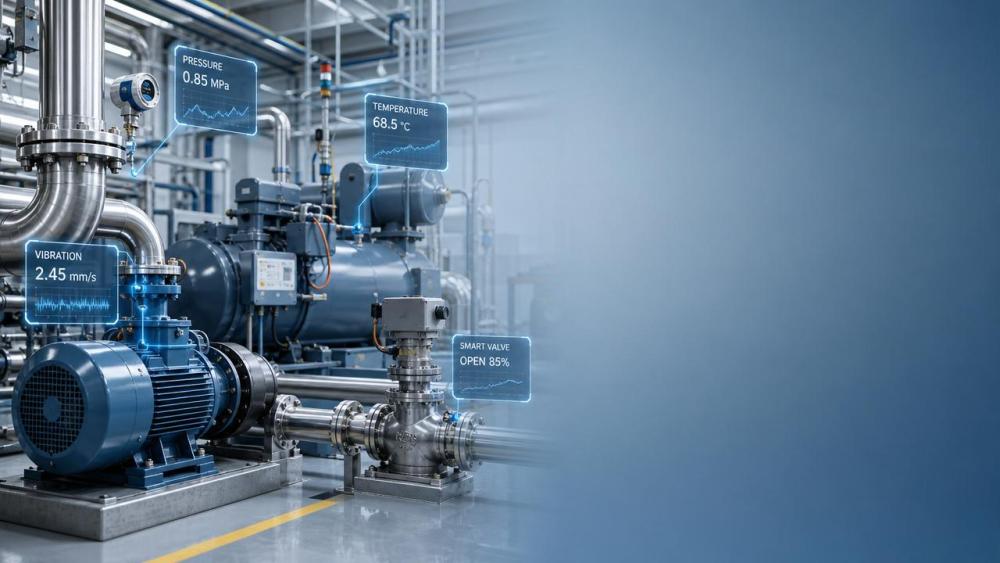
In industrial operations, equipment rarely fails without warning.
Small shifts in vibration, temperature, pressure, noise, or power use usually show up first.
That is where industrial predictive maintenance becomes practical, not theoretical.
It helps turn weak signals into service decisions before a shutdown spreads across the line.
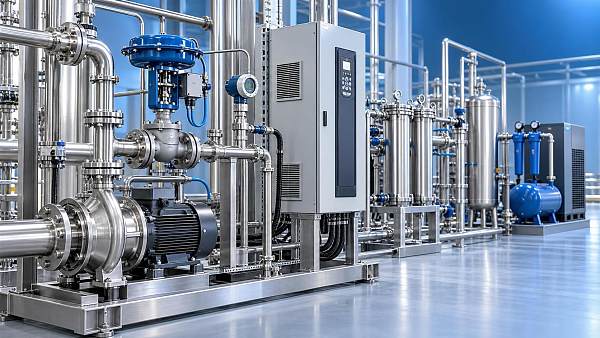
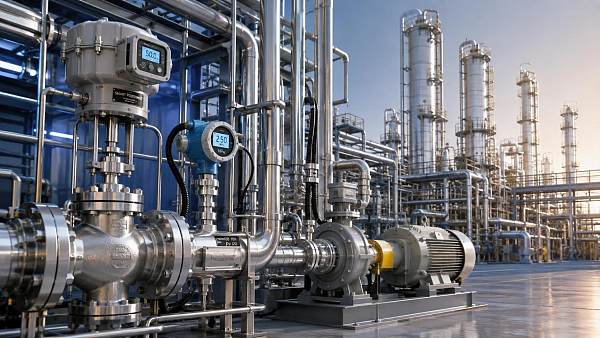
For pump sets, smart valves, compressors, and separation equipment, timing matters as much as diagnosis.
A bearing issue caught early is routine.
The same issue ignored can become seal damage, rotor wear, process instability, and a hard customer call.
The seven signals below are worth tracking because they appear across many asset types and operating conditions.
They also fit real service work, where data quality, response speed, and clear action matter every day.
1. Rising Vibration Levels
Vibration is often the first reliable sign in industrial predictive maintenance.
A steady increase can point to imbalance, misalignment, looseness, bearing wear, or cavitation.
In centrifugal pumps, changes near the bearing housing deserve quick review.
In compressors, vibration shifts may reflect rotor issues or coupling problems.
The key is trend direction, not one isolated reading.
A machine can still sit below alarm limits and already be moving toward failure.
- Compare overall velocity with historical baseline.
- Check frequency spectrum for bearing or shaft signatures.
- Confirm whether process load changed before assuming mechanical damage.
In practical field work, this is one of the fastest ways to prioritize inspection routes.
2. Abnormal Temperature Drift
Heat tells a clear story when friction, blockage, or poor cooling starts to build.
Temperature drift is especially useful in industrial predictive maintenance because it is easy to trend.
A motor running hotter than normal may indicate overload, insulation decline, or airflow restriction.
A valve actuator warming up can hint at excessive cycling or internal resistance.
Filter systems also show thermal clues when fouling pushes pumps and motors harder.
What matters is context.
Seasonal weather, enclosure conditions, and duty cycle can all move temperature upward.
Still, consistent deviation from a stable operating range should not be ignored.
- Trend bearing, motor, and discharge temperatures separately.
- Link thermal data with lubrication, cooling flow, and load conditions.
- Escalate when temperature rises faster than process demand explains.
3. Pressure Instability and Flow Deviation
Pressure and flow changes often expose hidden problems before a hard trip occurs.
This signal is critical for industrial predictive maintenance in pumps, valves, and filtration lines.
A falling discharge pressure may indicate impeller wear, internal leakage, or suction trouble.
Unstable valve response can show positioner drift, sticking trim, or poor instrument air quality.
In membrane systems, rising differential pressure usually points to fouling or blockage.
From a service perspective, pressure data becomes more useful when paired with operating setpoints.
A process upset can mimic equipment failure.
That is why verification across the full loop is so important.
- Watch for pressure hunting, not just pressure loss.
- Review valve travel against actual flow response.
- Flag repeated operator adjustments as a maintenance clue.
4. Unusual Noise Patterns
Noise is easy to dismiss because many industrial sites are already loud.
Even so, unusual sound remains a valuable industrial predictive maintenance input.
A sharp hiss may suggest air leakage or valve seat damage.
A grinding tone can point to bearing distress.
A crackling sound in pumps may signal cavitation beginning inside the casing.
What makes this signal useful is speed.
Technicians often hear a problem before they see a serious trend in the dashboard.
Acoustic tools improve consistency, but disciplined listening still matters.
When a familiar machine suddenly sounds different, treat it as evidence, not background.
5. Higher Energy Consumption
Power draw is one of the most overlooked indicators in industrial predictive maintenance.
When equipment needs more energy to deliver the same output, efficiency is slipping somewhere.
For air compressor systems, this may come from leakage, poor controls, or internal wear.
For pumps, it may reflect hydraulic losses, fouling, or operation far from best efficiency point.
That also means energy data supports both reliability and decarbonization targets.
A small rise in kilowatts can become a large cost over months of continuous duty.
In service contracts, this creates a strong case for early intervention.
6. Lubrication and Oil Condition Changes
Lubrication problems can stay hidden until damage is already expensive.
That is why oil condition belongs near the center of industrial predictive maintenance.
Metal particles, viscosity shift, water contamination, or oxidation each tell a different story.
In compressors, oil quality directly affects wear, cooling, and sealing behavior.
In gear-driven equipment, poor lubrication quickly raises vibration and temperature together.
The most useful approach is not simply changing oil on schedule.
It is tracking condition and matching action to actual equipment stress.
- Sample from consistent points and operating states.
- Look for particle trend, not just one lab report.
- Cross-check oil data with filter condition and seal health.
This usually prevents secondary damage that is much harder to explain after failure.
7. Repeated Alarms, Trips, or Control Corrections
Not every early warning comes from a sensor trend.
Repeated alarms, nuisance trips, and constant control corrections often reveal a system losing stability.
This pattern is highly valuable in industrial predictive maintenance because it connects equipment behavior with process impact.
For example, a control valve that keeps overshooting may not be sized well, tuned well, or moving freely.
A pump that trips on overload once a week is already giving notice.
The problem may be intermittent, but the pattern is real.
In actual service operations, alarm history often exposes weak assets faster than manual rounds alone.
How to Turn Signals Into Action
Tracking signals is only half of industrial predictive maintenance.
The real value comes from converting data into clear next steps.
A simple framework works well across mixed equipment fleets.
- Set a clean baseline after overhaul or confirmed healthy operation.
- Trend condition data weekly or by runtime, not only by calendar date.
- Rank signals by safety, process impact, and failure cost.
- Link each recurring signal to a standard inspection action.
- Document findings so future visits start with evidence, not guesswork.
This approach is especially useful in broad machinery portfolios like those covered by FCSM.
Pump hydraulics, valve control behavior, compressor efficiency, and filtration performance all produce different clues.
Still, the maintenance logic stays consistent.
Watch the trend, confirm the cause, act before the damage multiplies.
Final Takeaway
Industrial predictive maintenance works best when early signals are treated as decisions waiting to happen.
Rising vibration, heat, unstable pressure, unusual noise, higher energy use, oil changes, and repeated alarms all matter.
None should be viewed in isolation.
The strongest results come from combining trends, operating context, and disciplined follow-up.
Start with the assets that fail most often or disrupt production most severely.
Build baseline data, define response rules, and review small changes before they become large failures.
That is how industrial predictive maintenance becomes a practical reliability advantage, not just another reporting layer.
Related News
 What drives industrial wastewater treatment cost per cubic meter?Dr. Alistair VaughnIndustrial wastewater treatment cost per cubic meter depends on influent load, effluent targets, energy, technology, and sludge disposal. Explore the key cost drivers.
 How to verify CE compliance for fluid separation equipmentDr. Alistair VaughnFluid separation equipment CE verification made practical: learn how to check declarations, risk assessments, technical files, pressure safety, and installation readiness.
 Separation equipment trends reshaping industrial wastewater treatmentDr. Alistair VaughnSeparation equipment trends are reshaping industrial wastewater treatment through smarter membranes, modular systems, digital monitoring, and resource recovery strategies.
 When stainless steel separation equipment is the right choice for hygienic processesDr. Alistair VaughnStainless steel separation equipment: discover when hygienic design, corrosion resistance, CIP cleanability, and lifecycle reliability make it the smart choice.
 What to assess before choosing a process industry automation supplierDr. Alistair VaughnChoose a process industry automation supplier with confidence. Assess engineering depth, lifecycle reliability, digital integration, energy performance, and safety before you buy.
 How process control innovation in refineries reduces unplanned shutdownsDr. Alistair VaughnDiscover how process control innovation in refineries detects early deviations, improves valve and equipment reliability, and helps prevent costly unplanned shutdowns.
 What should a zero liquid discharge systems integrator include in its proposal?Dr. Alistair VaughnZero liquid discharge systems integrator proposal checklist: compare guarantees, utilities, scope, controls, waste handling, and lifecycle risk before award.
 Industrial wastewater treatment plant design: sizing for flow and loadDr. Alistair VaughnIndustrial wastewater treatment plant design guide: size systems for peak flow, pollutant loads, reliability, compliance, and lower lifecycle costs.
 Can predictive maintenance and machinery diagnostics prevent downtime?Dr. Alistair VaughnPredictive maintenance machinery diagnostics help reduce unplanned downtime by detecting early equipment issues, improving reliability, and enabling smarter maintenance decisions.
 Can a digital transformation machinery platform cut unplanned downtime?Dr. Alistair VaughnDiscover how a digital transformation machinery platform connects asset data, maintenance workflows, and process insights to reduce unplanned downtime.
 How water treatment equipment sizing affects operating costsDr. Alistair VaughnWater treatment equipment sizing shapes energy, chemical, and maintenance costs. Learn how to balance flow, pressure, recovery, and reliability for efficient operation.
 When does food processing automation justify the upfront investment?Dr. Alistair VaughnIndustrial automation solutions for food processing: discover when automation delivers measurable ROI through higher throughput, lower waste, reliable utilities, and stronger food safety control.