Predictive Maintenance ROI: What Impacts Payback Most?




Predictive maintenance ROI starts with the right financial question
Predictive maintenance ROI is often discussed as a technology outcome. In practice, it is a cash conversion question.
The real issue is not whether sensors collect data. It is whether failures, waste, and service delays shrink fast enough to improve margins.
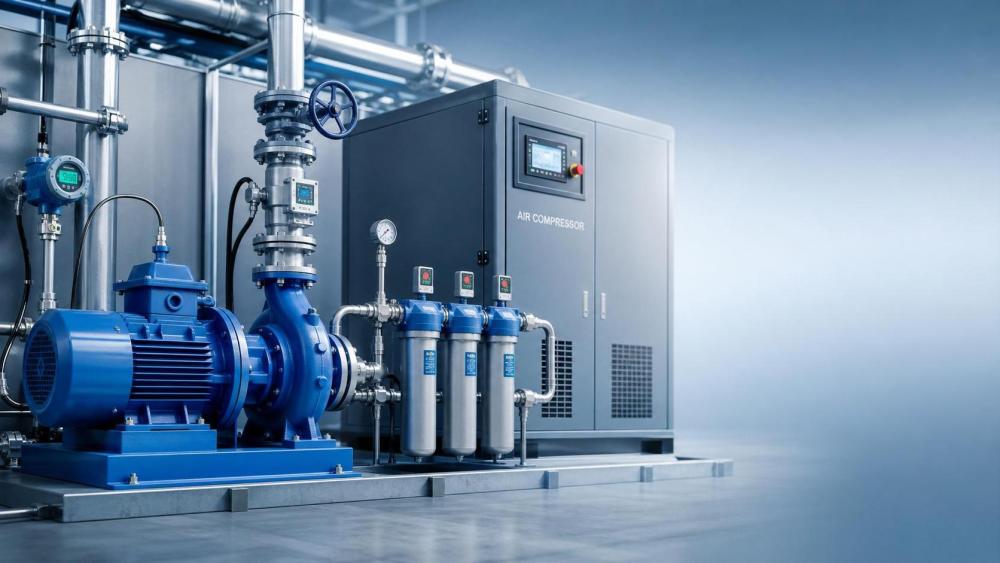
That matters most in fluid-intensive operations. Pumps, control valves, compressors, and filtration systems rarely fail at convenient moments.
A single bearing fault, cavitation event, valve stiction trend, or compressor efficiency drop can ripple into lost throughput and expensive emergency work.
This is why predictive maintenance ROI is usually strongest around critical assets, not across every machine at once.
FCSM tracks these asset classes closely because reliability, energy efficiency, and digitalization now move together in global process industries.
For approval decisions, the useful question becomes simple: which factors shorten payback most, and which assumptions distort the business case?
What actually drives predictive maintenance ROI faster than expected?
The fastest payback usually comes from avoided unplanned downtime. Everything else matters, but downtime dominates where production bottlenecks are tight.
If one centrifugal pump feeds a continuous process, one failure may stop an entire line. The value is not the repair cost alone.
It includes lost output, scrap, restart losses, overtime labor, and sometimes contract penalties.
The second major driver is energy. Air compressors, variable load pumps, and throttling valves can hide efficiency losses for months.
When predictive analytics identifies fouling, leakage, poor control behavior, or off-design operation, savings show up in utility bills quickly.
Asset life extension is another strong contributor, though it pays back more gradually. Bearings, seals, membranes, and valve trims last longer when interventions happen earlier.
Maintenance productivity also matters. Planned shutdown work costs less than emergency response, rushed procurement, and repeated troubleshooting.
In actual projects, predictive maintenance ROI improves fastest when these gains overlap on one critical asset family.
- High downtime cost per hour
- High energy intensity per unit of output
- Frequent repeat failures or unstable process conditions
- Long spare part lead times
- Safety, compliance, or water discharge consequences
Where those conditions exist together, predictive maintenance ROI can become visible within budgeting cycles, not only over a full asset life.
Which equipment usually pays back first in fluid and gas systems?
Not every machine deserves the same monitoring depth. More common wins come from assets that combine operational criticality with measurable failure patterns.
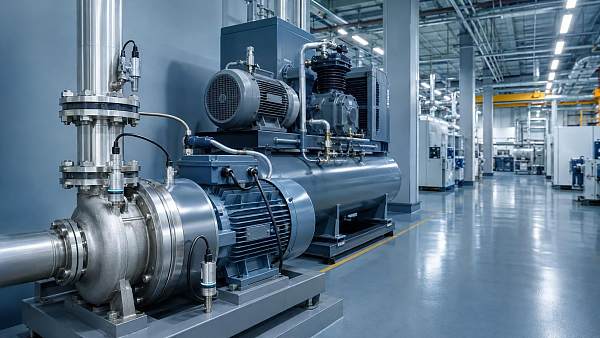
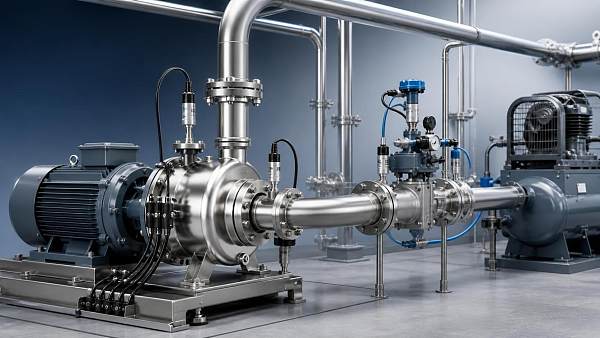
Industrial pumps are often first candidates. Cavitation, seal wear, vibration growth, and hydraulic imbalance can be detected before failure becomes visible.
Air compressors are another strong case because reliability and energy cost are tightly linked. Small efficiency drifts become large annual expenses.
Smart pneumatic control valves can also produce strong predictive maintenance ROI, especially where unstable flow control causes waste, quality loss, or excess steam use.
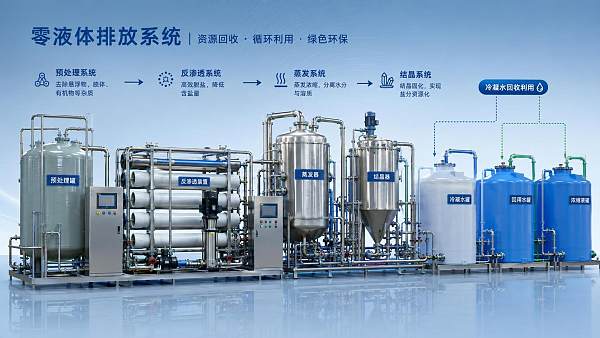
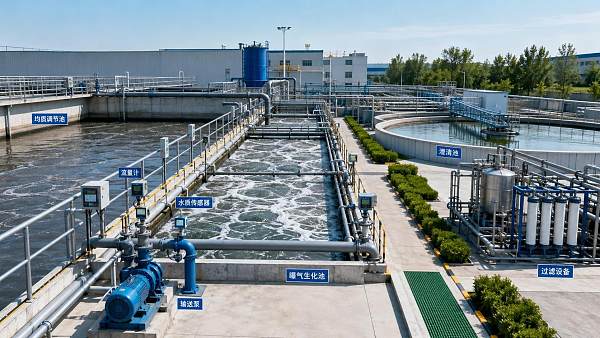
Filtration and separation equipment often gets overlooked. Yet membrane fouling, pressure drop changes, and cleaning cycle instability directly affect throughput and treatment cost.
FCSM’s industry lens is useful here. It connects fluid dynamics, thermodynamics, and operating economics rather than treating maintenance as a separate function.
That perspective helps identify the best starting point: assets where condition signals map clearly to production and energy outcomes.
This kind of comparison keeps predictive maintenance ROI grounded in operational evidence rather than broad digital transformation language.
Why do some predictive maintenance ROI cases look strong on paper but disappoint later?
The most common problem is weak baselining. If failure history, maintenance cost, and energy loss are not measured correctly, savings get overstated.
Another issue is choosing assets that are easy to instrument but financially unimportant. Data quality may be excellent, yet payback remains slow.
Some business cases also count every alarm as avoided failure. That inflates predictive maintenance ROI and creates credibility problems later.
A better method is to count only validated interventions that changed maintenance timing, prevented downtime, or reduced energy consumption.
Integration cost is another blind spot. Sensors are only one line item.
Analytics setup, historian access, cybersecurity review, training, and workflow changes can be larger than hardware in mature plants.
Need-to-know context matters too. A cavitation signature in one pump train may signal a design issue, not a maintenance timing issue.
That is where domain intelligence becomes important. FCSM’s coverage of CFD behavior, valve noise, compressor thermodynamics, and energy regulations reflects this wider view.
Predictive maintenance ROI is strongest when operating context explains the signal, and when teams agree how to act on it.
How should payback be judged before approval?
A practical review should test three things: asset criticality, economic exposure, and execution readiness.
Asset criticality asks whether failure interrupts production, creates safety risk, or damages compliance performance.
Economic exposure asks how much cash is at risk through downtime, excess energy, spare parts, product loss, or water treatment penalties.
Execution readiness tests whether the site can actually respond to predictive alerts. If work orders cannot be scheduled, insights stay theoretical.
The table below is useful when comparing proposals or internal pilot candidates.
When these conditions are present, predictive maintenance ROI becomes a controllable operating model rather than a hopeful innovation project.
What payback timeline is realistic, and what usually shortens it?
There is no universal payback period, but many successful projects show value in phases rather than all at once.
Early value often comes from one avoided event or one measurable energy correction. Broader returns arrive after workflow discipline improves.
Payback tends to shorten when a project starts with a small number of high-consequence assets.
It also shortens when the chosen assets already have maintenance history, process data, and stable operating ownership.
More delayed returns are common when deployment starts across a broad fleet with mixed duty cycles and unclear accountability.
For general machinery, especially pumps and compressors, replacement demand is increasingly shaped by energy-efficiency regulation and carbon pressure.
That changes the ROI logic. Predictive maintenance ROI should be reviewed alongside motor efficiency, COP improvement, and life extension plans.
In other words, the strongest case is often not maintenance alone. It is maintenance plus performance optimization.
- Start with one bottleneck system, not every utility asset
- Use confirmed failure modes, not generic dashboards
- Track both avoided downtime and energy variance
- Review spare lead times and shutdown planning windows
- Recalculate predictive maintenance ROI after each intervention
So what should be reviewed next before moving forward?
A sound next step is to rank assets by financial exposure, not by instrument availability.
Then separate value into four lines: downtime avoidance, energy reduction, asset life extension, and maintenance labor efficiency.
That structure makes predictive maintenance ROI easier to defend because each benefit can be tested against plant records.
It also helps compare fluid machinery categories fairly. A compressor case may be energy led, while a pump case may be downtime led.
In practical terms, the best decisions usually come from combining maintenance history with engineering context.
That is why market intelligence from sources such as FCSM can support evaluation, especially where cavitation, valve control behavior, compressor efficiency, or filtration stability affect cost outcomes.
Predictive maintenance ROI is rarely won by buying the most sensors. It is won by choosing the right assets, the right signals, and the right response model.
The next review should confirm where one avoided failure or one efficiency correction would change cash flow fastest, then build the pilot around that evidence.
- smart pneumatic control valves
- compressor efficiency
- industrial pumps
- centrifugal pumps
- plunger pumps
- control valves
- pneumatic control valves
- air compressors
- filtration systems
- separation equipment
- fluid dynamics
- predictive maintenance
- energy efficiency
- digital transformation
- fluid machinery
- predictive maintenance ROI
Related News
 What drives industrial wastewater treatment cost per cubic meter?Dr. Alistair VaughnIndustrial wastewater treatment cost per cubic meter depends on influent load, effluent targets, energy, technology, and sludge disposal. Explore the key cost drivers.
 How to verify CE compliance for fluid separation equipmentDr. Alistair VaughnFluid separation equipment CE verification made practical: learn how to check declarations, risk assessments, technical files, pressure safety, and installation readiness.
 Separation equipment trends reshaping industrial wastewater treatmentDr. Alistair VaughnSeparation equipment trends are reshaping industrial wastewater treatment through smarter membranes, modular systems, digital monitoring, and resource recovery strategies.
 When stainless steel separation equipment is the right choice for hygienic processesDr. Alistair VaughnStainless steel separation equipment: discover when hygienic design, corrosion resistance, CIP cleanability, and lifecycle reliability make it the smart choice.
 What to assess before choosing a process industry automation supplierDr. Alistair VaughnChoose a process industry automation supplier with confidence. Assess engineering depth, lifecycle reliability, digital integration, energy performance, and safety before you buy.
 How process control innovation in refineries reduces unplanned shutdownsDr. Alistair VaughnDiscover how process control innovation in refineries detects early deviations, improves valve and equipment reliability, and helps prevent costly unplanned shutdowns.
 What should a zero liquid discharge systems integrator include in its proposal?Dr. Alistair VaughnZero liquid discharge systems integrator proposal checklist: compare guarantees, utilities, scope, controls, waste handling, and lifecycle risk before award.
 Industrial wastewater treatment plant design: sizing for flow and loadDr. Alistair VaughnIndustrial wastewater treatment plant design guide: size systems for peak flow, pollutant loads, reliability, compliance, and lower lifecycle costs.
 Can predictive maintenance and machinery diagnostics prevent downtime?Dr. Alistair VaughnPredictive maintenance machinery diagnostics help reduce unplanned downtime by detecting early equipment issues, improving reliability, and enabling smarter maintenance decisions.
 Can a digital transformation machinery platform cut unplanned downtime?Dr. Alistair VaughnDiscover how a digital transformation machinery platform connects asset data, maintenance workflows, and process insights to reduce unplanned downtime.
 How water treatment equipment sizing affects operating costsDr. Alistair VaughnWater treatment equipment sizing shapes energy, chemical, and maintenance costs. Learn how to balance flow, pressure, recovery, and reliability for efficient operation.
 When does food processing automation justify the upfront investment?Dr. Alistair VaughnIndustrial automation solutions for food processing: discover when automation delivers measurable ROI through higher throughput, lower waste, reliable utilities, and stronger food safety control.