Predictive Maintenance Software ROI: Cost Factors to Review




Predictive Maintenance Software ROI: Cost Factors to Review
For enterprise decision-makers evaluating predictive maintenance software, ROI depends on far more than license fees alone.
From sensor integration and data quality to downtime reduction, labor efficiency, and asset lifespan, every cost factor shapes the true business case.
This article reviews the financial and operational variables worth checking before investment.
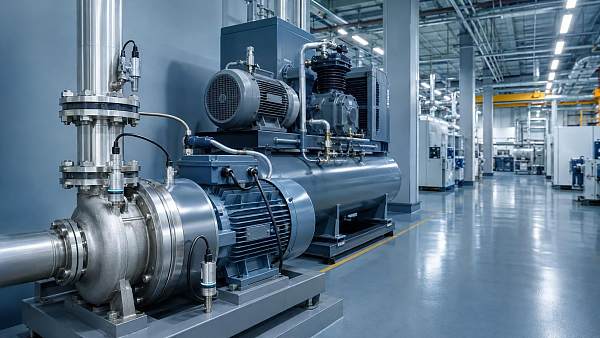
In process industries, that matters even more for pumps, valves, compressors, and separation equipment with high uptime pressure.
Why ROI in Predictive Maintenance Software Is Often Misread
Many teams start with software price and stop there.
That is usually the fastest way to underestimate total investment and overestimate short-term returns.
Predictive maintenance software creates value through better maintenance timing, fewer failures, and improved asset decisions.
But those gains depend on plant readiness.
A factory with connected assets, clean historian data, and disciplined work orders will see benefits faster.
A site with siloed systems may need a longer ramp.
From a procurement view, the right question is simple.
What total cost and measurable benefit will this predictive maintenance software deliver over twelve to thirty-six months?
Direct Cost Factors to Review Before Purchase
The first layer is direct spending.
These line items shape the starting ROI model for predictive maintenance software.
Software Licensing and Pricing Model
Check whether pricing is based on assets, users, sites, data points, or analytics modules.
A low entry fee can become expensive when more pumps, compressors, or valve stations are added.
Implementation and Integration Costs
Integration is often the hidden budget driver.
You may need connectors for SCADA, PLC, CMMS, ERP, historians, and edge devices.
If integration work is custom, costs rise quickly and project timelines stretch.
Sensors, Connectivity, and Edge Hardware
Some predictive maintenance software assumes the sensing layer already exists.
In reality, many sites still need vibration, temperature, pressure, flow, acoustic, or power monitoring upgrades.
For rotating equipment, this gap can be significant.
Training and Change Management
A platform nobody trusts will not produce ROI.
Budget for operator training, maintenance workflows, alarm review rules, and role-based adoption support.
In actual operations, this is where many digital projects slow down.
Operational Variables That Shape Real ROI
The stronger business case usually comes from avoided losses, not from software features alone.
That is why operational context matters when comparing predictive maintenance software vendors.
Cost of Downtime
Start with the financial impact of one unplanned failure.
Include lost production, quality losses, energy waste, emergency labor, expedited parts, and restart delays.
For a critical air compressor or process pump, a single event may justify the project.
Maintenance Labor Efficiency
Predictive maintenance software can reduce unnecessary inspections and calendar-based interventions.
That frees skilled technicians for root-cause work and planned shutdown tasks.
The value is not always headcount reduction.
More often, it is labor redeployment toward higher-value activity.
Asset Life Extension
Condition-based intervention helps prevent secondary damage.
That matters for bearings, seals, impellers, motors, valve actuators, and compressor rotors.
Longer asset life improves capital efficiency and lowers replacement pressure.
Energy and Process Stability
This factor is increasingly important.
Degrading equipment often consumes more power before it fails.
For energy-intensive systems, predictive maintenance software can support both uptime and decarbonization goals.
Data Quality Risks That Can Distort the Business Case
Not every dataset is ready for predictive analytics.
This is where ROI models often become too optimistic.
If the incoming data is noisy, inconsistent, or incomplete, alert quality drops.
False positives increase review workload and weaken trust in the predictive maintenance software.
Ask vendors direct questions about model tuning, baseline periods, failure labeling, and confidence scoring.
Also review how the system handles intermittent connectivity and missing historical records.
A realistic pilot should test data readiness before enterprise rollout.
How to Compare Predictive Maintenance Software Vendors on Cost
Side-by-side comparisons work best when the evaluation structure is simple.
Use a consistent framework for each predictive maintenance software option.
This kind of scoring keeps vendor demos grounded in business outcomes.
It also exposes where a cheaper predictive maintenance software package may cost more over time.
A Practical ROI Checklist for Industrial Buyers
Before final approval, review these points in one decision sheet.
- Identify the critical assets where failure cost is highest.
- Estimate annual downtime losses by asset class.
- Map existing sensors, historians, and maintenance systems.
- Separate one-time costs from recurring costs.
- Model best-case, expected, and conservative savings.
- Require a pilot with clear success metrics.
- Define who will act on alerts and within what timeline.
- Review cybersecurity, data ownership, and support response terms.
In industrial environments, the software alone never closes the loop.
The operating model behind predictive maintenance software is what turns insight into savings.
Final Takeaway
The best predictive maintenance software is not simply the platform with the most features.
It is the option that fits your assets, data maturity, maintenance workflow, and financial targets.
For operators managing pumps, smart valves, compressors, and filtration systems, the strongest ROI usually comes from focused deployment.
Start with high-impact equipment, validate results, then expand based on proven value.
That approach lowers risk, improves adoption, and gives procurement teams a more defensible investment case.
When reviewing predictive maintenance software, a disciplined cost model will tell you much more than a polished demo ever can.
Related News
 What drives industrial wastewater treatment cost per cubic meter?Dr. Alistair VaughnIndustrial wastewater treatment cost per cubic meter depends on influent load, effluent targets, energy, technology, and sludge disposal. Explore the key cost drivers.
 How to verify CE compliance for fluid separation equipmentDr. Alistair VaughnFluid separation equipment CE verification made practical: learn how to check declarations, risk assessments, technical files, pressure safety, and installation readiness.
 Separation equipment trends reshaping industrial wastewater treatmentDr. Alistair VaughnSeparation equipment trends are reshaping industrial wastewater treatment through smarter membranes, modular systems, digital monitoring, and resource recovery strategies.
 When stainless steel separation equipment is the right choice for hygienic processesDr. Alistair VaughnStainless steel separation equipment: discover when hygienic design, corrosion resistance, CIP cleanability, and lifecycle reliability make it the smart choice.
 What to assess before choosing a process industry automation supplierDr. Alistair VaughnChoose a process industry automation supplier with confidence. Assess engineering depth, lifecycle reliability, digital integration, energy performance, and safety before you buy.
 How process control innovation in refineries reduces unplanned shutdownsDr. Alistair VaughnDiscover how process control innovation in refineries detects early deviations, improves valve and equipment reliability, and helps prevent costly unplanned shutdowns.
 What should a zero liquid discharge systems integrator include in its proposal?Dr. Alistair VaughnZero liquid discharge systems integrator proposal checklist: compare guarantees, utilities, scope, controls, waste handling, and lifecycle risk before award.
 Industrial wastewater treatment plant design: sizing for flow and loadDr. Alistair VaughnIndustrial wastewater treatment plant design guide: size systems for peak flow, pollutant loads, reliability, compliance, and lower lifecycle costs.
 Can predictive maintenance and machinery diagnostics prevent downtime?Dr. Alistair VaughnPredictive maintenance machinery diagnostics help reduce unplanned downtime by detecting early equipment issues, improving reliability, and enabling smarter maintenance decisions.
 Can a digital transformation machinery platform cut unplanned downtime?Dr. Alistair VaughnDiscover how a digital transformation machinery platform connects asset data, maintenance workflows, and process insights to reduce unplanned downtime.
 How water treatment equipment sizing affects operating costsDr. Alistair VaughnWater treatment equipment sizing shapes energy, chemical, and maintenance costs. Learn how to balance flow, pressure, recovery, and reliability for efficient operation.
 When does food processing automation justify the upfront investment?Dr. Alistair VaughnIndustrial automation solutions for food processing: discover when automation delivers measurable ROI through higher throughput, lower waste, reliable utilities, and stronger food safety control.