Predictive Maintenance Software: What ROI Looks Like in 2026




Predictive Maintenance Software: What ROI Looks Like in 2026
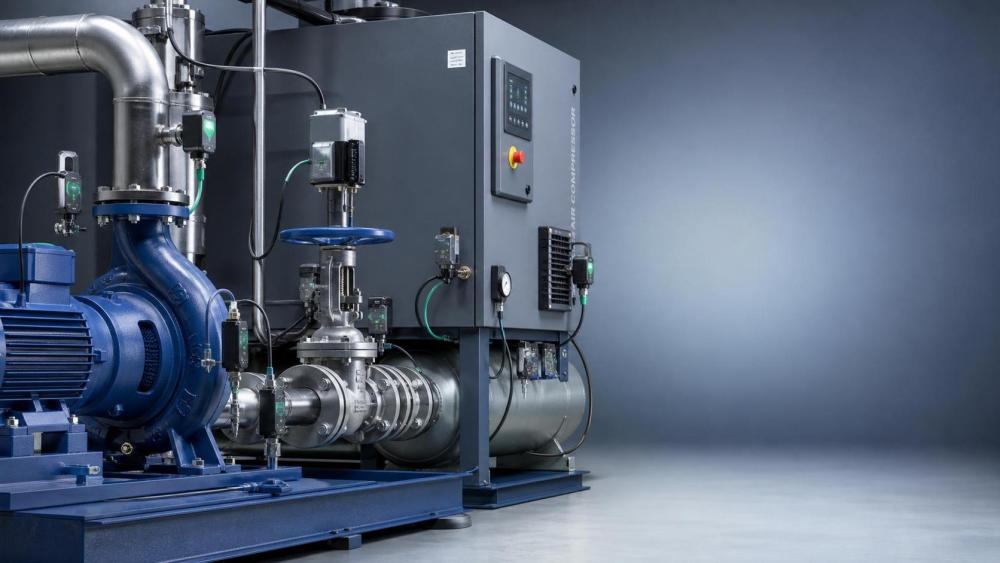
In 2026, predictive maintenance software is no longer judged by one metric.
Yes, fewer breakdowns still matter.
But the real business case is broader, and frankly, more interesting.
For operators of pumps, valves, compressors, and separation systems, returns now show up across the full asset lifecycle.
That includes energy use, spare parts, labor planning, uptime, and even capital allocation.
This shift matters because industrial machinery budgets are under pressure from every direction.
Energy remains expensive. Skilled maintenance labor is tight. Unplanned downtime costs more than it did three years ago.
At the same time, most plants already collect more equipment data than they actually use.
Predictive maintenance software turns that unused data into financial signals.
The question is not whether the technology works.
The real question is what measurable ROI looks like before approval, during rollout, and after the first year.
Why the ROI Conversation Has Changed
A few years ago, predictive maintenance software was often pitched as a maintenance tool.
In 2026, it behaves more like an operating margin tool.
That is a major difference when evaluating procurement.
Modern industrial assets are increasingly connected, but they are also increasingly expensive to run inefficiently.
A compressor drifting from optimal performance may not fail today.
Still, it can quietly destroy margins through wasted power and unstable throughput.
The same applies to cavitation risk in centrifugal pumps and leakage trends in control valves.
Predictive maintenance software detects those patterns earlier than periodic inspections can.
That means value appears before failure happens.
And that makes ROI easier to justify using financial terms, not just engineering language.
Where Predictive Maintenance Software Creates Measurable Value
The best ROI cases do not depend on a single dramatic failure event.
They come from several smaller improvements that compound over time.
1. Lower unplanned downtime
This is still the most visible return.
When predictive maintenance software flags abnormal vibration, temperature, pressure, or power signatures, teams can intervene earlier.
That reduces emergency shutdowns and secondary damage to connected equipment.
2. Lower energy waste
This is often the hidden profit pool.
Air compressors, pumping systems, and filtration trains rarely fail at peak inefficiency.
They usually keep running while consuming more energy than expected.
Predictive maintenance software helps identify that drift earlier.
3. Better spare parts planning
Many sites either overstock critical components or scramble when parts are unavailable.
Neither option is cheap.
With better failure forecasting, procurement timing becomes more deliberate.
That reduces rush freight, excess stock, and avoidable working capital.
4. Stronger labor productivity
Maintenance teams spend less time on blanket inspection routines.
They spend more time on work that actually reduces risk.
That improves wrench time and reduces overtime during equipment emergencies.
5. Smarter capital planning
Not every underperforming asset needs replacement this year.
Not every aging asset should be kept in service either.
Predictive maintenance software gives a better evidence base for repair, refurbish, or replace decisions.
What Good ROI Looks Like by Equipment Type
ROI is easier to validate when linked to actual failure modes.
In fluid and gas systems, the patterns are usually very specific.
In practice, the strongest predictive maintenance software deployments start with the most expensive recurring pain point.
That may be energy loss in compressors, seal failures in pumps, or unstable process control from valve degradation.
How to Evaluate ROI Before You Buy
A vendor demo can make every platform look impressive.
The harder part is verifying whether predictive maintenance software fits your operating economics.
A practical review should answer five questions:
- Which assets create the highest cost of unplanned downtime?
- Where is energy drift most likely to erode margins silently?
- What data already exists in SCADA, DCS, PLC, or historian systems?
- How much integration work is needed before useful alerts appear?
- Can the software link alerts to work orders and maintenance action?
This is where many ROI models become unrealistic.
They assume perfect data, instant user adoption, and zero process disruption.
A more reliable model starts with one asset cluster, one cost problem, and one decision workflow.
That gives a cleaner baseline and makes the procurement case much more credible.
The Cost Side of Predictive Maintenance Software
Good procurement decisions look at both returns and cost drivers.
Typical cost components include:
- Software licensing or subscription fees.
- Sensors or edge devices for missing data points.
- Integration with historians, CMMS, or ERP systems.
- Model configuration for specific asset types.
- Training, change management, and governance.
These costs are manageable when matched to clear use cases.
They become hard to justify when software is deployed too broadly, too early.
From a budgeting angle, the best predictive maintenance software projects avoid enterprise-wide ambition at the start.
They prove value on high-impact assets first, then expand with evidence.
Common ROI Risks That Distort the Business Case
There are a few warning signs worth watching.
- Counting every alert as avoided downtime.
- Ignoring false positives and operator fatigue.
- Overlooking the cost of poor master data.
- Assuming maintenance teams can absorb new workflows instantly.
- Treating all assets as equally critical.
The more realistic the assumptions, the stronger the approval case becomes.
In real operations, conservative ROI estimates often gain support faster than aggressive promises.
A Practical 2026 Buying Framework
If the goal is a sound procurement decision, keep the process simple.
- Pick one production line or utility system with known reliability pain.
- Quantify current losses from downtime, energy waste, and emergency maintenance.
- Check whether existing machine data is usable before buying more hardware.
- Request a pilot tied to measurable operational and financial KPIs.
- Expand only after the pilot proves repeatable savings.
This approach works especially well in complex fluid machinery environments.
It respects the reality that pumps, compressors, valves, and filtration units fail differently.
It also keeps predictive maintenance software tied to business outcomes instead of technical curiosity.
That is usually the difference between a promising pilot and a lasting platform.
Final Takeaway
In 2026, the ROI of predictive maintenance software is wider, more measurable, and more strategic than before.
The strongest returns come from lower lifecycle costs, reduced energy waste, steadier uptime, and better capital timing.
For industrial operators, that makes predictive maintenance software less of a maintenance experiment and more of a margin decision.
The most effective next move is not buying the biggest platform available.
It is identifying the assets where poor reliability or poor efficiency already costs the most.
Start there, measure carefully, and let operational proof shape the rollout.
That is what strong ROI from predictive maintenance software looks like in 2026.
Related News
 What drives industrial wastewater treatment cost per cubic meter?Dr. Alistair VaughnIndustrial wastewater treatment cost per cubic meter depends on influent load, effluent targets, energy, technology, and sludge disposal. Explore the key cost drivers.
 How to verify CE compliance for fluid separation equipmentDr. Alistair VaughnFluid separation equipment CE verification made practical: learn how to check declarations, risk assessments, technical files, pressure safety, and installation readiness.
 Separation equipment trends reshaping industrial wastewater treatmentDr. Alistair VaughnSeparation equipment trends are reshaping industrial wastewater treatment through smarter membranes, modular systems, digital monitoring, and resource recovery strategies.
 When stainless steel separation equipment is the right choice for hygienic processesDr. Alistair VaughnStainless steel separation equipment: discover when hygienic design, corrosion resistance, CIP cleanability, and lifecycle reliability make it the smart choice.
 What to assess before choosing a process industry automation supplierDr. Alistair VaughnChoose a process industry automation supplier with confidence. Assess engineering depth, lifecycle reliability, digital integration, energy performance, and safety before you buy.
 How process control innovation in refineries reduces unplanned shutdownsDr. Alistair VaughnDiscover how process control innovation in refineries detects early deviations, improves valve and equipment reliability, and helps prevent costly unplanned shutdowns.
 What should a zero liquid discharge systems integrator include in its proposal?Dr. Alistair VaughnZero liquid discharge systems integrator proposal checklist: compare guarantees, utilities, scope, controls, waste handling, and lifecycle risk before award.
 Industrial wastewater treatment plant design: sizing for flow and loadDr. Alistair VaughnIndustrial wastewater treatment plant design guide: size systems for peak flow, pollutant loads, reliability, compliance, and lower lifecycle costs.
 Can predictive maintenance and machinery diagnostics prevent downtime?Dr. Alistair VaughnPredictive maintenance machinery diagnostics help reduce unplanned downtime by detecting early equipment issues, improving reliability, and enabling smarter maintenance decisions.
 Can a digital transformation machinery platform cut unplanned downtime?Dr. Alistair VaughnDiscover how a digital transformation machinery platform connects asset data, maintenance workflows, and process insights to reduce unplanned downtime.
 How water treatment equipment sizing affects operating costsDr. Alistair VaughnWater treatment equipment sizing shapes energy, chemical, and maintenance costs. Learn how to balance flow, pressure, recovery, and reliability for efficient operation.
 When does food processing automation justify the upfront investment?Dr. Alistair VaughnIndustrial automation solutions for food processing: discover when automation delivers measurable ROI through higher throughput, lower waste, reliable utilities, and stronger food safety control.