Process Automation Systems: Common Integration Problems and Practical Fixes




Why Process Automation Systems Run Into Integration Trouble
Process automation systems promise higher efficiency, safer operations, and better data visibility, yet integration often becomes the biggest source of delays, hidden costs, and performance gaps.
In real projects, the issue is rarely one broken component.
More often, it is a chain of small mismatches.
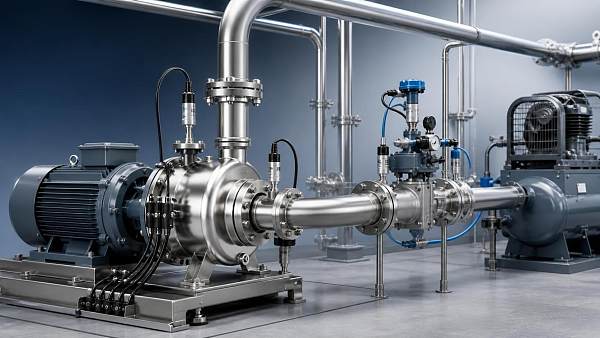
A pump skid arrives with one protocol.
The PLC architecture expects another.
The SCADA tags are named differently.
Then commissioning slows down.
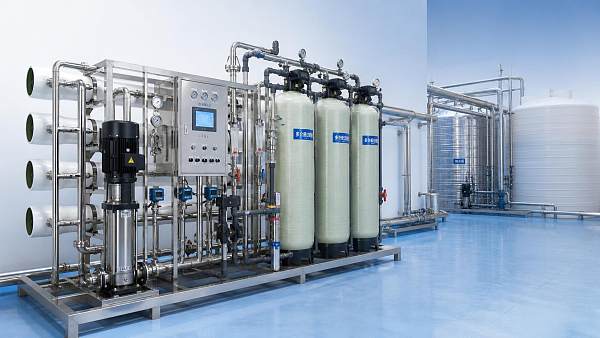
That pattern is common across compressors, valves, filtration units, and utility systems.
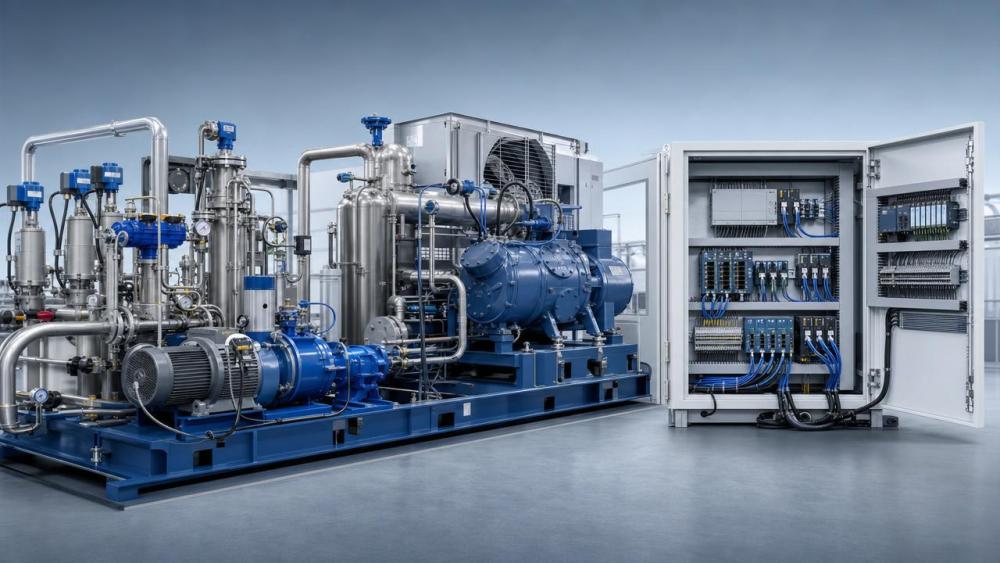
For teams managing industrial fluid and gas assets, process automation systems need more than hardware compatibility.
They need aligned data structures, clear control logic, and practical ownership across vendors.
The good news is that most integration failures are predictable.
Once seen early, they can be fixed with disciplined, low-drama actions.
Problem 1: Protocol Mismatches Between Equipment and Controls
This is one of the oldest problems in process automation systems.
It still causes major delays.
A package unit may support Modbus RTU.
The site standard may require Profinet or EtherNet/IP.
On paper, a gateway seems simple.
In practice, it adds latency, mapping work, and new failure points.
Practical fixes
- Freeze approved communication protocols before purchase orders are released.
- Require vendors to submit a full register map and supported function codes.
- Test gateways in FAT, not during site startup.
- Define which side owns scaling, alarms, and status bits.
For process automation systems, protocol alignment should be treated as a design decision, not a commissioning task.
Problem 2: Inconsistent Tag Naming and Data Mapping
Many integration headaches come from bad information structure.
One supplier uses “RUN_FB.”
Another uses “MOTOR_STATUS.”
The historian receives both, but the operations team sees confusion.
This becomes worse in large process automation systems with pumps, smart valves, compressors, analyzers, and separation skids from different vendors.
Poor naming also weakens maintenance.
Troubleshooting takes longer because nobody trusts the data source.
Practical fixes
- Set one plantwide tag naming convention early.
- Use a shared I/O and tag mapping sheet across all disciplines.
- Assign one person to approve naming changes.
- Validate mappings during FAT and SAT with live signal checks.
This sounds basic, but it saves enormous time later.
Well-structured process automation systems are easier to expand, secure, and analyze.
Problem 3: Control Philosophy Gaps
Equipment may work perfectly on its own.
The integrated process automation systems still fail if control intent is unclear.
A common example is a control valve with local logic that fights the main PLC sequence.
Another is a compressor skid that trips faster than the plant interlock expects.
These issues do not always appear in drawings.
They appear during startup, when time pressure is highest.
Practical fixes
- Write a control philosophy document before logic coding begins.
- Define handshakes, permissives, trips, and fallback modes in detail.
- Use cause-and-effect reviews with process, control, and package vendors together.
- Simulate abnormal scenarios, not only normal operation.
Clear operating intent gives process automation systems a stable foundation.
Without it, integration becomes a debate instead of an engineering task.
Problem 4: Weak Network Design and Cybersecurity Overlooked
Modern process automation systems depend on reliable industrial networks.
Yet many projects still treat networking as an afterthought.
The result is familiar.
Random dropouts, slow HMI updates, and devices that disappear during peak traffic.
More clearly now, digital transformation has also raised cyber risk.
Remote access added for convenience can expose critical assets.
Practical fixes
- Segment control networks from business networks.
- Specify managed switches, VLANs, and redundancy rules early.
- Control remote access through approved gateways and logging.
- Patch by policy, not by accident.
Reliable process automation systems require both uptime and controlled access.
Ignoring either one is expensive.
Problem 5: Field Device Configuration Errors
A surprising number of process automation systems suffer from simple device setup mistakes.
Wrong instrument ranges, bad valve fail positions, incorrect scaling, or duplicate IP addresses can derail commissioning.
This is especially painful on fluid systems.
A badly configured pressure transmitter can trigger nuisance trips.
A mis-set smart positioner can destabilize flow control.
Practical fixes
- Create device configuration sheets for every critical instrument.
- Verify ranges, units, fail states, and addresses before energization.
- Use loop checks to confirm signal direction and engineering values.
- Store final configuration backups in a controlled repository.
Small configuration discipline makes process automation systems much more predictable in operation.
A Simple Integration Checklist That Actually Helps
When deadlines are tight, teams need a usable checklist.
The most effective process automation systems are usually built with boring consistency.
That is not a weakness.
It is exactly what reduces surprises.
This kind of discipline is especially important where pumps, valves, compressors, and filtration systems must act as one coordinated process.
How to Reduce Integration Risk Before It Becomes Costly
The best strategy is not heroic troubleshooting at the end.
It is early coordination.
Successful process automation systems are shaped by decisions made months before startup.
That includes choosing vendors that can support open integration, not only good standalone equipment.
It also means reviewing package units through the lens of data quality, maintainability, and lifecycle support.
For operations that depend on fluid control, this matters even more.
A high-efficiency pump or smart valve delivers full value only when the larger process automation systems can read, control, and diagnose it correctly.
The most practical next step is simple.
Review one live project against the five problem areas above.
Find the gaps early.
Fix the structure before the schedule starts absorbing the cost.
That is how process automation systems become easier to commission, safer to run, and far more reliable over time.
Related News
 What drives industrial wastewater treatment cost per cubic meter?Dr. Alistair VaughnIndustrial wastewater treatment cost per cubic meter depends on influent load, effluent targets, energy, technology, and sludge disposal. Explore the key cost drivers.
 How to verify CE compliance for fluid separation equipmentDr. Alistair VaughnFluid separation equipment CE verification made practical: learn how to check declarations, risk assessments, technical files, pressure safety, and installation readiness.
 Separation equipment trends reshaping industrial wastewater treatmentDr. Alistair VaughnSeparation equipment trends are reshaping industrial wastewater treatment through smarter membranes, modular systems, digital monitoring, and resource recovery strategies.
 When stainless steel separation equipment is the right choice for hygienic processesDr. Alistair VaughnStainless steel separation equipment: discover when hygienic design, corrosion resistance, CIP cleanability, and lifecycle reliability make it the smart choice.
 What to assess before choosing a process industry automation supplierDr. Alistair VaughnChoose a process industry automation supplier with confidence. Assess engineering depth, lifecycle reliability, digital integration, energy performance, and safety before you buy.
 How process control innovation in refineries reduces unplanned shutdownsDr. Alistair VaughnDiscover how process control innovation in refineries detects early deviations, improves valve and equipment reliability, and helps prevent costly unplanned shutdowns.
 What should a zero liquid discharge systems integrator include in its proposal?Dr. Alistair VaughnZero liquid discharge systems integrator proposal checklist: compare guarantees, utilities, scope, controls, waste handling, and lifecycle risk before award.
 Industrial wastewater treatment plant design: sizing for flow and loadDr. Alistair VaughnIndustrial wastewater treatment plant design guide: size systems for peak flow, pollutant loads, reliability, compliance, and lower lifecycle costs.
 Can predictive maintenance and machinery diagnostics prevent downtime?Dr. Alistair VaughnPredictive maintenance machinery diagnostics help reduce unplanned downtime by detecting early equipment issues, improving reliability, and enabling smarter maintenance decisions.
 Can a digital transformation machinery platform cut unplanned downtime?Dr. Alistair VaughnDiscover how a digital transformation machinery platform connects asset data, maintenance workflows, and process insights to reduce unplanned downtime.
 How water treatment equipment sizing affects operating costsDr. Alistair VaughnWater treatment equipment sizing shapes energy, chemical, and maintenance costs. Learn how to balance flow, pressure, recovery, and reliability for efficient operation.
 When does food processing automation justify the upfront investment?Dr. Alistair VaughnIndustrial automation solutions for food processing: discover when automation delivers measurable ROI through higher throughput, lower waste, reliable utilities, and stronger food safety control.