Scalable Industrial Automation Solutions: When Expansion Pays Off




For project leaders under pressure to scale capacity, cut energy waste, and keep complex processes stable, scalable industrial automation solutions offer a practical path to growth. From pumps and control valves to compressors and filtration systems, the right expansion strategy can improve reliability, strengthen data visibility, and turn capital investment into measurable long-term operational gains.
The core search intent behind scalable industrial automation solutions is not simply to define automation. It is to understand when expansion makes business sense, how to avoid overspending, and which system choices create lasting value.
For project managers and engineering leads, the real question is straightforward: when does automation expansion pay off in uptime, throughput, energy performance, maintenance reduction, and operational control, rather than becoming another costly upgrade?
That means this topic should focus less on broad Industry 4.0 language and more on investment triggers, decision criteria, system architecture, execution risks, and measurable outcomes across fluid handling and process equipment.
When Does Scaling Industrial Automation Actually Pay Off?
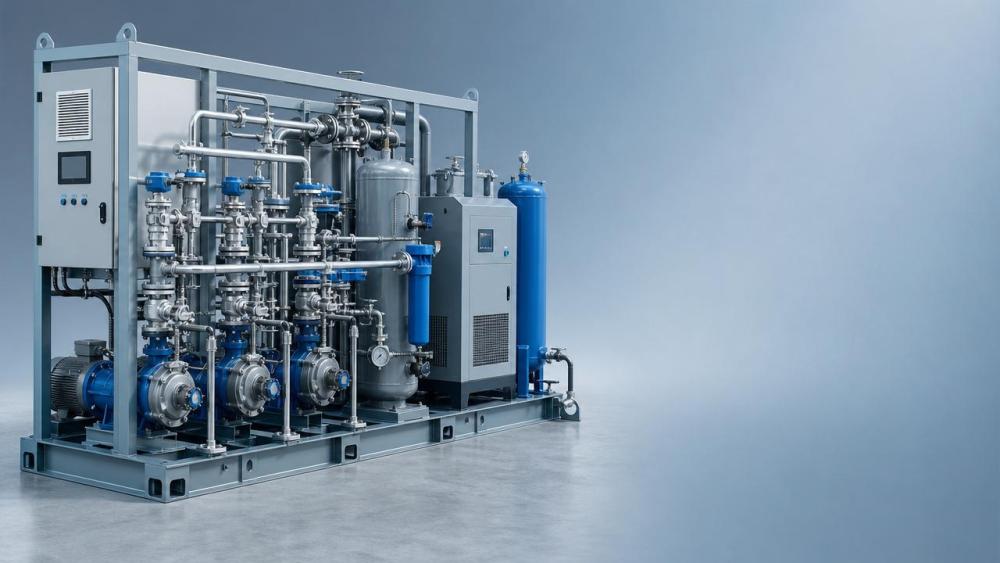
Scalable industrial automation solutions pay off when process complexity, production targets, or compliance pressure outgrow the limits of manual coordination and isolated equipment control.
In practice, expansion is justified when plants begin losing margin through energy waste, unstable process conditions, frequent operator intervention, quality drift, or maintenance events that could be prevented with better visibility and control.
For project leaders, the best signal is not that automation looks modern. It is that current operations are already creating repeatable losses that a modular control strategy can realistically reduce.
Those losses often appear in familiar forms: oversized pump operation, throttling inefficiency in control valves, unstable compressor loading, poor filtration sequencing, and delayed response to changing process conditions.
If those issues are happening across multiple assets or production lines, automation expansion is no longer just an engineering improvement. It becomes an operational and financial decision with clear strategic value.
The Business Case Project Leaders Need to Build First
Before approving any expansion, project leaders need a business case tied to outcomes that operations, finance, and maintenance teams all understand.
The strongest cases usually combine four measurable categories: throughput improvement, energy savings, reliability gains, and labor efficiency. In process industries, even a modest improvement in each area can produce a strong total return.
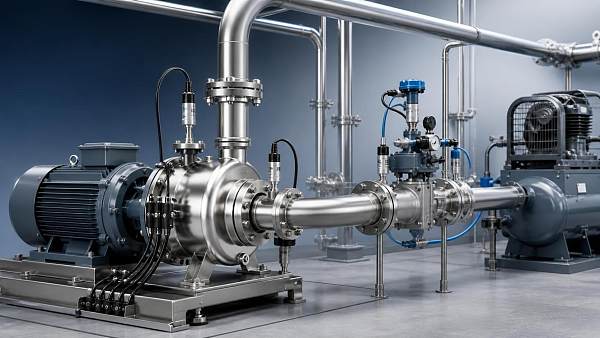
For example, a smarter pump and valve control scheme may reduce recirculation losses, stabilize flow, and lower motor loads. At the same time, better instrumentation can reduce unplanned shutdowns caused by cavitation, seal wear, or pressure instability.
Compressed air systems offer another clear example. Plants often expand production without rethinking compressor sequencing, storage, or demand response. Scalable controls can cut waste while supporting capacity growth without simply adding more machines.
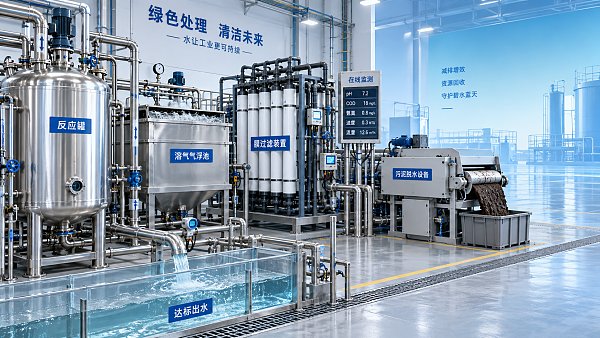
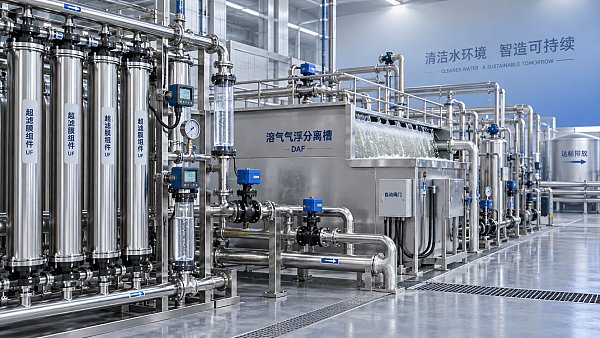
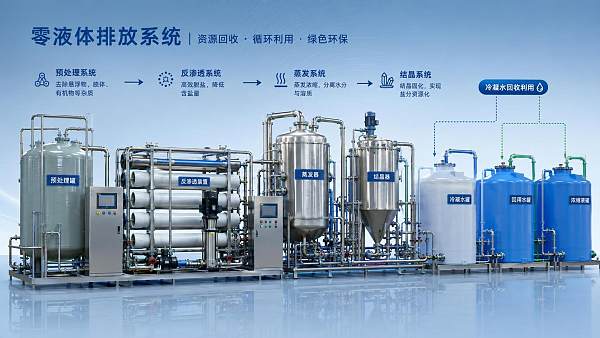
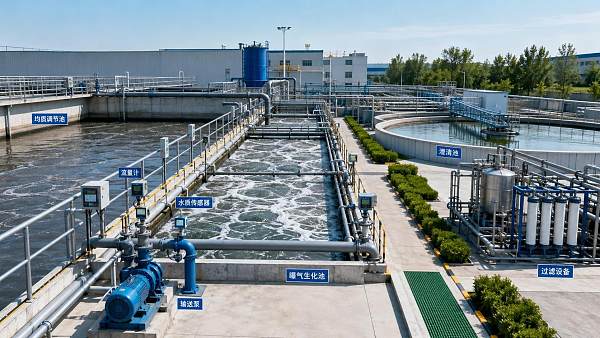
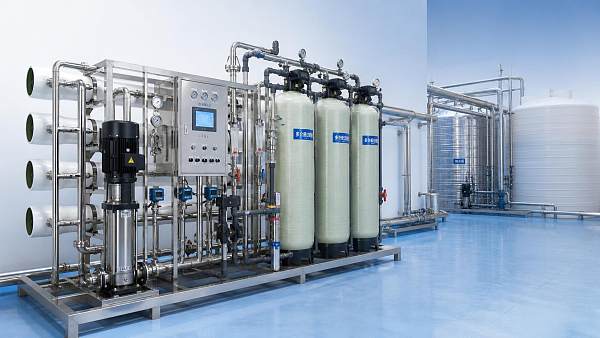
Filtration and separation systems also benefit when automation is built to expand. Better monitoring of pressure differentials, backwash timing, membrane performance, and effluent quality can reduce chemical use, avoid fouling, and improve water recovery.
For senior stakeholders, the decision is easier when the project team quantifies today’s losses, estimates improvement ranges, and identifies which benefits are operationally realistic within twelve to thirty-six months.
What Makes an Automation Solution Truly Scalable?
Not every automation platform is scalable. Some systems support initial deployment well but become expensive, rigid, or difficult to integrate once new equipment, lines, or sites are added.
A truly scalable architecture allows new assets to be connected without redesigning the entire control environment. That includes modular hardware, flexible I/O planning, open communication protocols, and software that supports phased growth.
Scalability also depends on data structure. If pump skids, valve islands, compressor packages, and filtration trains all report information differently, expansion creates confusion instead of insight.
Standardized tag naming, alarm philosophy, historian structure, and dashboard logic are often more important than flashy interfaces. They determine whether teams can compare assets, detect trends, and manage larger operations efficiently.
Cybersecurity and remote support also matter. As automation expands, so does the attack surface and the cost of poor access control. A scalable solution must include secure connectivity, user permissions, auditability, and maintainable update procedures.
For project leaders, scalability should mean this: adding future capacity should require extension, not reinvention.
Where Expansion Delivers the Most Value in Fluid and Process Systems
In many industrial environments, the best returns come from automating the equipment that most directly affects flow stability, energy consumption, and process continuity.
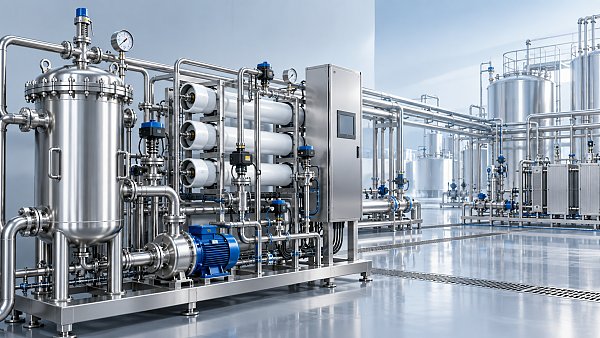
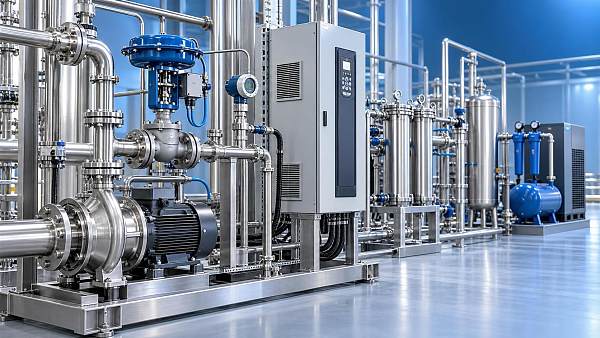
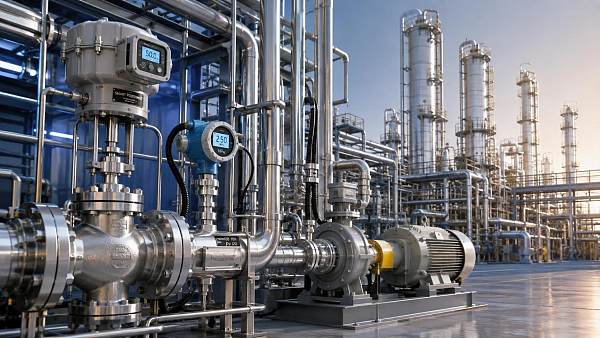
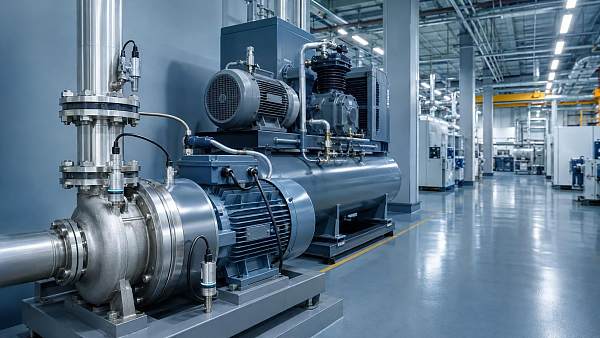
Industrial centrifugal pumps are a common starting point. Variable speed control, suction and discharge monitoring, and condition tracking can reduce hydraulic mismatch and improve operating efficiency across changing demand profiles.
High-pressure plunger pumps benefit from precise pressure management, pulsation monitoring, and coordinated startup logic. In demanding applications such as desalination or injection systems, control quality directly affects equipment life and output stability.
Smart pneumatic control valves are another high-value area. Better position feedback, valve diagnostics, and tuned control loops help reduce oscillation, overshoot, and process variability, especially in corrosive or high-temperature applications.
Air compressor systems often hide major savings potential. Sequencing logic, pressure band optimization, leak response, and energy monitoring can reduce lifecycle cost significantly while supporting production expansion more reliably.
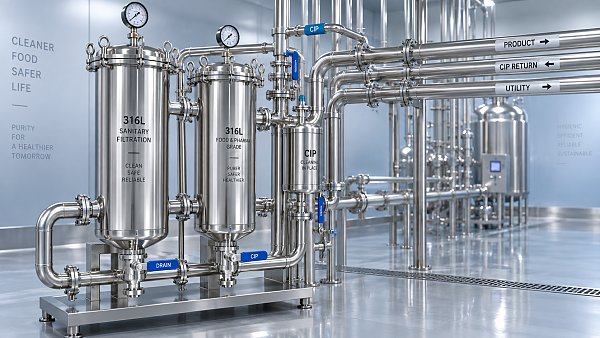
Filtration and separation systems gain value from automation when process quality, water recovery, or discharge compliance matters. Automated monitoring enables faster intervention before fouling, pressure spikes, or off-spec output becomes a larger problem.
For project managers, the practical lesson is clear: start where instability is expensive, energy use is high, or failure has cross-process consequences.
How to Judge ROI Without Oversimplifying the Decision
Return on investment for scalable industrial automation solutions should never be reduced to labor savings alone. In many process facilities, the larger value comes from avoiding losses rather than replacing headcount.
A sound ROI model includes direct savings such as energy reduction, fewer emergency repairs, lower spare parts use, and less unplanned downtime. But it should also include softer operational gains that still affect financial performance.
Those may include faster commissioning of future capacity, fewer quality deviations, better compliance reporting, reduced operator burden, and improved confidence in process decisions.
Scenario-based evaluation works well for project leaders. Compare the current state, a targeted upgrade path, and a full expansion path. Then evaluate capital cost, implementation risk, expected benefit timing, and dependency on workforce capability.
It is also important to test assumptions. If projected savings depend on perfect control tuning, ideal operator behavior, or unrealistically high asset utilization, the business case may look better on paper than in practice.
The most credible ROI cases use conservative assumptions and still show value. That gives leadership confidence and makes post-project performance easier to defend.
Common Risks That Can Undermine Expansion Projects
Automation scaling often fails for predictable reasons, and most are not about technology alone. They come from poor scope definition, weak cross-functional alignment, and underestimating site realities.
One common risk is automating a flawed process. If hydraulic design, valve sizing, compressor layout, or filtration logic is fundamentally weak, additional controls may only make the weakness more visible.
Another risk is fragmented ownership. Operations may want flexibility, maintenance may want simplicity, engineering may want technical capability, and management may want rapid payback. Without alignment, the project can stall or underperform.
Integration complexity is another frequent challenge. Legacy PLCs, incompatible protocols, poor documentation, and inconsistent instrumentation can turn a seemingly simple expansion into a costly engineering exercise.
Training is often underestimated as well. A scalable system is only valuable if operators, technicians, and supervisors understand how to use diagnostics, respond to alarms, and trust the new control logic.
Finally, project teams sometimes overspecify from the start. It is better to design for future expansion than to buy unnecessary complexity before the plant is ready to use it.
A Practical Roadmap for Phased Automation Expansion
For most facilities, the best path is phased expansion rather than one large transformation. This reduces disruption, improves learning, and allows the team to prove value before scaling further.
Phase one usually starts with a baseline assessment. Identify bottlenecks, unstable loops, energy-intensive assets, maintenance pain points, and data gaps. This creates a fact-based starting point for prioritization.
Phase two focuses on high-value pilot areas. That might be a pump room, compressor station, valve-intensive process unit, or filtration train where measurable gains are likely and disruption is manageable.
Phase three standardizes what works. Control templates, dashboards, alarm rules, instrumentation choices, and maintenance workflows should be documented so future deployment is faster and more consistent.
Phase four expands integration. Connect more equipment, add analytics, improve remote visibility, and link automation data into maintenance or production planning systems where it supports broader decision-making.
Phase five optimizes continuously. Once the architecture is in place, teams can refine setpoints, compare asset performance, detect degradation earlier, and align operational behavior with efficiency targets.
This phased model helps project leaders control risk while ensuring that expansion remains tied to business outcomes instead of technology enthusiasm.
What Decision-Makers Should Ask Vendors and Internal Teams
Good decisions depend on good questions. Project leaders should ask whether the proposed solution can scale technically, operationally, and financially over the next several years.
Key technical questions include protocol compatibility, modularity, cybersecurity design, edge and cloud options, historian structure, and the ease of adding new assets or production cells later.
Operational questions are just as important. How will operators interact with the system? What diagnostics are available? How much tuning is required? What maintenance skills are needed on site?
Commercial questions should include lifecycle support, spare parts strategy, upgrade paths, software licensing, commissioning scope, and how performance will be measured after startup.
Internally, teams should ask whether they have clear success metrics, realistic implementation windows, executive sponsorship, and enough process knowledge to avoid digitizing existing inefficiencies.
These questions separate scalable industrial automation solutions that create long-term value from projects that simply add control layers without solving core operational problems.
Conclusion: Expansion Pays Off When It Solves the Right Problems
Scalable industrial automation solutions create value when they are tied to specific operational pain points, designed for phased growth, and measured against clear performance outcomes.
For project managers and engineering leaders, the real opportunity is not automation for its own sake. It is using expansion to improve uptime, stabilize fluid and gas processes, reduce energy intensity, and build a control architecture that can grow with demand.
In pump systems, smart valves, compressors, and filtration operations, the payoff often comes from better visibility and faster, more consistent control decisions. Over time, those gains compound into stronger reliability and lower lifecycle cost.
The best expansion projects are neither rushed nor overengineered. They begin with the right business case, focus on high-impact assets, and scale in a way that operations teams can sustain.
When that happens, automation expansion does more than add capacity. It creates a more resilient, efficient, and competitive industrial operation.
Related News
 What drives industrial wastewater treatment cost per cubic meter?Dr. Alistair VaughnIndustrial wastewater treatment cost per cubic meter depends on influent load, effluent targets, energy, technology, and sludge disposal. Explore the key cost drivers.
 How to verify CE compliance for fluid separation equipmentDr. Alistair VaughnFluid separation equipment CE verification made practical: learn how to check declarations, risk assessments, technical files, pressure safety, and installation readiness.
 Separation equipment trends reshaping industrial wastewater treatmentDr. Alistair VaughnSeparation equipment trends are reshaping industrial wastewater treatment through smarter membranes, modular systems, digital monitoring, and resource recovery strategies.
 When stainless steel separation equipment is the right choice for hygienic processesDr. Alistair VaughnStainless steel separation equipment: discover when hygienic design, corrosion resistance, CIP cleanability, and lifecycle reliability make it the smart choice.
 What to assess before choosing a process industry automation supplierDr. Alistair VaughnChoose a process industry automation supplier with confidence. Assess engineering depth, lifecycle reliability, digital integration, energy performance, and safety before you buy.
 How process control innovation in refineries reduces unplanned shutdownsDr. Alistair VaughnDiscover how process control innovation in refineries detects early deviations, improves valve and equipment reliability, and helps prevent costly unplanned shutdowns.
 What should a zero liquid discharge systems integrator include in its proposal?Dr. Alistair VaughnZero liquid discharge systems integrator proposal checklist: compare guarantees, utilities, scope, controls, waste handling, and lifecycle risk before award.
 Industrial wastewater treatment plant design: sizing for flow and loadDr. Alistair VaughnIndustrial wastewater treatment plant design guide: size systems for peak flow, pollutant loads, reliability, compliance, and lower lifecycle costs.
 Can predictive maintenance and machinery diagnostics prevent downtime?Dr. Alistair VaughnPredictive maintenance machinery diagnostics help reduce unplanned downtime by detecting early equipment issues, improving reliability, and enabling smarter maintenance decisions.
 Can a digital transformation machinery platform cut unplanned downtime?Dr. Alistair VaughnDiscover how a digital transformation machinery platform connects asset data, maintenance workflows, and process insights to reduce unplanned downtime.
 How water treatment equipment sizing affects operating costsDr. Alistair VaughnWater treatment equipment sizing shapes energy, chemical, and maintenance costs. Learn how to balance flow, pressure, recovery, and reliability for efficient operation.
 When does food processing automation justify the upfront investment?Dr. Alistair VaughnIndustrial automation solutions for food processing: discover when automation delivers measurable ROI through higher throughput, lower waste, reliable utilities, and stronger food safety control.