Separation equipment trends reshaping industrial wastewater treatment




Industrial wastewater treatment is no longer judged solely by whether an effluent stream passes a discharge test at the end of the pipe. Technical evaluators are increasingly asked to consider water reuse, concentrate management, energy intensity, sludge handling, operator workload, and the resilience of a system when influent quality changes without warning. In that environment, separation equipment trends are becoming central to plant design decisions.
The shift is visible across chemical processing, food and beverage, mining, power generation, metal finishing, pharmaceuticals, and electronics manufacturing. A separator that once served as a relatively isolated unit operation must now work as part of a connected treatment train: protecting membranes, recovering valuable process water, stabilizing biological systems, reducing disposal volumes, and supplying verified performance data. The practical question is no longer “Which technology removes this contaminant?” It is “Which separation strategy remains reliable, economical, and controllable over the next operating cycle?”
Wastewater separation is moving from removal to resource control
For many years, industrial treatment schemes were designed around compliance-focused removal: settle solids, neutralize pH, precipitate metals, filter the remaining particles, and discharge. That approach still has a place, especially where receiving-water permits are stable and disposal infrastructure is available. Yet tighter limits, regional water scarcity, and Zero Liquid Discharge (ZLD) objectives are changing the value of every cubic meter entering a plant.
Water is now treated as a recoverable utility. Dissolved salts are viewed as a concentration challenge. Sludge is assessed not only as waste, but also as a source of disposal cost, recoverable material, and operational risk. This broader view favors separation equipment capable of producing consistent fractions rather than simply reducing total contamination.
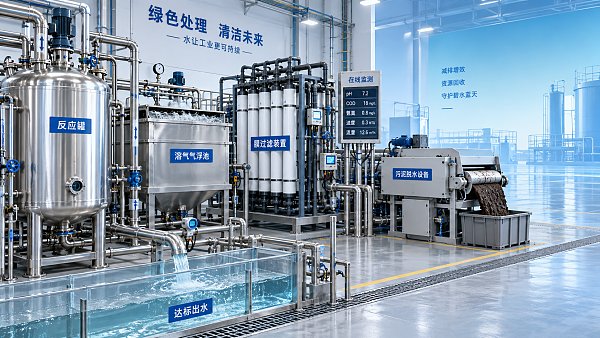
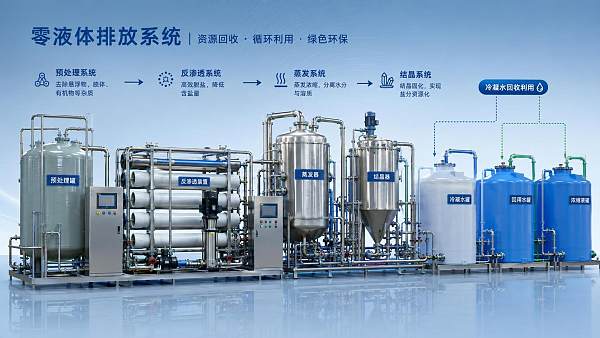
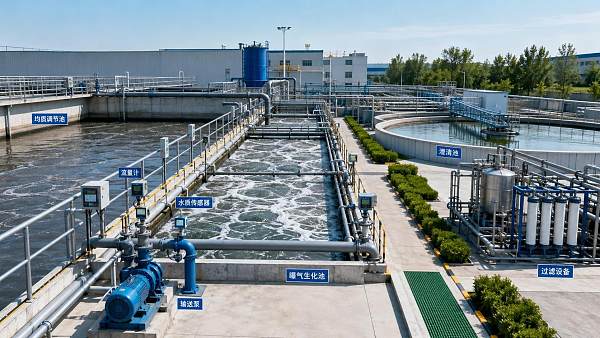
In a modern treatment train, a clarifier may create a low-solids overflow that protects ultrafiltration; ultrafiltration may provide stable feed to reverse osmosis; reverse osmosis may recover reusable water while generating a concentrate that requires evaporation, crystallization, or another targeted polishing step. Each stage affects the next. The performance of the entire system often depends on how well the first solids-liquid separation stage controls particle size, oil loading, colloids, and hydraulic swings.
Membrane systems are becoming more selective—and more demanding
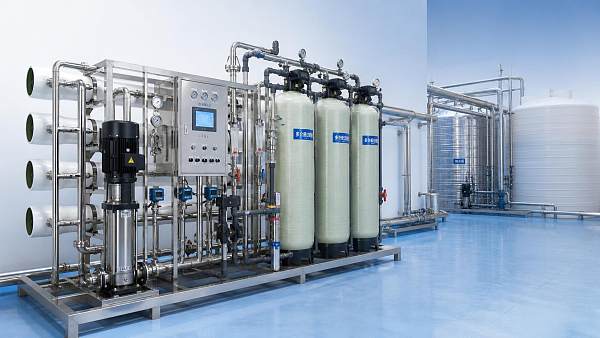
Advanced membranes remain one of the strongest forces behind current separation equipment trends. Microfiltration and ultrafiltration are widely applied for suspended solids, emulsified oil, bacteria, and high-molecular-weight organics. Nanofiltration and reverse osmosis extend the treatment boundary toward hardness removal, dissolved organic reduction, salt control, and water reuse.
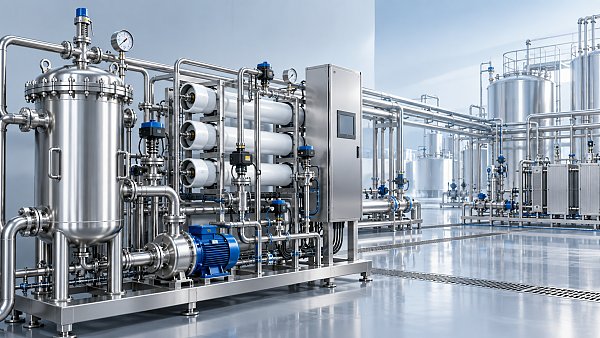
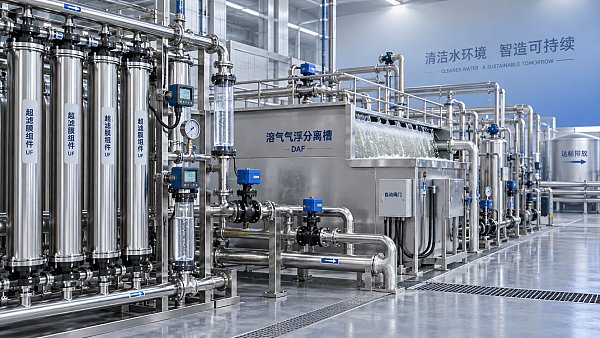
The important trend is not simply wider membrane adoption. It is the move toward membranes designed within a complete fouling-control strategy. Technical evaluators increasingly examine upstream coagulation, dissolved air flotation, media filtration, cartridge filtration, and crossflow conditions before comparing membrane flux figures. A membrane skid can look attractive in a proposal, but its long-term performance depends heavily on the quality and consistency of its feed.
Ceramic membranes are gaining attention in streams with abrasive particles, elevated temperature, aggressive cleaning conditions, or high oil content. Their higher initial cost can be justified where polymeric modules suffer frequent replacement or where aggressive chemical cleaning is unavoidable. Polymeric membranes, meanwhile, continue to offer flexibility and compact packaging for many reuse applications. The choice is rarely universal; it depends on fouling chemistry, expected cleaning frequency, recovery targets, and downtime tolerance.
For reverse osmosis, evaluators are looking beyond nominal rejection rates. They need to understand feed variability, silica behavior, scaling potential, antiscalant compatibility, cleaning accessibility, energy recovery options, and the destination of the reject stream. A high recovery target can become counterproductive if it drives rapid scaling, excessive cleaning, or an unmanageable concentrate volume downstream.
The renewed importance of front-end solids and oil separation
Membranes receive considerable attention, but many treatment failures begin earlier in the process. Poorly controlled suspended solids, free oil, stable emulsions, and fine colloids accelerate fouling across filters, membranes, ion exchange systems, and evaporators. This is why conventional separation technologies are being redesigned rather than replaced.
High-rate clarification, lamella settlers, hydrocyclones, decanter centrifuges, dissolved air flotation units, and filter presses are being selected with more precise knowledge of particle behavior. The useful design question is not merely how many kilograms of solids must be removed per day. It is whether the solids are dense or buoyant, coarse or colloidal, compressible or abrasive, hydrophobic or hydrophilic, and prone to forming a sticky cake.
For oily wastewater, free oil and chemically stabilized oil-water emulsions must be distinguished. A gravity separator or coalescer may perform well on free oil droplets but struggle with emulsions created by surfactants, high shear pumping, or cleaning chemicals. In those cases, chemical conditioning, electrocoagulation, flotation, or membrane-based separation may be needed before final polishing. Selecting equipment without identifying the oil state often leads to disappointing separation efficiency and unpredictable sludge production.
Similarly, a centrifuge may reduce tank residence time and produce a more concentrated solids phase, but it introduces rotational energy demand, wear considerations, and operating sensitivity. A filter press can produce a drier cake for disposal or recovery, yet requires attention to cloth washing, cycle time, feed conditioning, and the labor model around cake discharge. The right decision comes from comparing the whole solids-management route, not from ranking equipment by one performance claim.
Modular treatment trains are replacing oversized single-purpose systems
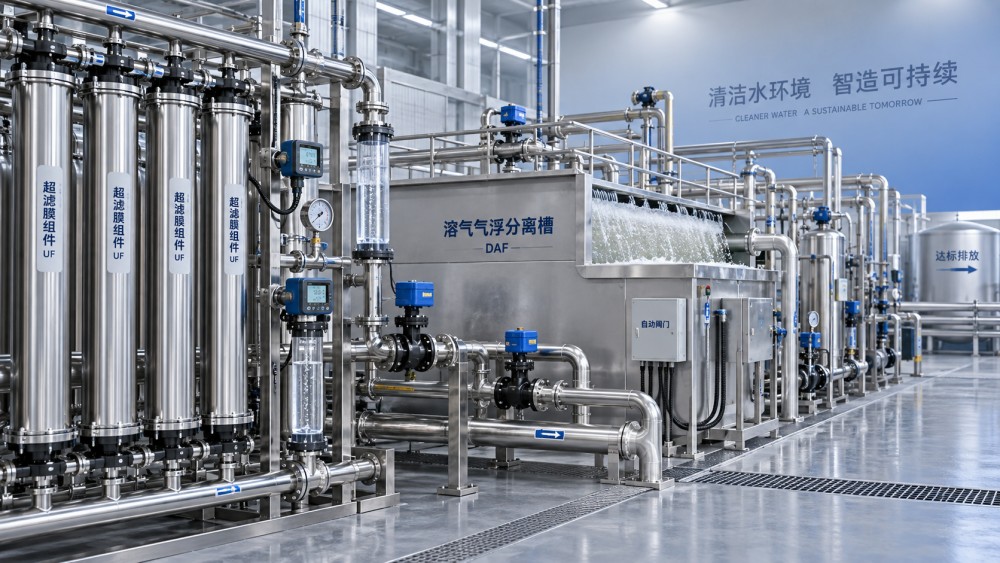
Industrial sites increasingly face changing production schedules, new formulations, intermittent batches, and uncertain future discharge conditions. As a result, modular separation systems are gaining favor over monolithic installations sized for one fixed design case. Packaged ultrafiltration skids, containerized reverse osmosis, mobile dewatering units, and expandable pretreatment lines can reduce implementation time while allowing capacity to grow in stages.
Modularity does not mean simplification. A compact system must still provide adequate buffer capacity, chemical storage, clean-in-place provisions, safe access for maintenance, and room for replacement modules. It should also accommodate the uncomfortable reality of industrial wastewater: the average flow is rarely the decisive number. Peaks in conductivity, temperature, oil, solids, or chemical oxygen demand can determine whether a treatment train stays stable.
For technical evaluation teams, this changes the way capacity should be discussed. Rather than asking only for a single rated flow, request an operating envelope. What influent range can the system handle? Which contaminants trigger reduced flux or bypass conditions? How does performance change during startup, cleaning, shutdown, or batch discharge? What buffer volume is required to protect sensitive downstream equipment? These questions reveal whether a modular design is genuinely flexible or simply compact.
Digital monitoring is becoming part of separation performance
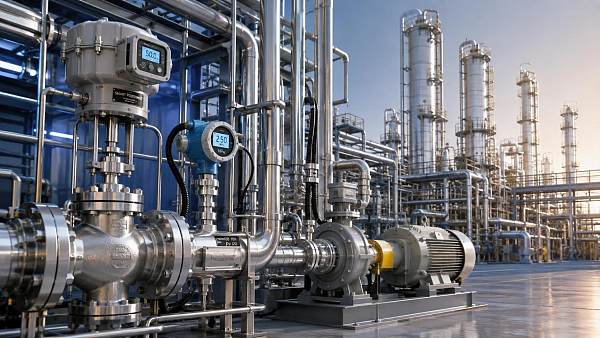
Separation equipment is increasingly expected to explain its own condition. Sensors for differential pressure, turbidity, conductivity, pH, oxidation-reduction potential, flow, temperature, dissolved oxygen, and vibration are being integrated into treatment assets that previously relied on periodic manual checks. The aim is not to create a dashboard for its own sake. It is to identify deviation before it becomes an expensive event: a blocked filter, a membrane integrity issue, a failing pump seal, a drifting chemical dose, or a sudden change in process wastewater composition.
For filtration systems, pressure-drop trends can indicate fouling development more effectively than a single alarm point. In membrane plants, normalized permeability and salt passage are more informative than raw flow alone because they distinguish feed-temperature effects from actual membrane deterioration. For centrifuges and pumps, vibration and motor load can help identify imbalance, solids buildup, bearing wear, or hydraulic restrictions.
Data quality matters as much as data quantity. Instruments must be positioned where they represent the process, maintained under real wastewater conditions, and linked to a response procedure. An online turbidity meter is valuable only if an abnormal reading leads to a defined action: investigate coagulation dosage, inspect the clarifier, isolate a filter train, or protect the membrane feed. Smart separation is therefore a combination of instrumentation, process logic, and trained operational judgment.
Energy and carbon are changing the equipment comparison
Energy consumption has become a decisive consideration, particularly in high-pressure membrane and thermal concentration applications. Yet evaluating energy in isolation can be misleading. A low-energy pretreatment system that allows frequent reverse osmosis cleaning may create higher total consumption and more chemical waste than a slightly more intensive upstream separation step. Likewise, a highly concentrated sludge cake can reduce hauling and disposal impacts even if the dewatering equipment requires additional electrical power.
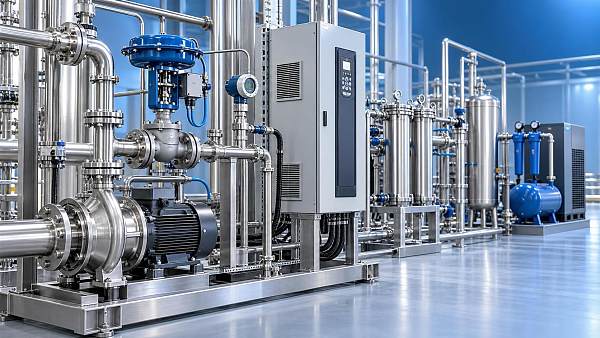
A lifecycle view should include pumping head, compressed air demand, chemical consumption, cleaning frequency, membrane replacement, waste transport, operator intervention, and planned maintenance. Pumps, valves, and control architecture deserve close attention because they shape both separation stability and power use. Variable-frequency drives can reduce unnecessary pumping energy, but only when control valves, pipework, and process logic are selected to avoid constant throttling losses.
This is one reason fluid-control expertise is becoming more relevant to wastewater separation. The reliability of a membrane, flotation, or dewatering system depends on stable feed pressure, accurate chemical dosing, controlled recirculation, and dependable isolation. At FCSM, analysis of industrial filtration and separation increasingly connects these elements: the separator itself, the pumps that feed it, the valves that regulate it, and the digital signals that make its condition visible.
How technical evaluators can test a proposal before committing
A vendor comparison based on capital cost, footprint, and headline recovery rate will miss important risks. A more useful review begins with the wastewater itself. Composite samples are helpful, but they should be supplemented by time-based and event-based sampling. Batch dumps, washdown periods, startup streams, maintenance events, and seasonal temperature changes can all produce conditions that an average sample conceals.
When reviewing separation equipment, evaluators should seek clear answers in several areas:
- Feed definition: What is the tested range for flow, solids, oil, salinity, pH, temperature, and key foulants—not merely the expected average?
- Separation boundary: Which contaminants are removed, concentrated, transformed, or passed through to the next stage?
- Performance verification: Which online measurements and laboratory tests confirm that the unit is operating as intended?
- Cleaning and recovery: How are filters backwashed, membranes cleaned, centrifuges flushed, and off-spec streams managed?
- Failure modes: What happens if power is lost, chemical dosing fails, influent oil surges, or downstream storage is unavailable?
- Residuals strategy: Where do sludge, spent media, brine, concentrate, and cleaning solutions go after separation?
Pilot testing can be particularly valuable when wastewater contains variable emulsions, unusual organics, silica, fine minerals, or proprietary additives. The objective is not merely to demonstrate that a technology works once. It is to observe flux decline, cake behavior, chemical demand, cleaning recovery, control response, and operator burden over a representative operating period.
ZLD is making concentration management a design discipline
Zero Liquid Discharge remains a major driver of innovation, especially in water-stressed regions and sectors facing restricted discharge options. But ZLD should not be treated as a single equipment category. It is a system objective that typically combines pretreatment, membrane concentration, thermal evaporation, crystallization, and solids handling. The best separation decision may occur far upstream, where removing hardness, organics, oil, or suspended solids reduces scaling and fouling pressure on the most energy-intensive stages.
Technical teams should be cautious about presenting ZLD as an automatic endpoint for every site. The economic and environmental case depends on water value, disposal restrictions, energy source, concentrate chemistry, recoverable salts, available footprint, and plant reliability requirements. In some situations, high-recovery reuse with responsibly managed concentrate offers a more balanced path. In others, a well-engineered ZLD system is necessary to maintain operations.
What the next phase of separation equipment trends will reward
The market is moving toward systems that are selective, measurable, serviceable, and adaptable. The winning technologies will not necessarily be those with the most complex process diagrams. They will be the ones that maintain separation performance when influent conditions drift, provide evidence that compliance is being achieved, and make sensible use of water, power, chemicals, and maintenance labor.
For technical evaluators, the opportunity is to move beyond equipment-by-equipment procurement. Assess the treatment train as a living fluid system: where solids enter, where pressure is lost, where fouling begins, where valuable water can be recovered, and where a small control failure could create a large downstream consequence. That perspective turns today’s separation equipment trends into practical design choices—and helps industrial wastewater treatment become more resilient in the years ahead.
Related News
 What drives industrial wastewater treatment cost per cubic meter?Dr. Alistair VaughnIndustrial wastewater treatment cost per cubic meter depends on influent load, effluent targets, energy, technology, and sludge disposal. Explore the key cost drivers.
 How to verify CE compliance for fluid separation equipmentDr. Alistair VaughnFluid separation equipment CE verification made practical: learn how to check declarations, risk assessments, technical files, pressure safety, and installation readiness.
 Separation equipment trends reshaping industrial wastewater treatmentDr. Alistair VaughnSeparation equipment trends are reshaping industrial wastewater treatment through smarter membranes, modular systems, digital monitoring, and resource recovery strategies.
 When stainless steel separation equipment is the right choice for hygienic processesDr. Alistair VaughnStainless steel separation equipment: discover when hygienic design, corrosion resistance, CIP cleanability, and lifecycle reliability make it the smart choice.
 What to assess before choosing a process industry automation supplierDr. Alistair VaughnChoose a process industry automation supplier with confidence. Assess engineering depth, lifecycle reliability, digital integration, energy performance, and safety before you buy.
 How process control innovation in refineries reduces unplanned shutdownsDr. Alistair VaughnDiscover how process control innovation in refineries detects early deviations, improves valve and equipment reliability, and helps prevent costly unplanned shutdowns.
 What should a zero liquid discharge systems integrator include in its proposal?Dr. Alistair VaughnZero liquid discharge systems integrator proposal checklist: compare guarantees, utilities, scope, controls, waste handling, and lifecycle risk before award.
 Industrial wastewater treatment plant design: sizing for flow and loadDr. Alistair VaughnIndustrial wastewater treatment plant design guide: size systems for peak flow, pollutant loads, reliability, compliance, and lower lifecycle costs.
 Can predictive maintenance and machinery diagnostics prevent downtime?Dr. Alistair VaughnPredictive maintenance machinery diagnostics help reduce unplanned downtime by detecting early equipment issues, improving reliability, and enabling smarter maintenance decisions.
 Can a digital transformation machinery platform cut unplanned downtime?Dr. Alistair VaughnDiscover how a digital transformation machinery platform connects asset data, maintenance workflows, and process insights to reduce unplanned downtime.
 How water treatment equipment sizing affects operating costsDr. Alistair VaughnWater treatment equipment sizing shapes energy, chemical, and maintenance costs. Learn how to balance flow, pressure, recovery, and reliability for efficient operation.
 When does food processing automation justify the upfront investment?Dr. Alistair VaughnIndustrial automation solutions for food processing: discover when automation delivers measurable ROI through higher throughput, lower waste, reliable utilities, and stronger food safety control.