Smart Fluid Control Retrofit: Cost, Downtime, and Payback




Smart Fluid Control Retrofit: Cost, Downtime, and Payback
For enterprise decision-makers, a smart fluid control retrofit is no longer just an engineering upgrade. It is where energy cost, maintenance exposure, production stability, and digital visibility meet in one budget line. If you are evaluating pumps, control valves, compressors, or separation equipment, the real question is usually not “Should we modernize?” but “Which retrofit is worth the shutdown, the capital, and the internal disruption?”
A good retrofit decision rarely starts with the equipment brochure. It starts with the pain point that finance, operations, and maintenance all agree is expensive: unstable flow, excessive compressed air consumption, valve hunting, recurring seal failures, cavitation damage, poor control accuracy, or unplanned downtime that keeps coming back under different names. That is the lens this checklist uses.
Start with the cost that is already leaking out
Before comparing vendors, pin down where the plant is paying today. In fluid systems, the biggest losses are often hidden in operating practice rather than in nameplate efficiency alone. A throttled pump running far from its best efficiency point, a compressor cycling too often, or a control valve oversized for the actual process range can quietly drain budget every shift.
- Check electricity consumption trend by asset group, not just by plant total. Pumps, compressors, and auxiliary filtration often hide in blended utility costs.
- Look at maintenance work orders from the last 12 to 24 months. Repeat failures matter more than one-off incidents.
- Review downtime logs with operations. Ask what actually stopped production, not only what was coded in CMMS.
- Confirm whether the issue is process-driven. Some “bad equipment” is really unstable upstream conditions, poor control logic, or a mismatch between original design and current throughput.
If the current baseline is fuzzy, the payback discussion will stay fuzzy too. That is where retrofit projects get approved on enthusiasm and later criticized on accounting.
Do not treat all retrofit candidates the same
Not every asset deserves a smart fluid control retrofit at the same depth. Some justify a full upgrade with sensors, drives, digital positioners, and control logic changes. Others need only trim replacement, instrumentation cleanup, or basic performance testing.
A practical screening method is to rank assets against four questions:
- Does failure interrupt production, safety, compliance, or product quality?
- Does the asset run enough hours for energy savings to matter?
- Is the control problem persistent enough that instrumentation and automation can realistically fix it?
- Can the work be installed inside a planned outage window?
If the answer is “no” to most of those, do not force a digital retrofit just because it sounds modern. Buyers lose money when they over-retrofit secondary assets and under-retrofit bottlenecks.
For pumps, verify the hydraulic case before buying controls
This is one of the most common mistakes. Plants add variable frequency drives, new sensors, and monitoring software to a pump that is fundamentally mismatched to the duty point. If the suction conditions are poor, if cavitation is already present, or if the pump spends most of its time far from BEP, controls alone will not rescue the economics.
Ask for the operating curve review. Compare current flow, head, NPSH conditions, and actual process variability against the original selection basis. If those records are incomplete, note that as a project risk rather than pretending the retrofit model is precise. In older facilities, this gap is common.
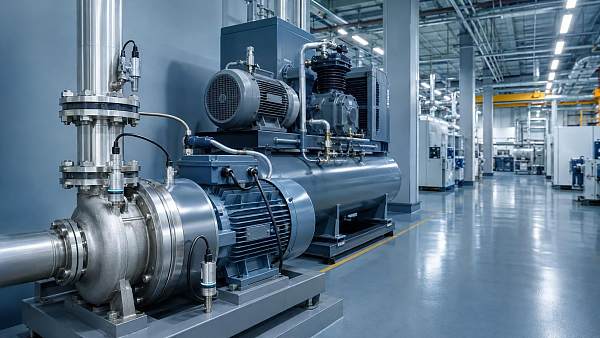
A smart retrofit around centrifugal pumps often pays when it addresses one of three realities: chronic throttling loss, unstable demand profile, or avoidable failure patterns. If none of those is true, the business case may be weaker than expected.
For control valves, sizing discipline matters more than glossy diagnostics
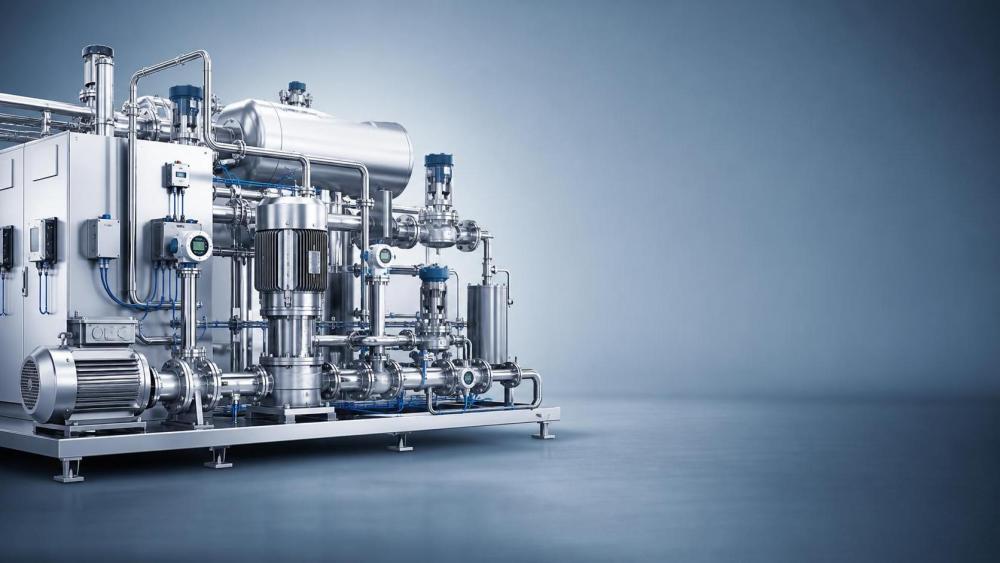
A smart pneumatic control valve retrofit can be excellent value, but only when the valve body, trim, actuator, and positioner are treated as a control package. Plants sometimes replace positioners and expect stability to improve, while the real problem is oversized Cv, trim erosion, poor shutoff class fit, or severe service conditions near critical flow.
In procurement review, ask for more than the device list. Ask how the supplier evaluated rangeability, expected travel position in normal operation, noise risk, flashing or cavitation exposure, air supply quality, and compatibility with the DCS or PLC architecture. If that conversation stays superficial, the retrofit scope is probably too shallow.
A valve that operates mostly near 10% open or 90% open is usually telling you something. That is not a tuning detail. It is a sizing or process control issue with cost consequences.
Compressors deserve a different payback lens
Compressed air projects often look attractive because the energy bill is large, but the savings estimate can be overstated if the plant has not dealt with leakage, pressure setpoint creep, or inappropriate end use. A smart fluid control retrofit in compressor systems usually needs demand-side discipline as much as equipment-side improvement.
Decision-makers should insist on separating these layers:
When those layers are not separated, every vendor proposal starts to look better than reality.
Downtime planning is where many “good” projects go bad
Retrofit economics are often destroyed by installation complexity rather than equipment price. A lower-capex offer can become the expensive one if it needs extra piping rework, control cabinet changes, software validation, operator retraining, or a longer shutdown than the site can tolerate.
Ask for a downtime map, not just an installation quotation. You want to know which tasks can be done online, which require process isolation, what preassembly is possible, what factory acceptance testing is included, and who owns commissioning risk. For continuous process industries, this matters as much as hardware selection.
One simple test helps: if the supplier cannot explain the shutdown sequence in operational language, they probably have not thought deeply enough about your outage constraints.
Do the payback math with ranges, not a single heroic number
For procurement and board review, single-point ROI claims are fragile. Actual savings depend on throughput, utility tariffs, maintenance behavior, and process variability. A more defensible approach is to model three cases: conservative, expected, and favorable.
- In the conservative case, assume partial savings realization and include learning-curve disruption after startup.
- In the expected case, use verified operating hours and measured baseline consumption where available.
- In the favorable case, include secondary gains only if they can be tracked, such as reduced scrap, lower spare consumption, or lower emergency callout cost.
Be careful with benefits that are real but hard to monetize cleanly. Better control stability, lower operator burden, and improved data visibility matter, but finance will challenge them unless the plant has a credible way to measure the effect. It is better to label these as qualitative or 【待核实】 than to inflate the payback model.
Check digital integration before approving the hardware
A smart fluid control retrofit is only “smart” if the data ends up somewhere useful. Plants routinely buy intelligent field devices that are later run in basic mode because network integration, historian mapping, cybersecurity review, or alarm rationalization was left for later.
For buyers, this means asking plain questions early: Which signals will be exposed to operators? Which diagnostics will maintenance actually use? Does the site support the required protocol and asset management environment? Are there internal standards for hazardous area installation, electrical classification, or cybersecurity that could delay deployment? Specific standards depend on site, region, and industry, so they should be checked against actual plant requirements rather than assumed.
Vendor comparison: the shortlist should get uncomfortable questions
By the time you are down to two or three suppliers, stop asking who has the best technology story. Ask who reduces decision risk. That usually means clearer scope boundaries, better site documentation discipline, more realistic commissioning support, and stronger after-sales responsiveness.
- What assumptions were made because plant data was missing?
- Which expected savings depend on process conditions staying within a narrow band?
- Which components have long lead times or single-source exposure?
- What happens if commissioning reveals a piping, tuning, or control logic issue outside the quoted scope?
- Is local service available, or will critical support depend on remote response?
Those answers tell you more than polished slides do.
What usually separates a solid retrofit from an expensive lesson
The strongest projects are not always the most ambitious. They are the ones built on verified baselines, realistic outage planning, and a narrow definition of where savings will actually come from. In practice, that means confirming hydraulic and process fit before adding intelligence, treating controls and mechanical hardware as one system, and refusing payback claims that cannot survive a conservative review.
If you are buying a smart fluid control retrofit for cost reduction, ask your team for three documents before approving spend: a baseline loss map, a shutdown execution plan, and a range-based payback model. If one of those is missing, the proposal is not ready yet. That is usually the simplest and most reliable checkpoint a decision-maker can use.
Related News
 What drives industrial wastewater treatment cost per cubic meter?Dr. Alistair VaughnIndustrial wastewater treatment cost per cubic meter depends on influent load, effluent targets, energy, technology, and sludge disposal. Explore the key cost drivers.
 How to verify CE compliance for fluid separation equipmentDr. Alistair VaughnFluid separation equipment CE verification made practical: learn how to check declarations, risk assessments, technical files, pressure safety, and installation readiness.
 Separation equipment trends reshaping industrial wastewater treatmentDr. Alistair VaughnSeparation equipment trends are reshaping industrial wastewater treatment through smarter membranes, modular systems, digital monitoring, and resource recovery strategies.
 When stainless steel separation equipment is the right choice for hygienic processesDr. Alistair VaughnStainless steel separation equipment: discover when hygienic design, corrosion resistance, CIP cleanability, and lifecycle reliability make it the smart choice.
 What to assess before choosing a process industry automation supplierDr. Alistair VaughnChoose a process industry automation supplier with confidence. Assess engineering depth, lifecycle reliability, digital integration, energy performance, and safety before you buy.
 How process control innovation in refineries reduces unplanned shutdownsDr. Alistair VaughnDiscover how process control innovation in refineries detects early deviations, improves valve and equipment reliability, and helps prevent costly unplanned shutdowns.
 What should a zero liquid discharge systems integrator include in its proposal?Dr. Alistair VaughnZero liquid discharge systems integrator proposal checklist: compare guarantees, utilities, scope, controls, waste handling, and lifecycle risk before award.
 Industrial wastewater treatment plant design: sizing for flow and loadDr. Alistair VaughnIndustrial wastewater treatment plant design guide: size systems for peak flow, pollutant loads, reliability, compliance, and lower lifecycle costs.
 Can predictive maintenance and machinery diagnostics prevent downtime?Dr. Alistair VaughnPredictive maintenance machinery diagnostics help reduce unplanned downtime by detecting early equipment issues, improving reliability, and enabling smarter maintenance decisions.
 Can a digital transformation machinery platform cut unplanned downtime?Dr. Alistair VaughnDiscover how a digital transformation machinery platform connects asset data, maintenance workflows, and process insights to reduce unplanned downtime.
 How water treatment equipment sizing affects operating costsDr. Alistair VaughnWater treatment equipment sizing shapes energy, chemical, and maintenance costs. Learn how to balance flow, pressure, recovery, and reliability for efficient operation.
 When does food processing automation justify the upfront investment?Dr. Alistair VaughnIndustrial automation solutions for food processing: discover when automation delivers measurable ROI through higher throughput, lower waste, reliable utilities, and stronger food safety control.