When does food processing automation justify the upfront investment?




Industrial automation solutions for food processing justify their upfront cost when a plant has a repeatable operating problem that people, maintenance routines, or extra shifts can no longer solve economically. The trigger is rarely “we want more technology.” It is usually a costly pattern: inconsistent fills, sanitation delays, labor shortages, rejected batches, compressed-air waste, unplanned downtime, or a line that cannot meet demand without adding risk.
The right question is not, “How quickly will this machine pay for itself?” in isolation. It is, “What will it cost us to keep operating this process manually or with unreliable equipment for the next three to five years?” A lower purchase price can become the more expensive choice when it preserves bottlenecks, weak traceability, or high utility consumption.
Automation is not automatically justified for every food operation. A low-volume facility with constantly changing recipes, irregular order patterns, and little standardization may gain more from improving work instructions, preventive maintenance, and line layout first. But where production is stable enough to measure, automation can turn recurring losses into controllable operating variables.
When Industrial Automation Solutions for Food Processing Make Financial Sense
The investment case becomes credible when the same loss occurs often enough to be measured. One occasional labeling error is a training issue. A daily pattern of label rework, giveaway, stop-start production, and missed changeover targets is a systems issue.
Start with the constraint rather than the equipment category. A robotic case packer may look impressive, but it is not the answer if the real constraint is an unstable upstream filling process. A new filler will not solve a sanitation schedule that leaves the line unavailable for too many production hours. Good procurement begins by identifying where capacity, quality, compliance, or cost is actually being lost.
A practical rule is this: automation is usually worth serious evaluation when it can remove a persistent constraint while improving at least one additional business outcome, such as product consistency, traceability, food safety control, energy use, or maintenance predictability. A project supported by only one narrow benefit is more vulnerable when assumptions change.
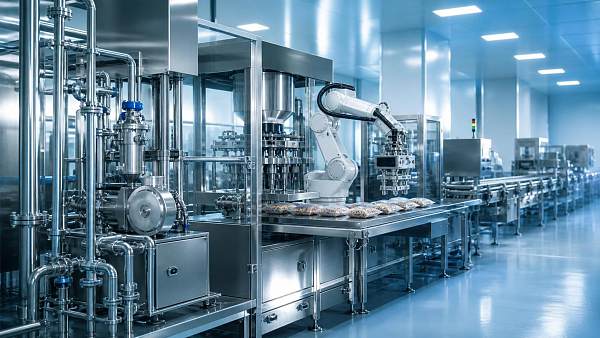
For example, automating a packaging cell may reduce repetitive manual handling. Its stronger case may be that it also provides count verification, rejects incorrectly sealed packs, captures production data, and allows the line to run at a steadier rate. Those linked effects are what make lifecycle economics work.
Build the Case From Cost of Ownership, Not Equipment Price
Capital cost matters, but it is only the visible part of the decision. The full cost of a food automation project includes installation, civil work, hygienic utility connections, controls integration, commissioning, validation, training, spare parts, safety guarding, and the lost production time needed to make the change.
It also includes the cost of getting the specification wrong. A system that cannot handle the intended product range, washdown requirements, line speed, or future packaging format can create years of workarounds. Procurement teams often focus hard on the quoted machine price and accept vague answers about changeovers, cleanability, service response, and ownership of production data. Those details have a much larger effect on operating results than they first appear to have.
A useful internal model separates the project into four value streams:
- Labor and availability: fewer manual interventions, less overtime pressure, and more stable staffing around repetitive tasks.
- Yield and quality: lower product giveaway, fewer damaged packs, more consistent fills, and fewer rejected batches.
- Utilities and consumables: reduced water, compressed-air, cleaning chemical, energy, filter, or membrane burden where the process supports it.
- Risk reduction: stronger traceability, fewer process deviations, safer handling, and less exposure to a single skilled operator being unavailable.
Estimate each item using the facility’s own records. Do not borrow a supplier’s generic savings percentage and treat it as a forecast. Pull twelve months of production reports, downtime codes, labor rosters, maintenance work orders, utility bills, quality holds, and scrap reports. If the site does not record the data cleanly, that is itself an early sign that a digital baseline may be needed before a major automation commitment.
Then model a conservative, expected, and adverse case. The conservative case should allow for ramp-up losses, planned maintenance, real changeover time, and the possibility that labor is redeployed rather than removed. That last point is often mishandled. Labor savings count as cash savings only when headcount, agency spend, overtime, or avoided future hiring genuinely changes. Redeploying people to quality checks or higher-value production work can still be valuable, but it should be represented honestly.
The Process Utilities Often Decide Whether Returns Hold Up
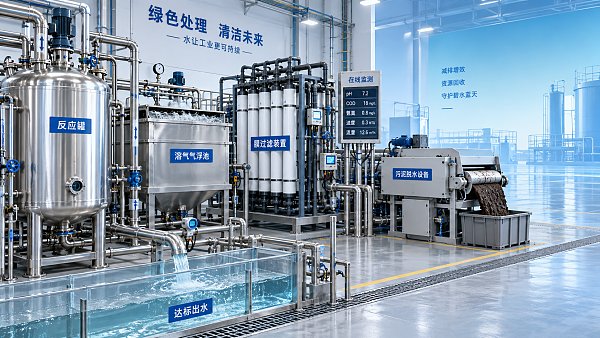
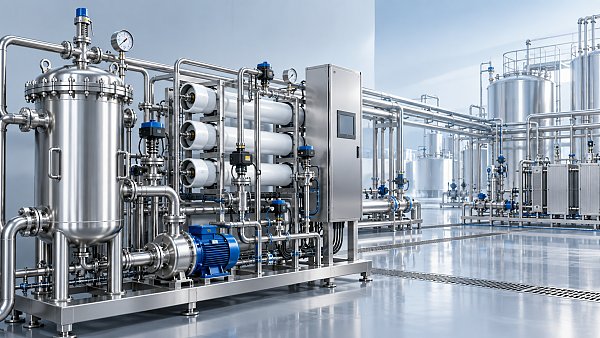
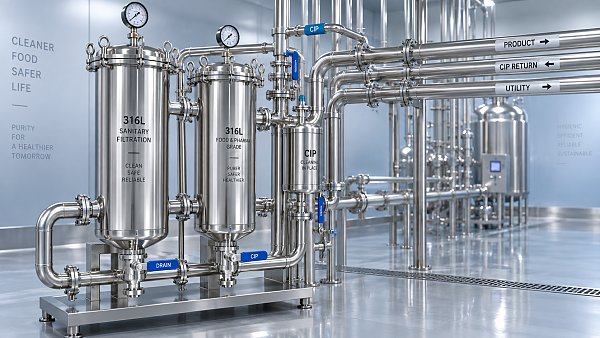
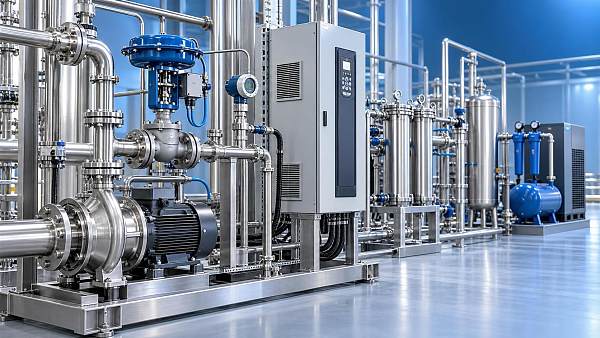
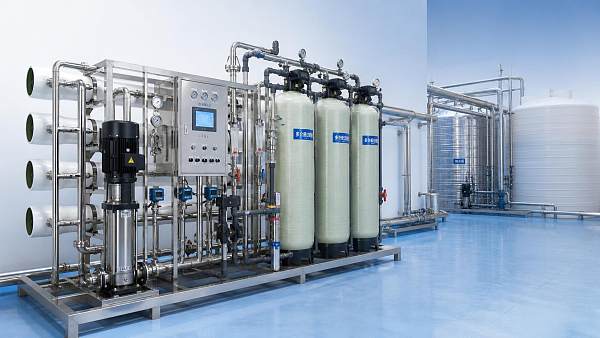
Food plants do not run on conveyors and software alone. Product transfer, washdown, clean-in-place systems, compressed air, water treatment, temperature control, and separation equipment often determine whether an automated line actually delivers its promised output.
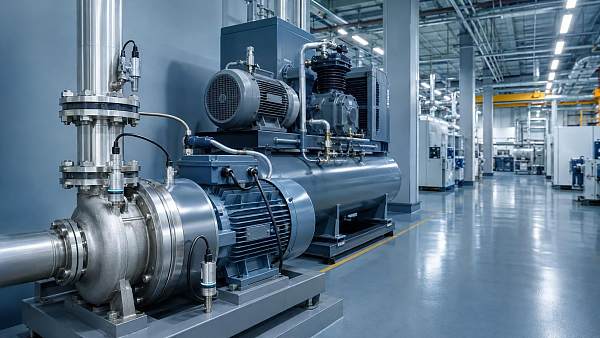
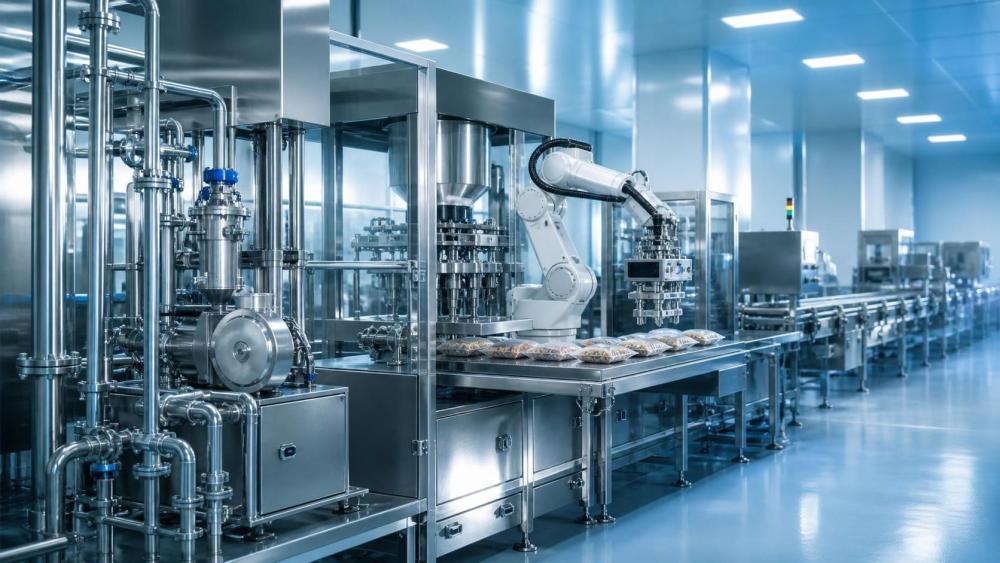
Consider a beverage, dairy, sauce, prepared-food, or ingredient process where pumps, valves, filters, and compressed air are constantly supporting production. A packaging automation project can be undermined by variable product feed, pressure fluctuations, contaminated air, poor valve response, or an undersized filtration stage. The automated equipment may be technically sound; the supporting process is simply not stable enough.
This is why specifications should map the complete operating chain. Confirm the actual flow rates, pressure ranges, viscosity changes, product temperatures, cleaning cycles, air demand profiles, drainage requirements, and filtration duty. “Nominal” utility capacity is not enough. Peak demand during changeover, cleaning, or simultaneous equipment starts can be the condition that exposes a weak design.
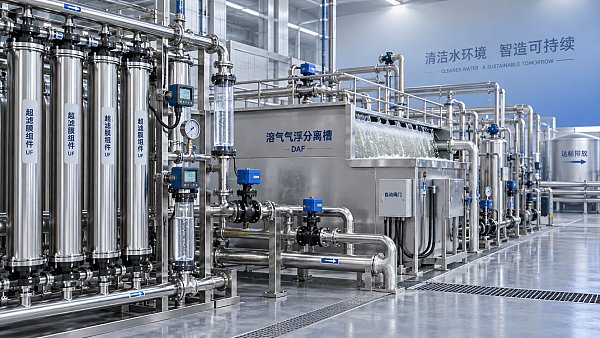
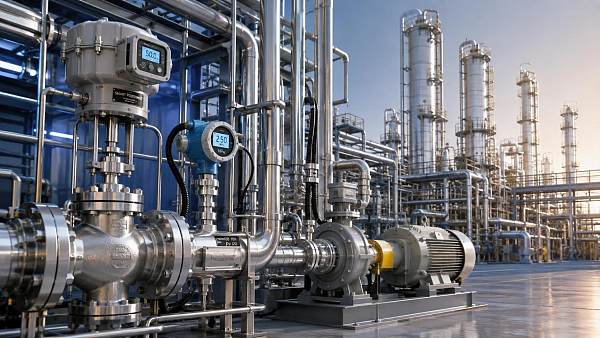
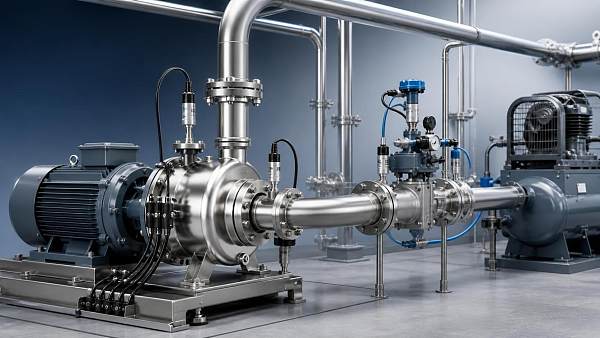
FCSM’s focus on pumps, precision control valves, compressor systems, and filtration and separation equipment is useful here as a technical reference point. In food environments, the most relevant questions are practical: can the pump operate reliably with the product and cleaning regime; does valve control remain repeatable; is compressed air clean and stable for its intended contact risk and actuator duty; can filtration performance be monitored before it affects production? Deep technical analysis of cavitation, valve behavior, energy efficiency, and predictive maintenance matters only when it helps answer those operating questions.
There is also a recurring energy mistake. Plants may automate a line while leaving pumps throttled unnecessarily, compressors running at inefficient unloaded conditions, or filtration systems serviced only after performance has already degraded. Automation should expose waste, not merely add another layer of consumption. Metering and condition data need to be included in the project scope when utilities are material to the process.
Where Automation Is Usually Worth Prioritizing First
Projects tend to perform best when they target a narrow, painful process before attempting a full-site transformation. Common starting points include filling and portion control, vision inspection, labeling and coding verification, palletizing, automated clean-in-place sequencing, batch tracking, and condition monitoring for critical pumps, valves, and compressors.
These areas have something in common: performance can be observed. A plant can compare fill-weight variation, rejected packs, labor hours per unit, cleaning time, downtime frequency, or energy consumption before and after the change. That makes it easier to manage the supplier, correct issues during commissioning, and decide whether to scale the approach.
Automating inspection can be especially defensible when manual checks are inconsistent or when defects reach the end of the line before they are discovered. Still, vision systems are not a shortcut around poor product presentation. If packages arrive randomly oriented, wet, reflective, or covered in residue, the system must be engineered around those conditions. Ask to see the proposed solution tested with real product samples, real packaging, and representative line speeds.
Likewise, predictive maintenance should begin with assets that create meaningful disruption when they fail. Instrumenting every motor simply because sensors are inexpensive can produce a large volume of data with little operational value. Monitoring a critical transfer pump, air compressor, or control valve is more persuasive when there is a defined failure mode, a responsible maintenance workflow, and an available response before production is affected.
Questions That Separate a Sound Proposal From a Polished Sales Presentation
A capable supplier should be able to answer operational questions plainly. Request a line-by-line scope that identifies what is included, what the plant must provide, and where responsibility changes hands. “Integration included” is too vague when several original equipment manufacturers, a system integrator, and internal engineering teams are involved.
Before approving the purchase, get clear answers to the following:
- What products, package sizes, recipes, and operating speeds were used to size the system?
- What throughput is guaranteed, and under what conditions?
- How are sanitation, allergen changeovers, washdown, and hygienic access handled?
- Which downtime events are excluded from the performance calculation?
- What spare parts must be held locally, and what lead times apply to critical components?
- Who owns the PLC, historian, recipe, alarm, and production data after commissioning?
- What acceptance test will prove the system meets the agreed requirements?
Factory acceptance testing and site acceptance testing deserve more attention than they often receive. Define them before the purchase order is issued. Use measurable criteria: acceptable cycle time, product handling quality, rejection accuracy, changeover duration, cleaning compatibility, safety function checks, and data capture requirements. “Successful commissioning” should never mean only that the equipment powers on.
Another avoidable mistake is treating automation as a maintenance-free purchase. Food environments are demanding. Moisture, cleaning chemicals, temperature swings, abrasives, fats, powders, and frequent operation all affect component life. The proposal should include training for operators and technicians, a documented preventive maintenance plan, critical spares, remote support arrangements where appropriate, and a realistic service model.
When It Is Better to Wait
There are situations where delaying the project is the disciplined choice. If product specifications change frequently, the facility has no reliable production baseline, utilities are near their limits, or the line layout will soon be rebuilt, major automation may lock in the wrong process.
Waiting does not mean doing nothing. Standardize the work, collect downtime reasons, repair obvious utility leaks, improve sanitation planning, and stabilize upstream product handling. A small control upgrade, better instrumentation, or a targeted valve, pump, air, or filtration improvement may create the stable foundation needed for a larger project later.
It is also sensible to pause when the business case depends on unrealistic assumptions: eliminating all labor, running at nameplate speed every hour, requiring no additional maintenance skill, or achieving immediate output gains after installation. Good projects include a learning period. The financial model should allow for it.
Make the Decision in Phases, but Design for the Whole Plant
Phased investment is often the most practical route. Start with a defined bottleneck, establish baseline measures, specify interfaces that support future expansion, and confirm the first phase performs in normal production. The first project should create reusable standards for controls, hygienic design, data collection, spare parts, cybersecurity, and operator training.
That approach avoids two opposite errors: buying an oversized “future-proof” system that is underused for years, or buying isolated equipment that cannot later communicate with the rest of the operation. The best automation roadmap is detailed enough to prevent dead ends but flexible enough to respond to real production needs.
Food processing automation earns its place when it improves a process that is already important, recurring, and measurable. For plants assessing industrial automation solutions for food processing, the strongest investment case combines proven production gains with reliable utilities, hygienic design, clear acceptance criteria, and a lifecycle maintenance plan. Buy the capability to control a costly process, not simply the most advanced machine in the quotation.
Common Questions
What payback period is acceptable for food automation?
There is no universal threshold. The acceptable period depends on capital constraints, risk exposure, asset life, demand confidence, and alternative uses for the capital. Compare the project against the full cost of continuing with the current process, then test the result under conservative assumptions.
Should labor savings be the main justification?
Usually not by itself. Labor can be a major benefit, especially where overtime, turnover, or repetitive manual work is creating pressure. A stronger case also includes quality consistency, capacity, traceability, safety, and reduced process disruption.
Can an existing line be automated without replacing everything?
Often, yes. Retrofit feasibility depends on mechanical condition, controls compatibility, hygiene requirements, available space, and utility capacity. A site survey and a documented interface review are essential before committing to a retrofit scope.
What is the most overlooked cost in an automation project?
Integration and ramp-up. Equipment prices may be visible early, while controls work, utility modifications, validation, operator training, production downtime, and post-installation tuning emerge later. Require these items to be defined in the commercial scope.
Related News
 What drives industrial wastewater treatment cost per cubic meter?Dr. Alistair VaughnIndustrial wastewater treatment cost per cubic meter depends on influent load, effluent targets, energy, technology, and sludge disposal. Explore the key cost drivers.
 How to verify CE compliance for fluid separation equipmentDr. Alistair VaughnFluid separation equipment CE verification made practical: learn how to check declarations, risk assessments, technical files, pressure safety, and installation readiness.
 Separation equipment trends reshaping industrial wastewater treatmentDr. Alistair VaughnSeparation equipment trends are reshaping industrial wastewater treatment through smarter membranes, modular systems, digital monitoring, and resource recovery strategies.
 When stainless steel separation equipment is the right choice for hygienic processesDr. Alistair VaughnStainless steel separation equipment: discover when hygienic design, corrosion resistance, CIP cleanability, and lifecycle reliability make it the smart choice.
 What to assess before choosing a process industry automation supplierDr. Alistair VaughnChoose a process industry automation supplier with confidence. Assess engineering depth, lifecycle reliability, digital integration, energy performance, and safety before you buy.
 How process control innovation in refineries reduces unplanned shutdownsDr. Alistair VaughnDiscover how process control innovation in refineries detects early deviations, improves valve and equipment reliability, and helps prevent costly unplanned shutdowns.
 What should a zero liquid discharge systems integrator include in its proposal?Dr. Alistair VaughnZero liquid discharge systems integrator proposal checklist: compare guarantees, utilities, scope, controls, waste handling, and lifecycle risk before award.
 Industrial wastewater treatment plant design: sizing for flow and loadDr. Alistair VaughnIndustrial wastewater treatment plant design guide: size systems for peak flow, pollutant loads, reliability, compliance, and lower lifecycle costs.
 Can predictive maintenance and machinery diagnostics prevent downtime?Dr. Alistair VaughnPredictive maintenance machinery diagnostics help reduce unplanned downtime by detecting early equipment issues, improving reliability, and enabling smarter maintenance decisions.
 Can a digital transformation machinery platform cut unplanned downtime?Dr. Alistair VaughnDiscover how a digital transformation machinery platform connects asset data, maintenance workflows, and process insights to reduce unplanned downtime.
 How water treatment equipment sizing affects operating costsDr. Alistair VaughnWater treatment equipment sizing shapes energy, chemical, and maintenance costs. Learn how to balance flow, pressure, recovery, and reliability for efficient operation.
 When does food processing automation justify the upfront investment?Dr. Alistair VaughnIndustrial automation solutions for food processing: discover when automation delivers measurable ROI through higher throughput, lower waste, reliable utilities, and stronger food safety control.