When does industrial predictive maintenance deliver a real ROI




Industrial predictive maintenance delivers a real ROI when it is applied to assets where failure is expensive, data quality is usable, and the maintenance team can act on alerts. For industrial decision-makers, the business case is strongest when predictive maintenance reduces unplanned downtime, cuts energy loss, extends component life, and improves process stability across pumps, valves, compressors, and separation systems.
What decision-makers are really asking about industrial predictive maintenance
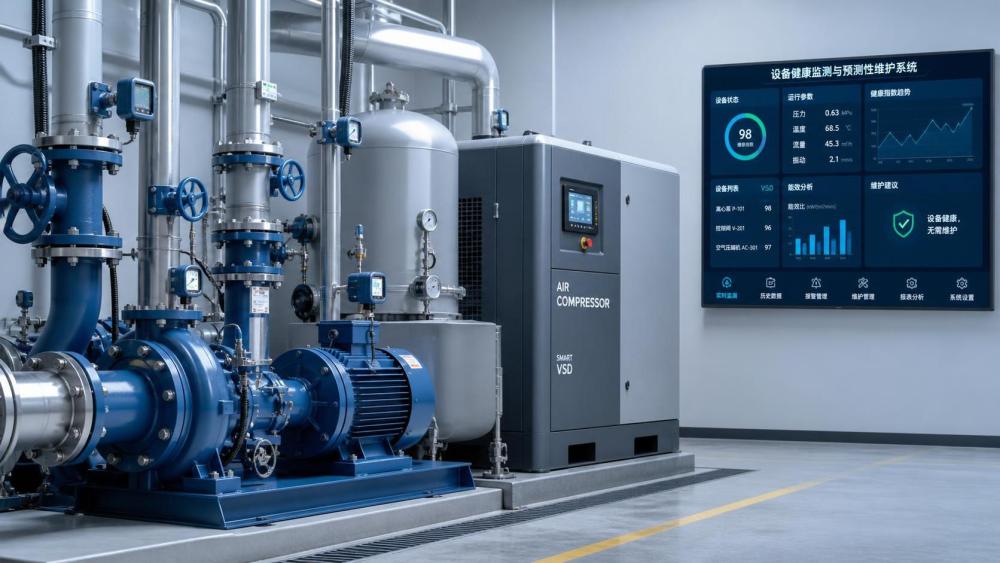
When executives search for answers about industrial predictive maintenance, they are usually not asking whether sensors and analytics are technically possible. They want to know when the investment produces measurable financial returns, how fast those returns appear, and which operating conditions make success more likely.
In most industrial settings, the core search intent is commercial and strategic. Readers want a practical threshold for action: where predictive maintenance creates bottom-line value, where it underperforms, and how to avoid funding a digital initiative that generates dashboards instead of operational gains.
That is especially true in fluid control and system machinery. In centrifugal pumps, plunger pumps, control valves, air compressors, and filtration equipment, the cost of failure is rarely limited to one spare part. It often includes lost throughput, unstable process control, energy waste, product quality risk, environmental exposure, and emergency labor.
When does industrial predictive maintenance deliver a real ROI?
The short answer is this: industrial predictive maintenance delivers a real ROI when it prevents costly failures earlier than traditional maintenance methods, and when the value of avoided losses is larger than the cost of monitoring, analysis, integration, and response.
That sounds simple, but in practice ROI depends on several operating realities. The first is asset criticality. If a machine has little effect on production, safety, quality, or energy use, even accurate predictions may not create meaningful financial impact.
The second is failure economics. Assets that fail rarely and cheaply may not justify continuous monitoring. By contrast, equipment with expensive bearings, seals, rotors, membranes, valve trim, or motors often provides a much stronger business case because one avoided incident can offset a large share of the program cost.
The third is response capability. Predictive maintenance has no value if the plant cannot schedule intervention, source parts, or trust the alert enough to act. Data without maintenance execution is overhead, not return.
Where ROI appears fastest in pumps, valves, compressors, and separation systems
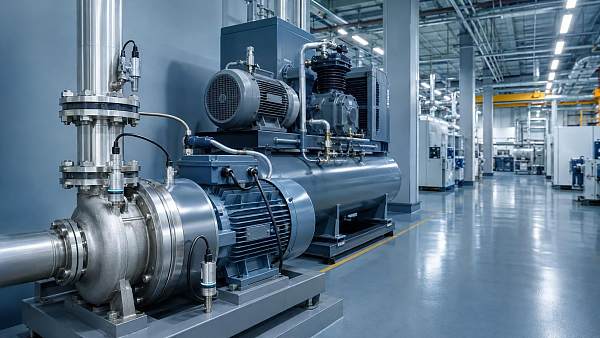
For many industrial companies, the fastest returns come from high-duty rotating equipment and process-control assets with clear operating signatures. Air compressors are a common example because they consume substantial energy, and declining efficiency often shows up before a major mechanical event.
In compressor systems, predictive maintenance can identify bearing wear, motor imbalance, abnormal discharge temperature, pressure instability, or leakage-related inefficiency. The return is not only in avoided breakdowns. It also appears in lower energy consumption and better compressed-air reliability across production lines.
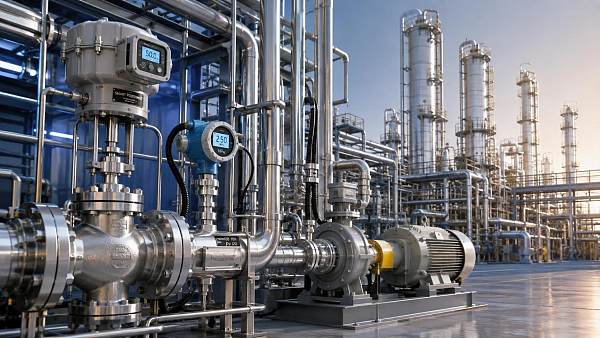
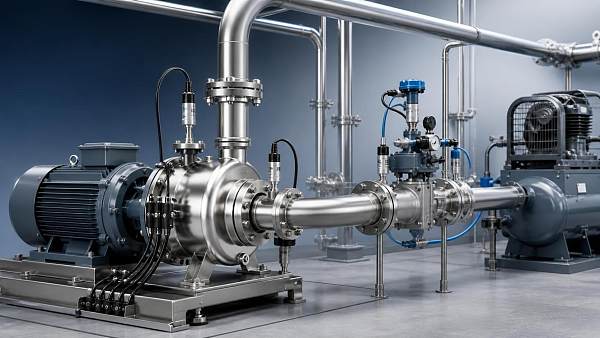
Centrifugal pumps are another strong use case. Vibration, cavitation, misalignment, seal degradation, and hydraulic instability can all create hidden costs long before full failure occurs. Monitoring these patterns allows plants to correct problems before they become shutdown events or chronic efficiency losses.
Smart control valves also deserve attention, especially in corrosive, high-temperature, or variable-load services. Valve stiction, actuator air leaks, positioner drift, and trim wear may not stop production immediately, but they can degrade process stability, increase energy use, and undermine quality. In these cases, predictive maintenance improves control performance as much as maintenance reliability.
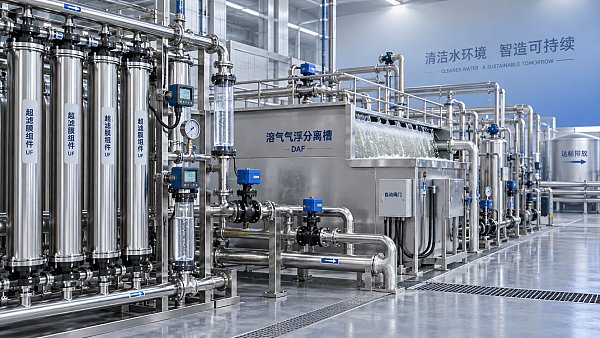
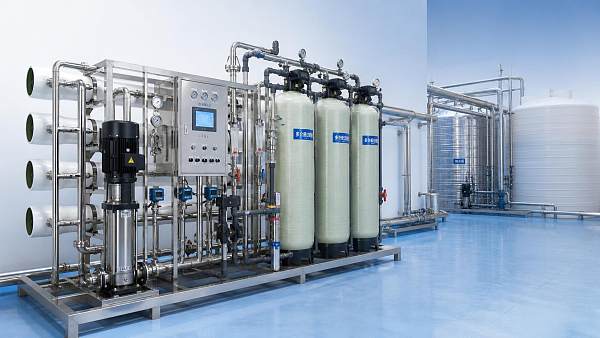
In filtration and separation systems, the value often comes from anticipating fouling, differential pressure trends, membrane degradation, and pump loading effects. Predictive insight helps avoid both emergency replacement and the silent cost of operating a system that is already underperforming.
Which benefits matter most to enterprise decision-makers
Executives usually evaluate industrial predictive maintenance through four financial lenses: downtime reduction, maintenance cost control, energy efficiency, and risk reduction. A proposal that addresses only one of these may still work, but the strongest ROI cases usually combine several.
Unplanned downtime is the most visible driver. In process industries, one failure can interrupt upstream and downstream systems, delay orders, waste raw material, and force emergency maintenance at premium cost. If a predictive program can prevent even a small number of these events, the economic case can become compelling quickly.
Maintenance cost control is the next layer. Predictive maintenance does not eliminate maintenance spending, but it shifts spending from reactive work toward planned intervention. That change often lowers overtime, reduces collateral damage, improves spare-parts planning, and avoids replacing components too early under calendar-based schedules.
Energy efficiency is often underestimated. Pumps operating away from best efficiency point, compressors with deteriorating performance, clogged filtration trains, or poorly performing valves all consume more energy than they should. In energy-intensive facilities, these losses accumulate continuously and can rival the cost of mechanical failures.
Risk reduction also matters, especially where hazardous fluids, emissions, water treatment compliance, or critical utilities are involved. Predictive maintenance can reduce the probability of leaks, excursions, contamination, and safety incidents. Even when those events are rare, the financial exposure can be large enough to justify investment.
How to judge whether your plant is ready for a positive ROI
Not every operation is ready to generate returns from industrial predictive maintenance. The most reliable way to assess readiness is to look at asset criticality, data availability, maintenance maturity, and decision workflow together rather than in isolation.
If failure history is poorly documented, sensor coverage is inconsistent, and work orders are not linked to asset condition, expected ROI becomes speculative. In that environment, the first step may be improving maintenance data discipline rather than purchasing more analytics.
Plants with strong candidates usually share several characteristics. They have recurring failure modes, measurable operating signals, expensive downtime, and a maintenance team capable of converting alerts into scheduled action. They also have management support for cross-functional work between operations, maintenance, reliability, and engineering.
Another sign of readiness is the presence of recurring “gray losses.” These are not catastrophic failures, but persistent drains on profitability: unstable pressure control, excessive compressor energy use, repeated seal replacement, chronic cavitation, or membrane fouling that returns faster than expected. Predictive maintenance often creates value by exposing and reducing these hidden losses.
What causes predictive maintenance programs to miss ROI
Many programs fail not because the technology is flawed, but because the business case was too broad or too vague. A common mistake is deploying predictive maintenance across too many low-value assets at once. That spreads cost widely while diluting measurable impact.
Another failure point is confusing data collection with diagnosis. Plants may install sensors and dashboards but never define what decisions should change when abnormal patterns appear. Without clear action rules, alerts become noise and trust falls quickly.
Weak integration is another major issue. If condition data sits outside the maintenance planning process, technicians may receive insights too late or in a form they cannot use. The return depends on turning prediction into work execution, not on creating a parallel information system.
There is also a governance problem in some organizations. Operations may want uptime, maintenance may want fewer false alarms, finance may want rapid payback, and IT may prioritize platform consistency. Without agreement on success metrics, the program can look successful technically while failing commercially.
How to build a stronger ROI case before scaling
Decision-makers should begin with a narrow, financially meaningful pilot. The best pilot is not the easiest machine to instrument. It is the asset group where avoided loss is visible, failure modes are known, and the plant can act on the results.
For example, a site may start with critical compressor trains, process pumps in corrosive service, or control valves affecting yield and energy balance. The goal is to prove measurable business outcomes, not merely model accuracy.
Success metrics should be defined in advance. These may include avoided downtime hours, reduced emergency work orders, lower energy consumption, fewer repeated failures, improved mean time between failures, or reduced spare-parts usage. If possible, finance should validate the value model early so reported gains are credible.
It is also wise to compare predictive maintenance against alternatives. In some cases, better preventive maintenance, operator rounds, lubrication discipline, or process optimization may solve a large share of the problem at lower cost. A sound ROI case should show why predictive maintenance adds incremental value beyond those measures.
Why ROI is becoming more strategic, not just operational
Industrial predictive maintenance is increasingly tied to broader strategic goals. In many sectors, the value is no longer limited to maintenance savings. It now supports decarbonization, energy-efficiency commitments, reliability-centered production, and digital transformation programs.
For companies operating pumps, compressors, valves, and separation systems, reliability and efficiency are tightly linked. A degrading asset often wastes power before it fails. That means predictive maintenance can contribute directly to lower operating cost per unit of output and to better environmental performance.
This matters in competitive bidding and global supply chains as well. Firms that can demonstrate stronger lifecycle performance, more stable throughput, lower utility intensity, and better asset reliability are often better positioned in regulated markets and high-spec industrial contracts.
In that sense, the ROI question is no longer only “Will this save maintenance cost?” It is also “Will this strengthen operational resilience, energy credibility, and long-term competitiveness?” For many industrial organizations, that broader value is becoming decisive.
Conclusion: the real ROI threshold
Industrial predictive maintenance delivers a real ROI when it is applied to the right assets, tied to clear failure economics, and connected to real maintenance action. It works best where downtime is expensive, efficiency losses are meaningful, and operating teams can respond before degradation becomes disruption.
For enterprise decision-makers, the key lesson is to treat predictive maintenance as a business performance tool, not a data project. Start with critical equipment, define value in financial terms, validate results on a focused scope, and scale only after proving impact.
In fluid control and system machinery, that approach can do more than reduce breakdowns. It can improve energy efficiency, stabilize process performance, protect lifecycle value, and create a stronger operational foundation for digital and low-carbon industrial growth.
Related News
 What drives industrial wastewater treatment cost per cubic meter?Dr. Alistair VaughnIndustrial wastewater treatment cost per cubic meter depends on influent load, effluent targets, energy, technology, and sludge disposal. Explore the key cost drivers.
 How to verify CE compliance for fluid separation equipmentDr. Alistair VaughnFluid separation equipment CE verification made practical: learn how to check declarations, risk assessments, technical files, pressure safety, and installation readiness.
 Separation equipment trends reshaping industrial wastewater treatmentDr. Alistair VaughnSeparation equipment trends are reshaping industrial wastewater treatment through smarter membranes, modular systems, digital monitoring, and resource recovery strategies.
 When stainless steel separation equipment is the right choice for hygienic processesDr. Alistair VaughnStainless steel separation equipment: discover when hygienic design, corrosion resistance, CIP cleanability, and lifecycle reliability make it the smart choice.
 What to assess before choosing a process industry automation supplierDr. Alistair VaughnChoose a process industry automation supplier with confidence. Assess engineering depth, lifecycle reliability, digital integration, energy performance, and safety before you buy.
 How process control innovation in refineries reduces unplanned shutdownsDr. Alistair VaughnDiscover how process control innovation in refineries detects early deviations, improves valve and equipment reliability, and helps prevent costly unplanned shutdowns.
 What should a zero liquid discharge systems integrator include in its proposal?Dr. Alistair VaughnZero liquid discharge systems integrator proposal checklist: compare guarantees, utilities, scope, controls, waste handling, and lifecycle risk before award.
 Industrial wastewater treatment plant design: sizing for flow and loadDr. Alistair VaughnIndustrial wastewater treatment plant design guide: size systems for peak flow, pollutant loads, reliability, compliance, and lower lifecycle costs.
 Can predictive maintenance and machinery diagnostics prevent downtime?Dr. Alistair VaughnPredictive maintenance machinery diagnostics help reduce unplanned downtime by detecting early equipment issues, improving reliability, and enabling smarter maintenance decisions.
 Can a digital transformation machinery platform cut unplanned downtime?Dr. Alistair VaughnDiscover how a digital transformation machinery platform connects asset data, maintenance workflows, and process insights to reduce unplanned downtime.
 How water treatment equipment sizing affects operating costsDr. Alistair VaughnWater treatment equipment sizing shapes energy, chemical, and maintenance costs. Learn how to balance flow, pressure, recovery, and reliability for efficient operation.
 When does food processing automation justify the upfront investment?Dr. Alistair VaughnIndustrial automation solutions for food processing: discover when automation delivers measurable ROI through higher throughput, lower waste, reliable utilities, and stronger food safety control.