Singapore’s Energy Efficiency Amendment Takes Effect for Smart Valve Positioners




Singapore’s Energy Efficiency (Product Registration) Amendment Act entered into force on 25 May 2026, mandating registration and technical compliance for smart valve positioners entering the Singapore market. The update directly affects manufacturers, exporters, and system integrators supplying to public-sector projects and new petrochemical infrastructure — making it a priority for industrial automation and process control stakeholders.
Event Overview
On 25 May 2026, Singapore’s Ministry of Trade and Industry (MTI) and the Energy Market Authority (EMA) jointly announced the formal commencement of the Energy Efficiency (Product Registration) Amendment Act. Under the amendment, smart valve positioners are now included in the mandatory product registration scheme. All such devices placed on the Singapore market must: (i) be registered with EMA; (ii) support the EMA-specified SG-Link v2.1 communication protocol; and (iii) incorporate remote energy-efficiency diagnostic functionality. From 1 August 2026, unregistered units will be excluded from Singapore government procurement and newly commissioned petrochemical projects.
Industries Affected
Export-oriented Automation Equipment Manufacturers
Manufacturers exporting smart valve positioners to Singapore must now ensure their products meet SG-Link v2.1 interoperability and embedded diagnostics requirements. Non-compliant models risk rejection at customs or disqualification from tender processes — particularly in public infrastructure and energy-intensive sectors.
System Integrators & Engineering Contractors
Firms specifying or deploying control systems for Singapore-based petrochemical or utility projects face tighter validation timelines. As of 1 August 2026, only EMA-registered positioners may be included in bill-of-materials for new-build projects — introducing potential delays if legacy or non-registered devices remain in design pipelines.
Distribution & Channel Partners
Local distributors and authorized resellers handling smart valve positioners must verify registration status before stocking or quoting. Inventory holding of non-registered units post-August 2026 may result in unsellable stock, especially where end customers require EMA compliance documentation for project certification.
What Stakeholders Should Monitor and Do Now
Track official EMA registration guidance and firmware validation criteria
While the law is effective, EMA has not yet published detailed technical validation procedures for SG-Link v2.1 implementation or remote diagnostic feature verification. Stakeholders should monitor EMA’s official portal for updates on test protocols, conformance checklists, and registration application workflows.
Review current product portfolios and project pipelines for Singapore-bound shipments
Exporters and integrators should identify all smart valve positioner SKUs scheduled for Singapore delivery between June and July 2026 — prioritizing those destined for government or petrochemical clients. Early engagement with EMA-accredited testing labs is advisable to avoid last-minute certification bottlenecks.
Distinguish policy commencement from operational enforcement
The law took effect on 25 May 2026, but the prohibition on unregistered units applies only from 1 August 2026. This three-month window allows time for registration and minor firmware updates — however, no grace period is provided for existing inventory already in Singapore warehouses or under contract.
Confirm supply chain alignment on protocol implementation and documentation
Manufacturers should verify that firmware versions, device configuration tools, and diagnostic reporting interfaces align with SG-Link v2.1 specifications — and ensure supporting documentation (e.g., declaration of conformity, test reports) is available in English and formatted per EMA submission requirements.
Editorial Perspective / Industry Observation
Observably, this amendment signals Singapore’s tightening integration of digital interoperability standards into energy efficiency regulation — moving beyond standalone energy consumption metrics to require real-time, protocol-governed performance visibility. Analysis shows the inclusion of SG-Link v2.1 reflects a broader regional trend toward standardized data exchange in industrial IoT deployments, especially in regulated infrastructure sectors. From an industry perspective, the timing — aligned with Singapore’s 2030 Green Plan targets — suggests this is less a one-off compliance step and more a foundational requirement for future energy-related product regulations. Current enforcement scope remains narrowly defined (public procurement + new petrochemical builds), but the precedent set by mandating both protocol adherence and remote diagnostics may inform upcoming updates for other field instrumentation categories.
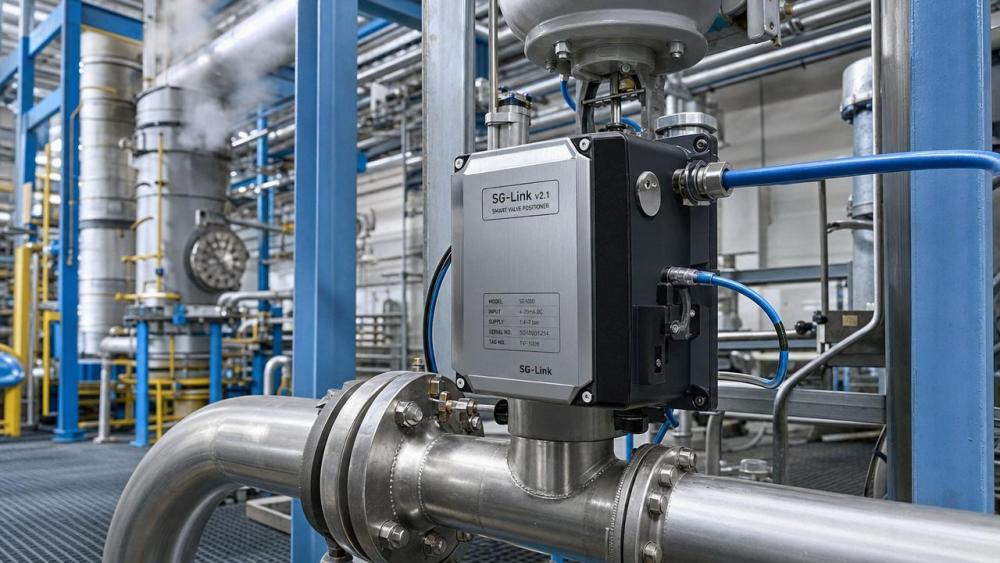
This development is best understood not as an isolated regulatory change, but as an early indicator of how energy efficiency policy is evolving to embed connectivity and data transparency requirements directly into hardware compliance frameworks — particularly in high-stakes industrial environments.
Information Source: Official announcements issued jointly by Singapore’s Ministry of Trade and Industry (MTI) and the Energy Market Authority (EMA), dated 25 May 2026. Further technical implementation details — including registration procedures, accredited testing bodies, and firmware validation guidelines — remain pending and are subject to ongoing monitoring.
Related News
 When does self-cleaning filtration technology reduce maintenance downtime?Separation Tech FellowFiltration technology can reduce maintenance downtime when solids are predictable, cleaning is automated, and reject handling is reliable. Learn how to select the right system.
 How fluid control digitalization improves valve maintenance planningProcess Control ArchitectFluid control digitalization helps teams prioritize valve maintenance, reduce unplanned downtime, and improve reliability with actionable condition data.
 What drives industrial wastewater treatment cost per cubic meter?Dr. Alistair VaughnIndustrial wastewater treatment cost per cubic meter depends on influent load, effluent targets, energy, technology, and sludge disposal. Explore the key cost drivers.
 How to verify CE compliance for fluid separation equipmentDr. Alistair VaughnFluid separation equipment CE verification made practical: learn how to check declarations, risk assessments, technical files, pressure safety, and installation readiness.
 How smart valve positioners improve process control valve accuracyProcess Control ArchitectDiscover how smart positioners improve process control valve accuracy, reduce friction-related errors, enhance stability, and enable predictive maintenance.
 Motor energy efficiency comparison for variable-speed compressor selectionPneumatic Power StrategistMotor energy efficiency comparison for variable-speed compressor selection: compare package power, load profiles, controls, and lifecycle savings.
 How fluid dynamics analysis helps size a chemical process pumpFluid Dynamics ScientistFluid dynamics analysis helps engineers size chemical process pumps for reliable flow, NPSH margin, efficiency, and safer long-term operation.
 Separation equipment trends reshaping industrial wastewater treatmentDr. Alistair VaughnSeparation equipment trends are reshaping industrial wastewater treatment through smarter membranes, modular systems, digital monitoring, and resource recovery strategies.
 Which valve technology standards apply to pneumatic diaphragm valves?Process Control ArchitectValve technology standards for pneumatic diaphragm valves: explore design, testing, actuator safety, hygienic compliance, and specification guidance for reliable selection.
 When stainless steel separation equipment is the right choice for hygienic processesDr. Alistair VaughnStainless steel separation equipment: discover when hygienic design, corrosion resistance, CIP cleanability, and lifecycle reliability make it the smart choice.
 When ZLD fouling in RO membranes requires more than cleaningSeparation Tech FellowZLD fouling in RO membranes: learn when CIP is no longer enough, how to identify irreversible damage, and which process changes protect recovery and reduce replacement costs.
 What to verify before choosing a self cleaning filtration systems supplierSeparation Tech FellowChoose a self cleaning filtration systems supplier with confidence. Verify flow capacity, cleaning performance, materials, automation, support, and lifecycle value.