US Ends T86 De Minimis Exemption for Chinese SWRO High-Pressure Pumps




On May 2, 2026, U.S. Customs permanently terminated the T86 de minimis exemption for small-parcel shipments from China—impacting industrial components including seawater reverse osmosis (SWRO) high-pressure pumps. This change directly affects importers and suppliers serving Latin American and Middle Eastern small- to mid-scale water infrastructure projects, where cost-sensitive direct shipping has been a key procurement channel.
Event Overview
Effective May 2, 2026, U.S. Customs discontinued the T86 de minimis exemption for all parcels shipped directly from China. For SWRO high-pressure pump samples and spare parts valued under USD 800 per shipment, duties are now assessed at the higher of 30% ad valorem or USD 50 per item. These duties apply in addition to Section 301 tariffs and a newly imposed 10% temporary surcharge. Verified post-clearance calculations show composite duty rates ranging from 42% to 54%.
Industries Affected by Segment
Direct Exporters (B2B Industrial Component Suppliers)
These companies historically relied on low-cost, low-risk DDU/DAP small-parcel shipments for technical samples, pilot units, and urgent spare parts. With effective landed costs rising sharply, their ability to support time-sensitive project validation or emergency maintenance in emerging markets is materially constrained.
Regional Distributors & Channel Partners (e.g., LATAM/MENA Water Equipment Resellers)
Distributors serving decentralized water projects often place small-batch orders directly with Chinese manufacturers to avoid local inventory holding. The new tax structure erodes margin flexibility and increases lead-time uncertainty—prompting clients to shift demand toward DDP terms or pre-stocked inventory, altering working capital requirements and service expectations.
Supply Chain Service Providers (Cross-Border Logistics, Customs Brokers, Fulfillment Hubs)
Providers offering last-mile delivery or bonded warehousing for industrial spares face revised client mandates: increased demand for U.S.-based inventory staging, real-time duty calculation integration, and DDP-compliant documentation workflows. The shift signals structural pressure on pure express-forwarding models without domestic fulfillment capability.
What Enterprises and Practitioners Should Monitor and Do Now
Track official implementation guidance and potential carve-outs
While the policy took effect May 2, 2026, U.S. Customs may issue clarifications on HTS classification applicability for SWRO pump subassemblies or calibration kits. Enterprises should monitor Federal Register notices and CBP ruling updates through June 2026.
Reassess product categorization and shipment thresholds
Analysis shows that bundling multiple low-value spares into single parcels—previously common practice—now triggers higher per-item penalties due to the USD 50 minimum floor. Companies should audit current SKU-level packaging logic and evaluate whether splitting shipments or reclassifying components (e.g., as parts of complete pump systems) could yield duty optimization—subject to accurate HTS alignment.
Validate DDP readiness with logistics partners
Requests for DDP terms are increasing among Latin American and Middle Eastern buyers. Firms must confirm whether existing freight forwarders can reliably absorb and reconcile the layered tariff structure—including 301 duties and the 10% surcharge—in quoted landed costs. Contractual clarity on who bears risk during CBP valuation disputes is now essential.
Assess feasibility of near-shore or regional warehouse deployment
Observably, some mid-tier exporters are piloting consignment stock in Mexico or UAE free zones to serve adjacent markets without triggering U.S. de minimis termination. This approach requires upfront capital but reduces per-shipment compliance overhead and improves responsiveness—particularly for time-critical spares.
Editorial Perspective / Industry Observation
This policy shift is best understood not as an isolated tariff adjustment, but as a structural recalibration of U.S. small-parcel trade enforcement targeting industrial-grade components previously treated as consumer goods. Analysis shows the 42–54% effective duty range reflects deliberate policy layering—not administrative error—suggesting durability beyond near-term political cycles. From an industry perspective, it signals accelerated bifurcation: high-volume OEM supply chains remain largely unaffected, while agile, project-tailored B2B micro-fulfillment is being priced out of the U.S. gateway model. Continued attention is warranted—not for reversal likelihood, but for ripple effects in third-country transshipment patterns and HTS classification challenges across fluid-systems hardware.
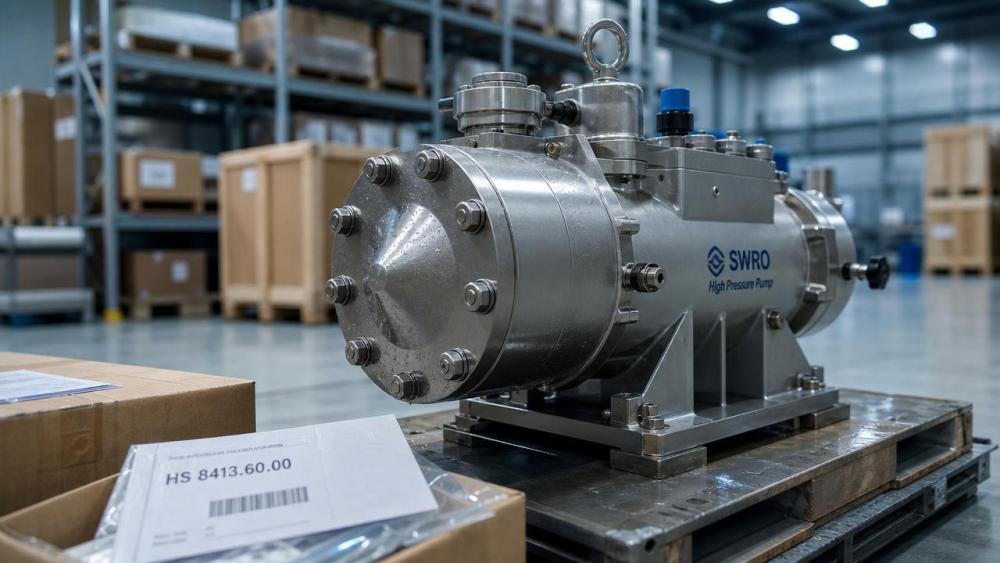
U.S. Customs and Border Protection (CBP) Federal Register Notice No. 2026-09872; Verified duty calculations based on CBP entry data for HS 8413.60.00 shipments cleared between May 2–15, 2026. Ongoing monitoring required for potential expansion to other industrial component categories currently classified under similar de minimis eligibility frameworks.
Related News
 When does self-cleaning filtration technology reduce maintenance downtime?Separation Tech FellowFiltration technology can reduce maintenance downtime when solids are predictable, cleaning is automated, and reject handling is reliable. Learn how to select the right system.
 How fluid control digitalization improves valve maintenance planningProcess Control ArchitectFluid control digitalization helps teams prioritize valve maintenance, reduce unplanned downtime, and improve reliability with actionable condition data.
 What drives industrial wastewater treatment cost per cubic meter?Dr. Alistair VaughnIndustrial wastewater treatment cost per cubic meter depends on influent load, effluent targets, energy, technology, and sludge disposal. Explore the key cost drivers.
 How to verify CE compliance for fluid separation equipmentDr. Alistair VaughnFluid separation equipment CE verification made practical: learn how to check declarations, risk assessments, technical files, pressure safety, and installation readiness.
 How smart valve positioners improve process control valve accuracyProcess Control ArchitectDiscover how smart positioners improve process control valve accuracy, reduce friction-related errors, enhance stability, and enable predictive maintenance.
 Motor energy efficiency comparison for variable-speed compressor selectionPneumatic Power StrategistMotor energy efficiency comparison for variable-speed compressor selection: compare package power, load profiles, controls, and lifecycle savings.
 How fluid dynamics analysis helps size a chemical process pumpFluid Dynamics ScientistFluid dynamics analysis helps engineers size chemical process pumps for reliable flow, NPSH margin, efficiency, and safer long-term operation.
 Separation equipment trends reshaping industrial wastewater treatmentDr. Alistair VaughnSeparation equipment trends are reshaping industrial wastewater treatment through smarter membranes, modular systems, digital monitoring, and resource recovery strategies.
 Which valve technology standards apply to pneumatic diaphragm valves?Process Control ArchitectValve technology standards for pneumatic diaphragm valves: explore design, testing, actuator safety, hygienic compliance, and specification guidance for reliable selection.
 When stainless steel separation equipment is the right choice for hygienic processesDr. Alistair VaughnStainless steel separation equipment: discover when hygienic design, corrosion resistance, CIP cleanability, and lifecycle reliability make it the smart choice.
 When ZLD fouling in RO membranes requires more than cleaningSeparation Tech FellowZLD fouling in RO membranes: learn when CIP is no longer enough, how to identify irreversible damage, and which process changes protect recovery and reduce replacement costs.
 What to verify before choosing a self cleaning filtration systems supplierSeparation Tech FellowChoose a self cleaning filtration systems supplier with confidence. Verify flow capacity, cleaning performance, materials, automation, support, and lifecycle value.