Canada Cuts Canola Anti-Dumping Duty to 5.9%, Boosting Pump Exports




Effective March 1, 2026, Canada reduced its anti-dumping duty on canola exports to China from 75.8% to 5.9%. This policy shift—coupled with broader Sino-Canadian trade normalization—is accelerating domestic oilseed crushing capacity expansion in China. As a result, demand for magnetic drive pumps and chemical process pumps used in solvent handling and refining stages of vegetable oil production is rising, particularly in export-oriented equipment procurement for Southeast Asian and Latin American markets.
Event Overview
On March 1, 2026, the Canadian government lowered the anti-dumping duty on canola shipments to China from 75.8% to 5.9%. This adjustment is publicly confirmed and tied to improved bilateral trade relations. No further tariff revisions or implementation timelines beyond this date have been officially announced.
Industries Affected
Direct Trade Enterprises
Exporters and importers engaged in Canada–China canola trade face immediate cost realignment. The sharp duty reduction lowers landed costs for Chinese buyers, increasing price competitiveness versus alternative oilseeds—and potentially reshaping sourcing decisions across Asia-Pacific supply chains.
Oilseed Processing Manufacturers
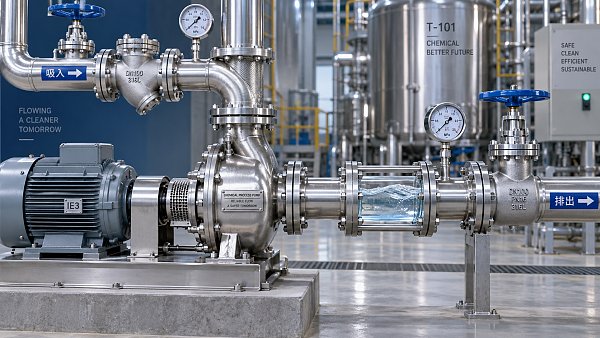
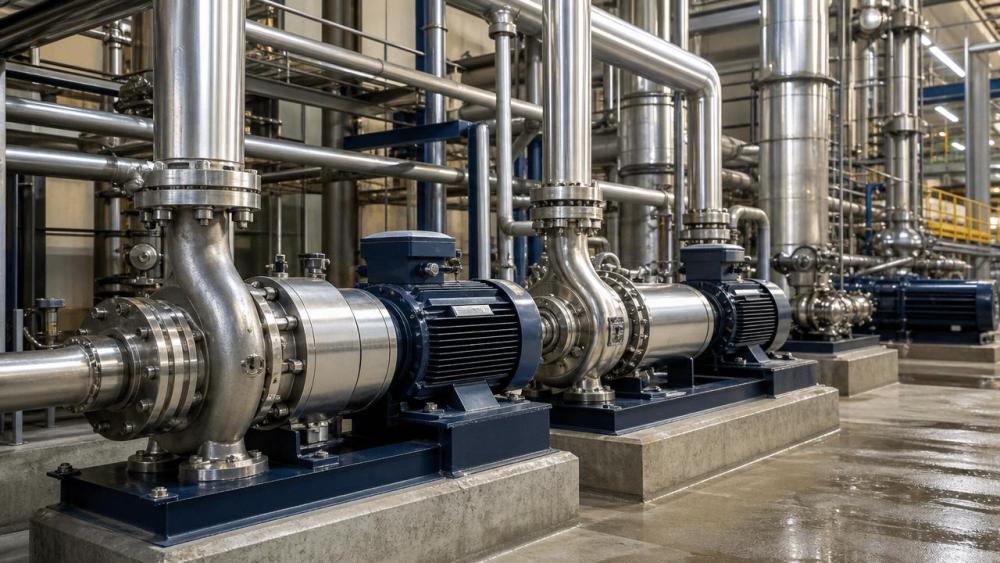
Domestic vegetable oil refiners are ramping up crushing line upgrades and expansions. Magnetic drive pumps (for closed-loop solvent transfer) and chemical process pumps (for high-temperature, high-pressure refining) are now being specified more frequently in new or retrofitted facilities—driving replacement and new-installation demand.
Industrial Pump Exporters & OEMs
Manufacturers supplying magnetic and chemical process pumps are seeing increased inquiry volume—notably for integrated pump packages aligned with processing technology. Export opportunities are emerging where suppliers partner with engineering contractors to deliver ‘pump skid + process package’ solutions targeting greenfield projects in Southeast Asia and Latin America.
Supply Chain Service Providers
Firms offering technical support, spare parts logistics, or local certification services for industrial pumps may experience higher regional deployment activity. Demand is shifting toward localized after-sales readiness, especially where end-users operate under tight project schedules and regulatory compliance requirements.
Key Considerations and Recommended Actions
Monitor official updates on tariff application scope
The current duty rate applies specifically to canola; it does not automatically extend to rapeseed meal, crude oil, or other derivatives. Stakeholders should verify whether related HS codes or product classifications remain subject to separate measures—and track any forthcoming notices from China’s Ministry of Commerce or Canada’s CBSA.
Assess pump specification trends in active EPC projects
Analysis shows that recent tender documents for edible oil plants in Vietnam, Indonesia, and Brazil increasingly reference API 610-compliant chemical process pumps and ISO 2858-compatible magnetic drive units. Exporters should prioritize alignment with these technical benchmarks—not just price—when engaging with engineering, procurement, and construction (EPC) firms.
Distinguish between policy signal and procurement reality
Observably, duty reduction creates favorable conditions for investment, but actual plant commissioning and associated equipment orders typically lag by 6–18 months. Companies should avoid over-indexing on near-term order forecasts and instead focus on relationship-building with design institutes and EPC contractors active in target regions.
Prepare for integrated solution engagement
Current more suitable approach is to coordinate early with system integrators or technology licensors—rather than pursuing standalone pump sales. Documentation supporting pump compatibility with common solvent systems (e.g., hexane, ethanol), corrosion resistance data, and third-party performance test reports are becoming baseline requirements in bid submissions.
Editorial Perspective / Industry Observation
This tariff adjustment is best understood as a structural signal—not yet a fully realized market outcome. From an industry perspective, it reflects renewed policy coordination between two major agricultural trading partners, lowering a key barrier to upstream feedstock supply. However, its impact on pump demand remains derivative: it depends on sustained investment in crushing infrastructure and downstream processing capacity. That makes continued monitoring of Chinese domestic crushing margins, soybean/canola crush ratios, and overseas EPC award announcements essential. The shift does not guarantee immediate export growth—but it does raise the probability of pump-related opportunities in integrated oil processing projects over the next 12–24 months.
Conclusion
This development signals a recalibration in agri-trade policy with tangible secondary effects on industrial equipment demand. It is neither a sudden market inflection nor a guaranteed sales catalyst—but rather a conditionally supportive factor for pump exporters engaging strategically with processing infrastructure development. Current interpretation should emphasize measured responsiveness over reactive scaling.
Source Attribution
Main source: Official tariff notice issued by the Government of Canada, effective March 1, 2026.
Note: Ongoing observation is required regarding implementation details for specific canola product categories (e.g., seed vs. meal), as well as confirmation of related Chinese customs enforcement practices.
Related News
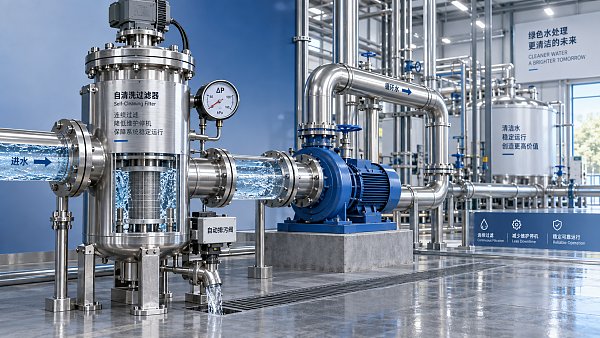
 When does self-cleaning filtration technology reduce maintenance downtime?Separation Tech FellowFiltration technology can reduce maintenance downtime when solids are predictable, cleaning is automated, and reject handling is reliable. Learn how to select the right system.
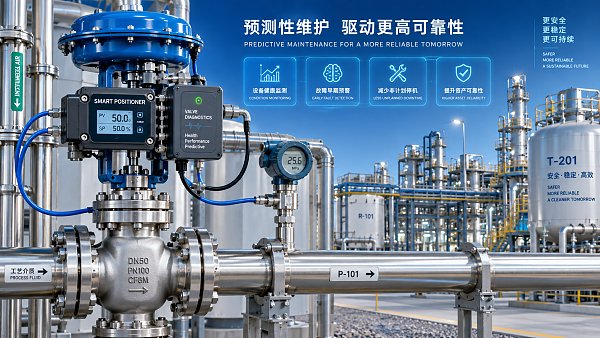
 How fluid control digitalization improves valve maintenance planningProcess Control ArchitectFluid control digitalization helps teams prioritize valve maintenance, reduce unplanned downtime, and improve reliability with actionable condition data.
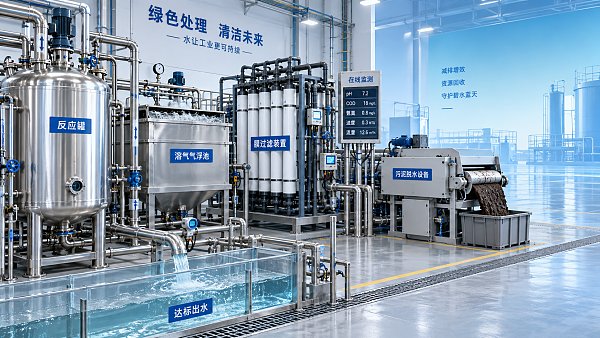
 What drives industrial wastewater treatment cost per cubic meter?Dr. Alistair VaughnIndustrial wastewater treatment cost per cubic meter depends on influent load, effluent targets, energy, technology, and sludge disposal. Explore the key cost drivers.
 How to verify CE compliance for fluid separation equipmentDr. Alistair VaughnFluid separation equipment CE verification made practical: learn how to check declarations, risk assessments, technical files, pressure safety, and installation readiness.
 How smart valve positioners improve process control valve accuracyProcess Control ArchitectDiscover how smart positioners improve process control valve accuracy, reduce friction-related errors, enhance stability, and enable predictive maintenance.
 Motor energy efficiency comparison for variable-speed compressor selectionPneumatic Power StrategistMotor energy efficiency comparison for variable-speed compressor selection: compare package power, load profiles, controls, and lifecycle savings.
 How fluid dynamics analysis helps size a chemical process pumpFluid Dynamics ScientistFluid dynamics analysis helps engineers size chemical process pumps for reliable flow, NPSH margin, efficiency, and safer long-term operation.
 Separation equipment trends reshaping industrial wastewater treatmentDr. Alistair VaughnSeparation equipment trends are reshaping industrial wastewater treatment through smarter membranes, modular systems, digital monitoring, and resource recovery strategies.
 Which valve technology standards apply to pneumatic diaphragm valves?Process Control ArchitectValve technology standards for pneumatic diaphragm valves: explore design, testing, actuator safety, hygienic compliance, and specification guidance for reliable selection.
 When stainless steel separation equipment is the right choice for hygienic processesDr. Alistair VaughnStainless steel separation equipment: discover when hygienic design, corrosion resistance, CIP cleanability, and lifecycle reliability make it the smart choice.
 When ZLD fouling in RO membranes requires more than cleaningSeparation Tech FellowZLD fouling in RO membranes: learn when CIP is no longer enough, how to identify irreversible damage, and which process changes protect recovery and reduce replacement costs.
 What to verify before choosing a self cleaning filtration systems supplierSeparation Tech FellowChoose a self cleaning filtration systems supplier with confidence. Verify flow capacity, cleaning performance, materials, automation, support, and lifecycle value.