Fluid Dynamics Intelligence for Pump Efficiency Gains




For technical evaluators, pump efficiency is no longer judged by nameplate performance alone—it depends on how accurately systems interpret flow behavior, cavitation risk, pressure losses, and lifecycle operating conditions. Fluid dynamics intelligence brings together CFD analysis, sensor data, control logic, and energy benchmarking to reveal where efficiency is gained or lost across centrifugal, plunger, and integrated fluid systems. This article explores how data-driven fluid insight supports better pump selection, smarter operation, and measurable energy savings in modern process industries.
Why fluid dynamics intelligence changes pump efficiency evaluation

In industrial plants, pumps rarely operate under the stable conditions shown on a factory test curve. Flow demand shifts, valves throttle, filters foul, suction levels fluctuate, and process fluids change viscosity.
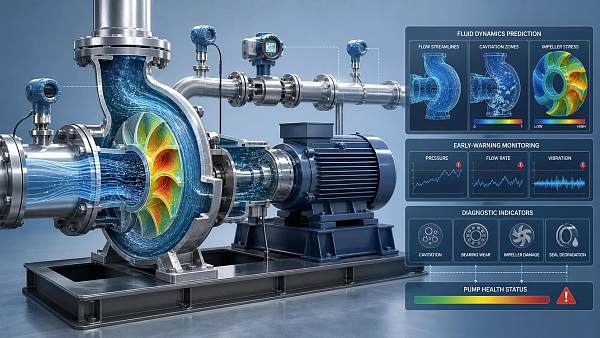
Fluid dynamics intelligence helps evaluators connect these changing conditions with actual energy use, hydraulic stability, vibration behavior, and maintenance exposure across the full operating envelope.
- It identifies whether the pump is operating near best efficiency point or wasting energy through excessive recirculation, throttling, or bypass flow.
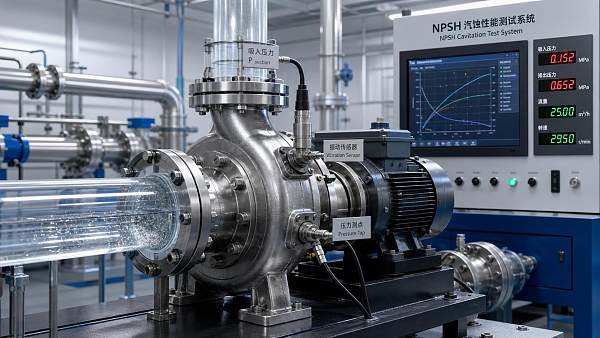
- It reveals cavitation risk before damage becomes visible on impellers, seals, bearings, or high-pressure wet-end components.
- It links pump behavior with control valves, filtration resistance, compressor utilities, and upstream process constraints.
- It supports technical procurement teams when comparing vendor claims, lifecycle costs, and decarbonization targets.
For FCSM, this intelligence is not limited to pump hardware. It connects the “hearts,” “throats,” “lungs,” and “purifying kidneys” of modern industry into a measurable fluid-control network.
Where efficiency is usually lost in real pump systems
Technical evaluators often face one difficult question: is low efficiency caused by the pump, the piping system, the control philosophy, or the selected duty point?
Fluid dynamics intelligence separates these causes by combining hydraulic curves, operating data, and system resistance models instead of relying on single-point performance assumptions.
The following table shows typical loss mechanisms that appear in chemical processing, water treatment, SWRO, power generation, municipal utilities, and general manufacturing plants.
This view prevents premature equipment replacement. In many cases, fluid dynamics intelligence shows that the pump is not defective; the system is forcing it into an inefficient role.
How technical evaluators should compare centrifugal and plunger pump decisions
Centrifugal pumps and high-pressure plunger pumps solve different hydraulic problems. Treating them as interchangeable can distort budgets, reliability planning, and lifecycle energy forecasts.
Fluid dynamics intelligence supports comparison by mapping required flow, pressure, pulsation tolerance, media characteristics, and control response before a purchase specification is finalized.
For evaluators reviewing tenders, the comparison below clarifies where each pump type is technically appropriate and where additional system design checks are required.
The most reliable procurement decision is usually not the pump with the highest catalog efficiency. It is the pump whose efficiency remains stable under verified process conditions.
Which data points matter most for fluid dynamics intelligence?
A useful intelligence model begins with measurable variables. Without accurate field data, even advanced CFD or digital twin analysis may produce misleading conclusions.
Core parameters to collect before evaluation
- Flow rate across minimum, normal, peak, and upset conditions, rather than only the nominal design point.
- Suction pressure, discharge pressure, fluid temperature, vapor pressure, and available NPSH margin.
- Motor power, variable frequency drive speed, valve opening, bypass status, and start-stop frequency.
- Fluid density, viscosity, solids content, corrosiveness, gas entrainment, and membrane or filter resistance.
- Vibration spectrum, acoustic signature, bearing temperature, seal leakage trend, and maintenance history.
FCSM’s intelligence approach links these data streams with pump mechanics, valve behavior, air compressor utilities, and separation equipment performance to form a system-level view.
That broader view is especially valuable when energy reduction, carbon reporting, and reliability improvement must be justified to both engineering and finance teams.
Procurement checklist: what to verify before approving a pump solution
Technical evaluators often receive proposals with similar flow, head, and motor ratings. The differences appear only when operating scenarios, compliance, and maintainability are examined.
The checklist below turns fluid dynamics intelligence into a practical procurement filter for industrial pump sets and integrated fluid control packages.
This procurement method helps evaluators defend recommendations with traceable evidence instead of relying on vendor confidence or incomplete datasheets.
How system integration improves energy savings beyond the pump
Pump efficiency gains are often limited when the rest of the fluid network is ignored. A highly efficient pump can still waste energy against restrictive piping or poorly sized valves.
Fluid dynamics intelligence therefore evaluates pumps together with control valves, filtration modules, membranes, compressors, cooling utilities, and process demand profiles.
Integrated improvement path
- Build a baseline using power draw, flow, head, valve position, and operating hours across representative production periods.
- Model the system curve and identify where pressure losses arise from piping, fittings, strainers, membranes, or throttling valves.
- Compare alternatives such as impeller trimming, variable speed control, parallel pump operation, or duty redistribution.
- Validate expected savings against reliability impact, spare-part availability, automation complexity, and compliance requirements.
This sequence allows decision teams to prioritize modifications with the strongest technical and financial justification, rather than investing in isolated upgrades.
Standards, compliance, and documentation evaluators should reference
Industrial pump decisions are influenced by efficiency rules, safety requirements, material compatibility, environmental targets, and documentation expectations in international tenders.
Fluid dynamics intelligence does not replace standards. It strengthens compliance review by providing operating evidence behind selected designs and control strategies.
- API 610 may be relevant for centrifugal pumps in petroleum, petrochemical, and natural gas applications where robustness is critical.
- ISO 5199 and ISO 9906 are often referenced for technical specifications and hydraulic performance acceptance testing.
- IEC motor efficiency classes and local energy regulations should be reviewed when comparing motor-driven pump packages.
- Material standards, sealing plans, and corrosion allowances must reflect media chemistry, temperature, pressure, and leakage tolerance.
For plants pursuing low-carbon operation, documentation should also support energy benchmarking, operating-hour assumptions, and projected electricity reduction after optimization.
Common mistakes that weaken pump efficiency projects
Many efficiency projects underperform because the evaluation starts too late or focuses only on equipment price. Fluid dynamics intelligence reduces these avoidable errors.
Mistake 1: accepting a single duty point as the full requirement
Plants operate across variable demand. A pump selected only for one rated point may run inefficiently during most production hours.
Mistake 2: separating valve behavior from pump selection
A control valve that absorbs excessive pressure drop can hide poor pump sizing while increasing energy consumption and noise risk.
Mistake 3: ignoring suction-side geometry
Elbows, reducers, vapor pockets, and insufficient submergence can create asymmetric inlet flow and cavitation even when theoretical NPSH appears acceptable.
Mistake 4: calculating payback without maintenance exposure
Energy savings are important, but seal failures, bearing wear, downtime, and spare-parts logistics can change the true lifecycle result.
FAQ for technical evaluators using fluid dynamics intelligence
How early should fluid dynamics intelligence be used in a project?
It should begin before final pump selection. Early analysis can prevent oversized motors, unsuitable impellers, insufficient NPSH margin, and control strategies that create long-term energy waste.
Does every pump application need CFD analysis?
Not every application requires full CFD. It is most useful when cavitation risk, complex suction geometry, multiphase flow, high-value downtime, or abnormal vibration is involved.
What is the fastest way to identify a poor pump-control match?
Check valve opening, differential pressure, pump speed, and energy use during normal production. Persistent throttling or unstable pressure often indicates mismatch.
Can fluid dynamics intelligence support retrofit decisions?
Yes. It helps compare impeller trimming, VFD installation, pump replacement, parallel operation, and piping modification using measurable energy and reliability criteria.
Why choose FCSM for pump efficiency intelligence and decision support
FCSM observes industrial pumps, control valves, air compressors, and separation systems as one connected fluid machinery ecosystem, not as isolated product categories.
Our Strategic Intelligence Center translates fluid dynamics intelligence into practical evaluation logic for pump suppliers, engineering teams, procurement specialists, and process-industry decision makers.
- Consult us for parameter confirmation, including flow range, head margin, NPSH review, viscosity impact, and operating-hour assumptions.
- Request selection support for centrifugal pumps, plunger pumps, control valves, compressor utilities, filtration units, and integrated fluid packages.
- Discuss tender documentation, compliance references, energy benchmarking, delivery-cycle risks, and customized evaluation frameworks.
- Use FCSM insight to compare lifecycle cost, decarbonization value, predictive maintenance readiness, and international procurement credibility.
If your team is preparing a new pump purchase, retrofit study, or efficiency upgrade, contact FCSM to clarify technical parameters, selection paths, certification concerns, sample support, and quotation communication before final commitment.
Related News
 How fluid dynamics analysis helps size a chemical process pumpFluid Dynamics ScientistFluid dynamics analysis helps engineers size chemical process pumps for reliable flow, NPSH margin, efficiency, and safer long-term operation.
 How fluid dynamic cavitation analysis predicts pump erosion riskFluid Dynamics ScientistFluid dynamic cavitation analysis reveals pump erosion risks before costly damage occurs. Learn how CFD pinpoints vapor collapse zones, off-design threats, and effective mitigation.
 How to identify industrial pump parts causing repeated seal failuresFluid Dynamics ScientistIndustrial pump parts can reveal why seals fail repeatedly. Learn how to inspect sleeves, bearings, shafts, flush lines, and hydraulic conditions for lasting repairs.
 How to size plunger pumps for high pressure dosing accuratelyFluid Dynamics ScientistPlunger pumps for high pressure dosing: learn how to size flow, pressure, suction, pulsation control, and materials for accurate, reliable chemical injection.
 What drives centrifugal pump price differences for similar duty points?Fluid Dynamics ScientistCentrifugal pump price differences explained: compare efficiency, materials, seals, testing, and lifecycle costs to choose the right pump package.
 What Should EPC Buyers Check in Fluid Equipment Technical Specs?Fluid Dynamics ScientistWhat should an EPC buyer check in fluid equipment technical specs? Explore key checks for duty range, materials, efficiency, interfaces, compliance, and lifecycle reliability.
 How Can Chemical Dosing Costs Be Reduced in Industrial Wastewater Treatment?Fluid Dynamics ScientistHow to reduce chemical dosing cost in industrial wastewater treatment? Discover practical ways to optimize monitoring, mixing, controls, and chemical selection while protecting compliance.
 Which pump cavitation test methods best reveal NPSH margin?Fluid Dynamics ScientistPump cavitation test methods explained: compare NPSH3, vibration, acoustic emission, and endurance testing to verify real NPSH margin and prevent costly pump damage.
 How fluid separation process design affects product purity and yieldFluid Dynamics ScientistFluid separation process design directly impacts product purity and yield. Learn how better configuration, equipment choices, and control strategies improve performance.
 What drives process industry pumps price in corrosive duty applicationsFluid Dynamics ScientistProcess industry pumps price in corrosive duty depends on materials, seals, coatings, testing, and supplier support. Learn how to compare quotes, avoid hidden costs, and choose reliable lifecycle value.
 How Fluid Dynamics Predictive Analytics Improves Pump Failure ForecastingFluid Dynamics ScientistFluid dynamics predictive analytics helps forecast pump failures earlier by linking flow behavior to cavitation, wear, and damage—improving maintenance decisions and reducing downtime.
 What Pump System Technology Improves Energy Efficiency in Chemical Processing?Fluid Dynamics ScientistPump system technology for chemical processing starts with the real duty point. Learn how VFDs, hydraulic design, staging, and controls can cut energy use and improve reliability.