Pump Impeller Design: 5 Changes That Improve Efficiency




For technical evaluators, pump impeller design is often the clearest lever for improving hydraulic efficiency, cavitation resistance, and lifecycle reliability. This article outlines five practical design changes that can reduce energy loss, stabilize flow behavior, and support better equipment selection across demanding industrial applications.
Why does pump impeller design deserve early attention in technical evaluation?
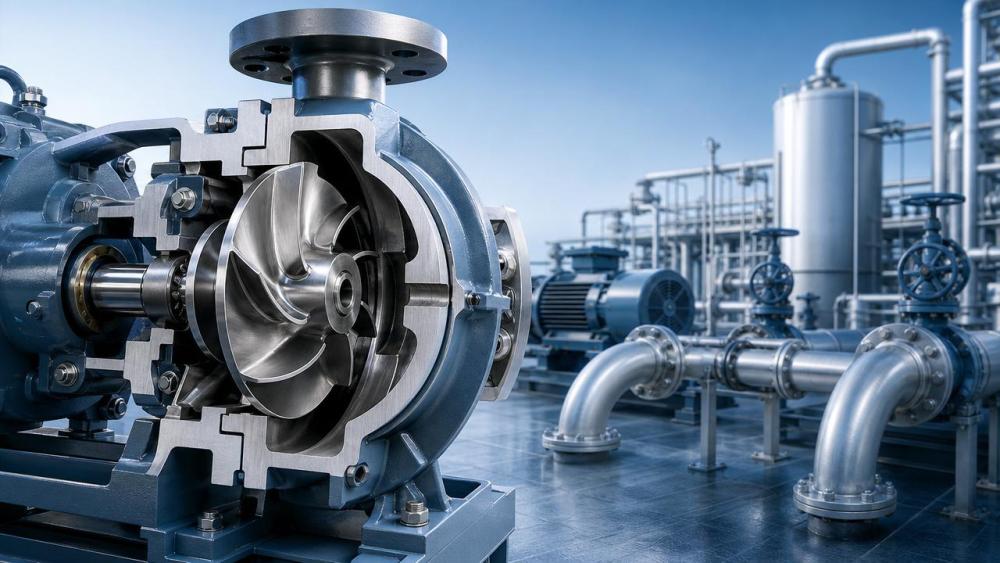
In industrial pump selection, many buyers focus first on motor rating, seal arrangement, or casing material. Those factors matter, but pump impeller design usually determines how efficiently hydraulic energy is created and how stable the pump remains away from the best efficiency point.
For technical evaluators working across water treatment, chemical processing, utilities, mining support systems, and general plant services, the impeller is where energy conversion, flow control, and cavitation risk meet. A weak design can raise power draw, vibration, recirculation, and maintenance frequency even when the pump meets nominal duty data on paper.
This is why FCSM tracks pump impeller design alongside broader fluid system intelligence. In modern process industries, a pump is not an isolated machine. Its behavior affects valve throttling stability, filtration loading, compressor utility demand in auxiliary systems, and overall decarbonization targets tied to lower energy intensity.
- Hydraulic efficiency influences operating expenditure over the full service life, often more than initial purchase price.
- Cavitation resistance affects reliability in variable suction conditions, high temperature service, and low-NPSH installations.
- Flow stability shapes downstream control performance, especially where smart valves and filtration systems must operate in narrow process windows.
- Impeller geometry also influences wear patterns, solids tolerance, and maintenance planning.
The five pump impeller design changes that usually improve efficiency
Not every efficiency gain requires a complete pump redesign. In many cases, targeted changes to pump impeller design deliver measurable benefits in head generation, internal loss reduction, and operating range. The five changes below are especially relevant during equipment comparison or retrofit review.
1. Optimize blade inlet angle to reduce shock loss
When the fluid enters the impeller at an angle that does not match blade geometry, incidence loss rises quickly. This creates local separation, pressure fluctuation, and early cavitation activity. Adjusting the blade inlet angle to better match expected suction flow conditions can reduce entry shock and improve suction performance.
For evaluators, this matters most in systems with seasonal flow variation, unstable upstream piping, or throttled operation. A pump that looks efficient at one duty point may suffer significant hydraulic penalties in real operating windows if the inlet geometry is too narrow or too aggressive.
2. Refine blade outlet angle for better head-efficiency balance
A larger outlet angle can increase theoretical head, but it often raises diffusion loss and radial load. A smaller angle may improve efficiency but narrow the operating envelope. Effective pump impeller design balances outlet angle with casing geometry, expected flow range, and shaft loading limits.
In chemical transfer or utility water service, where long running hours dominate lifecycle cost, a well-balanced outlet angle often creates a better total cost profile than simply pursuing the highest head coefficient.
3. Increase blade surface quality and hydraulic smoothness
Surface finish is not a cosmetic issue. Rough blade passages increase friction loss and encourage deposit formation. In corrosive or slurry-prone applications, poor hydraulic finish can also accelerate wear, making the original pump impeller design degrade faster in the field than in factory testing.
Precision casting, controlled machining, and tighter profile consistency help maintain passage uniformity. This is especially useful in high-efficiency centrifugal pumps where small hydraulic deviations can shift the best efficiency point and reduce repeatability between units.
4. Adjust blade count and passage width to control recirculation
Too few blades may increase slip and reduce head. Too many can increase blockage, friction, and solids sensitivity. Changing blade count is one of the most practical pump impeller design decisions when engineers must balance efficiency with clogging resistance, viscosity tolerance, or part-load stability.
This tradeoff appears often in wastewater, condensate, process water, and light chemical service. Technical evaluators should always review whether the proposed passage width matches the actual contamination level instead of assuming a standard closed impeller will suit every clean-looking fluid.
5. Improve shroud, wear ring, and tip clearance control
Internal leakage across clearances directly reduces volumetric efficiency. Even a well-shaped hydraulic passage cannot compensate for excessive recirculation through wear ring gaps or poor tip clearance control. Better clearance management often produces one of the fastest real-world efficiency gains.
For continuous-duty industrial pumps, this issue also affects maintenance intervals. If the original pump impeller design cannot preserve efficient clearances under thermal growth, corrosion, or light abrasion, performance drift may appear much sooner than expected.
Which design change matters most in different industrial scenarios?
Technical evaluation becomes easier when pump impeller design is linked to operating context. The table below summarizes which design focus usually matters most by application condition rather than by generic pump category.
The key point is that the best pump impeller design is rarely universal. A geometry that performs well in clean, stable water service may be a poor choice in a variable process line with entrained gas, intermittent fouling, or strict uptime requirements.
How should technical evaluators compare impeller options during procurement?
Procurement teams often receive multiple proposals with similar flow and head ratings. The challenge is to identify which pump impeller design will hold efficiency and reliability under real duty conditions. A structured comparison avoids overreliance on catalog curves alone.
A practical evaluation checklist
- Check the duty point against the expected operating band, including turndown, seasonal viscosity changes, and control valve interaction.
- Ask whether the pump impeller design was optimized for the quoted point only or for the wider envelope.
- Review NPSH-related risk, especially for hot liquids, elevated altitude, or long suction piping layouts.
- Examine passage width, blade count, and solids tolerance if contamination risk exists.
- Evaluate expected clearance growth and wear mechanisms over maintenance intervals.
- Request performance interpretation in relation to system efficiency targets, decarbonization goals, and digital monitoring plans.
The comparison table below helps technical evaluators review pump impeller design decisions in a procurement-friendly format.
A good procurement decision connects impeller geometry with plant reality. This is where FCSM’s cross-equipment perspective is useful. Pump efficiency should be judged together with valve control stability, filtration fouling behavior, motor regulation trends, and long-term energy compliance pressure.
What mistakes do buyers make when judging pump impeller design?
Several recurring mistakes appear in industrial purchasing. Most of them come from evaluating a pump only as a static product, not as a dynamic part of a fluid control network.
- Assuming peak catalog efficiency equals field efficiency. Real systems often run off-design because of valve throttling, seasonal demand, or fouling.
- Ignoring suction conditions. Even a strong pump impeller design cannot overcome poor suction piping or inadequate NPSH margin without reliability penalties.
- Choosing the narrowest clearances without considering wear environment. Tight internal gaps improve initial efficiency but may be unstable in abrasive or corrosive duty.
- Treating solids tolerance as an afterthought. Passage blockage risk can outweigh modest efficiency gains in real production environments.
- Comparing pump offers without reviewing hydraulic design philosophy. Two pumps with equal nominal duty may differ significantly in part-load behavior and maintenance profile.
In broader general machinery operations, these mistakes can cascade. An unstable pump raises control valve hunting, increases separator upset risk, and can add unnecessary electrical load across the plant. That is why technical evaluators increasingly need system-level judgment rather than isolated equipment comparison.
How do standards, digital tools, and decarbonization goals change the assessment?
Pump impeller design is no longer assessed only by traditional hydraulic curves. Today, evaluators also consider energy performance expectations, digital verification methods, and compatibility with predictive maintenance programs.
What to look for
- Use generally recognized test approaches and supplier documentation practices that allow fair duty-point comparison.
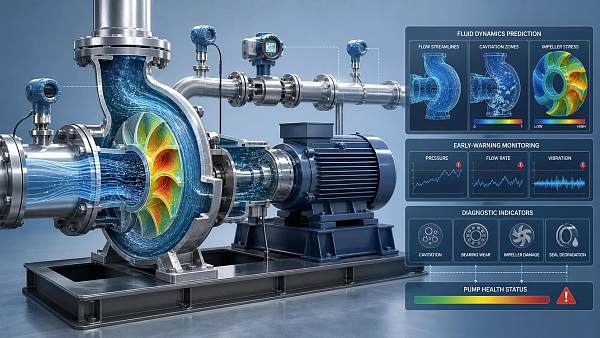
- Ask whether CFD analysis, cavitation review, or flow field optimization informed the impeller geometry.
- Connect efficiency discussions to motor energy rules, plant carbon reduction plans, and digital monitoring architecture.
- Review how vibration, temperature, power draw, and process data can validate the pump impeller design after installation.
This aligns closely with FCSM’s intelligence approach. The strongest technical decisions now merge hydraulic detail with regulatory awareness, material supply considerations, and evolving expectations around Process Industry 4.0 and low-carbon factories.
FAQ: common questions about pump impeller design
How do I know if pump impeller design is the real cause of poor efficiency?
Start by separating hydraulic causes from system causes. Check whether the pump is operating far from its intended range, whether suction conditions are unstable, and whether wear has increased internal leakage. If those conditions are controlled and power draw remains high, pump impeller design may be a primary contributor.
Which matters more: impeller geometry or impeller material?
Both matter, but in different ways. Geometry drives efficiency, head, and cavitation behavior. Material determines how well those hydraulic properties are preserved under corrosion, erosion, or temperature stress. For many technical evaluators, the right question is how long the original pump impeller design can remain effective in the actual medium.
Is a higher blade count always better for efficiency?
No. More blades can reduce slip and raise head, but they also increase surface friction and can narrow passages. In clean liquid service, that may be acceptable. In fluids with contamination, gas entrainment, or fouling potential, a lower blade count may offer better operating resilience.
Can an existing pump be improved without replacing the full unit?
Sometimes yes. Re-trimming, redesigning, or replacing the impeller can improve hydraulic matching if the casing and shaft arrangement remain suitable. However, technical evaluators should verify that the modified pump impeller design still works with casing geometry, motor loading, seal limits, and system curve behavior.
Why choose us for pump impeller design intelligence and selection support?
FCSM supports technical evaluators who need more than a simple product pitch. Our value is in connecting pump impeller design with the larger industrial fluid ecosystem, including control valves, compressors, separation equipment, materials risk, and energy-efficiency trends.
If you are comparing pump options for a new line, retrofit, or tender response, you can consult us for practical decision support on the points that usually delay procurement:
- Parameter confirmation for flow, head, NPSH conditions, fluid properties, and operating envelope
- Pump impeller design review for efficiency, cavitation resistance, passage suitability, and maintenance implications
- Selection guidance across industrial centrifugal pumps and adjacent fluid-control equipment
- Discussion of delivery timing, replacement planning, and technical document readiness for project schedules
- Support on certification expectations, data consistency, and internationally understandable technical communication
- Quotation alignment and customized solution discussion for demanding service conditions
When pump efficiency, reliability, and decarbonization targets all matter, a deeper review of pump impeller design can prevent expensive mistakes. Contact FCSM to discuss your operating data, selection questions, and project constraints before finalizing the equipment decision.
Related News
 How fluid dynamics analysis helps size a chemical process pumpFluid Dynamics ScientistFluid dynamics analysis helps engineers size chemical process pumps for reliable flow, NPSH margin, efficiency, and safer long-term operation.
 How fluid dynamic cavitation analysis predicts pump erosion riskFluid Dynamics ScientistFluid dynamic cavitation analysis reveals pump erosion risks before costly damage occurs. Learn how CFD pinpoints vapor collapse zones, off-design threats, and effective mitigation.
 How to identify industrial pump parts causing repeated seal failuresFluid Dynamics ScientistIndustrial pump parts can reveal why seals fail repeatedly. Learn how to inspect sleeves, bearings, shafts, flush lines, and hydraulic conditions for lasting repairs.
 How to size plunger pumps for high pressure dosing accuratelyFluid Dynamics ScientistPlunger pumps for high pressure dosing: learn how to size flow, pressure, suction, pulsation control, and materials for accurate, reliable chemical injection.
 What drives centrifugal pump price differences for similar duty points?Fluid Dynamics ScientistCentrifugal pump price differences explained: compare efficiency, materials, seals, testing, and lifecycle costs to choose the right pump package.
 What Should EPC Buyers Check in Fluid Equipment Technical Specs?Fluid Dynamics ScientistWhat should an EPC buyer check in fluid equipment technical specs? Explore key checks for duty range, materials, efficiency, interfaces, compliance, and lifecycle reliability.
 How Can Chemical Dosing Costs Be Reduced in Industrial Wastewater Treatment?Fluid Dynamics ScientistHow to reduce chemical dosing cost in industrial wastewater treatment? Discover practical ways to optimize monitoring, mixing, controls, and chemical selection while protecting compliance.
 Which pump cavitation test methods best reveal NPSH margin?Fluid Dynamics ScientistPump cavitation test methods explained: compare NPSH3, vibration, acoustic emission, and endurance testing to verify real NPSH margin and prevent costly pump damage.
 How fluid separation process design affects product purity and yieldFluid Dynamics ScientistFluid separation process design directly impacts product purity and yield. Learn how better configuration, equipment choices, and control strategies improve performance.
 What drives process industry pumps price in corrosive duty applicationsFluid Dynamics ScientistProcess industry pumps price in corrosive duty depends on materials, seals, coatings, testing, and supplier support. Learn how to compare quotes, avoid hidden costs, and choose reliable lifecycle value.
 How Fluid Dynamics Predictive Analytics Improves Pump Failure ForecastingFluid Dynamics ScientistFluid dynamics predictive analytics helps forecast pump failures earlier by linking flow behavior to cavitation, wear, and damage—improving maintenance decisions and reducing downtime.
 What Pump System Technology Improves Energy Efficiency in Chemical Processing?Fluid Dynamics ScientistPump system technology for chemical processing starts with the real duty point. Learn how VFDs, hydraulic design, staging, and controls can cut energy use and improve reliability.