When Pump Impeller Replacement Solves Low Flow Problems




When low flow points to the impeller, not the whole pump
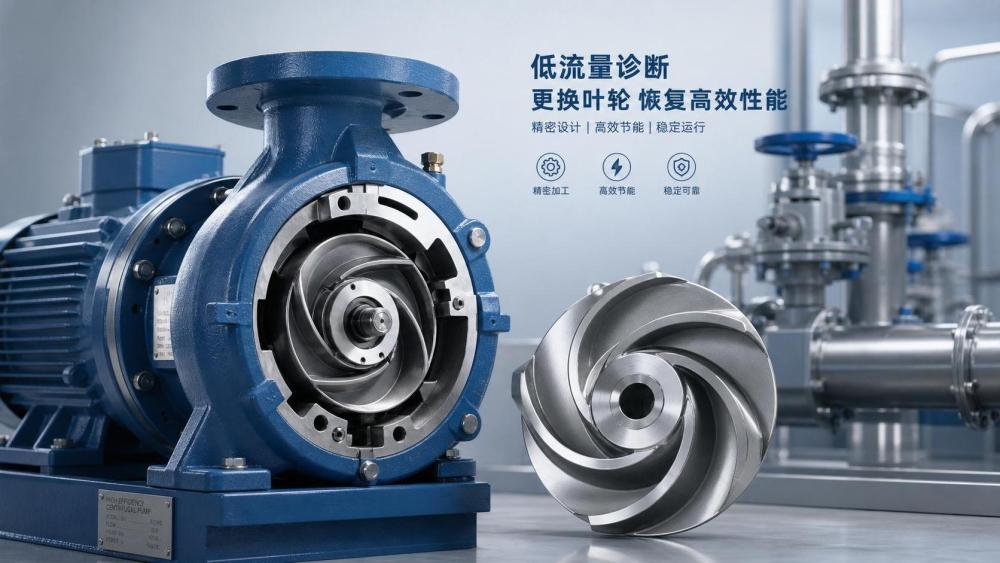
Low flow is often treated as a system problem first.
That works in some plants, but not in every service.
In real operating conditions, pump impeller replacement can restore lost hydraulic output faster than broader mechanical overhauls.
The key is knowing when the impeller is the actual bottleneck.
This matters across chemical transfer, water treatment, utility circulation, and filtration support lines.
Each service handles different fluid chemistry, solids load, duty cycles, and efficiency targets.
That is why the same low-flow symptom can lead to very different maintenance decisions.
Within FCSM’s fluid machinery perspective, the impeller is not just a spare part.
It is the hydraulic core that connects reliability, energy use, cavitation control, and lifecycle performance.
Different operating scenes create different low-flow causes
A cooling water loop usually declines slowly.
A corrosive chemical line may lose flow after one upset event.
A slurry or wastewater service often shows mixed symptoms.
Flow drops, vibration rises, and power draw does not always increase in parallel.
That is why pump impeller replacement should not be triggered by flow data alone.
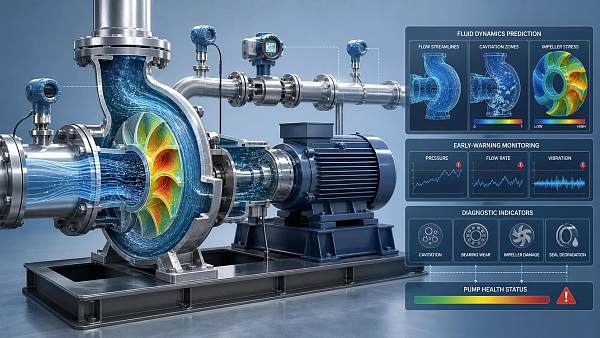
The better approach is to compare hydraulic performance loss with physical wear patterns.
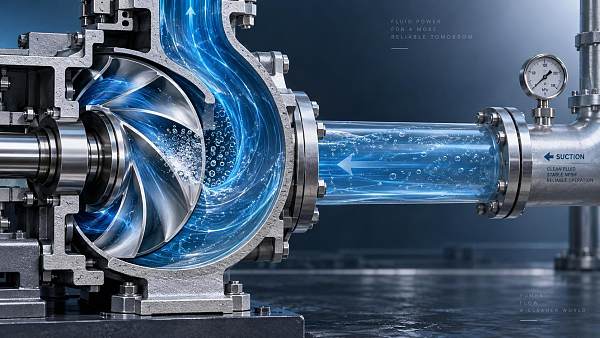
In practice, erosion rounds vane edges.
Corrosion changes blade thickness and balance.
Cavitation leaves pitting near the eye and pressure side.
Those details help separate impeller damage from valve throttling, suction problems, or inaccurate instrumentation.
In cleaner water systems, wear is subtle but efficiency loss is real
Closed-loop circulation systems rarely destroy an impeller overnight.
More often, the pump drifts away from its original duty point.
Flow is lower, but pressure may still look acceptable.
Here, pump impeller replacement makes sense when edge wear and increased clearances reduce hydraulic efficiency enough to raise energy cost.
This is especially relevant where decarbonization targets and motor efficiency rules are tightening.
A slightly damaged impeller can keep running, yet waste power every hour.
In corrosive or aggressive media, the damage path is faster
Chemical transfer and process dosing lines behave differently.
The question is not only whether pump impeller replacement restores flow.
It is whether the current material grade failed because of fluid chemistry, temperature swings, or off-design recirculation.
If replacement repeats the same metallurgy without checking these conditions, low flow may return quickly.
In this scene, material compatibility matters as much as geometry restoration.
Where pump impeller replacement is usually the right call
Some field conditions strongly suggest the impeller is the main source of lost output.
These clues are more reliable when several appear together.
- Flow declines while motor speed remains stable and suction conditions are unchanged.
- Pump head drops below the original curve without obvious downstream restriction changes.
- Inspection shows vane thinning, pitting, recirculation wear, or damaged leading edges.
- Casing and shaft condition remain acceptable, making full pump replacement unnecessary.
- Repeated balancing or seal work has not solved the hydraulic shortfall.
In these cases, pump impeller replacement is often the most economical intervention.
It targets the hydraulic root cause without extending downtime into unrelated assemblies.
The same symptom means different things in wastewater, process, and utility service
A practical comparison helps clarify why inspection standards should change by service type.
This is where many maintenance plans go wrong.
They use one replacement logic for all services, even though wear mechanisms are different.
What to inspect before approving pump impeller replacement
A good decision starts with evidence, not assumption.
In actual troubleshooting, these checkpoints usually reveal whether the impeller is truly responsible.
- Compare actual flow and head against the original pump curve at current fluid conditions.
- Check suction pressure history for chronic cavitation or temporary upset events.
- Measure wear ring clearances, not just impeller surface damage.
- Review vibration trends for imbalance tied to vane loss or deposit buildup.
- Inspect nearby valves and filters to rule out hidden system restriction.
- Confirm whether fluid properties changed after process modification or seasonal temperature shift.
FCSM’s broader fluid control view is useful here.
Low flow may begin in the pump, but it can be amplified by valve behavior, filtration loading, or upstream control instability.
Replacing the impeller without that context solves only part of the problem.
Common misjudgments that lead to repeat failures
One common mistake is blaming the motor because amperage looks unusual.
Hydraulic degradation can change power behavior in ways that look electrical.
Another mistake is approving pump impeller replacement only by part number.
That ignores trim changes, process modifications, and fluid property drift over time.
There is also the cost trap.
A lower-priced impeller may fit dimensionally, yet perform poorly because profile accuracy or balance quality is weaker.
In abrasive or corrosive duty, that shortcut usually increases replacement frequency.
A final blind spot is treating cavitation marks as a past event.
If suction energy conditions remain unchanged, a new impeller may enter the same damage cycle immediately.
How to make pump impeller replacement last longer
Longer service life usually comes from small corrections around the pump, not from the impeller alone.
The best results often come from a combined maintenance decision.
- Match impeller material to actual chemistry, solids content, and cleaning regime.
- Correct suction-side issues that create chronic cavitation or air entrainment.
- Review valve control behavior if the pump frequently operates far from best efficiency point.
- Track replacement intervals and wear patterns to detect changing process conditions early.
- Use inspection data to decide whether a coating, metallurgy upgrade, or hydraulic redesign is justified.
This approach fits the wider industrial push toward predictive maintenance and energy-aware asset management.
It also aligns with the way FCSM frames rotating equipment performance.
Hydraulic reliability, energy efficiency, and lifecycle economics should be evaluated together.
A practical next step before the next outage window
If low flow has become a recurring issue, start with the service history.
Look at when performance dropped, what fluid conditions changed, and how the wear pattern actually developed.
Then compare that evidence with the pump curve, suction conditions, and existing impeller geometry.
That sequence makes pump impeller replacement a targeted decision rather than a routine spare swap.
In many installations, replacing the impeller solves low flow quickly.
In the better-managed ones, it also becomes the moment to correct the operating condition that caused the damage.
That is usually the difference between recovering output for one cycle and improving pump performance for the long term.
Related News
 How fluid dynamics analysis helps size a chemical process pumpFluid Dynamics ScientistFluid dynamics analysis helps engineers size chemical process pumps for reliable flow, NPSH margin, efficiency, and safer long-term operation.
 How fluid dynamic cavitation analysis predicts pump erosion riskFluid Dynamics ScientistFluid dynamic cavitation analysis reveals pump erosion risks before costly damage occurs. Learn how CFD pinpoints vapor collapse zones, off-design threats, and effective mitigation.
 How to identify industrial pump parts causing repeated seal failuresFluid Dynamics ScientistIndustrial pump parts can reveal why seals fail repeatedly. Learn how to inspect sleeves, bearings, shafts, flush lines, and hydraulic conditions for lasting repairs.
 How to size plunger pumps for high pressure dosing accuratelyFluid Dynamics ScientistPlunger pumps for high pressure dosing: learn how to size flow, pressure, suction, pulsation control, and materials for accurate, reliable chemical injection.
 What drives centrifugal pump price differences for similar duty points?Fluid Dynamics ScientistCentrifugal pump price differences explained: compare efficiency, materials, seals, testing, and lifecycle costs to choose the right pump package.
 What Should EPC Buyers Check in Fluid Equipment Technical Specs?Fluid Dynamics ScientistWhat should an EPC buyer check in fluid equipment technical specs? Explore key checks for duty range, materials, efficiency, interfaces, compliance, and lifecycle reliability.
 How Can Chemical Dosing Costs Be Reduced in Industrial Wastewater Treatment?Fluid Dynamics ScientistHow to reduce chemical dosing cost in industrial wastewater treatment? Discover practical ways to optimize monitoring, mixing, controls, and chemical selection while protecting compliance.
 Which pump cavitation test methods best reveal NPSH margin?Fluid Dynamics ScientistPump cavitation test methods explained: compare NPSH3, vibration, acoustic emission, and endurance testing to verify real NPSH margin and prevent costly pump damage.
 How fluid separation process design affects product purity and yieldFluid Dynamics ScientistFluid separation process design directly impacts product purity and yield. Learn how better configuration, equipment choices, and control strategies improve performance.
 What drives process industry pumps price in corrosive duty applicationsFluid Dynamics ScientistProcess industry pumps price in corrosive duty depends on materials, seals, coatings, testing, and supplier support. Learn how to compare quotes, avoid hidden costs, and choose reliable lifecycle value.
 How Fluid Dynamics Predictive Analytics Improves Pump Failure ForecastingFluid Dynamics ScientistFluid dynamics predictive analytics helps forecast pump failures earlier by linking flow behavior to cavitation, wear, and damage—improving maintenance decisions and reducing downtime.
 What Pump System Technology Improves Energy Efficiency in Chemical Processing?Fluid Dynamics ScientistPump system technology for chemical processing starts with the real duty point. Learn how VFDs, hydraulic design, staging, and controls can cut energy use and improve reliability.