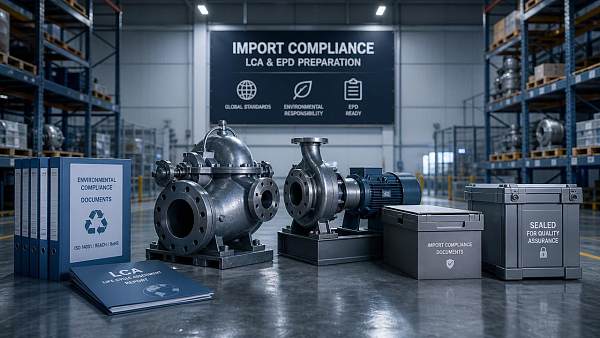
Chile Pilots Pump Carbon Disclosure Rules




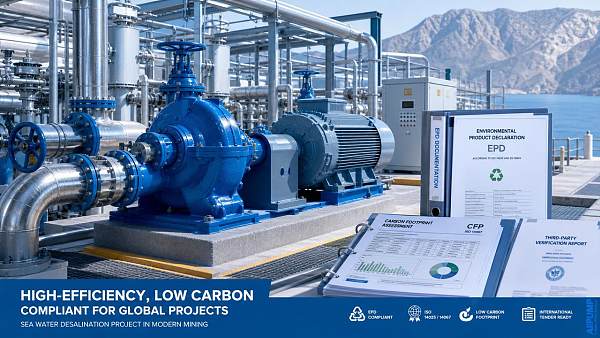
From June 1, 2026, Chile will pilot mandatory life-cycle carbon footprint disclosure for chemical process equipment in the mining and water sectors. Under the announced requirement, Chemical Process Pumps and Double Suction Water Pumps must be delivered with an Environmental Product Declaration (EPD) aligned with ISO 14040/44, or they will not qualify for project tenders or government procurement access. For pump manufacturers, exporters, project suppliers, and procurement teams serving Chile’s mining and water markets, this is a policy signal worth close attention because it links market access directly to carbon disclosure documentation.
Event Overview
According to the disclosed information, Chile’s Ministry of Energy, together with the Ministry of the Environment, announced that starting in June 2026 it will pilot a mandatory disclosure scheme for the full life-cycle carbon footprint of chemical process equipment in the mining and water sectors.
The currently confirmed scope includes Chemical Process Pumps and Double Suction Water Pumps. The public requirement states that these products must be supplied with an EPD environmental product declaration compliant with ISO 14040/44. If the required documentation is not provided, the products will not be eligible for project bidding or government procurement access.
At this stage, the announced information confirms the pilot launch timing, the sector focus, the relevant pump categories, and the documentation threshold tied to tendering and public procurement participation.
Which Industry Segments Will Be Affected
Pump manufacturers serving export markets
Manufacturers of Chemical Process Pumps and Double Suction Water Pumps are the most directly affected because the requirement is attached to shipment and market entry conditions. The impact mainly appears in product compliance preparation, document readiness, and customer response speed. From an industry perspective, companies that have not prepared ISO 14040/44-aligned EPD documentation may face delays in bidding support or order execution for Chile-related projects.
Export traders and overseas project suppliers
Trading companies and export-oriented suppliers will be affected because they often coordinate product delivery, tender submissions, and customer-facing compliance files. The impact mainly lies in contract execution risk and documentation coordination. Analysis shows that even when the manufacturer is the source of technical data, the exporter may still bear the practical pressure of ensuring that each shipment is accompanied by the required EPD for the Chilean market.
Mining and water project procurement teams
Procurement teams in mining and water projects are affected because supplier qualification and bid compliance standards may tighten around product carbon disclosure. The impact mainly appears in vendor screening, bid review, and document verification. Current attention should focus on the fact that pumps without the required declaration may be excluded from tender participation or public purchasing channels, changing how buyers compare eligible suppliers.
Compliance, certification, and supply chain support functions
Teams responsible for compliance management, technical documentation, and supply chain coordination will also be affected. They are likely to face a heavier workload in collecting product data, aligning declarations with ISO 14040/44, and maintaining communication across manufacturers, exporters, and end customers. Observably, this is not only a sales issue but also a cross-functional execution issue involving documentation control and delivery readiness.
What Companies and Practitioners Should Watch and How to Respond
Track official wording and any scope updates closely
Companies involved in Chile-related mining and water business should monitor follow-up statements from Chile’s Ministry of Energy and Ministry of the Environment. More suitable understanding at the current stage is that the pilot announcement establishes a clear compliance direction, while detailed implementation language may still matter for business operations such as accepted declaration formats, applicable product boundaries, and procurement handling in specific projects.
Review whether affected pump categories are already in active Chile-facing business lines
Enterprises should check whether Chemical Process Pumps or Double Suction Water Pumps are already being quoted, shipped, or included in bids for Chile’s mining and water sectors. The practical value of this review is to identify where documentation gaps may directly affect tenders, contracts, or delivery planning. From an industry perspective, this is more urgent for firms with ongoing public-sector or project-based business exposure.
Separate policy signaling from immediate project execution requirements
Not every policy announcement changes every transaction overnight, but this notice clearly connects EPD documentation to eligibility for tenders and government procurement access. Analysis shows that companies should distinguish between the broader policy signal and the immediate compliance needs of specific projects. In practice, sales, bid, and export teams should verify whether customers are already requesting EPDs and whether tenders are beginning to reflect the announced rule.
Prepare internal coordination for EPD-related documentation before shipment stages
Businesses should not wait until final delivery to address the EPD requirement. A more suitable response is to prepare internal workflows early among manufacturing, compliance, technical, and commercial teams so that product documentation can be checked before bids are submitted or shipments are arranged. Current attention should focus on reducing preventable risks such as missing declarations, late document preparation, or inconsistent communication with buyers.
Editorial View / Industry Observation
Observably, this development matters less as a standalone pump-sector headline and more as a market-access signal for industrial equipment entering regulated project channels. From an industry perspective, the key implication is that carbon disclosure is being tied to eligibility, not treated only as a voluntary sustainability statement.
Analysis shows that the current announcement is best understood as an early but concrete policy trigger rather than a fully expanded market-wide outcome. It already has practical relevance because the pilot directly names product categories and states the consequence of non-compliance in tendering and government procurement. At the same time, continued attention is necessary because the real business impact will depend on how the pilot is implemented in actual procurement and project workflows.
Current attention should focus on whether this pilot remains limited to the announced sectors and products or becomes a broader compliance reference point in future industrial equipment trade. For companies active in Chile-related exports, waiting for commercial disruption before responding would be a higher-risk approach than preparing documentation and communication processes now.
Conclusion
Chile’s June 2026 pilot on mandatory life-cycle carbon footprint disclosure for chemical process equipment sends a clear message to pump-related suppliers in the mining and water sectors: EPD documentation may become a direct condition for market participation. The immediate significance lies in compliance readiness for Chemical Process Pumps and Double Suction Water Pumps, especially where bidding and government procurement are involved. More suitable understanding at this stage is that this is both a specific operational requirement and a broader policy signal, and the industry should follow its implementation with caution, not assumption.
Source Information
Main sources: Chile’s Ministry of Energy; Chile’s Ministry of the Environment; the disclosed event summary provided for this article.
Items requiring continued observation: detailed implementation language for the pilot, any clarification on documentation handling in tenders and government procurement, and whether the announced scope remains limited to the mining and water sectors and the named pump categories.
Related News
 EU Pump Eco-Design Rules Tighten for 2027Fluid Dynamics ScientistEU pump eco-design rules tighten for 2027, raising IE4 efficiency, noise, digital twin, and CE+UKCA demands. Learn how suppliers can prepare fast and stay market-ready.
 NEA Fast-Track Adds IE5 Double Suction PumpsFluid Dynamics ScientistNEA Fast-Track adds IE5 double suction pumps with PM VSD drives, unlocking 40% capital grants and faster PUB tender approval. See what manufacturers and distributors should do now.
 Industrial Pump Sets: Common Sizing Mistakes to AvoidFluid Dynamics ScientistIndustrial pump sets often fail from oversizing, undersizing, or bad duty assumptions. Learn the most common sizing mistakes to avoid for better efficiency, reliability, and lifecycle cost.
 Brazil Cuts Import Duties on Pump ProductsFluid Dynamics ScientistBrazil Cuts Import Duties on Pump Products from July 1, 2026. Learn how lower tariffs on centrifugal pumps and chemical pump parts may impact pricing, sourcing, and exports to Brazil.
 Brazil Cuts Import Duty on Pumps and PartsFluid Dynamics ScientistBrazil cuts import duty on pumps and parts, lowering tariffs from 14% to 6% for key HS categories. See what it means for sourcing costs, project delivery, and import strategy.
 Brazil Cuts Import Duties on Key Pump and Compressor PartsFluid Dynamics ScientistBrazil cuts import duties on key pump and compressor parts from 12% to 6% effective July 1, 2026. See how this policy may reshape sourcing, pricing, and supply chain planning in Brazil.
 Bangladesh Unveils $320M Water Treatment Tender ListFluid Dynamics ScientistBangladesh Unveils $320M Water Treatment Tender List: explore the 2026–2027 procurement plan, key equipment standards, compliance rules, and supplier opportunities in municipal water projects.
![]() CBP Tightens UFLPA Traceability for Double Suction PumpsFluid Dynamics ScientistCBP Tightens UFLPA Traceability for Double Suction Pumps: learn how new four-tier records for cast blanks, bearings, seals, and assembly may reshape import compliance and delivery risk.
CBP Tightens UFLPA Traceability for Double Suction PumpsFluid Dynamics ScientistCBP Tightens UFLPA Traceability for Double Suction Pumps: learn how new four-tier records for cast blanks, bearings, seals, and assembly may reshape import compliance and delivery risk. Chile to Pilot LCA Pump Declarations From JuneFluid Dynamics ScientistChile to Pilot LCA Pump Declarations From June: learn how Double Suction Water Pumps exporters can prepare LCA reports and verified EPDs early to avoid customs delays and protect Chile orders.
 Chile to Pilot Mandatory Pump Carbon Footprint DeclarationsFluid Dynamics ScientistChile to Pilot Mandatory Pump Carbon Footprint Declarations: learn how verified EPDs will affect chemical process pump and double-suction pump exports, EPC bids, and Chile project access.
![]() Chile Pilots Pump Carbon Disclosure RulesFluid Dynamics ScientistChile pilots pump carbon disclosure rules from June 2026, requiring EPDs for Chemical Process Pumps and Double Suction Water Pumps in mining and water projects. See who is affected and how to stay tender-ready.
Chile Pilots Pump Carbon Disclosure RulesFluid Dynamics ScientistChile pilots pump carbon disclosure rules from June 2026, requiring EPDs for Chemical Process Pumps and Double Suction Water Pumps in mining and water projects. See who is affected and how to stay tender-ready. Chile Tests Pump Carbon and EPD DeclarationsFluid Dynamics ScientistChile tests pump carbon and EPD declarations for imported chemical process pumps. Learn compliance impacts, LCA requirements, and how exporters can prepare for 2026 customs risks.