Chain Expo Opens With Valve Buying Quotas




On June 22, 2026, the fourth China International Supply Chain Expo opened in Beijing’s Shunyi venue with a development that merits close attention from valve manufacturers, industrial procurement teams, and cross-border supply chain operators. A dedicated Smart Control Valve Procurement Hub has been introduced for Smart Valve Positioners and Eccentric Rotary Valves, combining a pre-certification path with stated bulk procurement intentions from international buyers. For exhibitors, the notable point is not only product visibility, but also more direct access to overseas end-user purchasing decision chains.
A procurement-focused mechanism takes shape at the exhibition
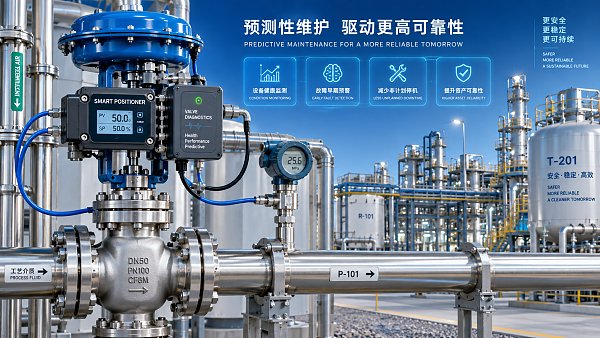
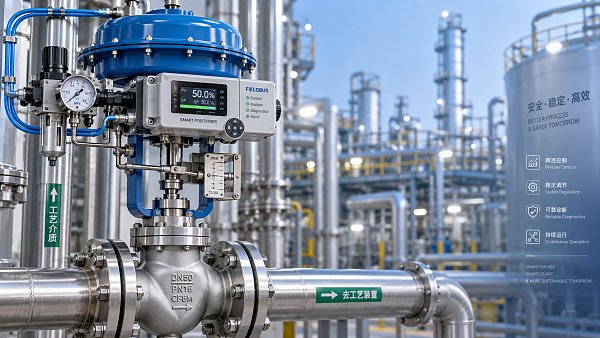
The event runs from June 22 to June 26, 2026, as part of the fourth China International Supply Chain Expo at the Beijing Shunyi venue. According to the provided event summary, the exhibition has set up a Smart Control Valve Procurement Hub specifically covering Smart Valve Positioners and Eccentric Rotary Valves.
The initiative was jointly launched by 12 international energy and water groups, including TÜV Rheinland of Germany, ADNOC of the United Arab Emirates, and Petrobras of Brazil. The confirmed arrangement includes a pre-certification channel and bulk procurement intention quotas for the two product categories named above.
The provided information also states that participating Chinese exhibitors can connect more directly with overseas end-user procurement decision chains through this mechanism.
Which parts of the chain may feel the impact first
Manufacturers of the named valve categories
From an industry perspective, producers of Smart Valve Positioners and Eccentric Rotary Valves are the most immediate stakeholders because the procurement arrangement is product-specific. The potential impact is concentrated in market access, buyer screening, and the pace at which suppliers may need to respond to qualification-related requests.
What deserves closer attention is whether firms can align product documentation, technical communication, and exhibition-facing business readiness with a process that combines pre-certification and procurement intent, rather than relying only on standard booth exposure.
Procurement and sourcing teams on the buyer side
For international buyers and sourcing functions, the significance lies in the creation of a more structured sourcing touchpoint within the exhibition itself. Analysis shows that this may shorten the early-stage comparison process for the covered products by linking supplier discovery more closely with qualification review.
The key variable to watch is how buyers define and apply their practical requirements within the pre-certification channel, because stated procurement intent does not automatically equal final purchase execution.
Supply chain and market-entry service providers
Service providers involved in export coordination, qualification support, technical translation, and delivery planning may also be affected. Observably, once suppliers are brought closer to overseas procurement decision chains, the supporting work around documentation consistency, communication accuracy, and fulfillment preparation becomes more operationally important.
For this group, the main issue is not demand volume as a confirmed fact, but the possibility that supplier onboarding and cross-border transaction preparation could become more front-loaded for the covered categories.
What companies should monitor now
Watch for formal rule details behind the hub
Companies should pay close attention to how the Procurement Hub is described in subsequent official wording, especially around the scope of pre-certification, participation criteria, and any procedural requirements tied to the two covered product groups. Analysis shows that these details matter more for business conversion than the announcement headline alone.
Separate procurement intent from executable orders
It is important to distinguish between bulk procurement intention quotas and completed commercial orders. For commercial teams, this means preparing for opportunity development without overstating certainty in internal planning, pricing assumptions, or production scheduling.
Prepare qualification and transaction materials early
Because the arrangement explicitly mentions a pre-certification channel, suppliers should focus on the readiness of qualification files, product records, and transaction-related documents. From a practical perspective, incomplete or inconsistent materials could weaken the value of gaining direct access to overseas decision-makers.
Coordinate sales, delivery, and customer communication
Firms exhibiting at the event should also align sales outreach with delivery planning and response workflows. What deserves closer attention is whether teams can handle technical inquiries, procurement discussions, and follow-up communication in a coordinated way once buyer access becomes more direct.
Why this reads as a signal rather than a finished outcome
Analysis shows that the announcement is best understood as an actionable market-access signal, not as proof of finalized transaction results. The inclusion of internationally recognized buyer-side participants and a product-specific pre-certification route suggests a more targeted procurement format than a general exhibition display, but the provided information does not confirm executed order volume, supplier selection outcomes, or long-term purchasing continuity.
Observably, the industry should focus on whether this mechanism remains a one-event arrangement or becomes a repeatable channel for matching Chinese exhibitors with overseas end-user procurement systems. At this stage, continued observation is more appropriate than firm conclusions.
How to interpret the development at this stage
In practical terms, this update points to a more procurement-oriented role for trade exhibitions in selected industrial categories. For companies in Smart Valve Positioners and Eccentric Rotary Valves, the immediate relevance lies in qualification readiness and buyer access. For the wider industry, it is more appropriate to understand this as a near-term operational signal with possible longer-term implications, provided follow-through mechanisms and actual transaction pathways become clearer.
Basis of this article and what still needs verification
This article is generated from the user-provided news title, event date, and event summary. The summary states that the fourth China International Supply Chain Expo, held from June 22 to June 26, 2026 in Beijing’s Shunyi venue, introduced a Smart Control Valve Procurement Hub initiated by 12 international energy and water groups, including TÜV Rheinland, ADNOC, and Petrobras, covering Smart Valve Positioners and Eccentric Rotary Valves.
For this type of industry update, relevant source categories usually include official exhibition announcements, company announcements, industry association releases, authoritative media coverage, and standard or certification-related documents. A specific official source link was not provided in the input, so further verification remains necessary. Follow-up attention should focus on any official clarification of participation rules, pre-certification procedures, and the practical progress of procurement matching after the event opens.
Related News
 How fluid control digitalization improves valve maintenance planningProcess Control ArchitectFluid control digitalization helps teams prioritize valve maintenance, reduce unplanned downtime, and improve reliability with actionable condition data.
 How smart valve positioners improve process control valve accuracyProcess Control ArchitectDiscover how smart positioners improve process control valve accuracy, reduce friction-related errors, enhance stability, and enable predictive maintenance.
 How to evaluate a valve automation supplier before placing an orderProcess Control ArchitectChoose a valve automation supplier with confidence. Learn how to assess engineering capability, compatibility, testing, lead times, and lifecycle support before ordering.
 How Does Industrial Automation Change Valve Specification Requirements?Process Control ArchitectHow does industrial automation change valve specification needs? Discover smarter sizing, diagnostics, protocols, fail-safe design, and lifecycle strategies for reliable control.
 Retrofit vs replacement automation: which option minimizes downtime?Process Control ArchitectRetrofit vs replacement automation: compare downtime, integration risk, lifecycle costs, and phased execution to protect uptime and modernize with confidence.
 When smart pneumatic control valves improve water treatment stabilityProcess Control ArchitectSmart pneumatic control valves for water treatment improve flow precision, dosing consistency, diagnostics, and plant stability. Learn how to select the right solution.
 When predictive maintenance for process valves pays off in plant operationsProcess Control ArchitectPredictive maintenance for process valves can cut downtime, reduce energy loss, and boost reliability. Learn when it pays off in plant operations—and how to justify the investment.
 Revised EN 14382:2026 Adds EMC Immunity Test for Smart Valve Positioners in EU ExportsProcess Control ArchitectEN 14382:2026 now mandates EMC immunity testing for Smart Valve Positioners, reshaping EU export compliance for valve OEMs and integrators. Learn what changed and how to prepare.
 FDA Tightens Import Rules for Smart Valve PositionersProcess Control ArchitectSmart valve positioners now face stricter FDA import rules. Learn how IEC 61508 SIL2 or UL 61508 documentation affects U.S. clearance, suppliers, and compliance planning.
 EN 14382:2026 Raises EU Entry Bar for Smart PositionersProcess Control ArchitectEN 14382:2026 raises the EU entry bar for Smart Valve Positioners with a 150 ms step response cap and IEC 62443-4-2 cybersecurity checks. Learn what exporters, buyers, and compliance teams must do before Nov 1, 2026.
 High-Precision Stainless Steel Control Valves for Corrosive Process LinesProcess Control ArchitectHigh-precision control valves stainless steel solutions improve corrosion resistance, flow stability, and safety in demanding process lines. Discover how to reduce downtime and boost control accuracy.
 How a Valve Performance Consultant Improves Uptime and Control AccuracyProcess Control ArchitectValve performance consultant insights to improve uptime, control accuracy, and energy efficiency. Learn how targeted diagnostics solve hidden valve issues across process systems.