Industrial Automation Valves: Choosing Positioning Accuracy That Fits




Selecting industrial automation valves is no longer a simple specification exercise. In modern process systems, positioning accuracy shapes flow stability, energy use, emissions control, and final product consistency.
As plants become more digital and efficient, tolerance for unstable valve behavior keeps shrinking. The right accuracy level must fit the process, not just the catalog.
This matters across chemicals, water treatment, energy, food processing, pharmaceuticals, and general manufacturing. A valve that is over-specified wastes budget, while one that is under-specified creates hidden operating risk.
Why positioning accuracy is becoming a bigger decision point
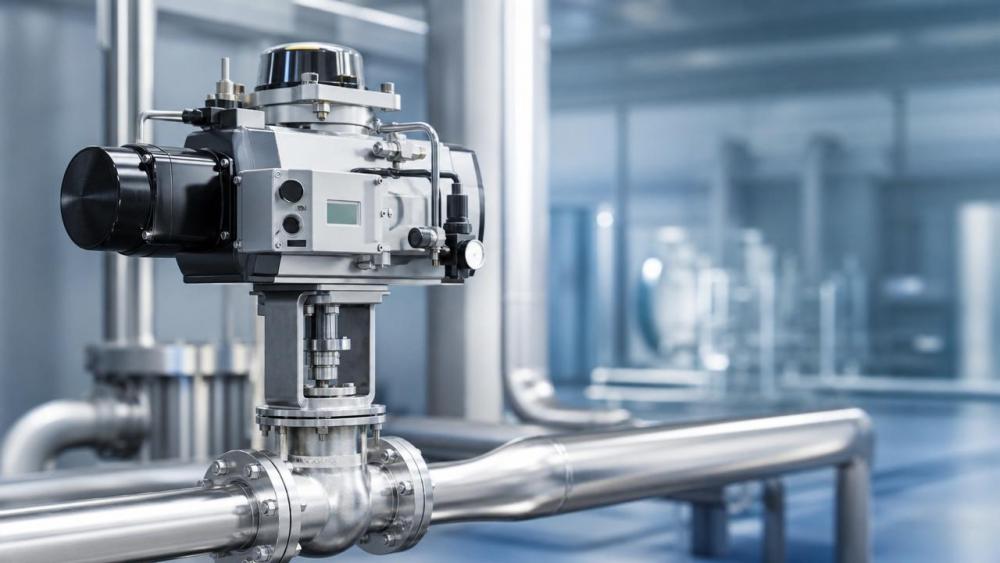
The market for industrial automation valves is shifting with three clear signals. Control loops are faster, compliance demands are tighter, and maintenance windows are shorter.
In older systems, a few percentage points of travel deviation often caused limited concern. Today, the same deviation may disrupt batching, increase flaring, or trigger off-spec output.
Positioning accuracy also connects directly to wider industrial transformation. Smart plants expect valves, pumps, compressors, and separators to behave as measurable, traceable assets.
For intelligence platforms such as FCSM, this trend fits a broader reality. Fluid control performance now influences both carbon reduction goals and digital reliability programs.
The trend behind tighter accuracy needs in industrial automation valves
Several forces are pushing users to rethink how accurate industrial automation valves really need to be in operation, not only in factory acceptance testing.
These pressures explain why selection conversations now include hysteresis, deadband, stroking speed, and installed performance. Static precision claims alone are not enough.
Accuracy is more than one number in industrial automation valves
Many buying decisions fail because positioning accuracy gets reduced to a single percentage. In practice, industrial automation valves must be judged through several linked behaviors.
Key performance elements to examine
- Repeatability: whether the valve returns to the same position under identical commands.
- Hysteresis: the difference between opening and closing approaches to the same target.
- Deadband: the command range where no meaningful movement occurs.
- Resolution: the smallest controllable position change the assembly can achieve.
- Response speed: how quickly the valve reaches a new stable state.
- Stability under load: whether process pressure changes disturb the actual position.
A valve may look accurate in bench testing but still perform poorly when friction, supply air quality, vibration, and fluid forces change. Installed accuracy is what truly matters.
Different processes need different levels of industrial automation valves accuracy
Not every application needs the same control precision. Matching industrial automation valves to process criticality prevents both overdesign and unstable production.
This variation shows why “highest possible accuracy” is not always the best answer. The correct answer is the lowest risk at the best lifecycle value.
What drives real-world accuracy loss after installation
The biggest misconception around industrial automation valves is that factory calibration guarantees long-term field performance. Many site conditions slowly erode positioning quality.
Common sources of installed performance drift
- Undersized or oversized actuators creating unstable control authority.
- Packing friction that increases breakaway force and deadband.
- Low-quality instrument air affecting smart positioner consistency.
- Cavitation, erosion, or flashing that changes trim behavior over time.
- Pipe stress or misalignment that distorts body and stem movement.
- Poor loop tuning that makes a healthy valve appear inaccurate.
Because of these factors, valve accuracy should be reviewed as a system issue. Valve body, trim, actuator, positioner, air supply, and control logic all interact.
How tighter accuracy expectations affect operations and business performance
More accurate industrial automation valves can improve process capability, but they also raise expectations for commissioning, maintenance discipline, and data interpretation.
In continuous processes, better valve behavior often reduces oscillation, energy loss, and rework. In batch processes, it can improve recipe consistency and shorten stabilization time.
There is also a strategic effect. As plants pursue lower emissions and predictive maintenance, valves become data-producing assets rather than passive line items.
- Lower variability in temperature, pressure, and flow control.
- Better compatibility with digital diagnostics and asset management.
- Reduced wear on pumps, compressors, and downstream equipment.
- Higher confidence during audits, validation, and compliance reviews.
Where evaluation should focus before selecting industrial automation valves
A practical assessment starts with process behavior, not brochure language. The most useful selection questions are simple, but they must be answered with operating data.
Core points worth checking
- How sensitive is product quality to small flow or pressure changes?
- Does the loop require fast corrections or mainly stable holding?
- What travel range is used most often during normal operation?
- Will the valve face erosion, scaling, corrosive media, or thermal cycling?
- Can site air supply and instrumentation support a high-performance assembly?
- What is the cost of drift, oscillation, or slow response over one year?
These checks help define whether standard control performance is enough or whether higher-end smart industrial automation valves are justified.
A practical decision path for matching accuracy to lifecycle value
This approach prevents short-term decisions from creating long-term operating penalties. It also supports more defensible specifications in competitive project environments.
The next move: specify industrial automation valves around actual performance
The future of industrial automation valves points toward smarter diagnostics, tighter control expectations, and stronger links to energy and emissions performance.
That means positioning accuracy should be treated as a process decision, not only a component feature. The best specification reflects service conditions, control objectives, and lifecycle economics together.
A useful next step is to review the most critical loops, compare required versus actual installed performance, and update valve criteria where process value is highest.
For organizations tracking fluid machinery trends, this method aligns valve choices with broader goals in digitalization, decarbonization, and high-reliability plant operation.
Related News
 How fluid control digitalization improves valve maintenance planningProcess Control ArchitectFluid control digitalization helps teams prioritize valve maintenance, reduce unplanned downtime, and improve reliability with actionable condition data.
 How smart valve positioners improve process control valve accuracyProcess Control ArchitectDiscover how smart positioners improve process control valve accuracy, reduce friction-related errors, enhance stability, and enable predictive maintenance.
 How to evaluate a valve automation supplier before placing an orderProcess Control ArchitectChoose a valve automation supplier with confidence. Learn how to assess engineering capability, compatibility, testing, lead times, and lifecycle support before ordering.
 How Does Industrial Automation Change Valve Specification Requirements?Process Control ArchitectHow does industrial automation change valve specification needs? Discover smarter sizing, diagnostics, protocols, fail-safe design, and lifecycle strategies for reliable control.
 Retrofit vs replacement automation: which option minimizes downtime?Process Control ArchitectRetrofit vs replacement automation: compare downtime, integration risk, lifecycle costs, and phased execution to protect uptime and modernize with confidence.
 When smart pneumatic control valves improve water treatment stabilityProcess Control ArchitectSmart pneumatic control valves for water treatment improve flow precision, dosing consistency, diagnostics, and plant stability. Learn how to select the right solution.
 When predictive maintenance for process valves pays off in plant operationsProcess Control ArchitectPredictive maintenance for process valves can cut downtime, reduce energy loss, and boost reliability. Learn when it pays off in plant operations—and how to justify the investment.
 Revised EN 14382:2026 Adds EMC Immunity Test for Smart Valve Positioners in EU ExportsProcess Control ArchitectEN 14382:2026 now mandates EMC immunity testing for Smart Valve Positioners, reshaping EU export compliance for valve OEMs and integrators. Learn what changed and how to prepare.
 FDA Tightens Import Rules for Smart Valve PositionersProcess Control ArchitectSmart valve positioners now face stricter FDA import rules. Learn how IEC 61508 SIL2 or UL 61508 documentation affects U.S. clearance, suppliers, and compliance planning.
 EN 14382:2026 Raises EU Entry Bar for Smart PositionersProcess Control ArchitectEN 14382:2026 raises the EU entry bar for Smart Valve Positioners with a 150 ms step response cap and IEC 62443-4-2 cybersecurity checks. Learn what exporters, buyers, and compliance teams must do before Nov 1, 2026.
 High-Precision Stainless Steel Control Valves for Corrosive Process LinesProcess Control ArchitectHigh-precision control valves stainless steel solutions improve corrosion resistance, flow stability, and safety in demanding process lines. Discover how to reduce downtime and boost control accuracy.
 How a Valve Performance Consultant Improves Uptime and Control AccuracyProcess Control ArchitectValve performance consultant insights to improve uptime, control accuracy, and energy efficiency. Learn how targeted diagnostics solve hidden valve issues across process systems.