Process Control Instrumentation Basics




Process control instrumentation sits at the center of modern industrial reliability. It connects measurement, decision-making, and physical action across pumps, valves, compressors, and separation systems, turning complex process conditions into stable, manageable operations.
For anyone studying process facilities, the basics matter because instrumentation now influences far more than control accuracy. It shapes energy use, maintenance strategy, emissions performance, product consistency, and the quality of plant data used for digital decisions.
That is especially relevant in fluid and gas handling industries, where even small measurement errors can affect cavitation risk, valve noise, compressor loading, membrane fouling, or wastewater treatment stability. In that context, process control instrumentation is not a secondary layer. It is part of the process itself.
What process control instrumentation really includes
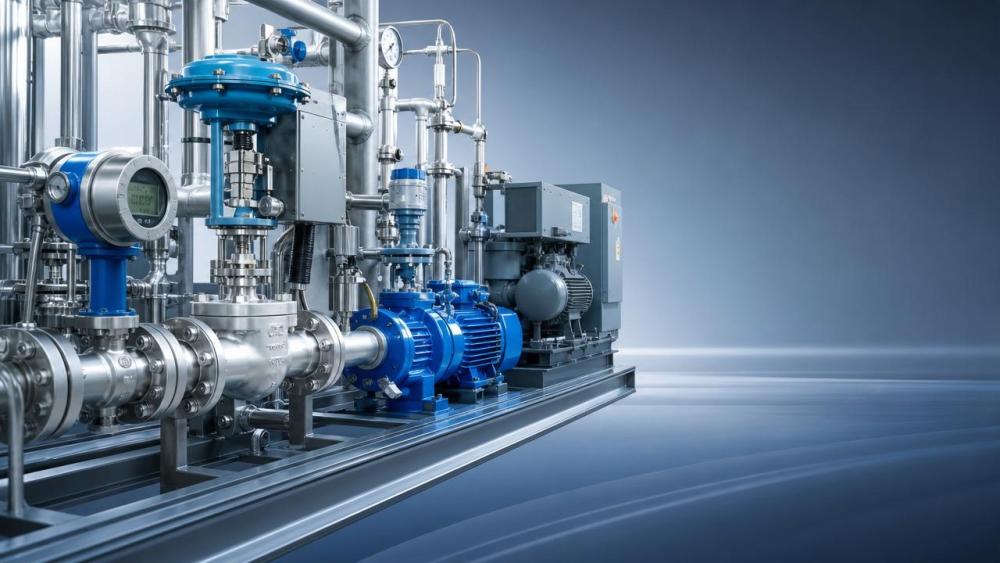
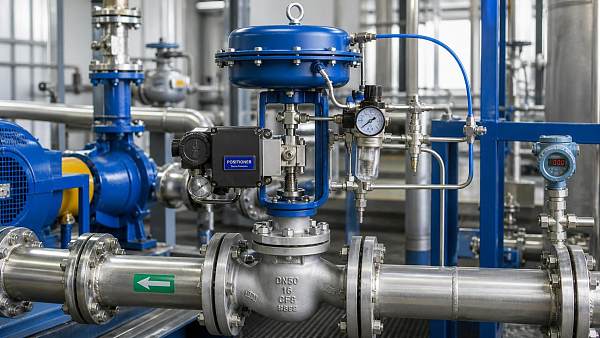
A simple diagram often helps here: instrumentation links the field signal to the final control response.
At a practical level, process control instrumentation covers the devices and logic that measure process variables, transmit signals, compare them with targets, and adjust equipment behavior. The core variables remain familiar: flow, pressure, temperature, level, composition, and density.
The basic chain is straightforward. A sensor detects a condition. A transmitter converts it into a usable signal. A controller evaluates the gap between actual and desired values. An actuator or control valve then changes the process.
Yet the industrial reality is more layered. Instrumentation also includes positioners, analyzers, switches, safety interlocks, data historians, communication protocols, and condition monitoring tools. In advanced plants, these elements work with DCS, PLC, SCADA, and edge analytics platforms.
That broader view matters because the value of process control instrumentation does not come from individual devices alone. It comes from how measurement quality, response speed, and control logic reinforce each other across the system.
Why the topic draws more attention now
Several industry shifts have raised the importance of instrumentation basics. Energy efficiency rules are tighter. Process uptime expectations are higher. Carbon reduction targets are moving from policy language into equipment decisions and operating budgets.
For fluid machinery sectors, this is not abstract. A centrifugal pump running away from its best efficiency point wastes power and increases wear. A control valve with poor trim selection can create instability and noise. An air compressor without reliable pressure control may cycle inefficiently. A filtration skid with weak differential pressure monitoring can miss fouling until productivity drops.
This is where the FCSM perspective is useful. Across industrial pumps, smart pneumatic control valves, compressor systems, and fluid separation equipment, the common thread is not only machinery design. It is the quality of control around that machinery.
As process industries move toward predictive maintenance and digital visibility, instrumentation also becomes a strategic data source. Better sensors and better signal integrity improve not just control loops, but also diagnostics, lifecycle analysis, and investment decisions.
The main building blocks in the field
Understanding process control instrumentation is easier when the field devices are grouped by what they do.
Measurement devices
These include pressure transmitters, flowmeters, level sensors, thermocouples, RTDs, analyzers, and vibration monitors. Their main job is to describe process reality accurately and repeatedly under actual operating conditions.
Selection is rarely about range alone. Media properties, pulsation, corrosion, response time, mounting location, and maintenance accessibility can change real performance dramatically.
Signal and control layers
Transmitters, controllers, I/O systems, and communication networks translate raw measurements into control actions. Here, stability depends on calibration discipline, signal quality, cybersecurity awareness, and clear alarm philosophy.
Final control elements
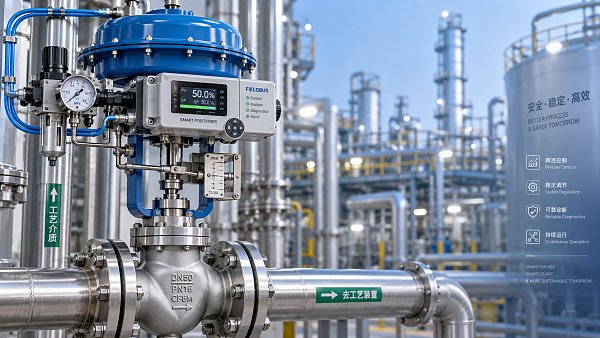
Control valves, dampers, variable speed drives, and actuators physically influence the process. In many fluid systems, the control valve remains the most visible symbol of process control instrumentation because it converts control intent into flow change.
Where process control instrumentation creates business value
The value becomes clear when instrumentation is linked to plant outcomes rather than device catalogs.
In pump systems, better suction and discharge monitoring supports stable operation near design conditions. That helps reduce cavitation exposure, seal damage, and wasted energy. In high-pressure plunger applications, accurate pressure and pulsation monitoring protects both throughput and mechanical life.
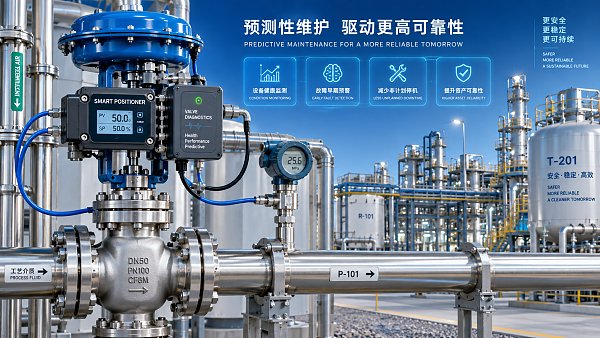
In smart pneumatic control valves, position feedback and digital diagnostics reveal stiction, air leakage, response lag, and partial stroke issues before control quality collapses. In air compressor systems, pressure, temperature, dew point, and load control instrumentation influence the entire compressed air cost structure.
Separation processes show the same pattern. Differential pressure, conductivity, turbidity, and membrane-related measurements support stable filtration, better cleaning cycles, and more confident progress toward Zero Liquid Discharge targets.
This is one reason intelligence platforms such as FCSM pay close attention to instrumentation context. Performance claims about machinery mean much more when the surrounding control architecture is visible and credible.
Typical application scenarios across fluid and gas systems
Process control instrumentation appears in almost every continuous or semi-continuous industrial line, but the control priorities change by system type.
- Pump stations focus on flow balance, pressure protection, vibration trends, and energy-efficient operation.
- Valve networks emphasize precise throttling, fast response, noise control, and stable loop tuning.
- Compressor installations depend on pressure bands, temperature protection, sequencing logic, and air quality measurement.
- Filtration and separation systems rely on pressure drop, solids loading, conductivity, and cleaning cycle control.
- Water and wastewater facilities need robust level, flow, and analyzer instrumentation that can survive variable media conditions.
In each case, the same principle applies: instrumentation should be judged by how well it supports the physical behavior of the process, not only by datasheet accuracy under ideal conditions.
How to assess instrumentation quality in practice
When reviewing process control instrumentation basics, it helps to look beyond brand names and ask whether the measurement chain fits the process realities.
- Check the process variable that truly drives performance, not just the easiest one to measure.
- Review installation conditions, including turbulence, entrained gas, solids, and temperature cycling.
- Compare required control speed with actual sensor and actuator response times.
- Look for maintainability, calibration access, spare parts availability, and diagnostic visibility.
- Confirm how the data will be used later, especially for predictive maintenance and energy analysis.
This approach is often more revealing than a simple specification comparison. A highly accurate device can still perform poorly if it is installed in the wrong location, exposed to unplanned contamination, or paired with weak control logic.
What to watch as digital and low-carbon goals expand
The future of process control instrumentation is increasingly tied to digital integration and decarbonization. Plants want more trustworthy data, but they also want data that leads to lower energy intensity and fewer unplanned interventions.
That creates demand for smart positioners, self-diagnostic transmitters, remote condition monitoring, and instrumentation that supports model-based optimization. It also raises the importance of data quality, because poor instrumentation can mislead advanced analytics just as easily as it can mislead a manual operator.
For research and evaluation work, the next useful step is usually not to collect more device names. It is to map the control loop, identify the most sensitive variables, compare operating risks, and review how instrumentation supports efficiency, safety, and lifecycle reliability together.
That kind of structured review turns process control instrumentation from a technical checklist into a decision framework. It also makes it easier to judge pumps, valves, compressors, and separation systems in a more complete and realistic way.
- smart pneumatic control valves
- air compressor systems
- fluid separation equipment
- industrial pumps
- control valves
- pneumatic control valves
- separation equipment
- fluid separation
- process control
- predictive maintenance
- energy efficiency
- decarbonization
- pump systems
- fluid machinery
- process control instrumentation
Related News
 How fluid control digitalization improves valve maintenance planningProcess Control ArchitectFluid control digitalization helps teams prioritize valve maintenance, reduce unplanned downtime, and improve reliability with actionable condition data.
 How smart valve positioners improve process control valve accuracyProcess Control ArchitectDiscover how smart positioners improve process control valve accuracy, reduce friction-related errors, enhance stability, and enable predictive maintenance.
 How to evaluate a valve automation supplier before placing an orderProcess Control ArchitectChoose a valve automation supplier with confidence. Learn how to assess engineering capability, compatibility, testing, lead times, and lifecycle support before ordering.
 How Does Industrial Automation Change Valve Specification Requirements?Process Control ArchitectHow does industrial automation change valve specification needs? Discover smarter sizing, diagnostics, protocols, fail-safe design, and lifecycle strategies for reliable control.
 Retrofit vs replacement automation: which option minimizes downtime?Process Control ArchitectRetrofit vs replacement automation: compare downtime, integration risk, lifecycle costs, and phased execution to protect uptime and modernize with confidence.
 When smart pneumatic control valves improve water treatment stabilityProcess Control ArchitectSmart pneumatic control valves for water treatment improve flow precision, dosing consistency, diagnostics, and plant stability. Learn how to select the right solution.
 When predictive maintenance for process valves pays off in plant operationsProcess Control ArchitectPredictive maintenance for process valves can cut downtime, reduce energy loss, and boost reliability. Learn when it pays off in plant operations—and how to justify the investment.
 Revised EN 14382:2026 Adds EMC Immunity Test for Smart Valve Positioners in EU ExportsProcess Control ArchitectEN 14382:2026 now mandates EMC immunity testing for Smart Valve Positioners, reshaping EU export compliance for valve OEMs and integrators. Learn what changed and how to prepare.
 FDA Tightens Import Rules for Smart Valve PositionersProcess Control ArchitectSmart valve positioners now face stricter FDA import rules. Learn how IEC 61508 SIL2 or UL 61508 documentation affects U.S. clearance, suppliers, and compliance planning.
 EN 14382:2026 Raises EU Entry Bar for Smart PositionersProcess Control ArchitectEN 14382:2026 raises the EU entry bar for Smart Valve Positioners with a 150 ms step response cap and IEC 62443-4-2 cybersecurity checks. Learn what exporters, buyers, and compliance teams must do before Nov 1, 2026.
 High-Precision Stainless Steel Control Valves for Corrosive Process LinesProcess Control ArchitectHigh-precision control valves stainless steel solutions improve corrosion resistance, flow stability, and safety in demanding process lines. Discover how to reduce downtime and boost control accuracy.
 How a Valve Performance Consultant Improves Uptime and Control AccuracyProcess Control ArchitectValve performance consultant insights to improve uptime, control accuracy, and energy efficiency. Learn how targeted diagnostics solve hidden valve issues across process systems.