Process Industry Automation: Where Smart Valves Fit




Process Industry Automation: Where Smart Valves Fit
Process industry automation is no longer just about connecting equipment across a plant.
It is about turning every valve, pump, compressor, and separator into a source of operational intelligence.
Smart pneumatic control valves now sit at critical control points inside automated fluid networks.
They improve safety, uptime, energy efficiency, commissioning predictability, and lifecycle visibility.
As plants pursue digital transformation and low-carbon performance, process industry automation increasingly depends on valve-level intelligence.
Understanding where smart valves fit helps reduce lifecycle risk and stabilize complex industrial systems.
Automation Is Moving From Central Control To Field Intelligence
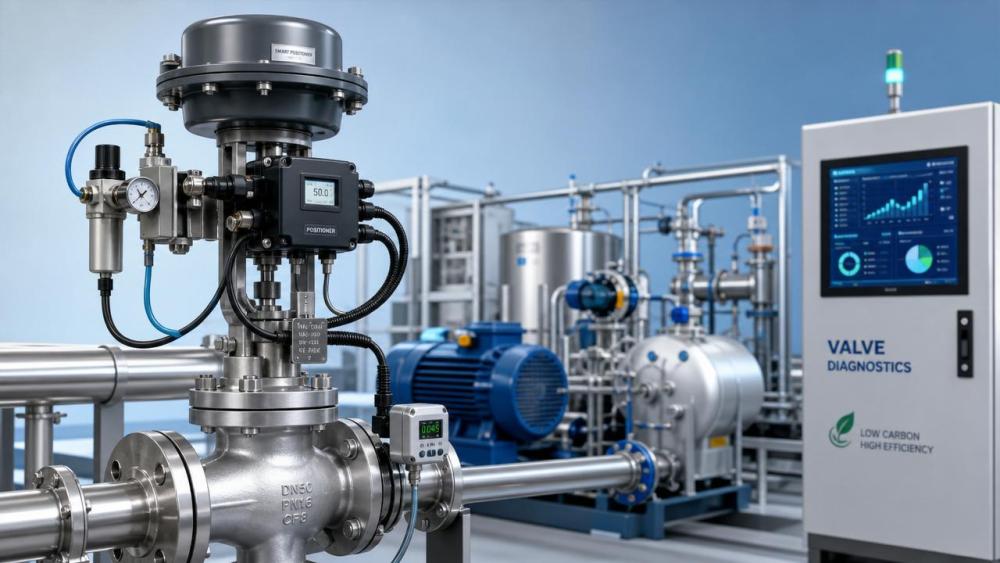
Traditional automation centered on control rooms, distributed control systems, and fixed operating logic.
That structure still matters, but it is no longer sufficient for high-variability operations.
Modern process industry automation is becoming more distributed, predictive, and data-rich.
Critical information now comes from field devices exposed to heat, vibration, corrosion, pressure cycling, and unstable flow.
Smart valves are especially valuable because they directly influence flow, pressure, temperature, and process response.
They act as the “throats” of pipe networks, continuously shaping how fluids and gases move.
In process industry automation, that makes them both actuators and diagnostic assets.
A valve that only opens and closes provides limited control value.
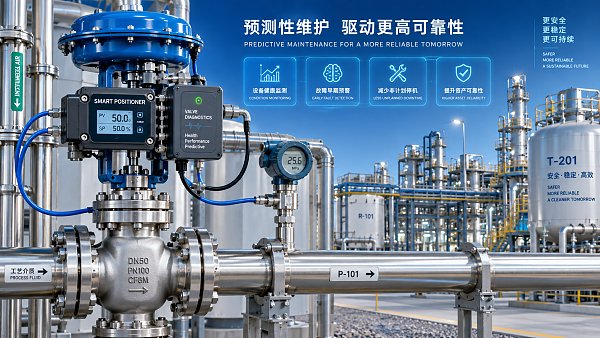
A smart valve reports position, friction, response speed, air consumption, travel deviation, and maintenance signals.
This shift changes how plants interpret performance and plan reliability actions.
Trend Signals Reshaping Smart Valve Demand
Several visible signals show why smart valves are becoming central to process industry automation.
First, plants are operating closer to energy, emissions, and throughput limits.
Second, operators need earlier warning of process instability and equipment degradation.
Third, commissioning schedules are tighter, while project complexity keeps increasing.
Fourth, digital maintenance programs require device-level data, not only system-level alarms.
These signals are visible in chemicals, water treatment, power, pharmaceuticals, refining, mining, food processing, and semiconductor utilities.
Across these sectors, process industry automation must support safer decisions under tighter operating margins.
Key Drivers Behind The Shift
These drivers explain why process industry automation is shifting from basic remote operation toward intelligent field control.
Where Smart Valves Fit In Automated Fluid Networks
Smart valves fit wherever process variability must be measured, controlled, and stabilized.
They are most valuable at points where small deviations create large operational consequences.
In process industry automation, these points often include feed control, pressure reduction, steam regulation, dosing, recirculation, and emergency isolation support.
- Flow control lines where instability causes quality variation.
- High-pressure loops where cavitation or flashing may damage trim.
- Steam systems where leakage increases energy cost.
- Chemical dosing lines where accuracy affects safety and yield.
- Utility networks where compressed air consumption must be monitored.
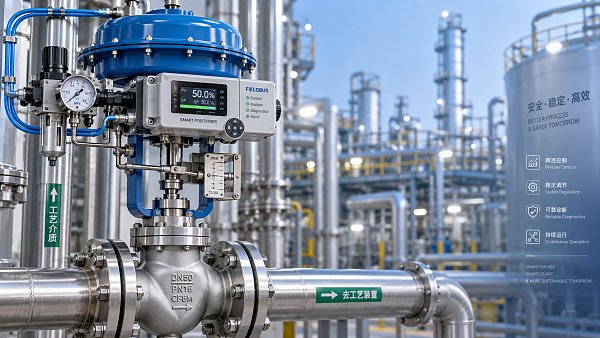
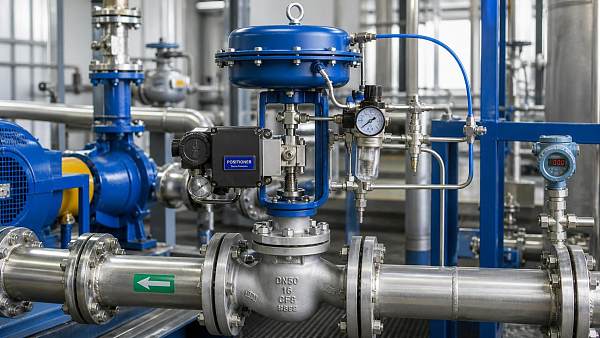
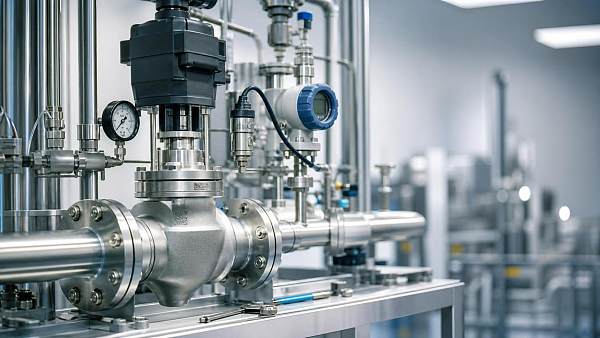
Smart pneumatic control valves combine trim design, actuator force, positioner intelligence, and communication capability.
This combination links physical flow behavior with digital condition awareness.
That link is essential when process industry automation must manage corrosive, high-temperature, or high-pressure conditions.
The Valve Is Becoming A Diagnostic Sensor
A smart valve does more than execute a control signal.
It creates a continuous picture of mechanical and process behavior.
Position feedback shows whether commanded travel matches actual movement.
Air pressure monitoring reveals actuator loading, leakage, or supply instability.
Travel histograms indicate whether the valve is oversized, undersized, or operating near damaging positions.
Friction signatures can reveal packing issues, stem wear, corrosion deposits, or poor alignment.
For process industry automation, this diagnostic role is strategically important.
It allows maintenance planning to move from calendar-based tasks toward condition-based intervention.
It also helps distinguish valve problems from pump instability, compressor pressure variation, or upstream process disturbances.
That distinction reduces unnecessary shutdowns and improves troubleshooting speed.
Impacts Across Engineering, Operations, And Lifecycle Cost
The rise of smart valves changes decisions across the complete plant lifecycle.
During engineering, valve sizing and control authority require closer attention.
A digital positioner cannot compensate for poor trim selection or unstable process design.
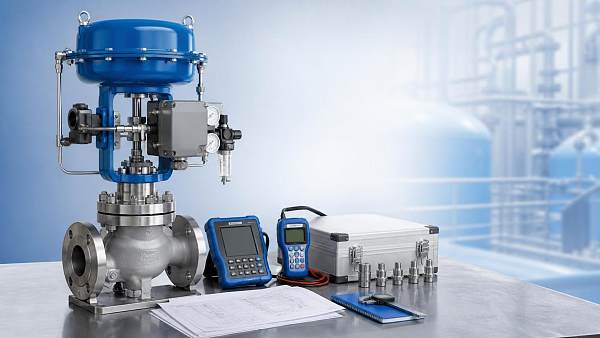
During commissioning, smart valve tools reduce uncertainty through automated calibration and response testing.
During operation, diagnostics support early detection of degradation before process alarms escalate.
During maintenance, stored performance data helps prioritize work orders based on real asset condition.
This lifecycle view is central to process industry automation because reliability and efficiency are connected.
A poorly performing valve may force pumps to run harder or compressors to waste air.
It may also create oscillation that increases wear across the entire loop.
Operational Areas Most Affected
- Loop stability improves when valve response is measured and tuned.
- Energy performance improves when throttling losses are visible.
- Safety improves when abnormal travel patterns are detected early.
- Maintenance improves when repairs target actual degradation.
- Commissioning improves when calibration records are digital and traceable.
What To Watch When Specifying Smart Valves
Smart valve value depends on correct application, not only advanced electronics.
Several factors deserve careful attention before integration into process industry automation architecture.
- Control performance: Confirm rangeability, deadband, response time, and installed flow characteristics.
- Mechanical suitability: Match body materials, packing, trim, and actuator force to process conditions.
- Diagnostic depth: Review available data on travel, friction, air use, and deviation alarms.
- Communication protocol: Align HART, Fieldbus, Profibus, Ethernet-APL, or wireless options with plant standards.
- Cybersecurity readiness: Control access, configuration rights, firmware updates, and network exposure.
- Lifecycle support: Consider spare parts, configuration tools, training, and diagnostic interpretation.
The strongest results come when smart valves are selected as control assets, not isolated instruments.
That mindset keeps process industry automation aligned with real process performance.
A Practical Roadmap For Adoption
Smart valve adoption does not require replacing every device at once.
A staged roadmap usually delivers better results and clearer investment justification.
This approach reduces technical risk while building internal confidence in diagnostic workflows.
It also helps compare actual benefits against commissioning time, maintenance savings, and energy improvement.
How Smart Valves Support Low-Carbon Operations
Low-carbon production depends on more than replacing motors or adding renewable power.
It also depends on reducing hidden losses inside control loops and utility networks.
Smart valves support this goal by improving visibility into throttling behavior and compressed air consumption.
They also help detect leakage, hunting, oversized valves, and inefficient operating ranges.
In process industry automation, these details matter because small losses repeat every hour.
Over a full operating year, they become measurable energy cost and emissions impact.
Smart valve data can also support sustainability reporting when connected with energy and production records.
This makes field-level intelligence part of broader decarbonization governance.
The Next Phase: From Smart Devices To Intelligent Networks
The next phase of process industry automation will not be defined by isolated smart devices.
It will be defined by how intelligently those devices work together.
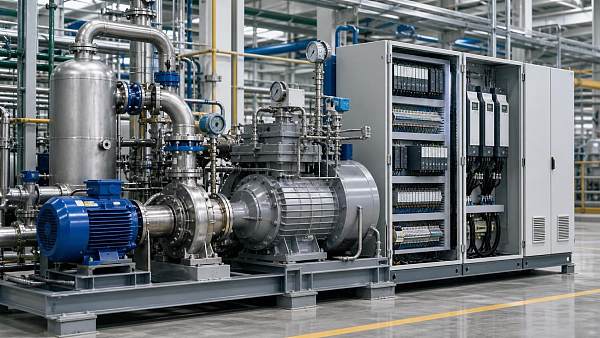
Pumps, valves, compressors, and separation systems will increasingly share operating context.
For example, valve oscillation may indicate pump cavitation, poor loop tuning, or upstream pressure disturbance.
Compressor air loss may appear first as abnormal actuator demand in valve diagnostics.
Separation performance changes may require faster or more stable flow regulation.
This system view reflects the direction of advanced process industry automation.
It moves plants from device monitoring toward fluid-network intelligence.
Action Points For Building Smarter Control Infrastructure
Smart valves deserve attention wherever process stability, uptime, and energy efficiency are strategic priorities.
The practical next step is to map critical loops and rank them by risk, cost, and diagnostic value.
Then review valve sizing, control behavior, communication readiness, and maintenance history.
Use the findings to build a phased smart valve plan within the wider process industry automation strategy.
FCSM tracks how fluid control technologies evolve across pumps, valves, compressors, and separation systems.
Follow these intelligence updates to evaluate smarter field devices, stronger automation architectures, and more resilient low-carbon operations.
Related News
 How fluid control digitalization improves valve maintenance planningProcess Control ArchitectFluid control digitalization helps teams prioritize valve maintenance, reduce unplanned downtime, and improve reliability with actionable condition data.
 How smart valve positioners improve process control valve accuracyProcess Control ArchitectDiscover how smart positioners improve process control valve accuracy, reduce friction-related errors, enhance stability, and enable predictive maintenance.
 How to evaluate a valve automation supplier before placing an orderProcess Control ArchitectChoose a valve automation supplier with confidence. Learn how to assess engineering capability, compatibility, testing, lead times, and lifecycle support before ordering.
 How Does Industrial Automation Change Valve Specification Requirements?Process Control ArchitectHow does industrial automation change valve specification needs? Discover smarter sizing, diagnostics, protocols, fail-safe design, and lifecycle strategies for reliable control.
 Retrofit vs replacement automation: which option minimizes downtime?Process Control ArchitectRetrofit vs replacement automation: compare downtime, integration risk, lifecycle costs, and phased execution to protect uptime and modernize with confidence.
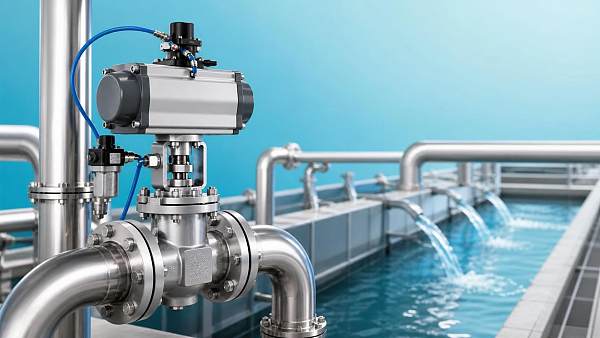
 When smart pneumatic control valves improve water treatment stabilityProcess Control ArchitectSmart pneumatic control valves for water treatment improve flow precision, dosing consistency, diagnostics, and plant stability. Learn how to select the right solution.
 When predictive maintenance for process valves pays off in plant operationsProcess Control ArchitectPredictive maintenance for process valves can cut downtime, reduce energy loss, and boost reliability. Learn when it pays off in plant operations—and how to justify the investment.
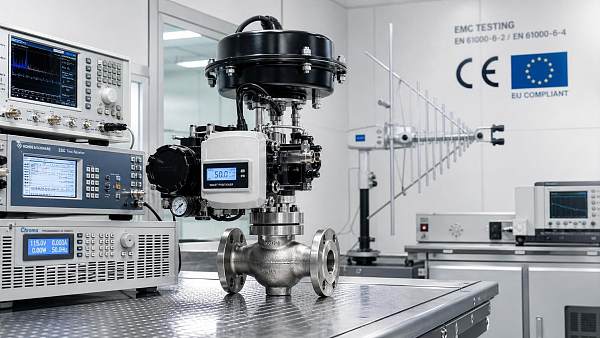
 Revised EN 14382:2026 Adds EMC Immunity Test for Smart Valve Positioners in EU ExportsProcess Control ArchitectEN 14382:2026 now mandates EMC immunity testing for Smart Valve Positioners, reshaping EU export compliance for valve OEMs and integrators. Learn what changed and how to prepare.
 FDA Tightens Import Rules for Smart Valve PositionersProcess Control ArchitectSmart valve positioners now face stricter FDA import rules. Learn how IEC 61508 SIL2 or UL 61508 documentation affects U.S. clearance, suppliers, and compliance planning.
 EN 14382:2026 Raises EU Entry Bar for Smart PositionersProcess Control ArchitectEN 14382:2026 raises the EU entry bar for Smart Valve Positioners with a 150 ms step response cap and IEC 62443-4-2 cybersecurity checks. Learn what exporters, buyers, and compliance teams must do before Nov 1, 2026.
 High-Precision Stainless Steel Control Valves for Corrosive Process LinesProcess Control ArchitectHigh-precision control valves stainless steel solutions improve corrosion resistance, flow stability, and safety in demanding process lines. Discover how to reduce downtime and boost control accuracy.
 How a Valve Performance Consultant Improves Uptime and Control AccuracyProcess Control ArchitectValve performance consultant insights to improve uptime, control accuracy, and energy efficiency. Learn how targeted diagnostics solve hidden valve issues across process systems.