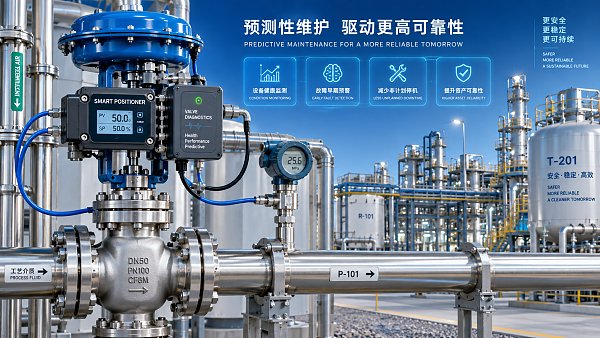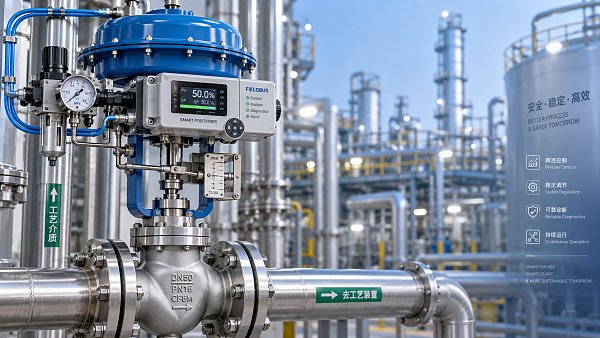
Process Industry Automation and Smarter Valve Position Control




Process industry automation is reshaping how operators manage safety, efficiency, and flow stability across complex systems. Smarter valve position control now helps reduce energy waste, improve response accuracy, and support reliable performance in demanding applications. For users and operators, understanding this shift is key to achieving better process visibility, tighter control, and more confident day-to-day decision-making.
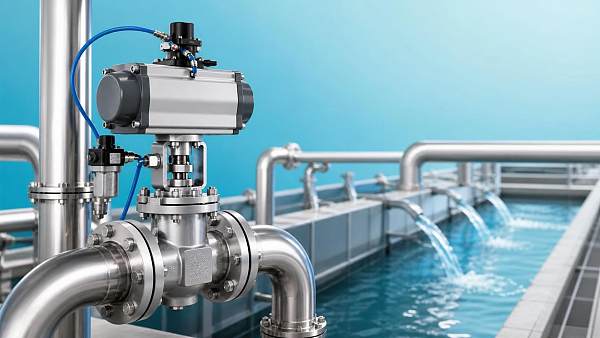
In chemical plants, water treatment lines, food processing units, energy facilities, and compressed air systems, the valve is no longer just a final control element. It has become a data-rich actuator point that directly influences throughput, quality, emissions, and maintenance workload. When process industry automation is combined with smart pneumatic positioners, feedback sensors, and stable instrument air, operators gain faster diagnostics, tighter loop behavior, and a clearer view of what is happening in real time.
For practical users, the value is not abstract. Better valve position control can reduce overshoot during startup, shorten settling time from 8–12 seconds to more manageable ranges in many applications, and limit avoidable wear caused by hunting or frequent micro-corrections. In facilities where pumps, compressors, filtration skids, and control valves must work together, even a 1–3% improvement in control stability can translate into meaningful savings in energy, product loss, and operator intervention.
Why Smarter Valve Position Control Matters in Process Industry Automation
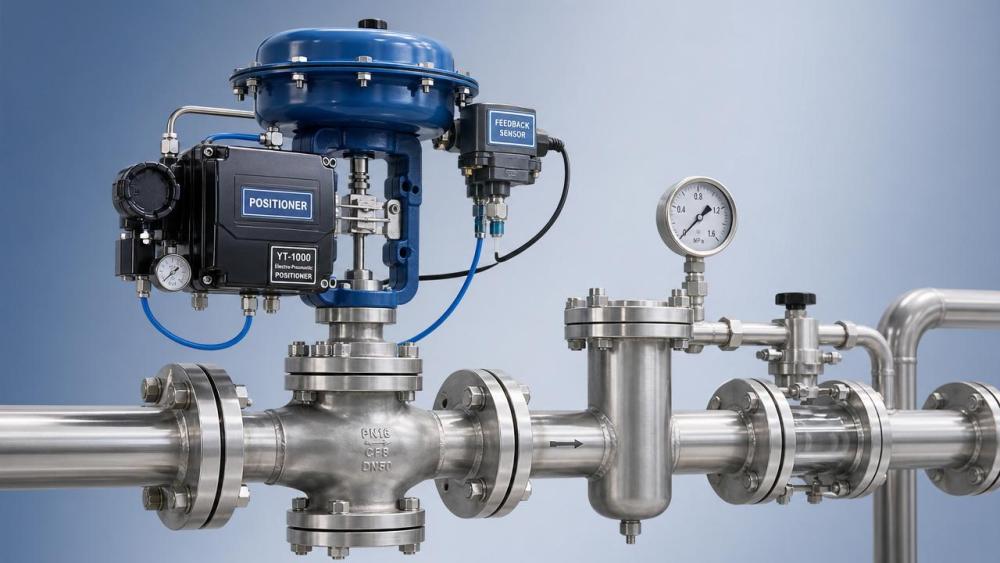
The basic purpose of valve position control is simple: move the valve stem or shaft to the requested position, then hold it accurately under changing process conditions. In modern process industry automation, however, the challenge is more demanding. Operators expect repeatable control under high temperature, corrosive fluids, pressure fluctuations, and variable load conditions across 24/7 production schedules.
Traditional analog setups often struggle when friction, air supply variation, poor actuator sizing, or deadband are present. A smart positioner can continuously compare command signal and actual travel, compensate for nonlinearity, and report deviations before they become a shutdown risk. For operators, this means fewer manual checks, clearer alarms, and better trust in the control loop.
Common operator problems in daily production
Many valve issues do not begin as catastrophic failures. They begin as small symptoms: a valve that takes 2–4 seconds longer to respond, a flow loop that oscillates during low-load operation, or a position feedback drift of 1–2%. In a distillation, filtration, or dosing process, those small errors can affect quality consistency and force operators to compensate elsewhere in the system.
- Unstable control near 10–20% opening due to poor trim selection
- Frequent cycling causing packing wear and actuator fatigue
- Instrument air contamination leading to slow response or sticking
- Weak diagnostics that hide early-stage seat, stem, or diaphragm problems
The wider system effect
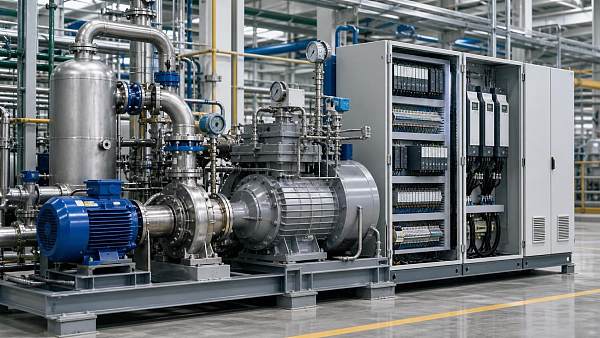
A control valve does not operate alone. It interacts with centrifugal pumps, plunger pumps, compressors, separators, and upstream or downstream process equipment. If valve position control is poor, pumps may run farther from best efficiency point, compressor demand may fluctuate, and separation performance may become inconsistent. This is why process industry automation increasingly treats valve intelligence as part of total system performance rather than a single component decision.
For example, in a filtration loop, unstable throttling may create pressure swings of 0.2–0.5 bar. That can increase membrane stress, alter backwash timing, and raise operator workload. In compressed air networks, unstable control can affect pressure bands, creating more start-stop behavior and higher energy use. Smarter position control reduces these chain reactions.
Key performance indicators operators should watch
When evaluating smarter valve position control, operators should monitor a few practical indicators rather than only relying on nameplate data. These values are easier to connect to plant performance and maintenance planning.
The main conclusion is straightforward: smart control is not only about digital features. It depends on a balanced combination of valve body selection, trim characteristics, actuator sizing, air quality, and usable diagnostics. Operators who track these four indicators usually identify performance loss earlier and with less downtime.
How to Select Smarter Valve Position Control for Real Operating Conditions
A valve that looks suitable on paper may still perform poorly if the application data are incomplete. In process industry automation, proper selection starts with the actual process profile: media type, pressure drop, control range, shutoff requirement, ambient conditions, and expected cycling frequency. For users and operators, the right selection process reduces both commissioning problems and long-term maintenance cost.
Start with the operating window, not just the line size
Many selection mistakes come from focusing on nominal pipe size first. A better method is to define the minimum, normal, and maximum flow points, along with inlet pressure, outlet pressure, temperature, and fluid properties. A control valve that spends 70% of its life below 15% opening may not deliver stable control, even if its nominal capacity appears correct.
For corrosive or high-temperature service, users should also check body material, trim hardness, packing type, and actuator fail action. In many industrial plants, these 4 factors affect reliability as much as Cv sizing. Where flashing, cavitation, or aerodynamic noise are possible, trim design becomes critical to protect both process stability and equipment life.
Four selection checks before purchase
- Confirm the real control range, not only design maximum flow.
- Verify actuator thrust or torque margin under worst-case differential pressure.
- Match positioner protocol and feedback needs to the plant control system.
- Review maintenance access, spare parts cycle, and calibration requirements.
The table below summarizes common selection factors that directly affect day-to-day operation. It can help operators and plant teams compare options more objectively during procurement or upgrade planning.
This comparison shows that smarter valve position control is a system decision, not a single-item purchase. Plants that evaluate characteristic curve, actuator margin, and diagnostics together usually achieve smoother commissioning within 1–3 shifts and fewer early adjustments after startup.
Match valve intelligence with the rest of the fluid control network
In integrated plants, control performance depends on how valves interact with pumps, compressors, and separation units. If a centrifugal pump is oversized or frequently throttled, the valve may be forced into a narrow operating band. If compressor pressure varies too widely, pneumatic actuator response may become inconsistent. For this reason, process industry automation should be planned from the network level.
This is especially relevant in the sectors covered by FCSM. Pump systems influence pressure profile, compressor systems stabilize air supply quality, and filtration or separation lines need precise modulation to protect membranes and maintain target throughput. Smart pneumatic control valves become the control throat of this network, and their position feedback can support better operating decisions across the full process line.
Implementation, Maintenance, and Risk Control for Operators
Even the best valve package can underperform if commissioning and maintenance are weak. In process industry automation, implementation should follow a defined sequence so that operators receive predictable behavior from day one. A structured rollout also reduces the risk of blaming the valve for issues caused by air quality, loop tuning, or incorrect installation geometry.
A practical 5-step implementation approach
- Verify process data, fail position, and actuator sizing before installation.
- Check air supply cleanliness, pressure stability, and tubing leakage.
- Run auto calibration and confirm stroke limits, feedback accuracy, and travel direction.
- Tune the control loop under low, normal, and peak load conditions.
- Record baseline values for travel deviation, response time, and alarm history.
In many plants, this 5-step method can be completed in 1–2 days for a standard valve station, depending on shutdown access and control system integration. The baseline record is especially important because it gives operators a reference point for condition changes after 3 months, 6 months, or the next major turnaround.
Routine maintenance priorities
Smarter valve position control reduces surprise failures, but it does not remove the need for routine care. Positioners, actuators, and valve internals still depend on basic maintenance discipline. A practical inspection schedule often includes weekly visual checks, monthly air filter review, quarterly functional testing, and annual calibration confirmation, though exact intervals depend on service severity.
- Check for air leakage, corrosion marks, loose linkages, and abnormal noise
- Review diagnostic alerts for travel deviation, excessive stroking, or supply fluctuation
- Inspect packing friction if response slows or position overshoot increases
- Coordinate valve health data with pump and compressor performance records
The table below outlines common operating risks and practical responses. This format is useful for operators, maintenance teams, and procurement staff planning spares and service windows.
The biggest lesson is that most control problems are diagnosable if baseline values and inspection routines exist. Plants that combine valve diagnostics with operator rounds and maintenance review usually detect degradation earlier than plants relying only on shutdown repair.
Common misconceptions that increase cost
“Any smart positioner will fix a bad valve selection”
Digital intelligence improves control, but it cannot fully overcome poor sizing, wrong trim type, or inadequate actuator force. If the mechanical basis is weak, diagnostics will only confirm the problem faster.
“Calibration once is enough”
In harsh service, calibration drift can appear over time because of wear, friction, or environmental exposure. A quick review every 6–12 months is often more economical than waiting for performance loss.
“Valve issues are separate from energy efficiency”
In reality, unstable throttling can increase pumping losses, compressed air consumption, and off-spec production. Better position control supports both control quality and lower operating energy across the system.
What Operators Should Ask Suppliers Before Upgrading
When planning a valve upgrade, users should ask questions that connect hardware to plant results. Good supplier discussions should cover more than brochure features. They should address service conditions, diagnostic visibility, spare parts strategy, and integration with the wider automation environment.
Useful supplier questions
- What travel accuracy and response time are realistic for this valve size and duty?
- How does the positioner handle friction compensation, split range, or low-load control?
- What spare parts are typically replaced in 12–24 months under similar service?
- What commissioning data should operators keep as a future maintenance baseline?
- How does the solution integrate with pump, compressor, and filtration process needs?
For industrial buyers, the strongest proposals are usually the ones that explain the operating envelope, maintenance expectations, and implementation sequence in clear terms. This is where an intelligence-focused platform such as FCSM adds value: connecting valve control decisions with broader insights on fluid machinery, energy efficiency, and the digital transformation of process systems.
As process industry automation continues to advance, smarter valve position control will remain a practical lever for safer operation, tighter process stability, and more efficient use of pumps, compressors, and separation assets. Operators who understand the selection logic, implementation steps, and maintenance signals are better prepared to reduce downtime and improve day-to-day control confidence.
If your team is evaluating valve upgrades, pneumatic control options, or broader smart fluid control strategies, now is the right time to review actual operating conditions and define a more reliable control roadmap. Contact us today to get a tailored solution, discuss product details, or explore more process industry automation solutions built around real plant needs.
Related News
 How fluid control digitalization improves valve maintenance planningProcess Control ArchitectFluid control digitalization helps teams prioritize valve maintenance, reduce unplanned downtime, and improve reliability with actionable condition data.
 How smart valve positioners improve process control valve accuracyProcess Control ArchitectDiscover how smart positioners improve process control valve accuracy, reduce friction-related errors, enhance stability, and enable predictive maintenance.
 How to evaluate a valve automation supplier before placing an orderProcess Control ArchitectChoose a valve automation supplier with confidence. Learn how to assess engineering capability, compatibility, testing, lead times, and lifecycle support before ordering.
 How Does Industrial Automation Change Valve Specification Requirements?Process Control ArchitectHow does industrial automation change valve specification needs? Discover smarter sizing, diagnostics, protocols, fail-safe design, and lifecycle strategies for reliable control.
 Retrofit vs replacement automation: which option minimizes downtime?Process Control ArchitectRetrofit vs replacement automation: compare downtime, integration risk, lifecycle costs, and phased execution to protect uptime and modernize with confidence.
 When smart pneumatic control valves improve water treatment stabilityProcess Control ArchitectSmart pneumatic control valves for water treatment improve flow precision, dosing consistency, diagnostics, and plant stability. Learn how to select the right solution.
 When predictive maintenance for process valves pays off in plant operationsProcess Control ArchitectPredictive maintenance for process valves can cut downtime, reduce energy loss, and boost reliability. Learn when it pays off in plant operations—and how to justify the investment.
 Revised EN 14382:2026 Adds EMC Immunity Test for Smart Valve Positioners in EU ExportsProcess Control ArchitectEN 14382:2026 now mandates EMC immunity testing for Smart Valve Positioners, reshaping EU export compliance for valve OEMs and integrators. Learn what changed and how to prepare.
 FDA Tightens Import Rules for Smart Valve PositionersProcess Control ArchitectSmart valve positioners now face stricter FDA import rules. Learn how IEC 61508 SIL2 or UL 61508 documentation affects U.S. clearance, suppliers, and compliance planning.
 EN 14382:2026 Raises EU Entry Bar for Smart PositionersProcess Control ArchitectEN 14382:2026 raises the EU entry bar for Smart Valve Positioners with a 150 ms step response cap and IEC 62443-4-2 cybersecurity checks. Learn what exporters, buyers, and compliance teams must do before Nov 1, 2026.
 High-Precision Stainless Steel Control Valves for Corrosive Process LinesProcess Control ArchitectHigh-precision control valves stainless steel solutions improve corrosion resistance, flow stability, and safety in demanding process lines. Discover how to reduce downtime and boost control accuracy.
 How a Valve Performance Consultant Improves Uptime and Control AccuracyProcess Control ArchitectValve performance consultant insights to improve uptime, control accuracy, and energy efficiency. Learn how targeted diagnostics solve hidden valve issues across process systems.