Tianjin Bonded Zone Opens Fluid Equipment Fast Lane




Image placement plan
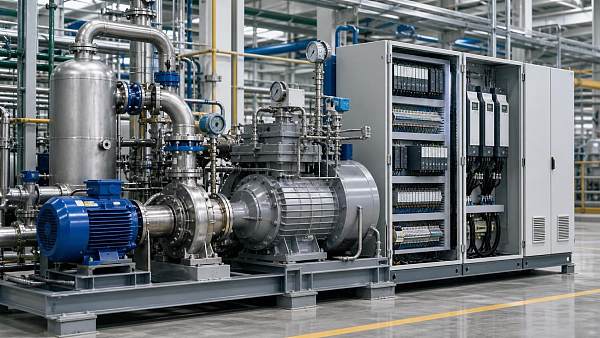
Place one visual near the opening section to illustrate a bonded-zone customs gate, export inspection workflow, or high-value fluid equipment prepared for overseas validation.
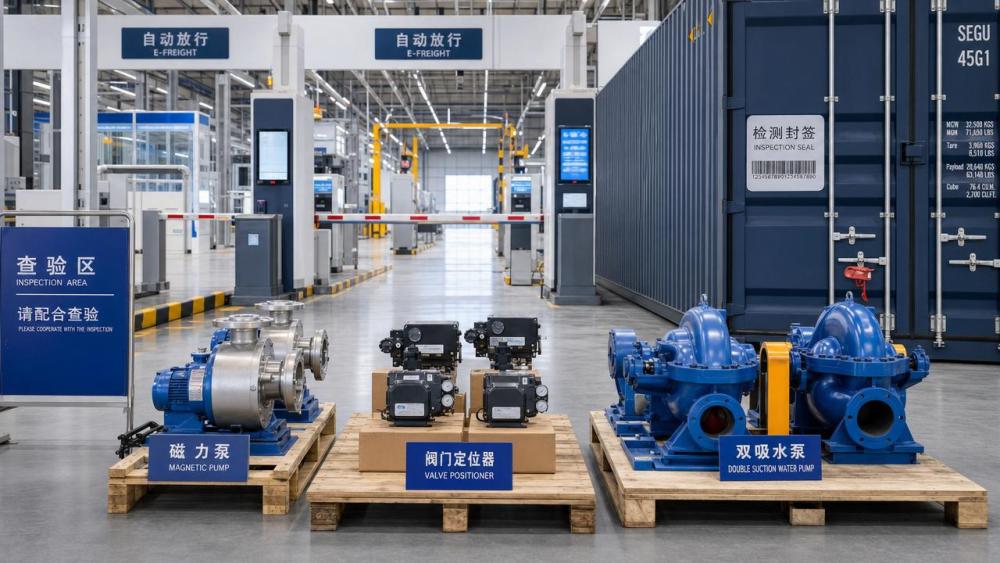
On June 1, 2026, the Tianjin Harbor-Area Comprehensive Bonded Zone began sealed customs operation, introducing facilitation measures that may affect exporters of high-value fluid equipment because offshore R&D, bonded testing, and global repair activities can be handled under a more streamlined bonded supervision framework.
What has been confirmed about the new operation
The event date provided is June 1, 2026. On that date, the Tianjin Harbor-Area Comprehensive Bonded Zone formally began sealed customs operation.
The reported facilitation package is aimed at three types of activities: offshore research and development, bonded testing, and global repair services.
- License filing is not required for the covered procedures described in the input.
- Smart checkpoint processing supports immediate declaration and release.
- Bonded write-off is available for R&D consumables.
The applicable export scenarios include high-value fluid equipment that requires overseas technical validation and small-batch trial production. The examples provided include intelligent valve positioners, magnetic drive pumps, and double-suction water pumps.
How the policy shift may affect industry participants
Export trading companies handling direct shipments
From an industry perspective, direct export traders may be affected because the measures relate to customs clearance, bonded handling, and the movement of products used for testing, repair, or validation. The most relevant business links include export declaration, bonded-zone entry and exit arrangements, sample movement, and coordination with overseas validation schedules.
These companies may need to watch whether immediate declaration and release at smart checkpoints changes document preparation, internal approval timing, and the way technical samples are matched with export orders.
Raw material and component procurement teams
Analysis shows that procurement teams may face new planning requirements when R&D consumables, spare parts, and trial-production materials are managed under bonded write-off. The affected links may include material classification, inventory records, supplier documentation, and traceability between purchased components and R&D or testing use.
Procurement teams should pay close attention to whether suppliers can provide consistent technical specifications, compliance documents, and batch-level records that support bonded testing and later export delivery.
Processing and manufacturing enterprises
For manufacturers of intelligent valve positioners, magnetic drive pumps, double-suction water pumps, and similar fluid equipment, the measures may influence prototype development, small-batch trial production, product testing, and repair preparation. This is especially relevant when products require overseas technical validation before wider export deployment.
Manufacturing enterprises may need to align production planning with bonded-zone procedures, keep technical records for trial products, and ensure that testing reports, repair records, and configuration changes remain traceable.
Supply chain service providers
Observably, logistics, warehousing, inspection-support, and customs service providers may see changes in workflow design because bonded testing, global repair, and immediate checkpoint release require tighter document coordination. The affected links may include bonded warehousing, checkpoint scheduling, goods identification, and movement records.
Service providers should monitor operating rules for smart checkpoints, bonded write-off of R&D consumables, and the documentation standards expected by exporters and manufacturers.
Practical issues companies should review
Confirm whether the product scenario fits the facilitation scope
Companies should first determine whether their export activity relates to offshore R&D, bonded testing, or global repair. The reported measures are particularly relevant to high-value fluid equipment requiring overseas technical validation and small-batch trial production, rather than ordinary bulk export activity.
Prepare technical files for validation and testing
For intelligent valve positioners, magnetic drive pumps, double-suction water pumps, and comparable equipment, technical files should be organized around product configuration, test purpose, trial-production batch, repair status, and validation requirements. This can help support customs handling, internal quality control, and later customer review.
Align procurement and inventory records with bonded write-off
Because R&D consumables are included in the reported bonded write-off arrangement, enterprises should review how consumables are purchased, stored, issued, used, and recorded. Clear links between consumable use and R&D or testing projects may become more important for operational consistency.
Reassess delivery plans and after-sales workflows
Immediate declaration and release at smart checkpoints may create opportunities to shorten certain process steps, but companies should not assume automatic time savings without reviewing actual operating procedures. Export delivery, repair return, inspection scheduling, and customer technical acceptance should be planned with compliance checks in mind.
Industry reading: a compliance-driven export pathway
Analysis shows that this development is better understood as a facilitation mechanism for specialized export activities rather than a broad removal of trade compliance obligations. The focus is on making bonded R&D, testing, and repair workflows more compatible with the needs of high-value equipment exporters.
From an industry perspective, the most important change may be the closer connection between customs procedures and technical validation. Products such as intelligent valve positioners and advanced pumps often require documentation, testing evidence, and configuration control before export acceptance. A bonded-zone framework that supports trial production and repair may encourage companies to improve internal traceability.
What deserves closer attention is whether future implementation details clarify documentation formats, checkpoint operating procedures, and the handling of consumables used during R&D. These factors may shape compliance costs, supplier coordination, and the ability of manufacturers to respond to overseas technical requirements.
A measured conclusion for fluid equipment exporters
The sealed operation of the Tianjin Harbor-Area Comprehensive Bonded Zone introduces a policy environment that may support higher-efficiency export preparation for selected fluid equipment scenarios. Its industry significance lies in the combination of bonded R&D, bonded testing, global repair support, and faster checkpoint processing.
However, the practical effect will depend on detailed implementation, company readiness, and the consistency of supporting documents. Exporters should treat the measures as a compliance opportunity, not as a substitute for careful product validation, customs documentation, and quality traceability.
Source basis and items to monitor
This article is based on the user-provided news title, event date, and event summary. Specific official source links were not provided in the input and should be verified continuously.
For this type of event, companies typically need to monitor official policy notices, bonded-zone operating guidance, customs supervision requirements, certification practices, tender document updates, and industry feedback. Further attention should be paid to detailed rules, certification implementation approaches, changes in technical bid requirements, and market responses from exporters and service providers.
Related News
 How fluid control digitalization improves valve maintenance planningProcess Control ArchitectFluid control digitalization helps teams prioritize valve maintenance, reduce unplanned downtime, and improve reliability with actionable condition data.
 How smart valve positioners improve process control valve accuracyProcess Control ArchitectDiscover how smart positioners improve process control valve accuracy, reduce friction-related errors, enhance stability, and enable predictive maintenance.
 How to evaluate a valve automation supplier before placing an orderProcess Control ArchitectChoose a valve automation supplier with confidence. Learn how to assess engineering capability, compatibility, testing, lead times, and lifecycle support before ordering.
 How Does Industrial Automation Change Valve Specification Requirements?Process Control ArchitectHow does industrial automation change valve specification needs? Discover smarter sizing, diagnostics, protocols, fail-safe design, and lifecycle strategies for reliable control.
 Retrofit vs replacement automation: which option minimizes downtime?Process Control ArchitectRetrofit vs replacement automation: compare downtime, integration risk, lifecycle costs, and phased execution to protect uptime and modernize with confidence.
 When smart pneumatic control valves improve water treatment stabilityProcess Control ArchitectSmart pneumatic control valves for water treatment improve flow precision, dosing consistency, diagnostics, and plant stability. Learn how to select the right solution.
 When predictive maintenance for process valves pays off in plant operationsProcess Control ArchitectPredictive maintenance for process valves can cut downtime, reduce energy loss, and boost reliability. Learn when it pays off in plant operations—and how to justify the investment.
 Revised EN 14382:2026 Adds EMC Immunity Test for Smart Valve Positioners in EU ExportsProcess Control ArchitectEN 14382:2026 now mandates EMC immunity testing for Smart Valve Positioners, reshaping EU export compliance for valve OEMs and integrators. Learn what changed and how to prepare.
 FDA Tightens Import Rules for Smart Valve PositionersProcess Control ArchitectSmart valve positioners now face stricter FDA import rules. Learn how IEC 61508 SIL2 or UL 61508 documentation affects U.S. clearance, suppliers, and compliance planning.
 EN 14382:2026 Raises EU Entry Bar for Smart PositionersProcess Control ArchitectEN 14382:2026 raises the EU entry bar for Smart Valve Positioners with a 150 ms step response cap and IEC 62443-4-2 cybersecurity checks. Learn what exporters, buyers, and compliance teams must do before Nov 1, 2026.
 High-Precision Stainless Steel Control Valves for Corrosive Process LinesProcess Control ArchitectHigh-precision control valves stainless steel solutions improve corrosion resistance, flow stability, and safety in demanding process lines. Discover how to reduce downtime and boost control accuracy.
 How a Valve Performance Consultant Improves Uptime and Control AccuracyProcess Control ArchitectValve performance consultant insights to improve uptime, control accuracy, and energy efficiency. Learn how targeted diagnostics solve hidden valve issues across process systems.