Valve Positioner Design Choices That Improve Loop Stability




Valve Positioner Design Choices That Improve Loop Stability
In demanding process loops, small actuator delays, excessive deadband, or poorly tuned feedback can turn a control valve into the source of oscillation rather than stability.
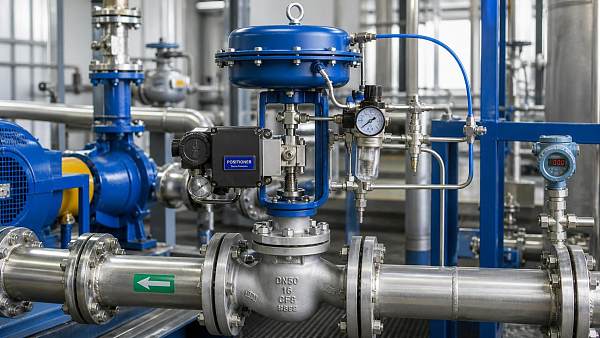
For technical evaluators, understanding valve positioner design is essential when comparing response speed, resolution, diagnostics, and pneumatic output capacity across applications.
This article examines the design choices that most directly influence loop stability, especially in high-precision throttling and digitally monitored fluid control systems.
Loop Stability Is Becoming a Positioner Selection Issue
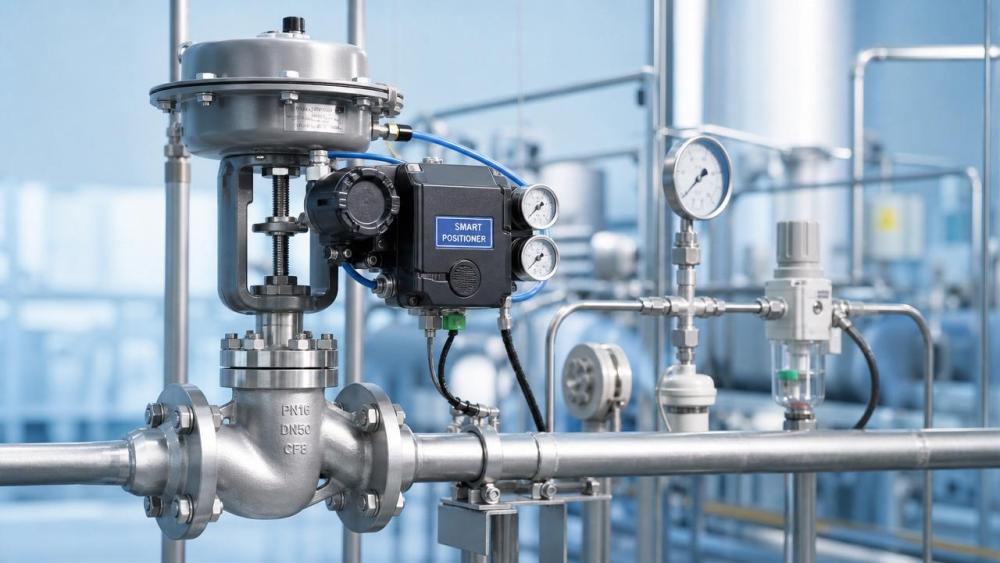
Across modern process plants, control loops face tighter energy targets, faster production changes, and stronger expectations for predictive maintenance.
That shift makes valve positioner design more strategic than it was in older pneumatic architectures.
A valve that once held a broad operating band may now regulate narrow pressure, flow, or temperature windows.
When the positioner cannot resolve small command changes, the loop may hunt around the setpoint.
When the pneumatic stage is undersized, actuator movement lags behind controller demand.
When feedback is noisy, the positioner may correct errors that do not truly exist.
These details explain why valve positioner design now affects process quality, compressor loading, pump efficiency, and valve trim life.
Trend Signals Point Toward Smarter, Faster, More Transparent Positioners
Several market signals show why valve positioner design is receiving closer attention in general machinery and process automation.
First, plants are replacing fixed-speed equipment with variable-speed pumps, compressors, and digitally tuned control strategies.
These systems react quickly, so unstable final control elements become easier to detect.
Second, low-carbon operation rewards stable throttling because cycling wastes compressed air, steam, chilled water, and electrical power.
Third, harsh services require valves to respond accurately despite friction, packing load, corrosion, high temperature, and pressure swings.
Digital diagnostics also expose behaviors that older maintenance routines missed.
Travel deviation, stick-slip, supply pressure decay, and actuator saturation now appear as measurable performance risks.
As a result, valve positioner design is moving from accessory selection toward loop performance engineering.
What Is Driving the Shift in Valve Positioner Design
The forces behind this shift are technical, economic, and operational.
They connect control accuracy with broader efficiency and reliability goals.
These forces make valve positioner design a practical lever for decarbonization, uptime, and product consistency.
Feedback Architecture Determines How the Valve Understands Motion
Feedback is the foundation of stable valve positioner design.
If the device measures stem position inaccurately, every control decision becomes less reliable.
Contactless sensors reduce mechanical wear and avoid linkage backlash in severe vibration environments.
Mechanical feedback systems may remain suitable where simplicity, familiarity, and local serviceability matter most.
The key design question is not only sensor type.
It is how the sensor, mounting geometry, signal filtering, and calibration routine behave together.
A poor mounting arrangement can introduce nonlinear travel measurement, especially on rotary valves and long-stroke actuators.
Good valve positioner design compensates for this through characterization, diagnostics, and stable feedback processing.
Resolution and Deadband Shape Small-Signal Behavior
Many loop problems begin near the setpoint, where command changes are small.
High resolution allows the positioner to respond without waiting for a large accumulated error.
Low deadband prevents the actuator from ignoring controller output changes.
However, extremely aggressive correction can amplify noise and create unnecessary movement.
Balanced valve positioner design separates genuine position error from signal noise and process disturbance.
Pneumatic Output Capacity Controls Real Actuator Speed
Fast electronics cannot stabilize a loop if the pneumatic stage cannot move the actuator.
Output capacity, supply pressure handling, relay design, and exhaust flow directly affect travel response.
Large actuators, high packing friction, and emergency shutdown duties demand stronger pneumatic delivery.
Small actuators may require finer air metering to avoid overshoot.
This is where valve positioner design must match actuator volume and valve dynamics.
Undersized pneumatic output creates sluggish response and phase lag.
Oversized output without suitable damping may create sharp corrections and oscillation.
- Check actuator volume before comparing response specifications.
- Review air consumption under steady and dynamic operation.
- Confirm exhaust capacity for fast closing or opening duties.
- Verify performance under minimum expected supply pressure.
Control Algorithms Must Balance Speed, Damping, and Noise Rejection
Modern digital valve positioner design often includes adaptive tuning, travel characterization, and configurable response levels.
These functions can improve stability when applied with process context.
A flow loop with rapid disturbances may need faster position correction.
A temperature loop with long process delay may need smoother action and less valve activity.
The positioner should support tuning flexibility without hiding critical settings behind opaque automation.
Useful valve positioner design provides response options that can be verified through step testing and trend analysis.
The goal is not maximum speed in every application.
The goal is controlled speed that supports the wider loop strategy.
Characterization Helps Align Valve Gain with Process Needs
Installed valve gain often changes across travel because pressure drop and process conditions vary.
Positioner characterization can reshape the command-to-travel relationship.
This improves controllability when the mechanical trim curve alone cannot suit every operating region.
Still, characterization should not mask poor valve sizing or severe trim damage.
Strong valve positioner design supports characterization while preserving diagnostic transparency.
Diagnostics Are Changing How Stability Problems Are Found
Digital diagnostics make valve positioner design valuable beyond immediate positioning accuracy.
They help identify whether instability comes from the valve, actuator, air supply, or process controller.
Useful diagnostics include travel deviation, cycle count, reversal count, friction estimate, and supply pressure monitoring.
Partial stroke data can reveal increasing friction before a shutdown valve fails its proof test.
High reversal counts may indicate loop tuning problems or excessive process noise.
A stable valve may still consume too much air if the pneumatic stage leaks or chatters.
This makes diagnostics central to lifecycle valve positioner design.
Impacts Across Fluid Control Systems Are Practical and Measurable
Better valve positioner design affects several business and technical layers in fluid handling operations.
In centrifugal pump systems, stable control valves reduce unnecessary recirculation and pressure fluctuations.
In compressor networks, stable throttling helps avoid demand swings that increase unloaded running.
In separation units, accurate valve movement supports consistent membrane pressure and filtration quality.
In corrosive or high-temperature services, reliable feedback helps detect mechanical degradation earlier.
The result is a tighter connection between valve automation and plant energy performance.
- Process stability improves when valve travel follows controller demand predictably.
- Maintenance planning improves when diagnostics reveal friction and wear trends.
- Energy efficiency improves when loops avoid cycling and overshoot.
- Safety improves when actuator response remains verified under abnormal conditions.
Key Design Priorities for Specification and Evaluation
A useful specification should connect valve positioner design choices with actual loop risks.
Generic response claims are less useful than application-specific performance evidence.
- Feedback integrity: confirm sensor stability, mounting tolerance, and calibration repeatability.
- Low deadband: evaluate small-signal response near normal operating travel.
- Pneumatic capacity: match output flow with actuator size and required stroke time.
- Tuning flexibility: require adjustable response for fast and slow process loops.
- Diagnostic depth: prioritize friction, travel deviation, supply pressure, and cycle analytics.
- Environmental resilience: verify vibration, temperature, enclosure, and hazardous-area requirements.
These priorities turn valve positioner design from a catalog comparison into a stability-focused engineering decision.
How to Judge the Next Positioner Upgrade
The best evaluation method combines laboratory data, field conditions, and loop performance evidence.
A positioner that performs well on a bench may behave differently with high packing friction or poor air quality.
This approach supports evidence-based decisions and avoids overvaluing isolated specifications.
A Practical Response Strategy for Stable Digital Fluid Control
Organizations upgrading control valves should begin with the loops that already show cycling, slow recovery, or high maintenance frequency.
Trend valve travel, controller output, process variable, and air supply pressure at the same time.
Then decide whether the root cause is controller tuning, valve sizing, actuator friction, or valve positioner design.
For new projects, define positioner requirements alongside valve trim, actuator sizing, and control philosophy.
For existing assets, pilot one critical loop before standardizing across the plant.
The most resilient direction is clear: valve positioner design must combine precise feedback, suitable pneumatic power, transparent diagnostics, and tunable control behavior.
FCSM will continue tracking how smart pneumatic control valves support stable, efficient, and low-carbon industrial fluid networks.
Use the next specification review to compare real loop behavior, not only device features.
That is the practical path toward positioners that strengthen stability instead of disturbing it.
Related News
 How fluid control digitalization improves valve maintenance planningProcess Control ArchitectFluid control digitalization helps teams prioritize valve maintenance, reduce unplanned downtime, and improve reliability with actionable condition data.
 How smart valve positioners improve process control valve accuracyProcess Control ArchitectDiscover how smart positioners improve process control valve accuracy, reduce friction-related errors, enhance stability, and enable predictive maintenance.
 How to evaluate a valve automation supplier before placing an orderProcess Control ArchitectChoose a valve automation supplier with confidence. Learn how to assess engineering capability, compatibility, testing, lead times, and lifecycle support before ordering.
 How Does Industrial Automation Change Valve Specification Requirements?Process Control ArchitectHow does industrial automation change valve specification needs? Discover smarter sizing, diagnostics, protocols, fail-safe design, and lifecycle strategies for reliable control.
 Retrofit vs replacement automation: which option minimizes downtime?Process Control ArchitectRetrofit vs replacement automation: compare downtime, integration risk, lifecycle costs, and phased execution to protect uptime and modernize with confidence.
 When smart pneumatic control valves improve water treatment stabilityProcess Control ArchitectSmart pneumatic control valves for water treatment improve flow precision, dosing consistency, diagnostics, and plant stability. Learn how to select the right solution.
 When predictive maintenance for process valves pays off in plant operationsProcess Control ArchitectPredictive maintenance for process valves can cut downtime, reduce energy loss, and boost reliability. Learn when it pays off in plant operations—and how to justify the investment.
 Revised EN 14382:2026 Adds EMC Immunity Test for Smart Valve Positioners in EU ExportsProcess Control ArchitectEN 14382:2026 now mandates EMC immunity testing for Smart Valve Positioners, reshaping EU export compliance for valve OEMs and integrators. Learn what changed and how to prepare.
 FDA Tightens Import Rules for Smart Valve PositionersProcess Control ArchitectSmart valve positioners now face stricter FDA import rules. Learn how IEC 61508 SIL2 or UL 61508 documentation affects U.S. clearance, suppliers, and compliance planning.
 EN 14382:2026 Raises EU Entry Bar for Smart PositionersProcess Control ArchitectEN 14382:2026 raises the EU entry bar for Smart Valve Positioners with a 150 ms step response cap and IEC 62443-4-2 cybersecurity checks. Learn what exporters, buyers, and compliance teams must do before Nov 1, 2026.
 High-Precision Stainless Steel Control Valves for Corrosive Process LinesProcess Control ArchitectHigh-precision control valves stainless steel solutions improve corrosion resistance, flow stability, and safety in demanding process lines. Discover how to reduce downtime and boost control accuracy.
 How a Valve Performance Consultant Improves Uptime and Control AccuracyProcess Control ArchitectValve performance consultant insights to improve uptime, control accuracy, and energy efficiency. Learn how targeted diagnostics solve hidden valve issues across process systems.