Wenzhou Valve Expo Signals Tighter Export Requirements




On May 23, 2026, the latest developments emerging from the 21st Wenzhou International Pump and Valve Expo pointed to a practical shift in export purchasing criteria for smart valve products. The confirmed orders and buyer inquiries did not only reflect demand; they also highlighted how certification, communication protocol compatibility, and environmental protection ratings are becoming concrete trade and procurement requirements. For exporters, OEM manufacturers, certification-related service providers, and supply chain teams, this matters because order conversion now appears more closely tied to whether technical compliance documents and delivery capability can match buyer expectations within relatively short lead times.
What the Expo Confirmed
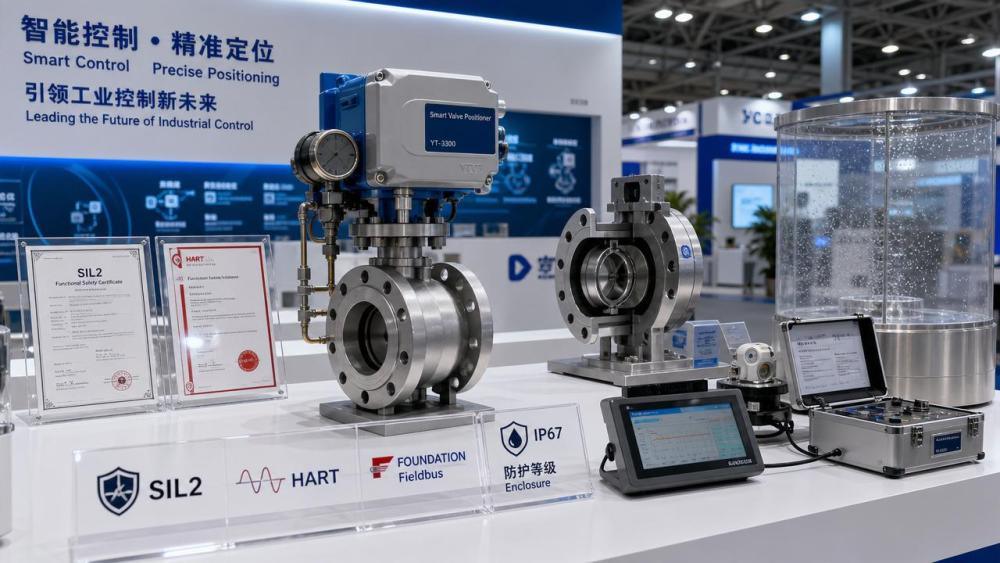
The 21st Wenzhou International Pump and Valve Expo was held from May 23 to May 25, 2026. According to the provided event summary, the exhibition attracted more than 30 international purchasing groups. Buyers from Thailand, Vietnam, and Malaysia concentrated their inquiries on Smart Valve Positioners and Eccentric Rotary Valves. Their attention focused on SIL2 functional safety certification, compatibility with HART and FOUNDATION Fieldbus protocols, and IP67 protection suited to hot and humid conditions. During the event, 17 foreign trade orders were finalized, with a total value exceeding RMB 42 million. Most of these orders were OEM private-label projects with delivery schedules of three to six months.
Why the Order Structure Matters Across the Supply Chain
Export sales teams face a more technical screening process
Analysis shows that export-oriented valve suppliers may be affected first at the quotation and technical clarification stage. When buyers concentrate on SIL2, protocol compatibility, and IP67 performance, sales conversion is no longer driven only by price and lead time. What deserves closer attention is whether exporters can present consistent technical files, certification status, and product configuration details early enough in negotiations, especially for OEM projects with defined delivery windows.
OEM manufacturers may see compliance move forward in the production timeline
From an industry perspective, manufacturers handling private-label orders may feel the impact in design confirmation, component selection, testing coordination, and delivery scheduling. The reported three-to-six-month lead time suggests that technical alignment cannot be postponed to the final shipment stage. Where certification scope, protocol support, or enclosure protection requirements are not clearly matched at the start, production planning and acceptance preparation may become more difficult.
Certification and testing services become more closely tied to trade execution
Observably, companies involved in certification, inspection, and technical verification may be drawn more directly into export execution when buyer attention centers on SIL2, HART, FOUNDATION Fieldbus, and IP67. The likely pressure point is not only whether a product claims compliance, but whether supporting evidence, test records, and technical descriptions can be organized in a form acceptable for procurement review, project approval, or delivery documentation.
Procurement and after-sales teams need to watch documentation continuity
For buyers, distributors, and after-sales support teams, the impact may appear in specification alignment, replacement compatibility, installation expectations, and later quality traceability. If a purchased product is selected on the basis of protocol compatibility, functional safety positioning, or moisture-resistance claims, then procurement records and post-delivery support materials become more important to avoid mismatches between bid requirements, supplied configuration, and service commitments.
What Companies Should Watch in the Next Stage
Check whether certification claims and sales materials fully match
Analysis shows that suppliers involved in smart control valve exports should pay closer attention to whether product brochures, quotations, nameplate descriptions, and technical files describe SIL2-related positioning consistently. The event summary confirms buyer focus on certification, but it does not provide execution details, so companies should treat this as a signal to verify internal consistency rather than assume that every order follows the same review standard.
Prepare protocol-related technical documents earlier
What deserves closer attention is the role of HART and FOUNDATION Fieldbus compatibility in pre-order communication. Where buyers raise these points during inquiries, exporters may need to prepare protocol support descriptions, configuration information, and interface-related documentation earlier in the sales process. This is particularly relevant for OEM orders, where branding changes must not create ambiguity in technical specifications.
Align delivery planning with protection and application expectations
Observably, IP67 protection under hot and humid conditions is not only a product feature discussion but also a delivery-risk issue. Companies should therefore watch whether their procurement, assembly, and final inspection arrangements are sufficient to support the promised configuration within the reported three-to-six-month delivery range. The current information does not confirm any formal regulatory revision, so this remains a practical compliance and execution watchpoint rather than a verified new rule.
Keep traceable records for OEM projects
From an industry perspective, OEM private-label projects increase the importance of traceable records across specification confirmation, testing references, packing identification, and after-sales support. Even when no additional official requirement is stated in the input, companies may need to pay closer attention to how documents are retained and presented if buyers increasingly use certification and compatibility criteria as procurement filters.
How This Signal Should Be Read
Analysis shows that this development is better understood as an execution signal from the market rather than proof of a newly issued formal regulation. The confirmed facts point to a procurement pattern in which overseas buyers are paying closer attention to certification language, communication protocol compatibility, and protection ratings when selecting smart valve products. At the same time, it remains necessary to observe whether these preferences will translate into broader tender wording, stricter document review, or more standardized acceptance expectations in subsequent transactions.
What the Event Indicates at This Stage
At this stage, the event is more appropriately read as evidence that technical compliance requirements are becoming more visible in export deal-making for smart valve products. The practical implication is not that the entire market has shifted under a single formal rule change, but that suppliers may increasingly need to connect certification, technical documentation, OEM delivery control, and post-sale traceability more tightly. A neutral reading is that the signal has already appeared in buyer behavior, while the broader degree of rule consolidation still requires observation.
Basis of This Article
This article is generated from the user-provided news title, event date, and event summary. The input did not provide specific official source links, so any official confirmation path remains to be further verified. For events of this kind, source types that are typically relevant include official announcements, regulatory releases, customs or trade authority information, industry association updates, standard organization documents, and reporting from authoritative media. Further observation is still needed regarding certification interpretation, execution standards, tender document wording, market feedback, and how companies implement related requirements in actual export projects.
Related News
 How fluid control digitalization improves valve maintenance planningProcess Control ArchitectFluid control digitalization helps teams prioritize valve maintenance, reduce unplanned downtime, and improve reliability with actionable condition data.
 How smart valve positioners improve process control valve accuracyProcess Control ArchitectDiscover how smart positioners improve process control valve accuracy, reduce friction-related errors, enhance stability, and enable predictive maintenance.
 How to evaluate a valve automation supplier before placing an orderProcess Control ArchitectChoose a valve automation supplier with confidence. Learn how to assess engineering capability, compatibility, testing, lead times, and lifecycle support before ordering.
 How Does Industrial Automation Change Valve Specification Requirements?Process Control ArchitectHow does industrial automation change valve specification needs? Discover smarter sizing, diagnostics, protocols, fail-safe design, and lifecycle strategies for reliable control.
 Retrofit vs replacement automation: which option minimizes downtime?Process Control ArchitectRetrofit vs replacement automation: compare downtime, integration risk, lifecycle costs, and phased execution to protect uptime and modernize with confidence.
 When smart pneumatic control valves improve water treatment stabilityProcess Control ArchitectSmart pneumatic control valves for water treatment improve flow precision, dosing consistency, diagnostics, and plant stability. Learn how to select the right solution.
 When predictive maintenance for process valves pays off in plant operationsProcess Control ArchitectPredictive maintenance for process valves can cut downtime, reduce energy loss, and boost reliability. Learn when it pays off in plant operations—and how to justify the investment.
 Revised EN 14382:2026 Adds EMC Immunity Test for Smart Valve Positioners in EU ExportsProcess Control ArchitectEN 14382:2026 now mandates EMC immunity testing for Smart Valve Positioners, reshaping EU export compliance for valve OEMs and integrators. Learn what changed and how to prepare.
 FDA Tightens Import Rules for Smart Valve PositionersProcess Control ArchitectSmart valve positioners now face stricter FDA import rules. Learn how IEC 61508 SIL2 or UL 61508 documentation affects U.S. clearance, suppliers, and compliance planning.
 EN 14382:2026 Raises EU Entry Bar for Smart PositionersProcess Control ArchitectEN 14382:2026 raises the EU entry bar for Smart Valve Positioners with a 150 ms step response cap and IEC 62443-4-2 cybersecurity checks. Learn what exporters, buyers, and compliance teams must do before Nov 1, 2026.
 High-Precision Stainless Steel Control Valves for Corrosive Process LinesProcess Control ArchitectHigh-precision control valves stainless steel solutions improve corrosion resistance, flow stability, and safety in demanding process lines. Discover how to reduce downtime and boost control accuracy.
 How a Valve Performance Consultant Improves Uptime and Control AccuracyProcess Control ArchitectValve performance consultant insights to improve uptime, control accuracy, and energy efficiency. Learn how targeted diagnostics solve hidden valve issues across process systems.