Choosing an Industrial Wastewater Treatment Manufacturer




Selecting the right industrial wastewater treatment manufacturer is a strategic decision affecting compliance, lifecycle cost, production continuity, and sustainability.
As discharge standards tighten, the best choice depends on wastewater chemistry, flow volatility, automation depth, separation efficiency, and service reliability.
Choosing an Industrial Wastewater Treatment Manufacturer by Operating Scenario
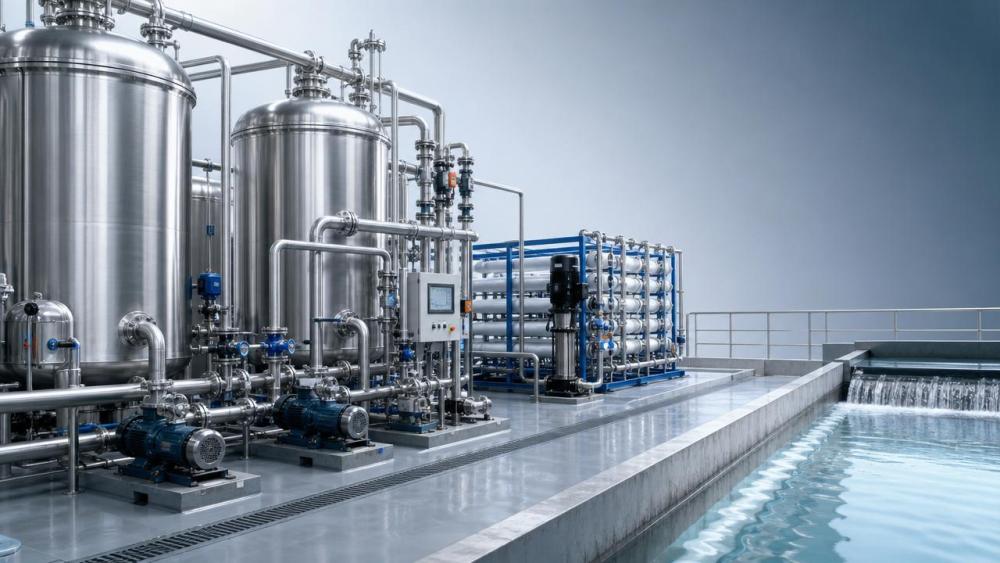
An industrial wastewater treatment manufacturer should be evaluated through real operating scenarios, not only through catalog capacity or equipment price.
A stable food plant, a metal finishing line, and a chemical park face completely different hydraulic and contaminant risks.
The right industrial wastewater treatment manufacturer connects process design, pumps, valves, membranes, controls, and maintenance into one reliable treatment architecture.
This scenario-based view reduces underdesign, overinvestment, emergency retrofits, and hidden energy consumption across the system lifecycle.
Why Scenario Judgment Changes the Manufacturer Shortlist
Wastewater treatment is not a single machine purchase. It is a process chain shaped by contaminants, discharge limits, and production rhythm.
A qualified industrial wastewater treatment manufacturer must prove experience with the specific loading pattern, not only general engineering capability.
High salinity requires different thinking from oil-bearing wastewater. Heavy metals demand different safeguards from biodegradable organic effluent.
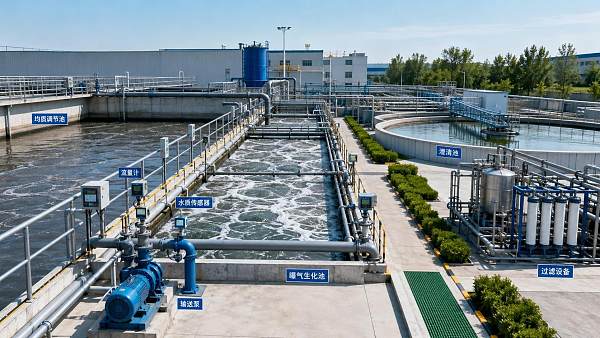
Flow equalization, chemical dosing, sludge handling, membrane protection, and automation logic must match the real application environment.
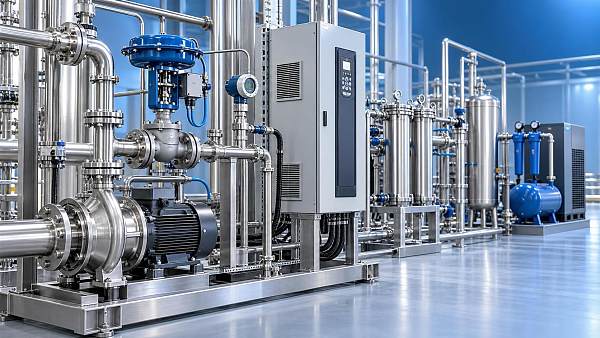
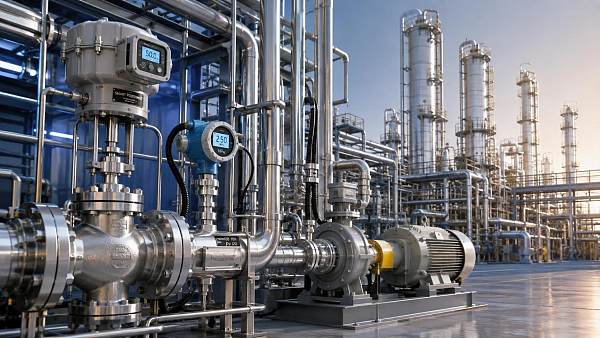
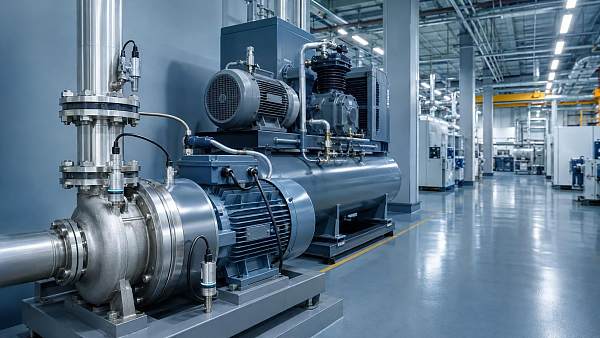
For FCSM’s fluid-control perspective, pumps, valves, compressors, and separation units determine whether treatment remains stable under disturbance.
Scenario One: Chemical and Petrochemical Effluent with Variable Loads
Chemical wastewater often contains solvents, acids, alkalis, salts, surfactants, and intermittent high-COD shock loads.
Here, an industrial wastewater treatment manufacturer should demonstrate strong jar testing, pilot validation, and corrosion-resistant material selection.
Key judgment points include equalization tank design, online pH control, explosion safety, dosing precision, and emergency bypass logic.
Smart pneumatic control valves become important when dosing, neutralization, and flow division need fast and accurate adjustment.
The industrial wastewater treatment manufacturer should also define how to protect membranes and biological units from toxic peak events.
Scenario Two: Metal Finishing, Electronics, and Heavy-Metal Wastewater
Metal finishing effluent may contain chromium, nickel, copper, zinc, cyanide, fluoride, and complexing agents.
An industrial wastewater treatment manufacturer must understand precipitation chemistry, oxidation-reduction control, filtration polishing, and hazardous sludge stability.
For electronics plants, trace contaminants matter. Conductivity, silica, boron, and micro-particles can affect reuse targets.
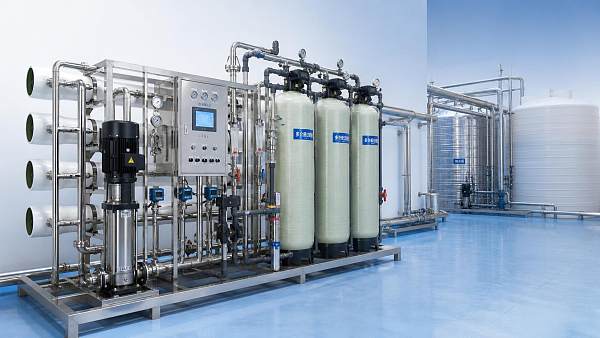
A strong industrial wastewater treatment manufacturer should integrate chemical treatment with ultrafiltration, reverse osmosis, ion exchange, or selective recovery.
Pump selection also matters because abrasive precipitates and corrosive water shorten the life of ordinary fluid-handling equipment.
Scenario Three: Food, Beverage, Textile, and High-Organic Effluent
Food and beverage wastewater usually has high BOD, fats, suspended solids, nutrients, and cleaning chemical residues.
Textile wastewater adds color, surfactants, salts, temperature variation, and dye chemistry that can resist biological degradation.
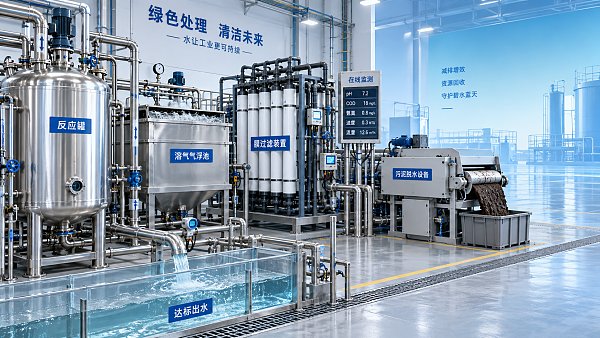
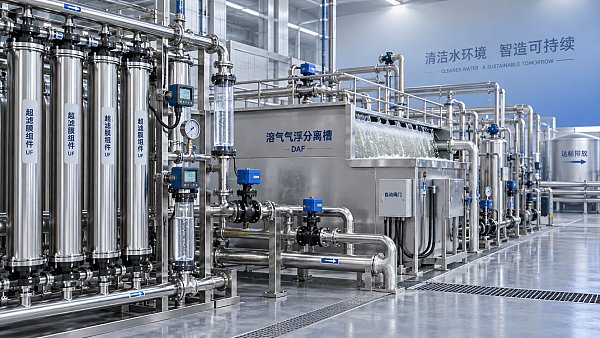
In these cases, the industrial wastewater treatment manufacturer should optimize pretreatment, dissolved air flotation, anaerobic digestion, aeration, and sludge dewatering.
Air compressor systems and blowers influence oxygen transfer efficiency, energy cost, and biological process stability.
The industrial wastewater treatment manufacturer should provide realistic energy models for aeration, recirculation, pumping, and chemical consumption.
Scenario Four: Mining, Power, and Zero Liquid Discharge Ambitions
Mining and power applications often involve high suspended solids, scaling ions, hardness, silica, chloride, and large wastewater volumes.
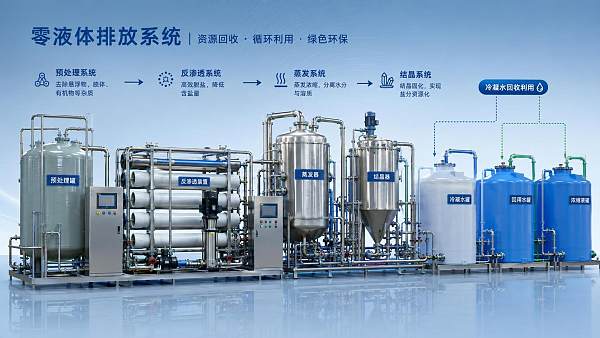
A capable industrial wastewater treatment manufacturer should evaluate clarification, thickening, filtration, membrane concentration, evaporation, and crystallization as one chain.
Zero Liquid Discharge requires more than RO membranes. It requires disciplined pretreatment and scale-control strategy.
High-pressure pumps, anti-scaling controls, brine management, and heat integration decide whether ZLD remains affordable.
The industrial wastewater treatment manufacturer should specify recovery limits, concentrate disposal routes, cleaning cycles, and downtime assumptions clearly.
Different Scenarios, Different Manufacturer Requirements
This comparison shows why one industrial wastewater treatment manufacturer may excel in one sector but struggle in another.
References should be checked against contaminant similarity, hydraulic scale, local discharge rules, and operating climate.
Scenario-Fit Evaluation Checklist
Use scenario-fit questions before accepting a proposal from any industrial wastewater treatment manufacturer.
- Has the influent variability been mapped across shifts, seasons, and cleaning cycles?
- Are laboratory tests or pilot trials included before final process locking?
- Are pumps, valves, membranes, blowers, and instruments sized for upset conditions?
- Does the automation system support alarms, trend analysis, and remote diagnostics?
- Are chemical, energy, membrane, and sludge costs presented as lifecycle costs?
- Are spare parts, service response, and operator training contractually defined?
A reliable industrial wastewater treatment manufacturer should answer these questions with data, not only with general assurances.
Digital Control and Fluid Machinery Integration
Modern wastewater systems increasingly depend on sensors, variable-frequency drives, smart valves, and predictive maintenance platforms.
An advanced industrial wastewater treatment manufacturer should connect process targets with fluid machinery performance.
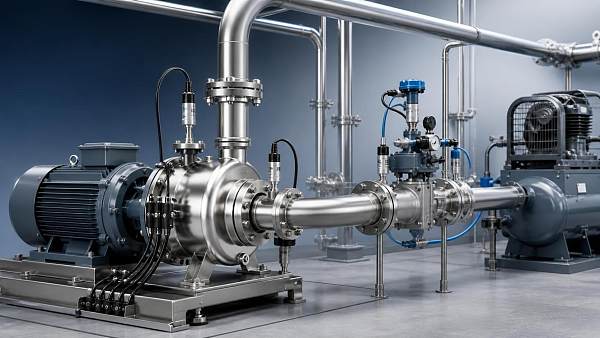
Centrifugal pumps affect circulation stability. High-pressure plunger pumps influence RO recovery. Control valves govern dosing accuracy.
Air compressors and blowers shape aeration cost, while filtration and separation equipment determine final effluent consistency.
Digital dashboards should show flow, pressure, conductivity, turbidity, pH, ORP, energy use, and alarm history in actionable form.
The industrial wastewater treatment manufacturer should define who owns data, who maintains sensors, and how control logic is updated.
Common Scenario Misjudgments That Increase Risk
The first mistake is designing from average flow while ignoring peak discharge and cleaning wastewater.
The second mistake is selecting an industrial wastewater treatment manufacturer based mainly on lowest initial quotation.
Low purchase price can hide chemical overuse, excessive power draw, premature membrane fouling, and poor sludge dewatering.
Another frequent issue is treating automation as optional. Manual adjustment cannot handle fast chemistry and flow disturbances reliably.
Some projects also underestimate operator workload, spare-part lead time, and maintenance access around pumps, tanks, and membranes.
A serious industrial wastewater treatment manufacturer will expose these risks early and document practical mitigation measures.
How to Build a Shortlist with Practical Evidence
Start with wastewater characterization, including contaminants, temperature, pH, conductivity, oil, suspended solids, and expected regulatory limits.
Then request a scenario-specific process route from each industrial wastewater treatment manufacturer under consideration.
The proposal should include mass balance, hydraulic profile, equipment list, control philosophy, and operating cost assumptions.
For complex effluent, demand pilot testing or reference data from comparable wastewater streams.
For ZLD or reuse projects, verify scaling indexes, recovery limits, membrane cleaning frequency, and concentrate treatment strategy.
The best industrial wastewater treatment manufacturer will welcome transparent technical review because robust evidence strengthens project certainty.
Action Guide for the Next Decision Step
Choosing an industrial wastewater treatment manufacturer should begin with the operating scenario, then move toward technology, budget, and contract terms.
Prepare a data package covering influent quality, discharge targets, expansion plans, energy priorities, and site constraints.
Compare proposals by lifecycle value, compliance confidence, automation readiness, fluid machinery reliability, and service accountability.
FCSM’s intelligence focus helps connect wastewater treatment decisions with pumps, valves, compressors, and separation technologies.
When the industrial wastewater treatment manufacturer matches the scenario, the plant gains cleaner discharge, lower risk, and stronger long-term sustainability.
Related News
 What drives industrial wastewater treatment cost per cubic meter?Dr. Alistair VaughnIndustrial wastewater treatment cost per cubic meter depends on influent load, effluent targets, energy, technology, and sludge disposal. Explore the key cost drivers.
 How to verify CE compliance for fluid separation equipmentDr. Alistair VaughnFluid separation equipment CE verification made practical: learn how to check declarations, risk assessments, technical files, pressure safety, and installation readiness.
 Separation equipment trends reshaping industrial wastewater treatmentDr. Alistair VaughnSeparation equipment trends are reshaping industrial wastewater treatment through smarter membranes, modular systems, digital monitoring, and resource recovery strategies.
 When stainless steel separation equipment is the right choice for hygienic processesDr. Alistair VaughnStainless steel separation equipment: discover when hygienic design, corrosion resistance, CIP cleanability, and lifecycle reliability make it the smart choice.
 What to assess before choosing a process industry automation supplierDr. Alistair VaughnChoose a process industry automation supplier with confidence. Assess engineering depth, lifecycle reliability, digital integration, energy performance, and safety before you buy.
 How process control innovation in refineries reduces unplanned shutdownsDr. Alistair VaughnDiscover how process control innovation in refineries detects early deviations, improves valve and equipment reliability, and helps prevent costly unplanned shutdowns.
 What should a zero liquid discharge systems integrator include in its proposal?Dr. Alistair VaughnZero liquid discharge systems integrator proposal checklist: compare guarantees, utilities, scope, controls, waste handling, and lifecycle risk before award.
 Industrial wastewater treatment plant design: sizing for flow and loadDr. Alistair VaughnIndustrial wastewater treatment plant design guide: size systems for peak flow, pollutant loads, reliability, compliance, and lower lifecycle costs.
 Can predictive maintenance and machinery diagnostics prevent downtime?Dr. Alistair VaughnPredictive maintenance machinery diagnostics help reduce unplanned downtime by detecting early equipment issues, improving reliability, and enabling smarter maintenance decisions.
 Can a digital transformation machinery platform cut unplanned downtime?Dr. Alistair VaughnDiscover how a digital transformation machinery platform connects asset data, maintenance workflows, and process insights to reduce unplanned downtime.
 How water treatment equipment sizing affects operating costsDr. Alistair VaughnWater treatment equipment sizing shapes energy, chemical, and maintenance costs. Learn how to balance flow, pressure, recovery, and reliability for efficient operation.
 When does food processing automation justify the upfront investment?Dr. Alistair VaughnIndustrial automation solutions for food processing: discover when automation delivers measurable ROI through higher throughput, lower waste, reliable utilities, and stronger food safety control.