Custom Industrial Automation Solutions for Retrofit Lines




Why Custom Industrial Automation Solutions Make Sense for Retrofit Lines
For older production assets, full replacement is rarely the only option. In many cases, custom industrial automation solutions deliver faster gains with less disruption and better capital control.
That matters even more in fluid and gas systems. Pumps, control valves, compressors, and separation equipment often sit at the center of uptime, energy use, and product consistency.
A retrofit line usually has mixed generations of equipment. One skid may be robust mechanically but weak digitally. Another may have acceptable throughput but poor visibility and unstable control.
Custom industrial automation solutions help connect those gaps. The goal is not adding technology for its own sake. The goal is making legacy assets work smarter, safer, and longer.
In process-heavy environments, FCSM’s sector focus is especially relevant. Its intelligence around cavitation, valve behavior, compressor efficiency, and filtration performance helps frame retrofit decisions in practical operating terms.
Below is a practical way to evaluate custom industrial automation solutions before a retrofit starts consuming time and budget.
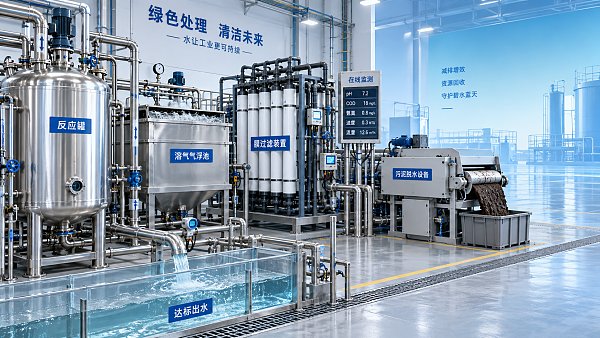
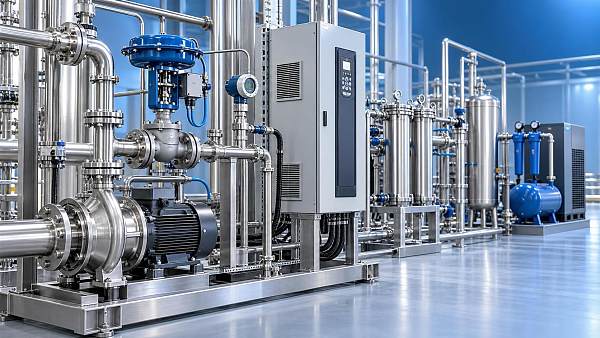
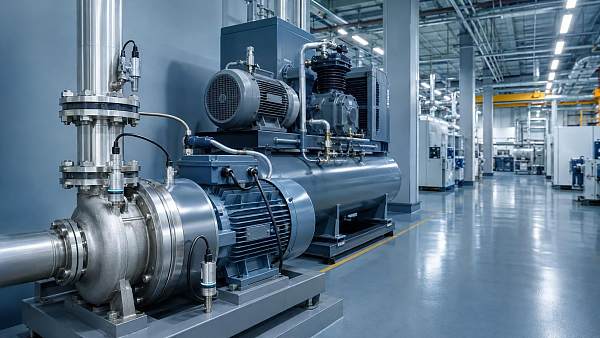
[Image 01: Retrofit industrial line with pumps, smart valves, compressor controls, and SCADA integration]
What to Check Before Committing Budget
- Start with process bottlenecks, not hardware age. The weakest point may be unstable valve response, compressor cycling, or pump cavitation rather than the oldest machine on the line.
- Map every control layer early. Include PLCs, drives, sensors, HMIs, fieldbus protocols, and manual workarounds, because undocumented signals often become the biggest retrofit delay.
- Verify mechanical health before adding automation. Better controls cannot fully compensate for worn impellers, leaking seals, sticking valve trim, or fouled filtration elements.
- Define one operating baseline first. Capture flow, pressure, energy, downtime, reject rate, and maintenance frequency so custom industrial automation solutions can be measured properly later.
- Check data quality, not just data quantity. A retrofit fails quietly when sensors drift, tag naming is inconsistent, or sampling rates are too slow for dynamic process changes.
- Review utility dependencies. Compressed air stability, power quality, cooling water, and network resilience can limit performance even when automation architecture looks correct on paper.
- Prioritize interoperability from day one. Custom industrial automation solutions should connect legacy equipment, modern analytics, and future expansion without forcing a complete controls rewrite.
- Set phased acceptance criteria. Use milestones for commissioning, operator handover, alarm rationalization, and energy verification instead of treating startup as one final event.
Where Retrofit Projects Often Win or Lose
Pumps and fluid transfer loops
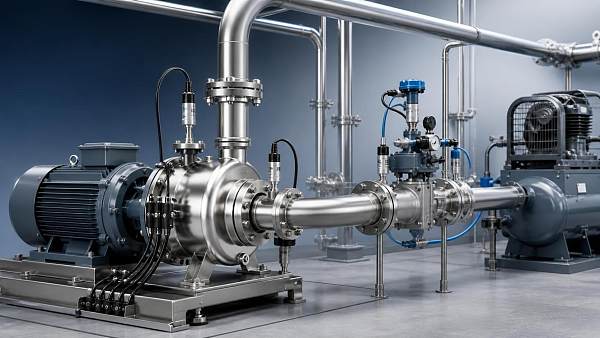
In centrifugal pump systems, retrofit value often comes from variable speed control, better suction monitoring, and tighter flow feedback. These are practical upgrades, but only if hydraulic behavior is understood first.
FCSM’s focus on cavitation and efficiency is useful here. A pump that looks oversized on paper may still be process-critical if line losses, fluid properties, or transient demand were never modeled correctly.
Control valves in harsh process conditions
Smart positioners and digital diagnostics can transform old valve loops. Still, many retrofits underperform because engineers automate around bad valve sizing or damaged trim rather than fixing root causes.
If a line handles corrosive media, high temperatures, or flashing conditions, custom industrial automation solutions should include valve characterization, travel feedback review, and noise or vibration checks.
Compressed air and utility systems
Air compressor systems are often treated like background utilities. In reality, they shape automation reliability across the plant. Pressure drops and unstable loading patterns create hidden production losses.
A retrofit may include VFD compressors, sequencing controls, leak detection, and demand profiling. These custom industrial automation solutions can reduce energy cost while improving actuator response and line stability.
Filtration and separation processes
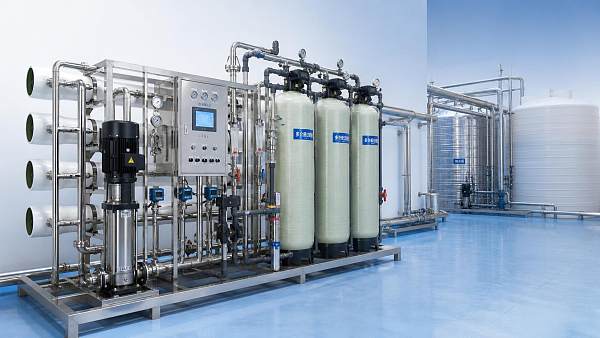
Separation systems usually suffer from fouling, unstable differential pressure, or inconsistent cleaning cycles. Automation can help, but only when sensors, membrane condition, and cleaning logic are aligned.
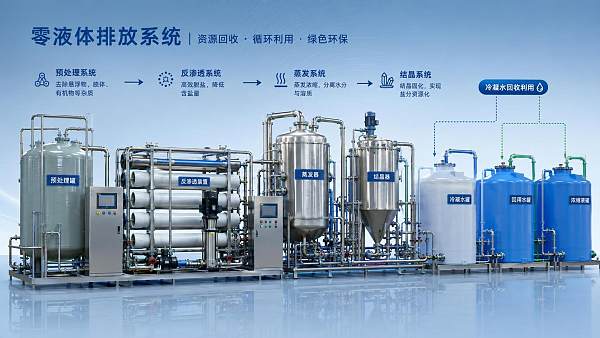
This is especially important in water reuse and ZLD-related operations. Better controls support compliance, but poor instrumentation placement can still distort the process picture.
Commonly Missed Items During Retrofit Planning
- Do not ignore operator routines. If daily stability depends on manual valve cracking, local bypasses, or reset habits, those actions must be designed into the new control strategy.
- Alarm overload is a real startup risk. More sensors can create more confusion unless priorities, delays, and response actions are cleaned up before commissioning.
- Cybersecurity cannot wait until handover. Remote access, edge gateways, and historian links should be reviewed with the same seriousness as I/O lists and panel drawings.
- Spare parts strategy matters. A retrofit using niche controllers or uncommon valve accessories may improve performance but increase lifecycle risk if replacement lead times are long.
- Do not assume energy savings appear automatically. If control logic increases recirculation, compressor unload time, or excessive cleaning cycles, utility consumption may actually rise.
- Vendor coordination needs structure. Custom industrial automation solutions often involve mechanical, electrical, software, and process specialists, and integration gaps usually appear between disciplines.
A Practical Comparison for Decision Support
How to Sequence the Work Without Creating New Risk
The most effective retrofit programs move in layers. First, stabilize the process. Then confirm mechanical integrity. Only after that should controls modernization and optimization logic be expanded.
This order sounds simple, but it is often skipped. Teams sometimes jump directly into dashboards, remote monitoring, or advanced analytics while unresolved field issues keep distorting the data.
For fluid machinery, this matters a lot. A smart valve cannot correct poor process design. A digital compressor controller cannot fix persistent leaks. A predictive model cannot rescue unreliable sensor inputs.
That is why custom industrial automation solutions should be validated at three levels: field device accuracy, loop performance, and plant-level business impact. If one layer is weak, the others suffer.
A workable implementation flow
- Audit the line in operating condition, not only during shutdown. Live process behavior reveals cycling, unstable pressure bands, and hidden operator interventions that drawings rarely show.
- Rank retrofit actions by production impact and outage feasibility. Quick control improvements may fund larger upgrades in pumps, compressors, or separation modules later.
- Use pilot logic where possible. Testing one pump train, valve cluster, or compressed air zone reduces commissioning risk before line-wide rollout.
- Document post-start tuning carefully. Many custom industrial automation solutions achieve full value only after loop tuning, alarm cleanup, and operator feedback during the first weeks.
Using Better Intelligence to Improve Retrofit Outcomes
Retrofit decisions improve when technical assumptions are grounded in real machinery behavior. That is where sector intelligence has practical value, especially in complex flow, pressure, and energy systems.
FCSM tracks the machinery categories that shape many retrofit lines: centrifugal pumps, plunger pumps, smart pneumatic control valves, air compressor systems, and industrial filtration and separation equipment.
Its perspective is useful because retrofit performance is rarely isolated. Cavitation affects energy and seal life. Valve noise can signal poor sizing. Compressor thermodynamics influence plant utility efficiency.
When custom industrial automation solutions are planned with this wider view, the result is usually stronger uptime, better COP, more stable control, and clearer decarbonization progress.
What to Do Next
If a retrofit line is underperforming, start with evidence, not assumptions. Build a clean baseline, identify the process constraint, and confirm whether the issue is mechanical, controls-related, or both.
Then evaluate custom industrial automation solutions against practical outcomes: uptime, controllability, energy use, maintainability, and future integration. That keeps the retrofit grounded in results, not features.
The strongest projects usually begin with a narrow, disciplined scope and expand only after early gains are proven. For aging lines, that approach is often the safest path to modern performance.
Related News
 What drives industrial wastewater treatment cost per cubic meter?Dr. Alistair VaughnIndustrial wastewater treatment cost per cubic meter depends on influent load, effluent targets, energy, technology, and sludge disposal. Explore the key cost drivers.
 How to verify CE compliance for fluid separation equipmentDr. Alistair VaughnFluid separation equipment CE verification made practical: learn how to check declarations, risk assessments, technical files, pressure safety, and installation readiness.
 Separation equipment trends reshaping industrial wastewater treatmentDr. Alistair VaughnSeparation equipment trends are reshaping industrial wastewater treatment through smarter membranes, modular systems, digital monitoring, and resource recovery strategies.
 When stainless steel separation equipment is the right choice for hygienic processesDr. Alistair VaughnStainless steel separation equipment: discover when hygienic design, corrosion resistance, CIP cleanability, and lifecycle reliability make it the smart choice.
 What to assess before choosing a process industry automation supplierDr. Alistair VaughnChoose a process industry automation supplier with confidence. Assess engineering depth, lifecycle reliability, digital integration, energy performance, and safety before you buy.
 How process control innovation in refineries reduces unplanned shutdownsDr. Alistair VaughnDiscover how process control innovation in refineries detects early deviations, improves valve and equipment reliability, and helps prevent costly unplanned shutdowns.
 What should a zero liquid discharge systems integrator include in its proposal?Dr. Alistair VaughnZero liquid discharge systems integrator proposal checklist: compare guarantees, utilities, scope, controls, waste handling, and lifecycle risk before award.
 Industrial wastewater treatment plant design: sizing for flow and loadDr. Alistair VaughnIndustrial wastewater treatment plant design guide: size systems for peak flow, pollutant loads, reliability, compliance, and lower lifecycle costs.
 Can predictive maintenance and machinery diagnostics prevent downtime?Dr. Alistair VaughnPredictive maintenance machinery diagnostics help reduce unplanned downtime by detecting early equipment issues, improving reliability, and enabling smarter maintenance decisions.
 Can a digital transformation machinery platform cut unplanned downtime?Dr. Alistair VaughnDiscover how a digital transformation machinery platform connects asset data, maintenance workflows, and process insights to reduce unplanned downtime.
 How water treatment equipment sizing affects operating costsDr. Alistair VaughnWater treatment equipment sizing shapes energy, chemical, and maintenance costs. Learn how to balance flow, pressure, recovery, and reliability for efficient operation.
 When does food processing automation justify the upfront investment?Dr. Alistair VaughnIndustrial automation solutions for food processing: discover when automation delivers measurable ROI through higher throughput, lower waste, reliable utilities, and stronger food safety control.