Industrial Machinery Trends 2026: What Is Changing Fast




Industrial machinery trends in 2026 are moving from broad discussion to immediate capital decisions. Energy rules are tightening, digital visibility is improving, and supply uncertainty is changing how equipment value is judged.
That matters across general industry, especially where pumps, valves, compressors, and separation systems support process continuity. The fastest changes are no longer only technical. They now shape uptime risk, lifecycle cost, and replacement timing.
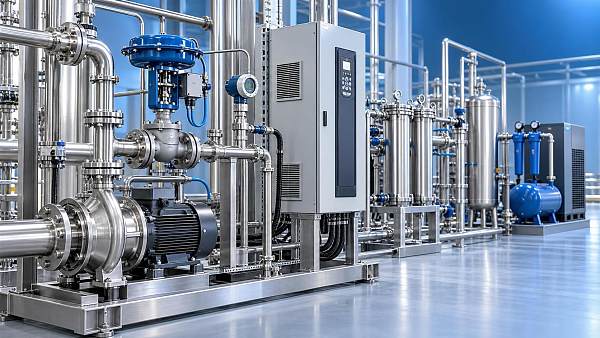
Seen through fluid control systems, the picture becomes clearer. Core machinery is being evaluated less as isolated hardware and more as a connected operating asset with energy, reliability, and carbon consequences.
Why 2026 feels different from earlier machinery cycles
Past upgrade waves often focused on output expansion. In 2026, industrial machinery trends are defined more by efficiency compliance, system resilience, and measurable operating intelligence.
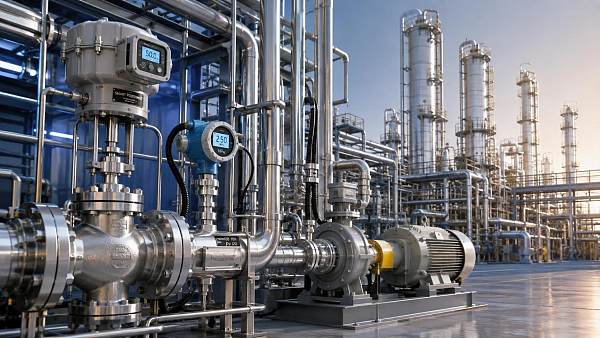
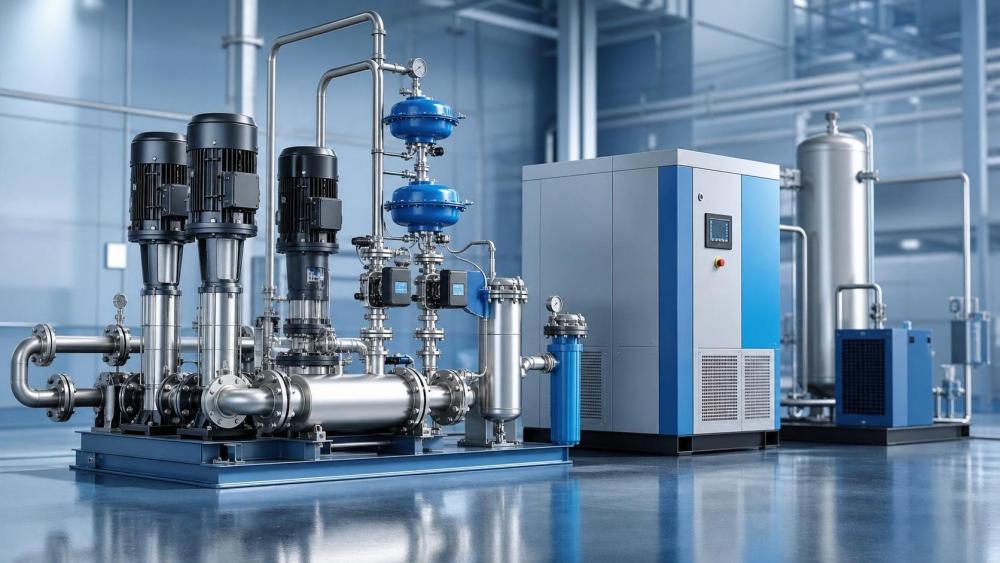
This shift is especially visible in fluid and gas handling equipment. A pump set, control valve, or compressor now affects power draw, process stability, maintenance exposure, and emissions reporting at the same time.
For that reason, equipment reviews are becoming more cross-functional. Mechanical performance still matters, but so do data quality, service access, spare part security, and the ability to adapt to stricter standards.
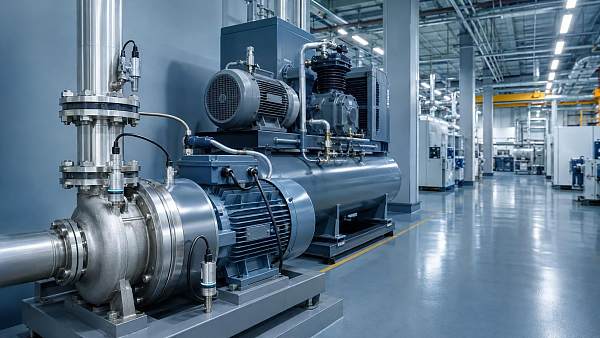
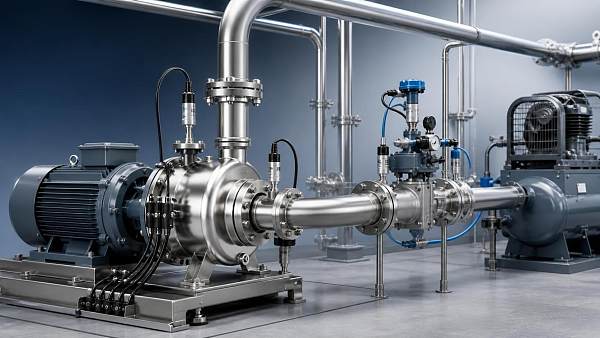
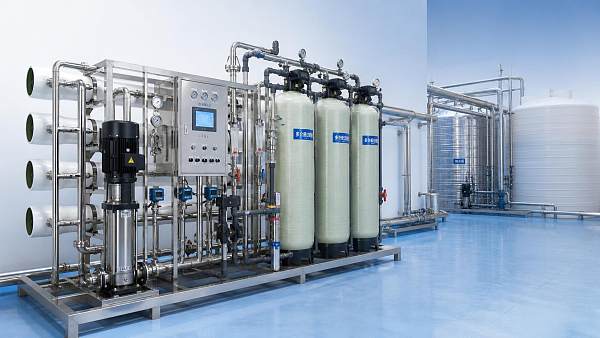
FCSM has been tracking this convergence closely. Its coverage of centrifugal pumps, plunger pumps, pneumatic valves, compressors, and filtration systems reflects how deeply linked process performance and strategic planning have become.
The main forces accelerating industrial machinery trends
Several forces are moving at once, which explains why decision windows feel shorter than before. The market is not changing in one direction. It is changing across regulation, engineering, and supply conditions.
Efficiency mandates are moving from policy to specification
Motor efficiency rules, compressed air optimization targets, and wastewater discharge pressure are becoming procurement filters. Equipment that once looked acceptable on purchase price alone is being re-ranked on total operating burden.
This is one reason high-efficiency air compressor systems and upgraded pump drives are advancing quickly. Permanent magnet variable frequency designs and two-stage compression now have stronger commercial logic, not only technical appeal.
Digital monitoring is changing what “reliable” means
Reliability used to be judged by brand history and maintenance records. Now it is increasingly linked to data visibility, alarm quality, and the ability to detect drift before failure becomes disruptive.
In pumps, that may mean cavitation indicators or vibration patterns. In valves, it may mean positioner feedback and control stability. In compressors, it often means load profile analysis and thermal behavior over time.
Supply chain volatility remains a design issue
Special alloys, seals, electronics, and membrane components still carry supply risk. As a result, industrial machinery trends now include a stronger preference for equipment architectures that reduce dependence on narrow sourcing channels.
This does not always mean buying simpler equipment. Often it means buying smarter systems with clearer maintainability, interchangeable subsystems, and more transparent spare-part planning.
Where the fastest changes are happening
Not every machinery category is shifting at the same speed. Fluid control equipment is among the most active areas because it sits at the intersection of energy use, process precision, and environmental compliance.
These categories also show why industrial machinery trends can no longer be read through one metric. Efficiency, controllability, and maintainability are increasingly evaluated as one package.
What these trends mean for business evaluation
A useful assessment now starts with system behavior, not only equipment nameplate data. Machinery that performs well in isolation may underdeliver once part-load operation, fluid variability, or control interaction is considered.
That is why lifecycle thinking is gaining ground. A lower upfront quote can lose its advantage if the asset brings frequent seal failures, unstable throttling, compressed air losses, or difficult membrane replacement cycles.
Industrial machinery trends also favor assets that support predictive maintenance. Better sensor integration and operating models can reduce emergency stoppages, but only when data points are relevant and tied to clear intervention thresholds.
FCSM’s intelligence model is useful in this context because it links engineering details with commercial signals. Cavitation analysis, valve noise behavior, and compressor thermodynamics all influence business outcomes when downtime or energy costs are material.
Practical signals worth watching in 2026
Some indicators are more actionable than headline market forecasts. They help distinguish temporary noise from structural movement in industrial machinery trends.
- More tenders asking for verified energy performance rather than generic efficiency claims.
- Greater demand for remote diagnostics, historian compatibility, and condition-based maintenance functions.
- Shorter tolerance for leakage, unstable control, and avoidable compressed air losses.
- Higher scrutiny on metallurgy, seals, membranes, and electronic component sourcing.
- Stronger interest in retrofit paths when full replacement budgets remain constrained.
These signals are especially relevant in chemical processing, water treatment, energy infrastructure, and automated manufacturing. In each case, fluid machinery sits close to both operating continuity and compliance exposure.
How to interpret industrial machinery trends without overreacting
Not every new feature deserves immediate adoption. The better approach is to separate trend momentum from site-specific value. Some upgrades solve urgent problems. Others only add complexity.
A disciplined review usually looks at operating profile first. Continuous duty, harsh media, pressure volatility, and energy intensity often reveal where trend adoption creates the fastest return.
It also helps to compare machinery at system level. A smart valve may only deliver full value when upstream pump stability is adequate. A high-efficiency compressor may disappoint if leakage and storage imbalance remain unresolved.
This is where fluid-focused intelligence becomes practical rather than theoretical. Understanding cavitation behavior, throttling precision, thermodynamic conversion, or filtration load can improve timing and reduce expensive misreads.
A grounded evaluation framework
- Map equipment to energy cost, downtime risk, and compliance relevance.
- Check whether current failures come from equipment design or system mismatch.
- Compare replacement, retrofit, and digital upgrade paths side by side.
- Review spare-part exposure and maintenance skill requirements before approval.
- Use performance data that reflects actual duty conditions, not ideal laboratory points.
Looking ahead with clearer priorities
The most important industrial machinery trends in 2026 are not only about smarter machines. They are about clearer accountability for how machines consume power, handle fluids, resist disruption, and support decarbonization targets.
For fluid control and system machinery, that means looking beyond catalog specifications. It means reading pumps, valves, compressors, and separation equipment as strategic infrastructure inside broader process performance.
The next useful step is to review which assets face the strongest pressure from energy intensity, control instability, or maintenance unpredictability. From there, trend analysis becomes more concrete, more comparable, and more actionable.
Industrial machinery trends reward careful timing rather than rushed adoption. A structured shortlist, grounded operating data, and credible technical intelligence will usually lead to better decisions than market noise alone.
- industrial centrifugal pumps
- high-pressure plunger pumps
- smart pneumatic control valves
- air compressor systems
- fluid control equipment
- fluid control systems
- centrifugal pumps
- plunger pumps
- control valves
- pneumatic control valves
- filtration systems
- separation equipment
- predictive maintenance
- two-stage compression
- decarbonization
- industrial machinery trends
- industrial machinery
- fluid machinery
Related News
 What drives industrial wastewater treatment cost per cubic meter?Dr. Alistair VaughnIndustrial wastewater treatment cost per cubic meter depends on influent load, effluent targets, energy, technology, and sludge disposal. Explore the key cost drivers.
 How to verify CE compliance for fluid separation equipmentDr. Alistair VaughnFluid separation equipment CE verification made practical: learn how to check declarations, risk assessments, technical files, pressure safety, and installation readiness.
 Separation equipment trends reshaping industrial wastewater treatmentDr. Alistair VaughnSeparation equipment trends are reshaping industrial wastewater treatment through smarter membranes, modular systems, digital monitoring, and resource recovery strategies.
 When stainless steel separation equipment is the right choice for hygienic processesDr. Alistair VaughnStainless steel separation equipment: discover when hygienic design, corrosion resistance, CIP cleanability, and lifecycle reliability make it the smart choice.
 What to assess before choosing a process industry automation supplierDr. Alistair VaughnChoose a process industry automation supplier with confidence. Assess engineering depth, lifecycle reliability, digital integration, energy performance, and safety before you buy.
 How process control innovation in refineries reduces unplanned shutdownsDr. Alistair VaughnDiscover how process control innovation in refineries detects early deviations, improves valve and equipment reliability, and helps prevent costly unplanned shutdowns.
 What should a zero liquid discharge systems integrator include in its proposal?Dr. Alistair VaughnZero liquid discharge systems integrator proposal checklist: compare guarantees, utilities, scope, controls, waste handling, and lifecycle risk before award.
 Industrial wastewater treatment plant design: sizing for flow and loadDr. Alistair VaughnIndustrial wastewater treatment plant design guide: size systems for peak flow, pollutant loads, reliability, compliance, and lower lifecycle costs.
 Can predictive maintenance and machinery diagnostics prevent downtime?Dr. Alistair VaughnPredictive maintenance machinery diagnostics help reduce unplanned downtime by detecting early equipment issues, improving reliability, and enabling smarter maintenance decisions.
 Can a digital transformation machinery platform cut unplanned downtime?Dr. Alistair VaughnDiscover how a digital transformation machinery platform connects asset data, maintenance workflows, and process insights to reduce unplanned downtime.
 How water treatment equipment sizing affects operating costsDr. Alistair VaughnWater treatment equipment sizing shapes energy, chemical, and maintenance costs. Learn how to balance flow, pressure, recovery, and reliability for efficient operation.
 When does food processing automation justify the upfront investment?Dr. Alistair VaughnIndustrial automation solutions for food processing: discover when automation delivers measurable ROI through higher throughput, lower waste, reliable utilities, and stronger food safety control.