Predictive Maintenance Machinery: Cut Downtime Before Failures Start




Predictive maintenance machinery matters most when downtime is expensive
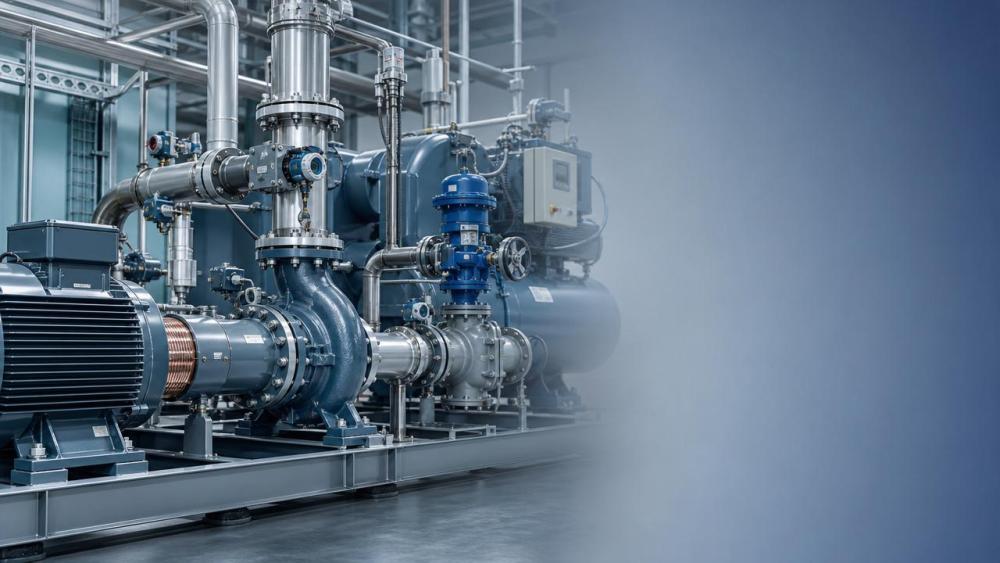
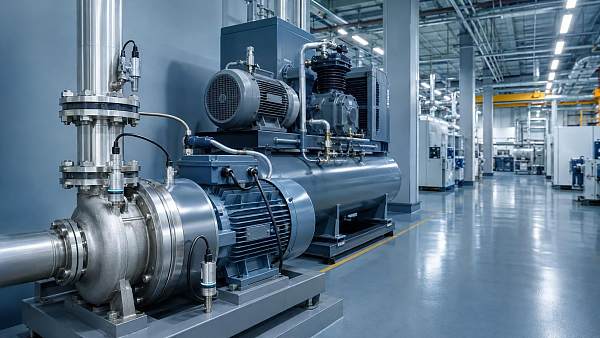
Predictive maintenance machinery has moved from pilot programs into daily operating decisions across fluid and process equipment.
The reason is practical. A stopped pump, unstable valve, or overloaded compressor rarely fails without leaving a trace first.
Pressure drift, vibration changes, thermal imbalance, and energy deviation often appear earlier than visible damage.
In actual operations, predictive maintenance machinery helps convert those weak signals into maintenance timing, risk ranking, and better shutdown planning.
That matters even more in fluid systems, where one asset can affect flow stability, product quality, energy intensity, and environmental compliance at the same time.
For FCSM, this is not a narrow maintenance topic. It sits at the intersection of reliability, decarbonization, digitalization, and lifecycle equipment performance.
Why the same predictive maintenance machinery logic does not fit every plant
Different assets fail for different reasons, and the operating context changes the warning pattern.
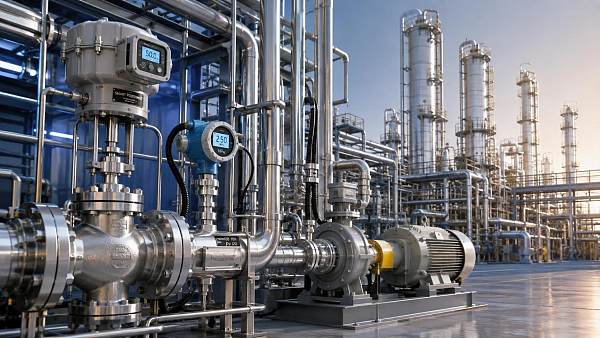
A centrifugal pump in a water line may show cavitation and bearing wear.
A plunger pump in SWRO or high-pressure service may expose seal fatigue, pulsation stress, and lubrication issues much earlier.
Smart pneumatic control valves behave differently again. Their failures often begin with position deviation, stiction, air leakage, or unstable response curves.
Compressor systems usually add another layer because motor efficiency, discharge temperature, rotor condition, and load profile interact continuously.
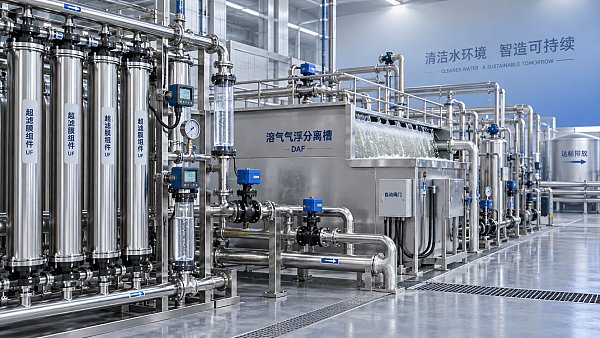
Separation equipment also requires a different lens. Membrane fouling, pressure drop, slurry variability, and cleaning cycles can distort normal benchmarks.
So the better question is not whether predictive maintenance machinery is useful.
The better question is which failure signatures matter in each operating scene, and what data can be trusted enough to act on.
Pump-intensive systems usually need earlier warning around hydraulic instability
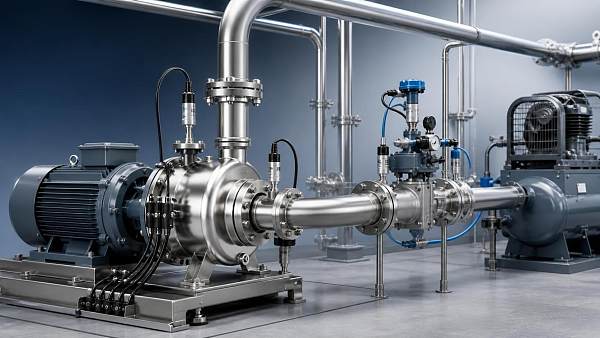
In pump networks, predictive maintenance machinery is most valuable where flow interruption quickly spreads across the process.
Chemical transfer, municipal water treatment, cooling loops, and nuclear auxiliary systems all fit this pattern.
Here, the first judgment point is not only mechanical health.
It is whether hydraulic efficiency is changing because of cavitation, off-design operation, recirculation, or seal degradation.
A common mistake is to track vibration alone. That can miss early efficiency loss and hidden energy waste.
A more reliable setup combines suction and discharge pressure, motor current, vibration, temperature, and flow stability.
When FCSM analyzes pump performance, CFD-informed thinking also matters.
Impeller cavitation does not always begin as a dramatic failure event. It often starts as subtle performance erosion.
That is why predictive maintenance machinery in pump applications should link condition signals with process duty, not just rotating parts.
Compressed air and gas systems need predictive maintenance machinery that sees energy loss
Air compressor systems are often treated as utility equipment until rising power bills or unstable air supply create broader disruption.
In reality, predictive maintenance machinery in compressor rooms should balance reliability and energy performance together.
Permanent magnet variable frequency units and two-stage compression systems are efficient, but their value depends on stable control behavior.
In this scene, the warning signs are often thermal or electrical before they become mechanical.
Watch discharge temperature trends, pressure stability, oil condition, dew point, start-stop frequency, and specific energy consumption.
If compressed air demand swings sharply, a fixed threshold can create false alarms.
More useful models compare behavior under similar load windows instead of forcing one static baseline.
This is one reason predictive maintenance machinery works best when operations data and maintenance data are not separated.
Control valves and separation equipment reveal a different kind of risk
Smart pneumatic control valves rarely fail in the same visible way as rotating equipment.
Their risk often appears as process inconsistency, hunting, delayed response, or poor throttling precision.
In corrosive or high-temperature service, trim wear and actuator performance can shift gradually while production still appears normal.
For this reason, predictive maintenance machinery should include stroke signatures, air consumption, response time, and deviation from commanded position.
The same pattern applies to filtration and separation, although the physics changes.
In membranes, filters, and sludge-related equipment, differential pressure alone rarely tells the full story.
Feed variability, fouling rate, cleaning effectiveness, and solids characteristics all affect what “normal” means.
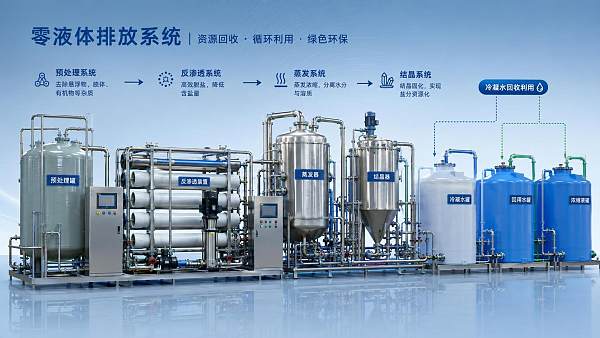
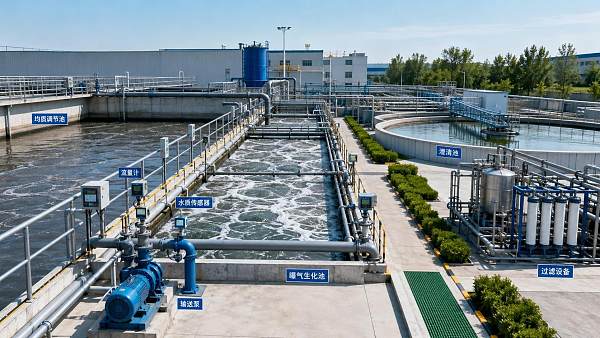
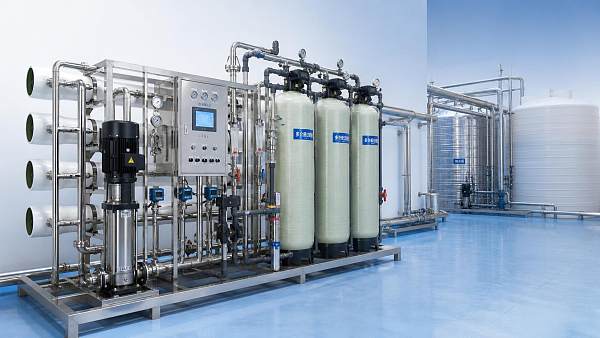
That is why predictive maintenance machinery in ZLD or wastewater lines should be tuned to operating phases, not just calendar intervals.
The demand differences become clearer when conditions are compared directly
A side-by-side comparison helps explain why one maintenance strategy rarely transfers cleanly across all machinery classes.
Where predictive maintenance machinery is often misread
One frequent misjudgment is assuming more sensors automatically mean better prediction.
If sensor placement ignores fluid behavior, the model may be precise but not useful.
Another mistake is copying alarm logic from one line to another with different media, duty cycles, or ambient conditions.
This is especially risky in corrosive service, variable-speed compressor applications, and mixed-feed separation systems.
It is also common to focus on replacement cost while ignoring process loss, energy waste, and restart complexity.
That narrow view can undervalue predictive maintenance machinery in assets that appear inexpensive but control critical throughput.
- Do not judge health from a single parameter when the failure mode is multi-cause.
- Do not treat similar pump or valve models as identical if process media differ.
- Do not separate maintenance analytics from energy-efficiency evaluation.
- Do not rely only on calendar maintenance where load severity changes weekly.
A practical way to adapt predictive maintenance machinery before scaling
A workable rollout usually starts with asset criticality, but it should quickly move into failure-context mapping.
That means matching each equipment group with its most decision-relevant signals and its real operating envelope.
For FCSM-related machinery, a useful sequence often looks like this.
- Identify assets where downtime affects safety, product continuity, emissions, or utility intensity.
- Define failure modes by equipment physics, not by generic maintenance labels.
- Choose signals that explain both condition change and process impact.
- Set baselines by load band, media type, and operating phase.
- Review alerts against maintenance findings and tune the model iteratively.
In practice, predictive maintenance machinery becomes far more reliable when it is grounded in thermodynamics, fluid behavior, and control response.
That is also why sector intelligence matters.
Changes in motor efficiency regulation, material supply risk, and low-carbon targets can reshape maintenance priorities long before a component fails.
Next-step decisions should focus on fit, not just technology
The strongest predictive maintenance machinery strategy is rarely the most complicated one.
It is the one aligned with asset physics, site variability, and the cost of being wrong.
Before expanding further, it helps to sort machinery by operating scene, compare warning indicators, and confirm where data quality is already strong enough.
Then evaluate implementation difficulty, maintenance response time, and the business value of earlier intervention.
For fluid control, pumps, compressors, valves, and separation systems, predictive maintenance machinery delivers the most value when judgment stays grounded in how each system really runs.
That approach reduces downtime before failures start, but it also supports smarter energy use, cleaner process control, and stronger lifecycle reliability.
Related News
 What drives industrial wastewater treatment cost per cubic meter?Dr. Alistair VaughnIndustrial wastewater treatment cost per cubic meter depends on influent load, effluent targets, energy, technology, and sludge disposal. Explore the key cost drivers.
 How to verify CE compliance for fluid separation equipmentDr. Alistair VaughnFluid separation equipment CE verification made practical: learn how to check declarations, risk assessments, technical files, pressure safety, and installation readiness.
 Separation equipment trends reshaping industrial wastewater treatmentDr. Alistair VaughnSeparation equipment trends are reshaping industrial wastewater treatment through smarter membranes, modular systems, digital monitoring, and resource recovery strategies.
 When stainless steel separation equipment is the right choice for hygienic processesDr. Alistair VaughnStainless steel separation equipment: discover when hygienic design, corrosion resistance, CIP cleanability, and lifecycle reliability make it the smart choice.
 What to assess before choosing a process industry automation supplierDr. Alistair VaughnChoose a process industry automation supplier with confidence. Assess engineering depth, lifecycle reliability, digital integration, energy performance, and safety before you buy.
 How process control innovation in refineries reduces unplanned shutdownsDr. Alistair VaughnDiscover how process control innovation in refineries detects early deviations, improves valve and equipment reliability, and helps prevent costly unplanned shutdowns.
 What should a zero liquid discharge systems integrator include in its proposal?Dr. Alistair VaughnZero liquid discharge systems integrator proposal checklist: compare guarantees, utilities, scope, controls, waste handling, and lifecycle risk before award.
 Industrial wastewater treatment plant design: sizing for flow and loadDr. Alistair VaughnIndustrial wastewater treatment plant design guide: size systems for peak flow, pollutant loads, reliability, compliance, and lower lifecycle costs.
 Can predictive maintenance and machinery diagnostics prevent downtime?Dr. Alistair VaughnPredictive maintenance machinery diagnostics help reduce unplanned downtime by detecting early equipment issues, improving reliability, and enabling smarter maintenance decisions.
 Can a digital transformation machinery platform cut unplanned downtime?Dr. Alistair VaughnDiscover how a digital transformation machinery platform connects asset data, maintenance workflows, and process insights to reduce unplanned downtime.
 How water treatment equipment sizing affects operating costsDr. Alistair VaughnWater treatment equipment sizing shapes energy, chemical, and maintenance costs. Learn how to balance flow, pressure, recovery, and reliability for efficient operation.
 When does food processing automation justify the upfront investment?Dr. Alistair VaughnIndustrial automation solutions for food processing: discover when automation delivers measurable ROI through higher throughput, lower waste, reliable utilities, and stronger food safety control.