What drives industrial wastewater treatment cost per cubic meter?




The cost per cubic meter of industrial wastewater treatment is a unit-cost result, not a stable property of a plant. Two facilities with the same daily discharge volume can face very different treatment costs because the water carries different pollutant loads, arrives at different flow patterns, requires different discharge quality, and produces different residuals. A low unit cost based on average annual volume can also conceal expensive peaks, bypass risk, membrane replacement, or a sludge disposal burden that appears elsewhere in the budget.
A useful cost view separates the calculation into four linked elements: annualized capital expenditure, energy and consumables, labor and maintenance, and residuals management. The denominator matters as much as the numerator. Dividing total cost by all incoming water may understate the cost of treated discharge when a stream is diverted, recycled internally, or concentrated into a smaller reject flow. Comparing systems therefore requires the same boundary: influent to compliant treated effluent, including pretreatment, sludge processing, cleaning chemicals, off-site disposal, and any required polishing stage.
Influent load sets the treatment burden
Volume alone says little about treatment difficulty. A cubic meter with suspended solids is not equivalent to a cubic meter containing dissolved salts, stable emulsified oil, toxic metals, high chemical oxygen demand, solvents, or a rapidly changing pH. Pollutant concentration and treatability determine tank size, chemical dose, aeration demand, hydraulic residence time, membrane flux, and the quantity and character of sludge.
Variability often costs more than a consistently high load. A biological process can operate economically with a predictable organic load, but a sudden solvent discharge, extreme pH event, high salinity batch, or biocidal cleaning solution can disrupt biomass activity. Recovery may require reduced loading, supplemental nutrients, reseeding, added monitoring, and temporary hauling. The relevant question is therefore not only the average influent analysis, but the maximum, minimum, frequency, duration, and sequence of deviations.
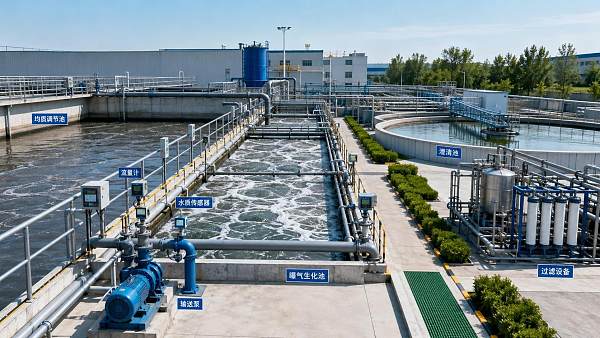
Composite samples provide a stronger basis for estimating average chemical and biological demand than a single grab sample. Yet grab samples remain important for short-lived events such as a cleaning cycle, batch dump, or separator upset. Missing either view leads to an undersized equalization system or an overdesigned treatment train. Equalization tanks, controlled feed pumps, and online pH or conductivity measurements add capital cost, but they can lower total unit cost by preventing treatment equipment from repeatedly operating outside its efficient range.
Pollutants that change the cost curve
- Suspended solids and fibers raise screening, settling, filtration, thickening, and disposal requirements. Their abrasiveness also affects pump wear and the selection of impeller, seal, and lining materials.
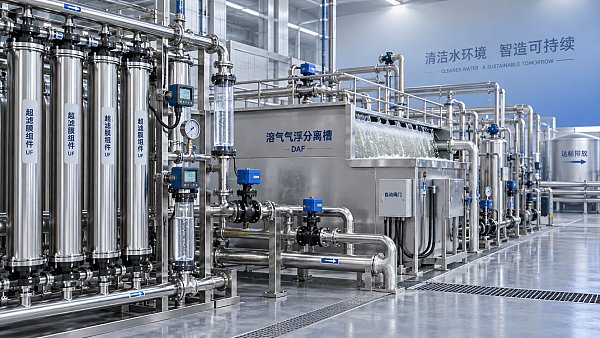
- Oil and grease may be removable by gravity separation when droplets coalesce readily. Stable emulsions behave differently and can require emulsion breaking, dissolved air flotation, specialized media, or membrane pretreatment.
- High organic load increases oxygen transfer demand in aerobic treatment. Where the wastewater is warm, concentrated, and suitably biodegradable, anaerobic treatment can be considered, but it introduces different operational controls and gas-handling requirements.
- Dissolved salts are largely unaffected by conventional clarification or biological treatment. Once salt removal is required, reverse osmosis, evaporation, crystallization, or another concentration route can dominate the cost per cubic meter.
- Metals and reactive compounds often require precise pH control, reduction or oxidation, precipitation, filtration, and segregated sludge handling. A mixed-metal sludge may have a disposal route very different from ordinary biological sludge.
Segregating streams before they mix is frequently more valuable than adding treatment after mixing. A relatively clean cooling-water bleed, a concentrated rinse, a high-salt regeneration stream, and an oily washdown stream should not automatically enter one common equalization tank. Mixing can dilute a concentrated stream enough to make recovery impractical while contaminating a larger water volume that would otherwise need simpler treatment.
Required effluent quality determines technology and operating margin
The destination of treated water changes the economics. Discharge to a sewer, discharge to surface water, reuse as process water, boiler-feed pretreatment, and near-zero liquid discharge impose progressively different constraints in many applications. The target is not simply “clean water.” Limits may concern solids, organic load, oil, nutrients, metals, color, toxicity, conductivity, pathogens, or a site-specific parameter. Each additional constraint should be traced to the unit operation responsible for meeting it.
Overdesign can produce needless energy, chemical, and replacement expense. Underdesign creates a more damaging cost pattern: repeated noncompliance, emergency chemical use, rushed media changes, unplanned hauling, and retrofit work in a constrained plant layout. A sound basis of design states the normal target, the design peak, the allowable short-term operating envelope, and what happens when the influent crosses that envelope.
Reuse specifications deserve particular scrutiny. Water suitable for one rinse stage may be unsuitable for a final rinse, cooling loop, membrane feed, or high-pressure boiler application. Treating every reusable stream to the highest internal standard can distort the project economics. A fit-for-purpose water balance identifies where lower-grade reclaimed water is acceptable and where tighter polishing is genuinely needed.
Technology selection shifts cost between capital, energy, chemicals, and waste
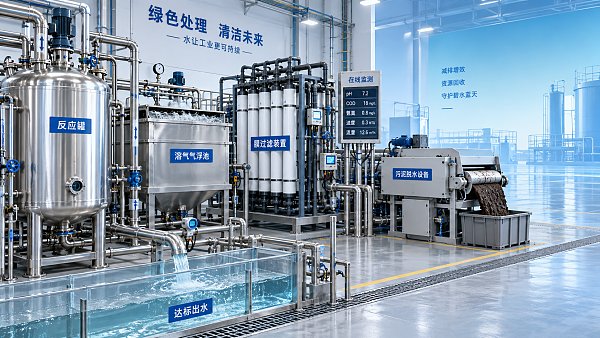
Physical, chemical, biological, and membrane processes do not substitute for each other in every wastewater. Screens, hydrocyclones, clarifiers, dissolved air flotation units, media filters, ultrafiltration, activated carbon, ion exchange, biological reactors, reverse osmosis, and thermal concentration each remove particular forms of contamination. The least expensive process on a quotation can be expensive once its limitations create extra chemical demand or leave downstream equipment exposed.
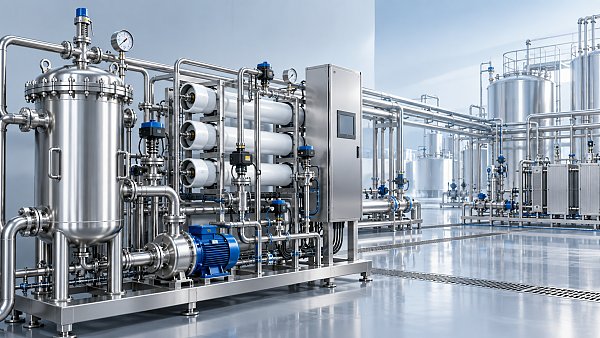
Membrane systems illustrate why unit cost cannot be assessed from installed capacity alone. Permeate flow declines as fouling, scaling, concentration polarization, temperature change, and osmotic pressure increase. Maintaining production by raising pressure increases electricity use and can accelerate compaction or leakage risk. Pretreatment quality, cleaning frequency, recovery target, and concentrate disposal must be included alongside the membrane skid price.
High recovery is also not automatically economical. Recovering more water reduces freshwater purchase and discharge volume, yet it concentrates salts and sparingly soluble compounds. At a certain point, antiscalant demand, cleaning frequency, reject management, and downstream evaporation can outweigh the value of the additional permeate. The optimum recovery is a site-specific balance rather than the highest achievable percentage.
Energy costs are strongly influenced by hydraulic design and control
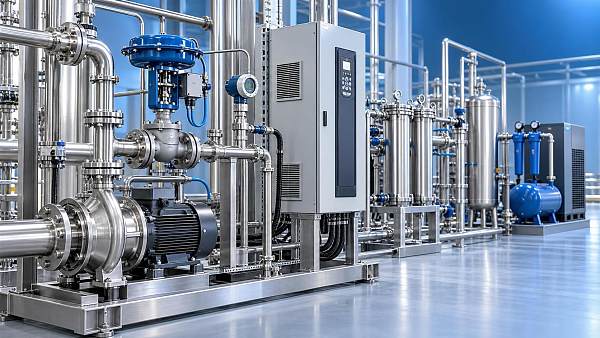
Electricity is visible on operating statements, so it is often treated as the main driver. It can be substantial, especially in aeration, high-pressure filtration, vacuum systems, recirculation, and sludge dewatering. Still, energy use is shaped by earlier design choices: pressure losses through piping and valves, unnecessary throttling, oversized pumps, poor impeller selection, air leakage, fouled diffusers, and operation far from the pump’s best efficiency region.
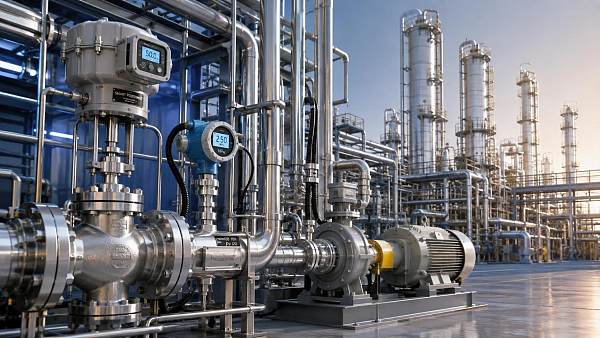
A pump selected for the maximum imagined flow may spend most of its life recirculating through a control valve. This creates wasted head, heat, vibration, and seal wear. Variable-speed control can reduce this loss where flow truly varies, but it is not a universal correction. The pump curve, static head, minimum-flow requirement, solids content, net positive suction head, and motor operating range still need to match the duty. For corrosive or abrasive service, material choice may favor duplex stainless steel, suitable elastomers, hard coatings, lined components, or another compatible construction; the lowest initial material cost can be quickly reversed by leakage or premature replacement.
Air-driven valves and instruments introduce another energy boundary that is sometimes omitted. Compressed air has a real generation cost, and leaking actuators, poorly maintained regulators, or continuous air consumption add to the system load. Electric and pneumatic actuation should be assessed against fail-safe requirements, hazardous-area constraints, response speed, maintenance access, and total utility demand rather than purchase price alone.
Sludge, concentrate, and spent media can dominate the apparent bargain
Treatment does not eliminate most pollutants; it transfers them into sludge, float, brine, spent carbon, exhausted resin, filter cake, or a concentrated liquid. Disposal costs depend on mass, moisture content, contaminant classification, packaging, transport distance, accepted receiving routes, and the consistency of the waste profile. A process that produces more sludge through heavy chemical dosing may appear reliable at the water-treatment stage while creating a larger downstream liability.
Dewatering performance deserves a practical test rather than an assumption. Polymer type, feed solids, temperature, shear history, mixing energy, and machine settings influence cake dryness. A small increase in dry solids content can reduce hauled mass materially, but only if it does not require disproportionate polymer use, labor, or equipment downtime. The cost model should treat sludge treatment as a connected train: thickening, conditioning, dewatering, storage, loading, transport, and disposal.
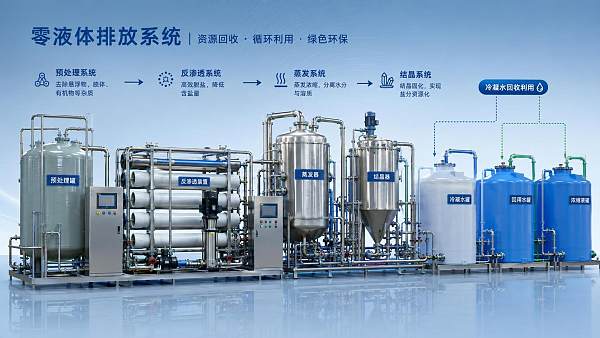
Concentrate management should be established before selecting reverse osmosis or evaporation. A membrane recovery calculation without a defined reject destination is incomplete. Similarly, a zero-liquid-discharge concept must include the handling of crystallized solids, cleaning solutions, scale deposits, and off-spec batches. These streams are often lower in volume but higher in unit disposal cost.
Reliability changes the real cost per treated cubic meter
Planned maintenance is measurable; unplanned downtime is usually scattered across lost production, temporary storage, tanker movements, emergency repairs, and contract treatment. Reliability therefore belongs in the cost calculation even when it does not appear as a separate line item. Redundancy is justified where a failed pump, blower, chemical dosing unit, filter, or control valve would halt essential treatment or cause untreated storage to fill before repair is possible.
Redundancy should be selective. Duplicating every item raises capital and maintenance expense. A more useful review identifies single points of failure, lead times for rotating equipment and specialized seals, availability of bypass storage, and whether maintenance can be performed without stopping the critical treatment step. Standardized motors, seal cartridges, valve positioners, and instrumentation can reduce spares complexity when they remain compatible with the process fluid and operating duty.
Instrumentation has a cost when installed and maintained, yet missing measurements often produce larger hidden losses. Flow, pH, conductivity, oxidation-reduction potential, dissolved oxygen, turbidity, pressure differential, and tank level measurements each serve different control purposes. The value lies in linking the signal to an action: diverting an abnormal batch, pacing coagulant to actual flow, initiating membrane cleaning from differential pressure trends, or detecting a pump that is operating outside its expected range. Sensors without calibration discipline or a defined response procedure do not create the same economic benefit.
A defensible unit-cost model needs operating scenarios
A single average-cost figure is weak when production is seasonal, batch-based, or subject to frequent product changes. Build the estimate around normal operation, high-load operation, low-flow operation, cleaning or regeneration periods, and credible upset conditions. Each scenario should show treated volume, chemical use, electricity, labor, maintenance allowance, residual generation, and the effect on equipment utilization.
Capital comparisons should use the same lifecycle horizon and include civil works, drainage modifications, electrical supply, controls integration, commissioning, training, spare parts, and future access for membrane replacement or sludge removal. Tight layouts can turn a low equipment price into high installation cost when pipe rerouting, lifting access, ventilation, secondary containment, and shutdown windows are considered late.
The most credible industrial wastewater treatment cost per cubic meter is therefore a range tied to defined water quality, discharge duty, operating pattern, and residual route. When those conditions are explicit, pump efficiency, valve control, filtration performance, chemical consumption, and maintenance exposure can be evaluated as connected economic variables rather than isolated equipment line items.
Related News
 What drives industrial wastewater treatment cost per cubic meter?Dr. Alistair VaughnIndustrial wastewater treatment cost per cubic meter depends on influent load, effluent targets, energy, technology, and sludge disposal. Explore the key cost drivers.
 How to verify CE compliance for fluid separation equipmentDr. Alistair VaughnFluid separation equipment CE verification made practical: learn how to check declarations, risk assessments, technical files, pressure safety, and installation readiness.
 Separation equipment trends reshaping industrial wastewater treatmentDr. Alistair VaughnSeparation equipment trends are reshaping industrial wastewater treatment through smarter membranes, modular systems, digital monitoring, and resource recovery strategies.
 When stainless steel separation equipment is the right choice for hygienic processesDr. Alistair VaughnStainless steel separation equipment: discover when hygienic design, corrosion resistance, CIP cleanability, and lifecycle reliability make it the smart choice.
 What to assess before choosing a process industry automation supplierDr. Alistair VaughnChoose a process industry automation supplier with confidence. Assess engineering depth, lifecycle reliability, digital integration, energy performance, and safety before you buy.
 How process control innovation in refineries reduces unplanned shutdownsDr. Alistair VaughnDiscover how process control innovation in refineries detects early deviations, improves valve and equipment reliability, and helps prevent costly unplanned shutdowns.
 What should a zero liquid discharge systems integrator include in its proposal?Dr. Alistair VaughnZero liquid discharge systems integrator proposal checklist: compare guarantees, utilities, scope, controls, waste handling, and lifecycle risk before award.
 Industrial wastewater treatment plant design: sizing for flow and loadDr. Alistair VaughnIndustrial wastewater treatment plant design guide: size systems for peak flow, pollutant loads, reliability, compliance, and lower lifecycle costs.
 Can predictive maintenance and machinery diagnostics prevent downtime?Dr. Alistair VaughnPredictive maintenance machinery diagnostics help reduce unplanned downtime by detecting early equipment issues, improving reliability, and enabling smarter maintenance decisions.
 Can a digital transformation machinery platform cut unplanned downtime?Dr. Alistair VaughnDiscover how a digital transformation machinery platform connects asset data, maintenance workflows, and process insights to reduce unplanned downtime.
 How water treatment equipment sizing affects operating costsDr. Alistair VaughnWater treatment equipment sizing shapes energy, chemical, and maintenance costs. Learn how to balance flow, pressure, recovery, and reliability for efficient operation.
 When does food processing automation justify the upfront investment?Dr. Alistair VaughnIndustrial automation solutions for food processing: discover when automation delivers measurable ROI through higher throughput, lower waste, reliable utilities, and stronger food safety control.