Indonesia Duties Raise SWRO Materials Costs




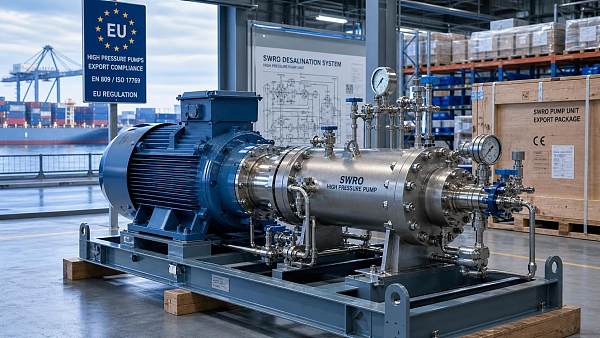
On June 2, 2026, a trade-rule change in Indonesia moved from discussion into confirmed application: the country’s anti-dumping authority issued a final ruling imposing an 18.01% anti-dumping duty on polypropylene homopolymer from China under tariff code 3902.10.40. Because this material is used in pressure-resistant sealing rings for SWRO High-pressure Pumps and in end caps and pressure vessels for Industrial RO Membranes, the decision deserves close attention from raw-material buyers, desalination equipment assemblers, exporters, and procurement teams tracking cost, delivery, and sourcing adjustments.
What the ruling confirms
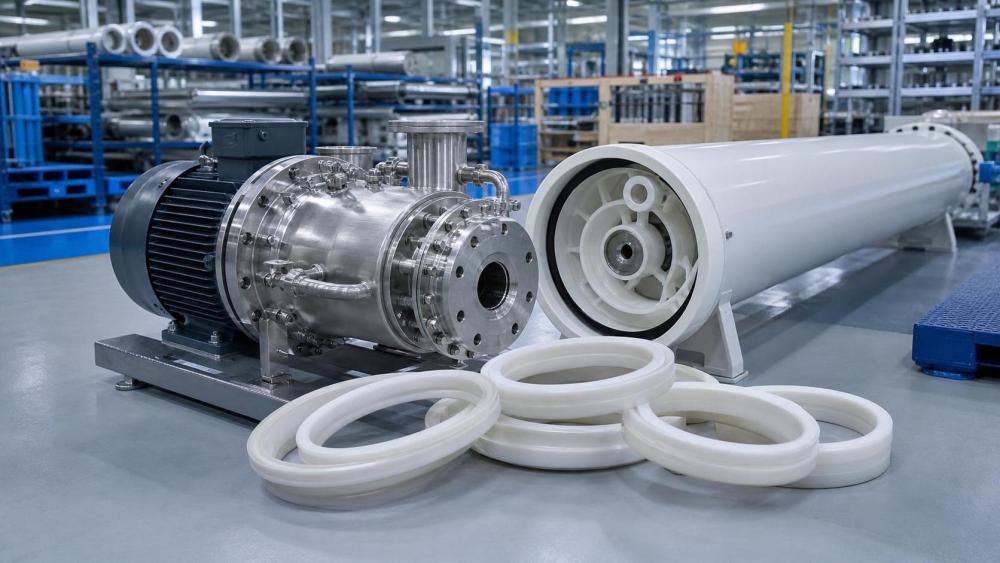
The confirmed facts are limited but commercially significant. Indonesia’s anti-dumping committee issued a final determination on June 2, 2026, applying an 18.01% anti-dumping duty to Chinese polypropylene homopolymer classified under tariff code 3902.10.40. The supplied event summary identifies this resin as a core engineering plastic input for pressure-bearing seals used in SWRO High-pressure Pumps, as well as for end caps and membrane housings used with Industrial RO Membranes. The same summary also states that Indonesia is the world’s third-largest seawater desalination equipment assembly country, that local SWRO system costs are expected to rise by about 7%, and that the measure is accelerating a shift by buyers toward China-based final assembly for export.
Where the cost pressure is likely to appear first
Material sourcing now becomes a direct trade-compliance issue
From an industry perspective, companies that buy polypropylene homopolymer for desalination-related components may face the earliest impact because the measure is attached to a specific product classification and origin. For these businesses, the main pressure points are likely to be import cost calculation, origin-sensitive procurement decisions, and document review linked to the taxed material stream. What deserves closer attention is whether procurement files, product descriptions, and customs-facing material records remain aligned with the affected tariff code and declared product use.
Local assembly operations may see margin and quotation pressure
Assemblers of SWRO systems in Indonesia may be affected through input cost increases rather than through a direct change in product standards. Analysis shows that when a taxed raw material sits inside critical sealing and membrane-housing applications, the impact can move quickly into quotation, tender pricing, and delivery planning. The event summary already points to an estimated increase of about 7% in local SWRO system cost, so manufacturers and project-facing commercial teams may need to revisit component costing, sourcing routes, and the timing of purchase commitments.
Export and procurement teams may need to reassess delivery structures
For exporters and overseas buyers, the practical issue is not only resin pricing but also where final assembly is completed. Observably, the supplied information indicates a faster move toward China-based final assembly followed by export. That means procurement teams may need to review supplier allocation, factory qualification scope, and commercial terms tied to assembled equipment rather than to component-only sourcing. It is more appropriate to understand this as a trade-structure adjustment signal, especially for contracts where total delivered cost matters more than single-part pricing.
Supply-chain service providers may face more document-sensitive workflows
Logistics coordinators, customs-facing service providers, and contract administration teams may also feel indirect effects. Their work could become more sensitive to material descriptions, origin declarations, and coordination between component lists and shipping documents. While the input does not provide detailed enforcement procedures, companies involved in cross-border delivery should pay attention to whether customer requests, bid documentation, or shipment files begin to reflect tighter scrutiny around the affected resin category.
Practical checkpoints for companies now
Recheck material and product documentation
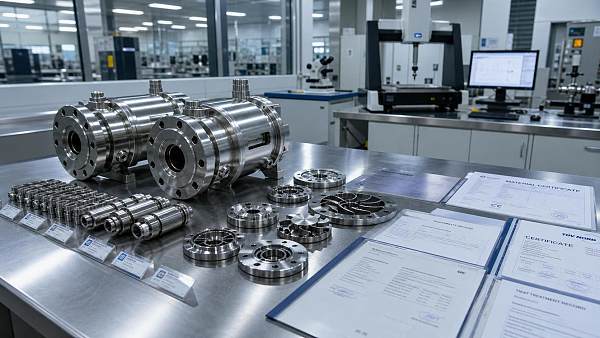
Companies using polypropylene homopolymer in SWRO pump seals, membrane end caps, or membrane housings should review whether internal purchasing records, technical descriptions, and trade documents clearly identify the affected material category. If the same resin appears across multiple component families, consistency in documentation becomes more important for compliance and customer communication.
Track sourcing and assembly decisions together
Analysis shows that this development should not be viewed only as a raw-material issue. Where final assembly takes place may become part of the commercial response. Businesses involved in desalination equipment supply should compare the implications of local assembly versus China-based final assembly and export, especially in bids or long-lead projects where cost stability and delivery coordination are sensitive.
Watch for changes in tenders and customer requirements
What deserves closer attention is whether procurement documents, technical bid requirements, or customer review processes begin to reflect the cost and sourcing consequences of the anti-dumping measure. The input does not provide detailed downstream execution rules, so companies should treat this as an area for active monitoring rather than as a settled operating standard.
Prepare for after-sales and traceability questions
Where affected materials are embedded in pressure-related or membrane-related components, buyers may ask more questions about supply origin, material consistency, and replacement-part planning. Even without a new certification rule stated in the input, firms may benefit from keeping material traceability files, component specifications, and supplier qualification records ready for commercial or project-level review.
Why this looks like an execution signal, not just a headline
Observably, this development is more than a routine trade notice because it reaches into a material used in specific desalination equipment components rather than in a distant upstream category with limited downstream relevance. Analysis shows that the immediate significance lies in how a tariff decision on polypropylene homopolymer can translate into procurement, assembly, and export-structure adjustments for SWRO systems. At the same time, it is still necessary to distinguish the confirmed ruling from broader market conclusions. The duty itself is confirmed in the supplied information; the full pace of sourcing migration, customer response, and document-level implementation still requires continued observation.
How the market may best read this development
At this stage, it is more appropriate to understand the measure as a confirmed trade-rule change with direct cost implications for selected desalination equipment inputs and with possible follow-through into sourcing and final-assembly decisions. The event should not be overstated as a complete restructuring of the market, but it also should not be treated as a narrow resin issue with no equipment-level consequences. For companies tied to SWRO High-pressure Pumps, Industrial RO Membranes, and related assemblies, the more practical reading is that cost, documentation, and supply-chain configuration now deserve closer review.
Basis of this article and what still needs verification
This article is generated solely from the user-provided news title, event date, and event summary. In similar cases, relevant source types typically include official announcements, trade or customs authority publications, regulatory releases, industry association updates, standard-setting documents, and reporting by established industry media. No specific official source link was provided in the input, so the underlying official publication path still needs to be verified on an ongoing basis. Further observation is also needed on detailed implementation language, compliance interpretation, tender document changes, customer response, industry feedback, and how companies execute sourcing or assembly adjustments in practice.
Related News
 Are High-Pressure Plunger Pumps Suitable for Seawater RO Pretreatment?High-Pressure Flow ExpertAre high-pressure plunger pumps suitable for seawater RO pretreatment? Explore key risks, ideal applications, and smarter SWRO pump selection guidance.
 China-UAE Direct Sea Route Cuts Transit Time for SWRO High-Pressure Pump ExportsHigh-Pressure Flow ExpertChina-UAE direct sea route cuts SWRO high-pressure pump transit to under 24 days, improving delivery reliability for UAE, Africa, and South Asia water treatment projects.
 China Expands Cross-Border RMB and FX Cash Pooling Nationwide for MultinationalsHigh-Pressure Flow ExpertChina expands cross-border RMB and FX cash pooling nationwide, signaling smoother multi-currency settlements for multinationals. See what it means for exporters, supply chains, and payment efficiency.
 China’s Helium Export Ban Puts SWRO Pump Supply Under StrainHigh-Pressure Flow ExpertChina’s helium export ban is straining SWRO pump supply, delaying calibration, compliance, and delivery. Discover what this means for exporters and buyers.
 EU PPWR Takes Effect for SWRO Pump PackagingHigh-Pressure Flow ExpertEU PPWR takes effect for SWRO pump packaging, putting exporters, importers, and suppliers under stricter EU compliance on heavy metals and PFAS. See what changes now.
 EU PPWR Now in Force for SWRO Pump PackagingHigh-Pressure Flow ExpertEU PPWR now in force for SWRO pump packaging: learn how new heavy metal and PFAS compliance rules affect exports, customs clearance, and shipment readiness to Europe.
 EU Enforces Dual Certification for SWRO PumpsHigh-Pressure Flow ExpertEU Enforces Dual Certification for SWRO Pumps: learn how EN 16485:2026 impacts CE validity, customs clearance, and EU market access for exporters and distributors.
 What Drives Seawater Reverse Osmosis Energy Consumption in Plant Design?High-Pressure Flow ExpertSeawater reverse osmosis energy consumption in plant design depends on salinity, recovery, pumps, pretreatment, and ERDs. Learn what truly cuts power use and boosts SWRO efficiency.
 EU Rule Starts for SWRO Pump Energy CertificationHigh-Pressure Flow ExpertEU Rule Starts for SWRO Pump Energy Certification: learn how ErP testing, MEI ≥ 0.82, and digital energy label filing now affect EU imports, customs clearance, and delivery planning.
 EU Rule Takes Effect for SWRO High-Pressure PumpsHigh-Pressure Flow ExpertEU Rule Takes Effect for SWRO High-Pressure Pumps: Learn how EN 16485:2026 impacts compliance, IE4 verification, corrosion testing, and export access across EU and MENA markets.
 EU Revises EN 14895 for SWRO High-Pressure PumpsHigh-Pressure Flow ExpertEU Revises EN 14895 for SWRO High-Pressure Pumps: discover how the 2026 rule change impacts CE marking, EU market access, certification, and tender readiness for exporters.
 EN 13445-4:2026 Takes Effect for SWRO Pressure PartsHigh-Pressure Flow ExpertEN 13445-4:2026 now affects SWRO pressure parts, adding full-life-cycle traceability to CE compliance. See what exporters, suppliers, and project teams must review now.