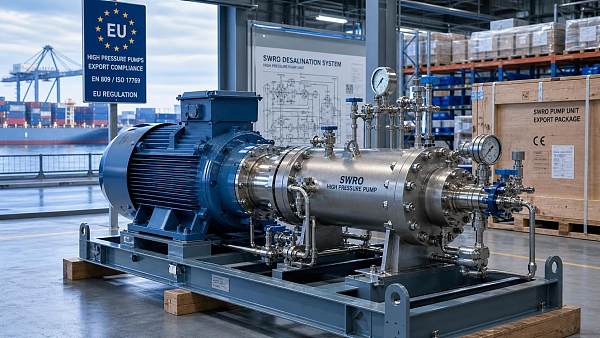
EU Draft Tightens SWRO Pump Ecodesign Rules




On July 11, 2026, the European Commission published a draft amendment to Ecodesign Regulation (EU) 2019/1781 focused on SWRO high-pressure pumps. The draft introduces new market-entry conditions from Q1 2028, including minimum efficiency thresholds, digital twin readiness, ISO 5199:2025 compliance, real-time energy telemetry through MQTT or OPC UA, and third-party Type H efficiency verification. For exporters, manufacturers, certification-related firms, buyers, and pre-market testing providers, the development is worth close attention because it points to changes not only in product design requirements, but also in technical documentation, conformity preparation, and delivery planning for the EU market.
What the draft amendment sets out
The published draft amendment is identified as COM(2026) 389 final and relates to Ecodesign Regulation (EU) 2019/1781. According to the provided event summary, the draft applies to SWRO high-pressure pumps entering the EU market from Q1 2028.
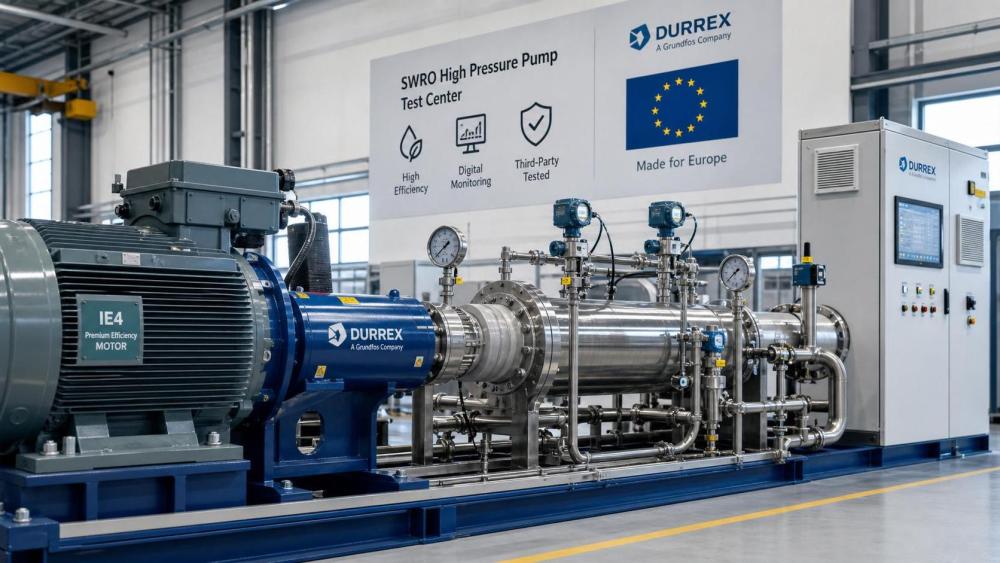
The confirmed changes described in the draft include mandatory minimum efficiency thresholds and digital twin readiness requirements. The text provided also states that the draft mandates compliance with ISO 5199:2025, requires real-time energy telemetry via MQTT or OPC UA, and calls for third-party Type H efficiency verification.
The summary further indicates that these requirements directly affect exporters' design, certification, and pre-market testing timelines.
Where the pressure points are likely to emerge
Design and manufacturing work may move earlier in the export cycle
From an industry perspective, manufacturers of SWRO high-pressure pumps are likely to feel the first impact at the product development stage. The reason is straightforward: the draft does not focus on a single parameter, but links efficiency, design readiness, telemetry capability, and verification into one compliance path. In practical terms, this may affect specification alignment, component selection, control architecture, test preparation, and the structure of technical files prepared before shipment to the EU market.
Exporters may face tighter document and timing coordination
For direct trade companies and export teams, the likely effect is less about customs formality in isolation and more about readiness of supporting compliance materials before market entry. Analysis shows that when efficiency thresholds, telemetry requirements, and third-party verification appear together, exporters may need closer coordination between engineering teams, testing arrangements, certification schedules, and customer-facing delivery commitments. What deserves closer attention is whether existing quotation, contract, and lead-time assumptions remain aligned with the draft direction for Q1 2028 entry.
Testing and certification-related services may become a more visible bottleneck
Certification-related firms and testing service providers may also be affected because the draft explicitly refers to third-party Type H efficiency verification. Observably, this creates a stronger link between product readiness and external verification capacity. Businesses involved in pre-market testing, conformity preparation, or technical dossier support may need to watch how verification expectations are ultimately interpreted and how that influences report preparation, test sequencing, and client onboarding timelines.
Procurement teams may need clearer technical and bid language
For buyers, project procurement teams, and channels handling EU-bound equipment, the issue is not only whether a pump can be supplied, but whether tender specifications, purchase terms, and supplier qualification documents accurately reflect the emerging rule set. Analysis shows that procurement decisions may increasingly depend on whether suppliers can demonstrate preparation around ISO 5199:2025, telemetry interfaces such as MQTT or OPC UA, and third-party efficiency verification, especially where delivery timing leaves little room for redesign or retesting.
What companies should monitor now
Check whether current product files match the draft direction
Companies with SWRO high-pressure pump business linked to the EU market should review whether current product documentation, technical specifications, and internal compliance checklists already address the elements named in the draft. This is not yet the same as a confirmed final execution outcome, but it is a practical screening step for identifying potential gaps in efficiency claims, digital readiness descriptions, and testing evidence.
Track how verification and compliance language is interpreted
What deserves closer attention is the practical reading of third-party Type H efficiency verification and how it may be reflected in certification workflows or customer requests. Since the provided information does not include detailed execution rules, companies should treat this as an area for continued monitoring rather than a settled compliance template.
Review lead times for testing, redesign, and pre-market preparation
Analysis shows that the most immediate operational risk may sit in timing rather than headline regulation text. Where export projects involve design updates, telemetry integration, test scheduling, or third-party review, companies may need to reassess internal milestones for bids, samples, factory testing, and final shipment planning intended for the EU market from Q1 2028.
Watch for changes in tender documents and supplier qualification requests
For commercial teams, another practical area is downstream document flow. If buyers, distributors, or project owners begin updating technical bid requirements in response to the draft, the first visible signal may appear in qualification forms, specification annexes, testing report requests, or contract language. At this stage, it is more appropriate to understand this as a monitoring priority tied to potential market execution rather than a confirmed uniform market practice.
How this development is best understood at this stage
Observably, this development is more than a routine product update because it combines energy performance requirements with digital readiness and third-party verification in one regulatory direction. At the same time, analysis shows it should not yet be treated as a fully settled implementation outcome based solely on the provided information, because the event summary describes a draft amendment rather than a completed final enforcement framework.
From an industry perspective, the more useful reading is that this is an execution signal with real planning implications. It suggests that companies serving the EU market may need to prepare earlier for specification alignment, conformity evidence, and customer communication, while continuing to watch for the final wording, interpretation, and market adoption path.
Why the market should keep this on the working agenda
The significance of this draft lies in the way it connects market access to efficiency, digital telemetry capability, and external verification for SWRO high-pressure pumps. That combination can affect design decisions, certification sequencing, export preparation, procurement review, and delivery scheduling across the supply chain.
A neutral reading is that this is best understood as a regulatory signal with practical consequences already visible in planning logic, but with execution details that still require observation. For that reason, companies should neither ignore the draft nor assume every implementation detail is already fixed.
Basis of this article and points requiring follow-up
This article was generated based on the user-provided news title, event date, and event summary. The discussion is limited to the information provided for the draft amendment concerning SWRO high-pressure pumps, the stated Q1 2028 market-entry timing, ISO 5199:2025 compliance, MQTT or OPC UA telemetry, and third-party Type H efficiency verification.
For developments of this kind, relevant source categories commonly include official announcements, regulatory publications, trade or customs authority updates, industry association information, standards organization documents, and reporting by established professional media. However, a specific official source link was not provided in the input, so the underlying text should continue to be verified against formal published materials.
Further follow-up should focus on any later official wording, compliance interpretation, certification practice, tender document updates, market feedback, and actual implementation by companies involved in EU-bound SWRO high-pressure pump projects.
Related News
 Are High-Pressure Plunger Pumps Suitable for Seawater RO Pretreatment?High-Pressure Flow ExpertAre high-pressure plunger pumps suitable for seawater RO pretreatment? Explore key risks, ideal applications, and smarter SWRO pump selection guidance.
 China-UAE Direct Sea Route Cuts Transit Time for SWRO High-Pressure Pump ExportsHigh-Pressure Flow ExpertChina-UAE direct sea route cuts SWRO high-pressure pump transit to under 24 days, improving delivery reliability for UAE, Africa, and South Asia water treatment projects.
 China Expands Cross-Border RMB and FX Cash Pooling Nationwide for MultinationalsHigh-Pressure Flow ExpertChina expands cross-border RMB and FX cash pooling nationwide, signaling smoother multi-currency settlements for multinationals. See what it means for exporters, supply chains, and payment efficiency.
 China’s Helium Export Ban Puts SWRO Pump Supply Under StrainHigh-Pressure Flow ExpertChina’s helium export ban is straining SWRO pump supply, delaying calibration, compliance, and delivery. Discover what this means for exporters and buyers.
 EU PPWR Takes Effect for SWRO Pump PackagingHigh-Pressure Flow ExpertEU PPWR takes effect for SWRO pump packaging, putting exporters, importers, and suppliers under stricter EU compliance on heavy metals and PFAS. See what changes now.
 EU PPWR Now in Force for SWRO Pump PackagingHigh-Pressure Flow ExpertEU PPWR now in force for SWRO pump packaging: learn how new heavy metal and PFAS compliance rules affect exports, customs clearance, and shipment readiness to Europe.
 EU Enforces Dual Certification for SWRO PumpsHigh-Pressure Flow ExpertEU Enforces Dual Certification for SWRO Pumps: learn how EN 16485:2026 impacts CE validity, customs clearance, and EU market access for exporters and distributors.
 What Drives Seawater Reverse Osmosis Energy Consumption in Plant Design?High-Pressure Flow ExpertSeawater reverse osmosis energy consumption in plant design depends on salinity, recovery, pumps, pretreatment, and ERDs. Learn what truly cuts power use and boosts SWRO efficiency.
 EU Rule Starts for SWRO Pump Energy CertificationHigh-Pressure Flow ExpertEU Rule Starts for SWRO Pump Energy Certification: learn how ErP testing, MEI ≥ 0.82, and digital energy label filing now affect EU imports, customs clearance, and delivery planning.
 EU Rule Takes Effect for SWRO High-Pressure PumpsHigh-Pressure Flow ExpertEU Rule Takes Effect for SWRO High-Pressure Pumps: Learn how EN 16485:2026 impacts compliance, IE4 verification, corrosion testing, and export access across EU and MENA markets.
 EU Revises EN 14895 for SWRO High-Pressure PumpsHigh-Pressure Flow ExpertEU Revises EN 14895 for SWRO High-Pressure Pumps: discover how the 2026 rule change impacts CE marking, EU market access, certification, and tender readiness for exporters.
 EN 13445-4:2026 Takes Effect for SWRO Pressure PartsHigh-Pressure Flow ExpertEN 13445-4:2026 now affects SWRO pressure parts, adding full-life-cycle traceability to CE compliance. See what exporters, suppliers, and project teams must review now.