SWRO Pump Lead Times Reach 36 Weeks




The timing of the underlying disruption was not specified in the input, but the latest update cited in the Global Pump Supply Index report released on 4 July 2026 shows a notable extension in delivery cycles for SWRO high-pressure plunger pumps. For desalination-related procurement, pump manufacturing, and supply chain planning teams, this matters because the change is tied to a specific materials bottleneck rather than a general market delay, which can directly affect order timing, supplier coordination, and delivery planning for upcoming slots.
What the latest supply update confirms
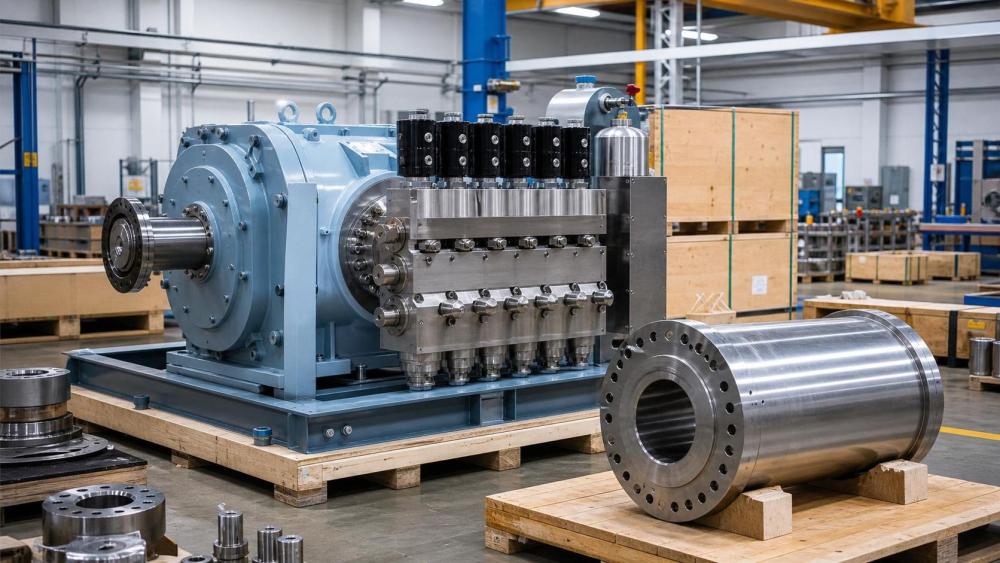
According to the information provided, average global lead time for seawater reverse osmosis high-pressure plunger pumps has risen to 36 weeks, increasing by 4 weeks month on month. The reported cause is constrained global titanium alloy forging capacity, with particular pressure around Grade 7 (Ti-0.12Pd) cylinder blocks. The same update states that major suppliers in China, Germany, and Korea are accepting orders on an allocation-only basis. Buyers are also being advised to secure delivery slots for Q4 2026 to Q1 2027 as early as possible.
Where the pressure is likely to be felt first
Procurement teams face a narrower booking window
From an industry perspective, buyers of SWRO high-pressure pumps may be affected first because longer lead times and allocation-only acceptance can reduce flexibility in order timing. The main pressure point is likely to be procurement scheduling, especially where delivery windows are linked to planned installation or maintenance cycles. What deserves closer attention is whether internal approval and vendor confirmation processes are fast enough to secure the required slots.
Manufacturing and assembly planning become more exposed to one component constraint
Analysis shows that pump-related manufacturing activities may feel the impact through dependence on titanium alloy forged parts, especially the Grade 7 cylinder block mentioned in the update. Even without broader market data, the information provided suggests that a constraint in one critical material and component category can shape delivery performance across the finished pump segment. Companies involved in assembly, order management, or production planning should therefore watch component availability and promised delivery dates closely.
Supply chain service providers may need to manage tighter customer expectations
Observably, distributors, sourcing intermediaries, and supply chain service providers may be drawn into the issue through customer communication and delivery coordination. Where suppliers are only taking allocation-based orders, the practical impact may show up in quote validity, slot reservation, and changes to shipment expectations. The immediate point to monitor is not only lead time itself, but also how clearly allocation terms are being communicated across contracts and project timelines.
Operational issues companies should watch now
Delivery slot confirmation should move earlier
Analysis shows that the clearest near-term action is around timing. Since buyers are being advised to lock in Q4 2026 to Q1 2027 delivery slots now, companies with foreseeable SWRO pump demand should review whether their current procurement calendars still match supplier realities.
Material-linked risk needs to be tracked at component level
Because the reported bottleneck is tied specifically to titanium alloy forging capacity and especially Grade 7 cylinder blocks, firms should pay attention to whether supplier commitments are supported by actual component allocation. This is more specific than a general long-lead warning and should be monitored accordingly in purchasing and delivery discussions.
Allocation terms require closer supplier communication
Where order acceptance is allocation-only, the practical question is no longer just price or nominal lead time. What deserves closer attention is how suppliers define allocation, whether quantities are capped, and how shipment priority is communicated. These details can materially affect planning even when an order is technically accepted.
Customer-facing teams may need earlier expectation setting
For companies serving end users or project owners, the update suggests a need for earlier communication on timing risk. Observably, delivery discussions, schedule commitments, and internal forecasting may all need to reflect the longer pump lead time now being reported.
How this signal should be read at this stage
Analysis shows that this development is best read as a targeted supply chain signal rather than a fully defined market outcome. The information provided points to a clear constraint, a measurable month-on-month lead-time increase, and tighter order acceptance behavior among major suppliers. At the same time, the input does not establish how long the shortage will persist or whether capacity conditions will ease in the next reporting cycle. It is more appropriate to understand this as a near-term warning with possible medium-term implications, pending further confirmation.
Why the update deserves continued attention
In practical terms, the significance of this update lies in the combination of three factors already confirmed in the input: longer lead times, a material-specific forging bottleneck, and allocation-only order acceptance in key supplier markets. Taken together, these conditions suggest that affected companies should not treat the issue as a routine scheduling fluctuation. At the same time, it would be premature to frame it as a settled long-term shift without additional follow-up data. For now, it is more appropriate to view the development as an industry signal that requires close procurement and delivery monitoring.
Basis of this article and follow-up verification
This article is based on the user-provided news title, the note that the event timing was not specified, and the supplied event summary. For this type of industry update, commonly relevant source categories may include official notices, company statements, industry association releases, authoritative trade media reporting, and standard-related documents. A specific official source link was not provided in the input, so further verification is still needed. Areas worth continued monitoring include subsequent GPSI updates, any change in supplier allocation practices, and whether titanium alloy forging availability for Grade 7 components shows signs of improvement.
Related News
 Are High-Pressure Plunger Pumps Suitable for Seawater RO Pretreatment?High-Pressure Flow ExpertAre high-pressure plunger pumps suitable for seawater RO pretreatment? Explore key risks, ideal applications, and smarter SWRO pump selection guidance.
 China-UAE Direct Sea Route Cuts Transit Time for SWRO High-Pressure Pump ExportsHigh-Pressure Flow ExpertChina-UAE direct sea route cuts SWRO high-pressure pump transit to under 24 days, improving delivery reliability for UAE, Africa, and South Asia water treatment projects.
 China Expands Cross-Border RMB and FX Cash Pooling Nationwide for MultinationalsHigh-Pressure Flow ExpertChina expands cross-border RMB and FX cash pooling nationwide, signaling smoother multi-currency settlements for multinationals. See what it means for exporters, supply chains, and payment efficiency.
 China’s Helium Export Ban Puts SWRO Pump Supply Under StrainHigh-Pressure Flow ExpertChina’s helium export ban is straining SWRO pump supply, delaying calibration, compliance, and delivery. Discover what this means for exporters and buyers.
 EU PPWR Takes Effect for SWRO Pump PackagingHigh-Pressure Flow ExpertEU PPWR takes effect for SWRO pump packaging, putting exporters, importers, and suppliers under stricter EU compliance on heavy metals and PFAS. See what changes now.
 EU PPWR Now in Force for SWRO Pump PackagingHigh-Pressure Flow ExpertEU PPWR now in force for SWRO pump packaging: learn how new heavy metal and PFAS compliance rules affect exports, customs clearance, and shipment readiness to Europe.
 EU Enforces Dual Certification for SWRO PumpsHigh-Pressure Flow ExpertEU Enforces Dual Certification for SWRO Pumps: learn how EN 16485:2026 impacts CE validity, customs clearance, and EU market access for exporters and distributors.
 What Drives Seawater Reverse Osmosis Energy Consumption in Plant Design?High-Pressure Flow ExpertSeawater reverse osmosis energy consumption in plant design depends on salinity, recovery, pumps, pretreatment, and ERDs. Learn what truly cuts power use and boosts SWRO efficiency.
 EU Rule Starts for SWRO Pump Energy CertificationHigh-Pressure Flow ExpertEU Rule Starts for SWRO Pump Energy Certification: learn how ErP testing, MEI ≥ 0.82, and digital energy label filing now affect EU imports, customs clearance, and delivery planning.
 EU Rule Takes Effect for SWRO High-Pressure PumpsHigh-Pressure Flow ExpertEU Rule Takes Effect for SWRO High-Pressure Pumps: Learn how EN 16485:2026 impacts compliance, IE4 verification, corrosion testing, and export access across EU and MENA markets.
 EU Revises EN 14895 for SWRO High-Pressure PumpsHigh-Pressure Flow ExpertEU Revises EN 14895 for SWRO High-Pressure Pumps: discover how the 2026 rule change impacts CE marking, EU market access, certification, and tender readiness for exporters.
 EN 13445-4:2026 Takes Effect for SWRO Pressure PartsHigh-Pressure Flow ExpertEN 13445-4:2026 now affects SWRO pressure parts, adding full-life-cycle traceability to CE compliance. See what exporters, suppliers, and project teams must review now.