Aramco Tightens SWRO Pump Tender Requirements




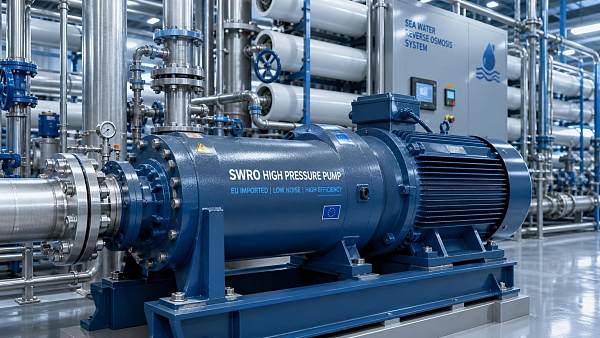
On July 9, 2026, Saudi Aramco updated its Materials and Equipment Procurement Standard through Revision 4 of MEPS-001, adding a new requirement that SWRO high-pressure pumps supplied to its desalination projects must carry ISO 15643-3:2025 certification. For pump manufacturers, certification bodies, engineering teams, procurement functions, and desalination project suppliers, the immediate point of attention is that the rule applies to all new tenders and now ties product eligibility not only to pump performance claims, but also to third-party verification of fatigue life modeling, cavitation margin validation, and integration of real-time thermal strain monitoring.
What the revised procurement standard now requires
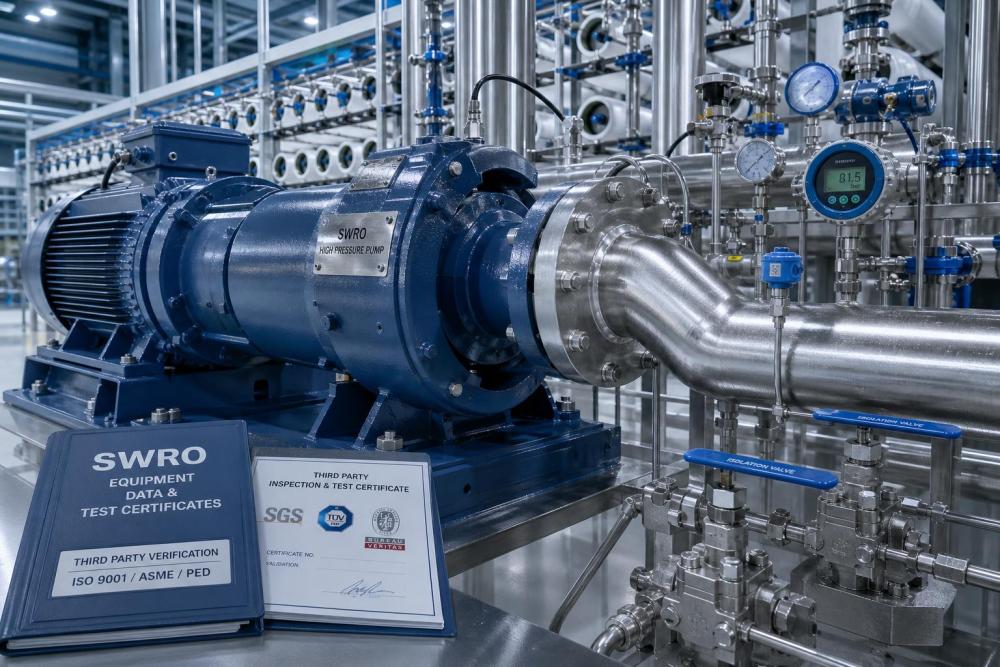
According to the information provided, Saudi Aramco issued Revision 4 of its Materials and Equipment Procurement Standard, MEPS-001, on 2026-07-09. The revision mandates ISO 15643-3:2025 certification for all seawater reverse osmosis high-pressure pumps supplied to its desalination projects.
The same revision also requires third-party verification in three specific areas: fatigue life modeling, cavitation margin validation, and integration of real-time thermal strain monitoring. The requirement is effective immediately for all new tenders.
Where the impact is likely to appear first
Supplier qualification may tighten at the bid-entry stage
From an industry perspective, pump manufacturers and package suppliers are the first group likely to feel the change because tender eligibility now appears more directly connected to certification status and supporting technical verification. The main impact is likely to show up in prequalification files, bid documentation, and technical compliance review.
What deserves closer attention is whether suppliers already have documentation that can clearly demonstrate conformity with ISO 15643-3:2025 and the newly specified third-party verification requirements. For companies pursuing new Aramco-related opportunities, this is likely to become a front-end commercial issue as much as a technical one.
Procurement and contractor teams may face a narrower compliant vendor pool
Analysis shows that procurement teams, EPC contractors, and project delivery organizations linked to desalination tenders may need to reassess which pump suppliers can meet the revised standard without delay. The effect is likely to be concentrated in vendor screening, technical clarification cycles, and tender timetable planning.
Because the update is effective immediately for new tenders, buyers and project teams may need to pay closer attention to how certification readiness and third-party verification materials are handled during sourcing and evaluation.
Testing, verification, and documentation services gain practical relevance
Observably, the revision places more weight on independent verification rather than self-declared technical adequacy. That means service providers involved in certification, verification, and compliance documentation may become more central to tender preparation and approval workflows.
The business impact here is less about broad market expansion and more about the increased practical importance of evidence quality, review traceability, and alignment between technical files and procurement requirements.
What companies should watch in the near term
Certification status versus tender timing
Companies active in this segment should closely track whether their current or planned SWRO high-pressure pump offerings can be presented with the required ISO 15643-3:2025 certification for new tenders. The key practical issue is not only whether certification is being pursued, but whether it can be documented in time for bid submission and technical review.
Readiness of third-party verification materials
Another immediate focus is the quality and completeness of third-party verification records covering fatigue life modeling, cavitation margin validation, and real-time thermal strain monitoring integration. In practice, this means suppliers and project teams may need to review whether their technical dossiers are structured in a way that supports procurement acceptance rather than only engineering discussion.
The difference between a standards requirement and a generic capability claim
Analysis shows that the revision should not be read simply as a preference for higher technical standards. It is a procurement requirement tied to new tenders. For companies involved in sales, tendering, and customer communication, the distinction matters because internal assumptions about product capability do not replace formal compliance evidence.
Communication across engineering, sales, and supply chain teams
What deserves closer attention is internal coordination. Where tender compliance depends on certification, independent verification, and monitoring integration evidence, gaps between engineering teams, commercial teams, and supply chain support can create delays even if the product itself is technically suitable. Companies working on active opportunities may need clear internal ownership of documents, verification scope, and customer-facing compliance responses.
Why this looks like more than a routine document revision
Observably, this update signals that procurement scrutiny for SWRO high-pressure pumps in Aramco desalination tenders is becoming more documentation-driven and verification-driven. That is an analysis, not an additional fact beyond the source information. The immediate-effect clause for new tenders also suggests this is not merely a long-horizon standard note for future consideration.
At the same time, it is more appropriate to understand this as a targeted procurement signal rather than a confirmed market-wide shift. The information provided establishes a clear rule change within Aramco's procurement framework, but it does not by itself prove how broadly other buyers, projects, or regions will follow.
How this update is best understood now
At this stage, the most balanced reading is that Saudi Aramco has made compliance for SWRO high-pressure pumps more explicit, more formalized, and more immediate in new desalination tenders. For affected suppliers and procurement-side participants, the near-term issue is operational readiness: certification availability, third-party verification, and documentation alignment.
From an industry perspective, this is best understood as a concrete short-term procurement change with possible longer-term signaling value. Its broader implications still require observation, but its immediate tender relevance is already clear from the information provided.
Basis of this article and points for continued verification
This article is based on the user-provided news title, event date, and event summary concerning Saudi Aramco's July 9, 2026 update to MEPS-001 and the related ISO 15643-3:2025 requirement for SWRO high-pressure pumps. The interpretation above separates confirmed facts from analysis and observation.
For this type of industry update, relevant source categories would typically include official company procurement notices, corporate announcements, industry association materials, authoritative media coverage, and standard-organization documents. A specific official source link was not provided in the input, so the underlying wording and any follow-up clarification should continue to be verified. Areas worth monitoring include whether additional implementation guidance, tender interpretation notes, or related compliance clarifications are issued later.
Related News
 Are High-Pressure Plunger Pumps Suitable for Seawater RO Pretreatment?High-Pressure Flow ExpertAre high-pressure plunger pumps suitable for seawater RO pretreatment? Explore key risks, ideal applications, and smarter SWRO pump selection guidance.
 China-UAE Direct Sea Route Cuts Transit Time for SWRO High-Pressure Pump ExportsHigh-Pressure Flow ExpertChina-UAE direct sea route cuts SWRO high-pressure pump transit to under 24 days, improving delivery reliability for UAE, Africa, and South Asia water treatment projects.
 China Expands Cross-Border RMB and FX Cash Pooling Nationwide for MultinationalsHigh-Pressure Flow ExpertChina expands cross-border RMB and FX cash pooling nationwide, signaling smoother multi-currency settlements for multinationals. See what it means for exporters, supply chains, and payment efficiency.
 China’s Helium Export Ban Puts SWRO Pump Supply Under StrainHigh-Pressure Flow ExpertChina’s helium export ban is straining SWRO pump supply, delaying calibration, compliance, and delivery. Discover what this means for exporters and buyers.
 EU PPWR Takes Effect for SWRO Pump PackagingHigh-Pressure Flow ExpertEU PPWR takes effect for SWRO pump packaging, putting exporters, importers, and suppliers under stricter EU compliance on heavy metals and PFAS. See what changes now.
 EU PPWR Now in Force for SWRO Pump PackagingHigh-Pressure Flow ExpertEU PPWR now in force for SWRO pump packaging: learn how new heavy metal and PFAS compliance rules affect exports, customs clearance, and shipment readiness to Europe.
 EU Enforces Dual Certification for SWRO PumpsHigh-Pressure Flow ExpertEU Enforces Dual Certification for SWRO Pumps: learn how EN 16485:2026 impacts CE validity, customs clearance, and EU market access for exporters and distributors.
 What Drives Seawater Reverse Osmosis Energy Consumption in Plant Design?High-Pressure Flow ExpertSeawater reverse osmosis energy consumption in plant design depends on salinity, recovery, pumps, pretreatment, and ERDs. Learn what truly cuts power use and boosts SWRO efficiency.
 EU Rule Starts for SWRO Pump Energy CertificationHigh-Pressure Flow ExpertEU Rule Starts for SWRO Pump Energy Certification: learn how ErP testing, MEI ≥ 0.82, and digital energy label filing now affect EU imports, customs clearance, and delivery planning.
 EU Rule Takes Effect for SWRO High-Pressure PumpsHigh-Pressure Flow ExpertEU Rule Takes Effect for SWRO High-Pressure Pumps: Learn how EN 16485:2026 impacts compliance, IE4 verification, corrosion testing, and export access across EU and MENA markets.
 EU Revises EN 14895 for SWRO High-Pressure PumpsHigh-Pressure Flow ExpertEU Revises EN 14895 for SWRO High-Pressure Pumps: discover how the 2026 rule change impacts CE marking, EU market access, certification, and tender readiness for exporters.
 EN 13445-4:2026 Takes Effect for SWRO Pressure PartsHigh-Pressure Flow ExpertEN 13445-4:2026 now affects SWRO pressure parts, adding full-life-cycle traceability to CE compliance. See what exporters, suppliers, and project teams must review now.