Industrial Pump Technology Changes Chemical Dosing Accuracy




Industrial pump technology is reshaping chemical dosing accuracy by giving operators tighter flow control, steadier pressure, and more reliable metering in demanding process environments. In water treatment, chemical processing, food support systems, mining auxiliaries, and utility networks, dosing performance directly affects product quality, regulatory compliance, corrosion control, and operating cost. When flow pulses, seal wear, cavitation, or poor control logic disturb injection rates, the result is often chemical waste, unstable reactions, and safety exposure. That is why industrial pump technology has moved far beyond simple liquid transfer. Today, it combines precision hydraulics, digital monitoring, smart controls, and material engineering to make dosing more repeatable, traceable, and energy-aware across the broader industrial landscape.
What does industrial pump technology mean in chemical dosing applications?
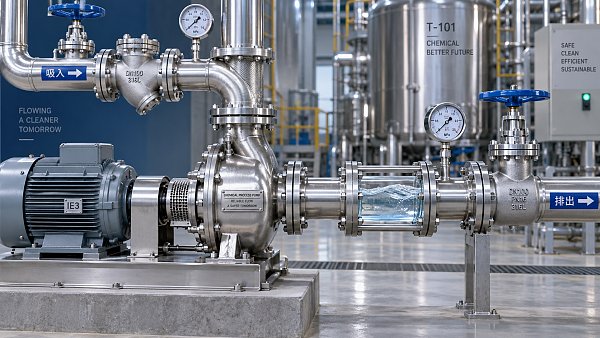
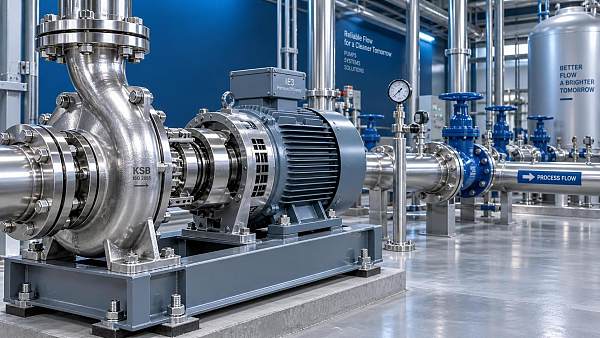
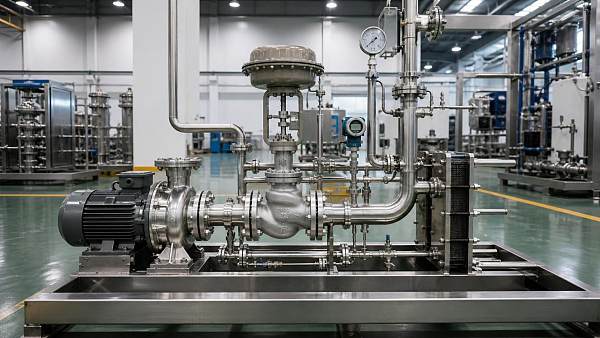
In chemical dosing, industrial pump technology refers to the design features, control methods, and system integration capabilities that allow a pump to deliver a precise amount of fluid at the required pressure and timing. This includes metering pumps, diaphragm pumps, plunger pumps, controlled centrifugal transfer units, variable frequency drives, pulsation dampening devices, smart sensors, and communication interfaces tied to automated process systems.
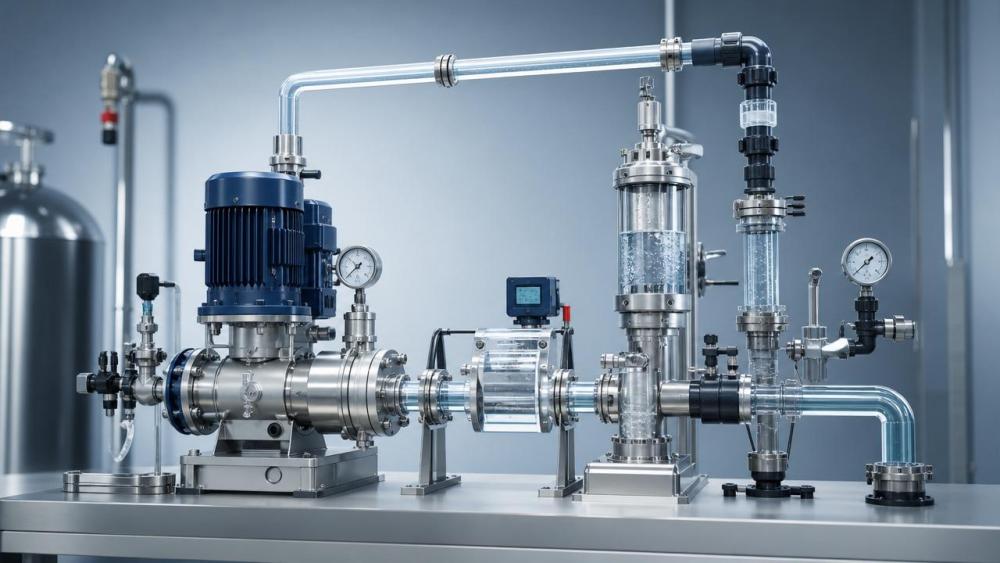
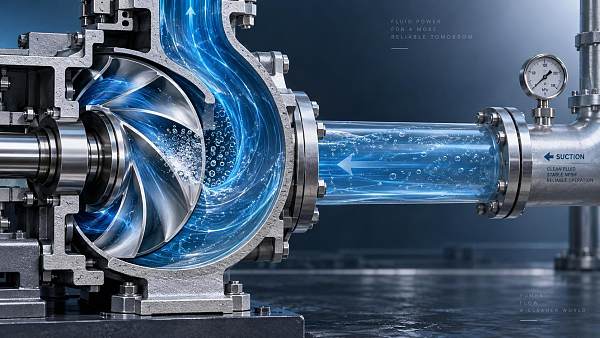
The key difference between ordinary transfer pumping and dosing is accuracy under changing conditions. A dosing line may need to inject acids, alkalis, coagulants, antiscalants, chlorine-based chemicals, polymers, or additives into a flowing stream that is itself changing in temperature, viscosity, or back pressure. Advanced industrial pump technology helps maintain the target feed rate despite those fluctuations. It does this through stable stroke control, consistent displacement, pressure compensation, leak-resistant wet ends, and better response to instrumentation signals.
For general industry, this matters because dosing is rarely isolated. It influences downstream separation, filtration, pH balance, membrane life, boiler protection, wastewater discharge, and overall process stability. When industrial pump technology improves dosing precision, the benefit spreads across the entire fluid control chain.
How is industrial pump technology changing dosing accuracy in real operations?
The biggest change is that accuracy is no longer defined only by pump nameplate performance. Modern industrial pump technology improves real-world dosing through a combination of mechanical precision and active control. Older systems often depended on fixed stroke settings, manual adjustment, and operator estimation. Newer systems can respond continuously to process data and adjust chemical feed in near real time.
Several improvements are driving this shift:
- Higher metering repeatability through improved diaphragm, plunger, and check valve design
- Variable speed control that matches pump output to live process demand
- Pressure and flow feedback that detects drift before it becomes a dosing error
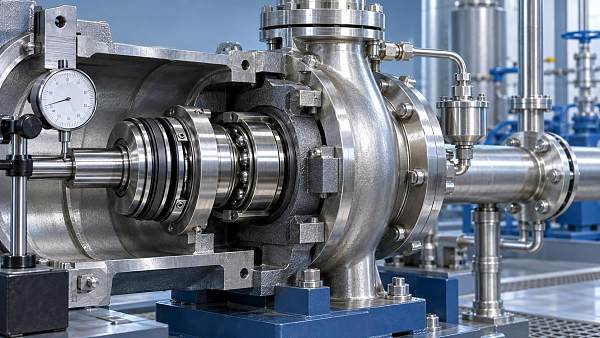
- Material upgrades that reduce swelling, corrosion, and seal degradation in aggressive media
- Digital integration with PLC, SCADA, and remote monitoring platforms for traceable adjustment
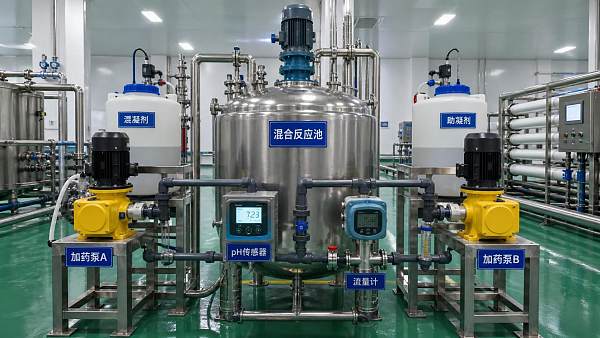
For example, a water treatment skid dosing coagulant into a fluctuating inlet flow can now link the chemical pump directly to flowmeter signals. Instead of feeding a constant amount and hoping the ratio remains acceptable, the system automatically tracks process changes. In a chemical blending line, pressure spikes that once caused overfeed can be smoothed through pulsation control and improved discharge valve response. In membrane systems, tighter antiscalant dosing protects expensive assets while avoiding unnecessary overdosing.
This is where industrial pump technology creates measurable value: not simply by moving fluid, but by stabilizing process chemistry under variable operating conditions.
Which applications benefit most from better industrial pump technology?
Nearly any industry that relies on controlled chemical addition can benefit, but the gains are most visible where small feed deviations create large operational consequences. Water and wastewater systems are a leading example. Dosing errors in pH correction, disinfection, or coagulant feed can quickly affect compliance, sludge production, and downstream filtration performance.
Chemical process plants also see strong benefits because reaction quality often depends on exact additive ratios. In these settings, industrial pump technology helps support product uniformity, yield, and safer handling of hazardous chemicals. Power utilities use precision dosing for boiler treatment, cooling tower chemistry, and emissions-related fluid control. Food-support and cleaning systems depend on repeatable additive injection to maintain hygiene and protect equipment, even when direct product contact is limited.
Other important use cases include mining water management, pulp and paper bleaching support, textile treatment, oil and gas auxiliary dosing, and industrial recycling systems. Across all of these sectors, improved industrial pump technology reduces two common problems: chemical underfeed that harms process results, and chemical overfeed that raises cost and environmental burden.
How can a system judge whether current dosing accuracy is limited by the pump?
Not every dosing problem starts with the pump, but the pump is often a major factor. A useful first step is to separate symptoms from root causes. If concentration results drift, operators may assume the chemical itself is unstable, yet the real issue may be pulsation, suction starvation, trapped gas, worn check valves, or mismatched control logic.
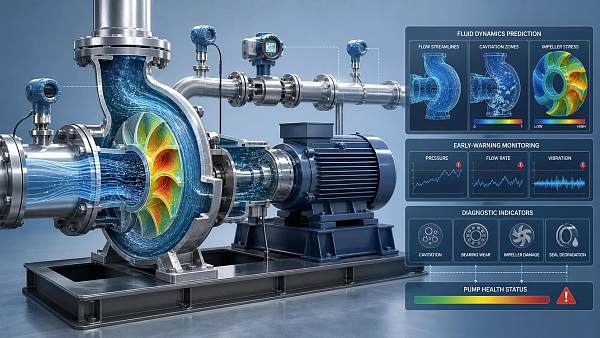
Warning signs that industrial pump technology may be limiting accuracy include inconsistent injection volume, frequent manual recalibration, visible pressure fluctuation, cavitation noise, seal leakage, excessive maintenance, and poor response to automatic control signals. Another sign is when dosing setpoints look correct on paper but actual process chemistry still varies widely.
A structured review should cover suction conditions, chemical properties, turndown ratio, control method, piping layout, back pressure stability, and instrumentation quality. In many cases, the best improvement is not just replacing one pump with a larger model. It may involve selecting a more suitable metering principle, adding dampeners, resizing lines, improving degassing, or integrating flow verification.
What should be compared when selecting industrial pump technology for dosing?
Selection should focus on dosing behavior, not just maximum flow and pressure. Start with the chemical itself: viscosity, corrosiveness, solids content, off-gassing tendency, and temperature all affect performance. Then consider whether the process needs continuous low-flow injection, batch dosing, ratio control, or fast response to variable loads.
A reliable comparison usually includes these factors:
- Accuracy and repeatability across the expected operating range
- Ability to handle back pressure changes without output drift
- Material compatibility with the dosing chemical
- Maintenance interval, spare parts burden, and seal life
- Compatibility with automation, alarms, and remote diagnostics
- Energy use and lifecycle cost rather than purchase price alone
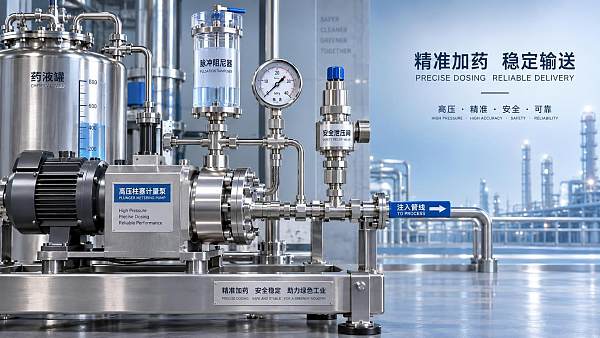
In some applications, diaphragm metering pumps offer strong containment and repeatability. In others, plunger-based solutions provide the pressure needed for difficult injection points. Controlled centrifugal support pumps can also play a role where transfer stability and feed preparation matter. The right industrial pump technology is the one that matches process chemistry, control strategy, and reliability targets as a complete system decision.
What risks and misconceptions should be avoided during implementation?
One common misconception is that digital features alone guarantee precise dosing. Smart displays and communication modules are useful, but they cannot correct poor suction design, incompatible elastomers, trapped air, or unstable back pressure. Another mistake is oversizing the pump. An oversized unit may spend most of its life operating at the edge of its controllable range, reducing actual dosing accuracy.
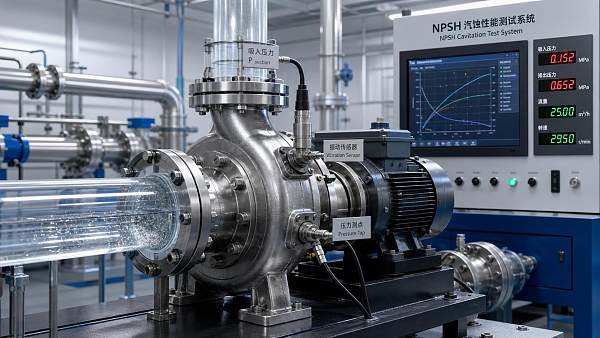
There is also a tendency to treat calibration as a one-time setup task. In reality, chemical properties, wear patterns, and process conditions change over time. Even the best industrial pump technology performs best when supported by periodic verification, clean instrumentation, and practical maintenance routines. Ignoring piping details is another risk. Long suction runs, insufficient NPSH margin, sharp bends, and missing dampeners can undermine an otherwise capable pump.
Implementation should therefore combine equipment choice with system discipline: confirm chemical compatibility, stabilize suction conditions, validate control logic, and review actual field accuracy after startup. A dosing system becomes dependable when hydraulic design, instrumentation, and pump performance are aligned rather than treated as separate issues.
How should facilities plan the next step in upgrading industrial pump technology?
A practical upgrade begins with measurement. Review where dosing errors create the highest cost, safety, or compliance impact. Compare target feed rates with actual delivered volumes, note maintenance history, and identify where process variability is strongest. Then prioritize improvements that produce both accuracy and operational resilience, such as better metering control, chemical-compatible materials, pulsation reduction, or signal integration with the broader automation system.
Industrial pump technology is no longer only a hardware topic. It is a process performance tool that influences chemical efficiency, equipment protection, and digital visibility across general industry. When selected and applied carefully, it can tighten dosing control, reduce waste, and support more stable production outcomes. The most effective next step is to assess the full dosing loop—from storage tank to injection point—and then match industrial pump technology to the real operating demands of that system.
Related News
 How fluid dynamics analysis helps size a chemical process pumpFluid Dynamics ScientistFluid dynamics analysis helps engineers size chemical process pumps for reliable flow, NPSH margin, efficiency, and safer long-term operation.
 How fluid dynamic cavitation analysis predicts pump erosion riskFluid Dynamics ScientistFluid dynamic cavitation analysis reveals pump erosion risks before costly damage occurs. Learn how CFD pinpoints vapor collapse zones, off-design threats, and effective mitigation.
 How to identify industrial pump parts causing repeated seal failuresFluid Dynamics ScientistIndustrial pump parts can reveal why seals fail repeatedly. Learn how to inspect sleeves, bearings, shafts, flush lines, and hydraulic conditions for lasting repairs.
 How to size plunger pumps for high pressure dosing accuratelyFluid Dynamics ScientistPlunger pumps for high pressure dosing: learn how to size flow, pressure, suction, pulsation control, and materials for accurate, reliable chemical injection.
 What drives centrifugal pump price differences for similar duty points?Fluid Dynamics ScientistCentrifugal pump price differences explained: compare efficiency, materials, seals, testing, and lifecycle costs to choose the right pump package.
 What Should EPC Buyers Check in Fluid Equipment Technical Specs?Fluid Dynamics ScientistWhat should an EPC buyer check in fluid equipment technical specs? Explore key checks for duty range, materials, efficiency, interfaces, compliance, and lifecycle reliability.
 How Can Chemical Dosing Costs Be Reduced in Industrial Wastewater Treatment?Fluid Dynamics ScientistHow to reduce chemical dosing cost in industrial wastewater treatment? Discover practical ways to optimize monitoring, mixing, controls, and chemical selection while protecting compliance.
 Which pump cavitation test methods best reveal NPSH margin?Fluid Dynamics ScientistPump cavitation test methods explained: compare NPSH3, vibration, acoustic emission, and endurance testing to verify real NPSH margin and prevent costly pump damage.
 How fluid separation process design affects product purity and yieldFluid Dynamics ScientistFluid separation process design directly impacts product purity and yield. Learn how better configuration, equipment choices, and control strategies improve performance.
 What drives process industry pumps price in corrosive duty applicationsFluid Dynamics ScientistProcess industry pumps price in corrosive duty depends on materials, seals, coatings, testing, and supplier support. Learn how to compare quotes, avoid hidden costs, and choose reliable lifecycle value.
 How Fluid Dynamics Predictive Analytics Improves Pump Failure ForecastingFluid Dynamics ScientistFluid dynamics predictive analytics helps forecast pump failures earlier by linking flow behavior to cavitation, wear, and damage—improving maintenance decisions and reducing downtime.
 What Pump System Technology Improves Energy Efficiency in Chemical Processing?Fluid Dynamics ScientistPump system technology for chemical processing starts with the real duty point. Learn how VFDs, hydraulic design, staging, and controls can cut energy use and improve reliability.