Process Industry Pumps: What Drives Lifetime Cost Most




For finance approvers, the real question about process industry pumps is not purchase price, but what drives lifetime cost most. In most process plants, the biggest cost driver is energy, followed by maintenance intensity, unplanned downtime, and the mismatch between pump design and actual operating duty. A cheaper pump can easily become the most expensive option if it runs off its best efficiency point, suffers frequent seal failures, or causes production interruptions. The smartest capital decision is therefore not “Which pump costs less today?” but “Which option minimizes total cost of ownership over the next 10 to 20 years?”
That is the core search intent behind this topic: decision-makers want a practical framework for evaluating process industry pumps based on lifetime economics, operational risk, and return on capital. For financial stakeholders, the useful answer is not a technical deep dive for engineers alone. It is a clear explanation of which cost categories matter most, how to compare alternatives, and which warning signs indicate that an apparently low-cost asset may create hidden expense later.
What finance approvers really need to know first
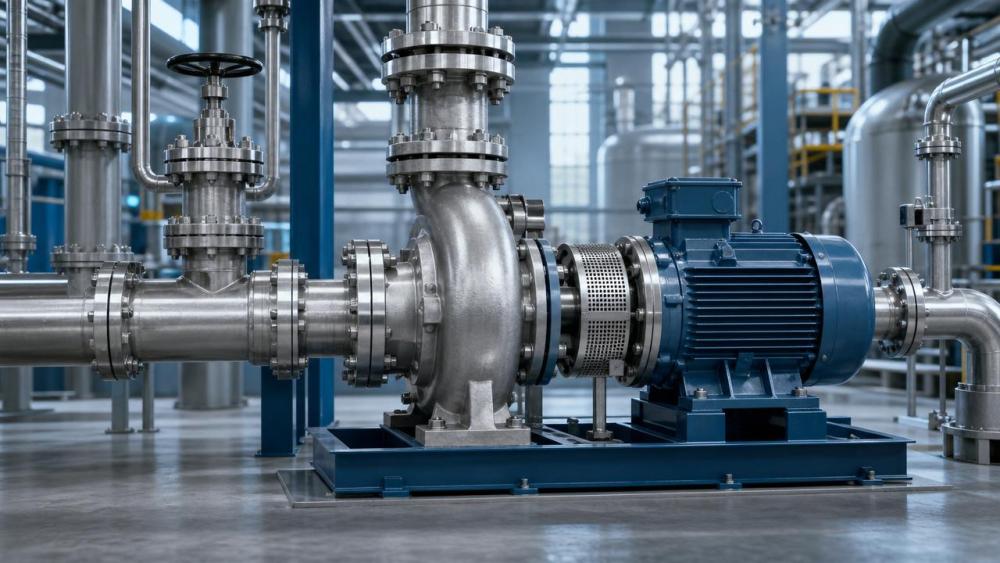
If you approve budgets for pumps in chemical plants, water treatment systems, refineries, food processing lines, pulp and paper mills, or other continuous operations, the first principle is simple: acquisition cost is usually the smallest part of lifecycle cost. In many installations, the purchase price may account for only a modest share of total spending, while electricity, repairs, spare parts, labor, process disruption, and replacement events dominate the financial outcome over time.
This means the best-performing pump on paper is not always the right financial choice either. A premium design only creates value if it fits the process conditions, the control philosophy, and the maintenance capability of the site. Finance approvers therefore need a balanced lens: energy efficiency, reliability, serviceability, and process criticality must all be weighted together.
In practical terms, the lifetime cost of process industry pumps is driven most by five factors: power consumption, duty-point mismatch, downtime impact, maintenance frequency, and sealing or materials reliability under real process conditions. Everything else is secondary unless the application is highly specialized.
Why energy use usually becomes the largest cost driver
For most continuously operating pumps, electricity is the dominant lifetime expense. A pump running 24/7 for years can consume several times its purchase price in energy. Even a seemingly small efficiency gap between two options can translate into a major difference in annual operating cost.
For finance teams, this is where total cost ownership analysis becomes powerful. A pump with higher hydraulic efficiency, a properly sized motor, and better control integration can justify a higher upfront price if the energy savings are consistent and measurable. This is especially true in large flow, high-duty, or around-the-clock applications.
However, nameplate efficiency alone is not enough. What matters is efficiency at the actual operating point. Many pumps are selected with generous safety margins, then forced to run throttled, recirculated, or far from their best efficiency point. In those cases, the plant pays for wasted energy every hour.
A finance approver should therefore ask three direct questions before approving a pump purchase: What is the expected annual operating hour profile? What is the real duty range, not just the design point? And what is the modeled energy cost at those real conditions? These questions often reveal more value than long feature lists.
Duty-point mismatch: the hidden cost that keeps compounding
One of the most expensive mistakes in pump investment is selecting equipment for a theoretical condition rather than the plant’s true operating reality. Oversized pumps often appear conservative during project design, but they frequently create long-term penalties. Excess flow is then controlled by throttling valves, bypass recirculation, or repeated on-off cycling, all of which waste energy and stress components.
Undersized pumps can be just as costly. They may struggle to meet peak process demand, run continuously at unfavorable conditions, overheat, cavitate, or require premature replacement. In both cases, the financial issue is not merely technical inefficiency. It is that the plant keeps paying for poor fit through higher utility bills, more interventions, and increased process instability.
For financial review, this is why a pump curve should never be treated as a technical appendix only relevant to engineers. It is a cost document. If the expected operating point sits far from the best efficiency point, long-term spend will likely rise. If the process has variable demand, then variable speed control or a different pump configuration may deliver a better economic result than a fixed-speed, oversized unit.
Downtime risk often outweighs maintenance cost
Finance teams sometimes focus on visible maintenance cost because it is easy to budget: seals, bearings, wear parts, and service labor can all be priced. But in many process industries, the real financial threat is unplanned downtime. If a pump failure interrupts production, delays batch completion, affects product quality, or forces a shutdown of linked systems, the economic loss can dwarf the cost of the pump itself.
This is especially true in continuous process environments where one critical pump can become a bottleneck for the whole line. A low-cost pump with higher failure frequency may look attractive in procurement but become very expensive when downtime, restart losses, contractor callouts, and safety exposure are included.
For that reason, finance approvers should classify pumps by process criticality rather than applying the same purchasing logic to every unit. A non-critical utility pump may justify a lower-cost approach. A pump serving hazardous chemicals, boiler feed, reactor circulation, solvent transfer, or wastewater compliance duty often requires a stronger bias toward reliability, material suitability, and predictive maintenance capability.
In simple terms, the more expensive the consequence of failure, the more sensible it becomes to invest in reliability upfront.
Seal reliability and leakage control are major financial variables
In many pump applications, seals are among the most common sources of trouble. Mechanical seal failure can lead not only to repair cost but also to leakage, contamination, environmental incidents, product loss, and regulatory exposure. In hazardous or high-value fluids, this risk becomes a financial issue far beyond routine maintenance.
For finance approvers, seal selection should not be treated as a minor component choice. It has direct implications for operating continuity, EHS compliance, and insurance-related risk. A poor seal arrangement in corrosive, abrasive, flashing, or temperature-sensitive services may cause repeated interventions and hidden cost accumulation.
The same applies to materials of construction. A pump that is technically capable of moving the fluid but not truly matched to its corrosiveness, solids content, vapor pressure behavior, or temperature profile may experience rapid wear, internal damage, or sealing issues. A lower purchase price can vanish quickly if material mismatch causes repeated failures.
When evaluating quotes, finance stakeholders should ask whether the recommended design has proven performance in comparable media and operating conditions. That question often exposes the difference between a low bid and a low lifecycle cost solution.
Maintenance frequency matters, but maintenance predictability matters more
Maintenance is an important cost driver, but its financial impact is not limited to the amount spent on parts and labor. Predictability matters just as much. Planned maintenance can be budgeted, scheduled during turnarounds, and optimized across the asset base. Unplanned maintenance creates disruption, emergency purchasing, overtime, expedited logistics, and greater production risk.
This is why pumps with condition monitoring capability, stable bearing life, accessible service design, and strong spare-parts availability often outperform cheaper alternatives financially. Their value lies not only in fewer repairs, but in making costs more controllable and less disruptive.
For process industry pumps, maintenance economics should include mean time between failures, average repair duration, spare parts lead time, technician skill requirements, and the availability of local service support. These factors influence working capital, shutdown exposure, and annual budget volatility.
A finance approver does not need to become a pump specialist. But they should insist on visibility into expected maintenance intervals and the practical service model behind the asset. If the supplier cannot clearly explain those points, lifetime cost uncertainty is probably high.
Variable speed drives can improve economics, but only in the right duty profile
Variable speed drives are often presented as a universal answer to pump efficiency. In reality, they are highly effective when the process demand changes significantly over time and the pump currently relies on throttling or bypass control. In those cases, reducing speed instead of wasting flow can generate substantial energy savings.
But a variable speed drive is not automatically the best choice in every installation. Its value depends on load profile, control strategy, motor compatibility, harmonic considerations, and the stability requirements of the process. If the pump runs at one stable duty point nearly all the time, the economic benefit may be limited.
For finance approvers, the correct question is not “Does this pump include advanced control?” but “How much annual cost reduction will that control deliver in this specific duty cycle?” Capital should follow measurable savings, not generic technology claims.
How to compare pump options using a finance-first framework
When reviewing proposals for process industry pumps, finance teams need a consistent framework that turns technical variation into comparable business impact. A useful model includes six cost layers: purchase and installation cost, annual energy cost, planned maintenance cost, unplanned repair cost, downtime cost, and end-of-life replacement or overhaul cost.
Each pump option should be evaluated over a realistic service period, often 10 to 20 years depending on application. Discounted cash flow can then be used to compare lifetime economics rather than first-year spending only. This approach often changes the ranking of options dramatically.
At a minimum, ask suppliers and internal engineering teams to provide the following:
Expected operating efficiency at actual duty conditions; annual power consumption estimate; likely wear components and replacement intervals; expected seal and bearing life; recommended spare parts inventory; downtime implications of failure; and evidence from similar installations. These are the numbers that support a true investment decision.
If a quote is missing these items, it may be competitively priced but financially incomplete.
When the lowest purchase price is still the wrong answer
There are situations where choosing the cheapest pump is reasonable, such as low-criticality standby service, non-hazardous utilities, or applications with low annual run hours. But finance approvers should be careful not to generalize that logic to all process duties.
In mission-critical systems, the lowest upfront cost often corresponds with higher uncertainty in materials, efficiency, support quality, and operating life. That uncertainty is itself a cost factor. It may not appear on the quotation, but it appears later in variance reports, energy bills, emergency spending, and lost production.
A more disciplined view is to treat pump investment as risk-adjusted capital allocation. The question is not simply whether one option costs more. It is whether paying more upfront reduces enough downstream cost and operational risk to improve net present value.
In many cases, that answer is yes.
What financial stakeholders should ask before approving pump capital
To make stronger decisions, finance approvers can use a short list of questions that quickly exposes lifetime cost risk. Is the pump sized for normal operation or only for a design extreme? How close will it run to its best efficiency point? What is the annual energy cost under actual plant conditions? What is the expected mean time between failures? What happens financially if the pump goes down unexpectedly? And is the seal and material package truly suited to the fluid?
These questions force the conversation away from brochure claims and toward operating economics. They also create better alignment between finance, operations, maintenance, and engineering teams.
Another useful step is to separate pumps into criticality tiers and apply different approval criteria to each. This avoids overinvesting in low-risk services while preventing false economy in high-impact ones. Not every pump needs the same design standard, but every pump should be justified with the right cost logic.
Conclusion: the biggest driver is rarely the one on the purchase order
For most process industry pumps, the biggest lifetime cost driver is energy, but the most underestimated driver is downtime caused by poor application fit, seal issues, or reliability problems. Maintenance cost matters, yet it becomes far more serious when it is unplanned. Material selection, operating point, and control strategy all influence whether a pump remains a productive asset or becomes a recurring cost center.
For finance approvers, the most valuable mindset shift is this: do not evaluate pumps as one-time equipment purchases. Evaluate them as long-life operating assets whose real cost is created over thousands of running hours. When you compare options through total cost of ownership, process criticality, and risk-adjusted return, better capital decisions become much easier.
The pump with the lowest quote is not always the lowest-cost pump. The one that delivers efficient operation, predictable maintenance, and fewer interruptions is usually the better financial asset.
Related News
 How fluid dynamics analysis helps size a chemical process pumpFluid Dynamics ScientistFluid dynamics analysis helps engineers size chemical process pumps for reliable flow, NPSH margin, efficiency, and safer long-term operation.
 How fluid dynamic cavitation analysis predicts pump erosion riskFluid Dynamics ScientistFluid dynamic cavitation analysis reveals pump erosion risks before costly damage occurs. Learn how CFD pinpoints vapor collapse zones, off-design threats, and effective mitigation.
 How to identify industrial pump parts causing repeated seal failuresFluid Dynamics ScientistIndustrial pump parts can reveal why seals fail repeatedly. Learn how to inspect sleeves, bearings, shafts, flush lines, and hydraulic conditions for lasting repairs.
 How to size plunger pumps for high pressure dosing accuratelyFluid Dynamics ScientistPlunger pumps for high pressure dosing: learn how to size flow, pressure, suction, pulsation control, and materials for accurate, reliable chemical injection.
 What drives centrifugal pump price differences for similar duty points?Fluid Dynamics ScientistCentrifugal pump price differences explained: compare efficiency, materials, seals, testing, and lifecycle costs to choose the right pump package.
 What Should EPC Buyers Check in Fluid Equipment Technical Specs?Fluid Dynamics ScientistWhat should an EPC buyer check in fluid equipment technical specs? Explore key checks for duty range, materials, efficiency, interfaces, compliance, and lifecycle reliability.
 How Can Chemical Dosing Costs Be Reduced in Industrial Wastewater Treatment?Fluid Dynamics ScientistHow to reduce chemical dosing cost in industrial wastewater treatment? Discover practical ways to optimize monitoring, mixing, controls, and chemical selection while protecting compliance.
 Which pump cavitation test methods best reveal NPSH margin?Fluid Dynamics ScientistPump cavitation test methods explained: compare NPSH3, vibration, acoustic emission, and endurance testing to verify real NPSH margin and prevent costly pump damage.
 How fluid separation process design affects product purity and yieldFluid Dynamics ScientistFluid separation process design directly impacts product purity and yield. Learn how better configuration, equipment choices, and control strategies improve performance.
 What drives process industry pumps price in corrosive duty applicationsFluid Dynamics ScientistProcess industry pumps price in corrosive duty depends on materials, seals, coatings, testing, and supplier support. Learn how to compare quotes, avoid hidden costs, and choose reliable lifecycle value.
 How Fluid Dynamics Predictive Analytics Improves Pump Failure ForecastingFluid Dynamics ScientistFluid dynamics predictive analytics helps forecast pump failures earlier by linking flow behavior to cavitation, wear, and damage—improving maintenance decisions and reducing downtime.
 What Pump System Technology Improves Energy Efficiency in Chemical Processing?Fluid Dynamics ScientistPump system technology for chemical processing starts with the real duty point. Learn how VFDs, hydraulic design, staging, and controls can cut energy use and improve reliability.