Pneumatic Valve Technology: Common Failure Risks




For after-sales maintenance teams, pneumatic valve technology is both a reliability asset and a frequent source of hidden downtime when contamination, actuator wear, air supply instability, or positioner drift goes unnoticed. Understanding the common failure risks behind sticking, leakage, slow response, and inaccurate throttling helps technicians diagnose issues faster and prevent repeat service calls. This article outlines the key failure modes of pneumatic valves in real industrial environments and explains what maintenance personnel should watch for during inspection, troubleshooting, and lifecycle support.
In process plants, water treatment systems, compressor stations, and automated packaging lines, a pneumatic control valve rarely fails in isolation. It is connected to air quality, actuator sizing, signal integrity, valve trim condition, and the operating behavior of the wider fluid network.
For FCSM’s audience of field service engineers and after-sales maintenance personnel, the value of pneumatic valve technology lies in practical diagnosis. A 15-minute inspection can prevent a 6-hour unplanned shutdown when symptoms are interpreted correctly.
How Pneumatic Valve Technology Fails in Real Service Conditions
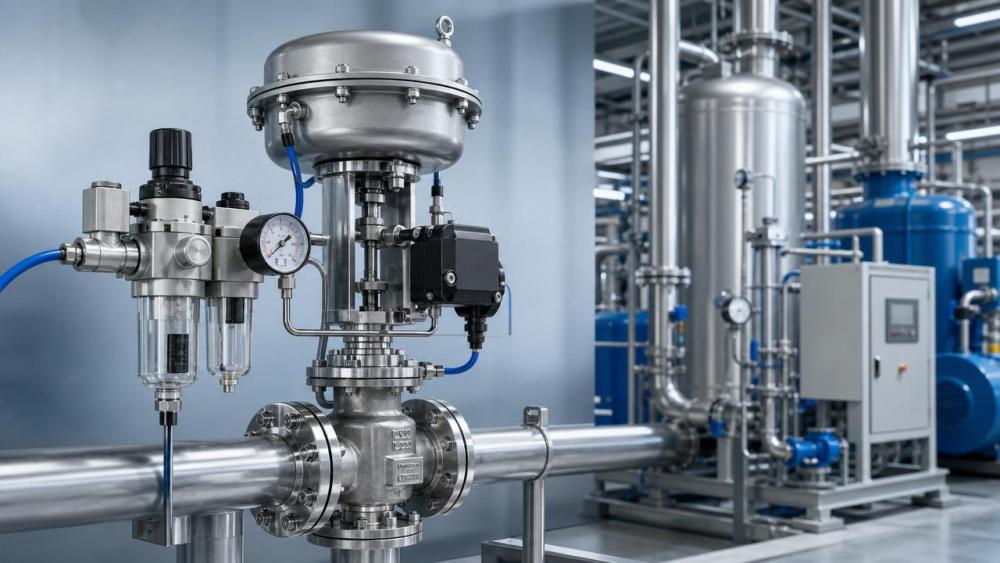
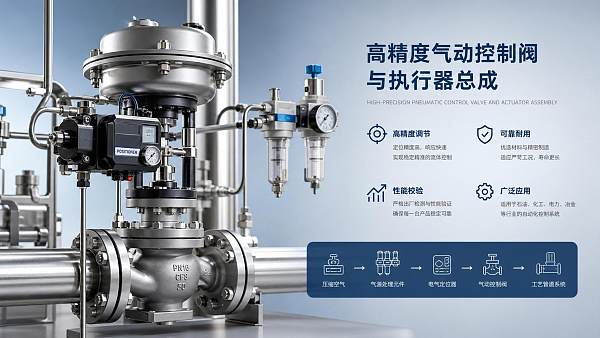
Pneumatic valve technology depends on a controlled chain: compressed air, filter regulator, solenoid or positioner, actuator, stem, packing, trim, and process fluid. A weakness in any link can distort valve behavior.
Maintenance teams often see the final symptom first: a valve that sticks, leaks, overshoots, or responds slowly. The root cause may be 2 meters upstream in the air line or inside the trim.
Why small deviations become large downtime risks
A control valve moving 5% slower than expected may appear acceptable during manual testing. Under closed-loop control, however, that delay can trigger oscillation, poor throttling, and unnecessary compressor energy use.
In critical services such as chemical dosing, steam regulation, and membrane filtration backwash, a response delay of 1–3 seconds can affect pressure stability and downstream product consistency.
Common operating symptoms technicians should record
- Valve travel does not match the 4–20 mA command signal within the expected tolerance.
- Actuator pressure rises slowly, drops unexpectedly, or fluctuates during stable demand.
- The stem hesitates near 10%, 50%, or 90% travel, suggesting friction or trim damage.
- Seat leakage increases after repeated cycling, especially in slurry, steam, or corrosive media.
- Positioner feedback shows repeated hunting, overshoot, or calibration drift after 3–6 months.
A structured record of symptoms is essential. Without travel feedback, air pressure readings, and process conditions, teams may replace parts without removing the cause.
The table below summarizes frequent failure risks in pneumatic valve technology and the first diagnostic checks maintenance personnel can perform during routine service visits.
The key conclusion is clear: pneumatic valve technology must be diagnosed as a system. Replacing a positioner will not solve trim erosion, and cleaning a seat will not stabilize wet compressed air.
Air Supply, Contamination, and Actuator Wear Risks
The air system is the power source behind pneumatic valve technology. If plant air is wet, oily, undersized, or unstable, even a high-quality valve assembly will behave unpredictably.
After-sales technicians should not treat compressed air as a background utility. A valve requiring 5.5 bar supply may fail intermittently if header pressure falls to 4.2 bar during peak compressor demand.
Moisture, oil, and particles
Moisture corrodes internal components, oil causes sticking in small pilot passages, and solid particles damage elastomers. In many plants, filter elements are replaced only after visible performance loss.
A practical service interval is to inspect filter regulators every 1–3 months in humid environments and every 3–6 months in cleaner indoor installations.
Field checks for air-side problems
- Measure supply pressure at the valve, not only at the compressor outlet.
- Drain the filter bowl and check for oil, water, rust, or black particles.
- Verify tubing diameter and length, especially where response time is above 2 seconds.
- Check solenoid exhaust ports for blockage, insects, paint overspray, or icing.
- Confirm that boosters, quick exhaust valves, and volume tanks are correctly sized.
Actuator wear is often gradual. A diaphragm may lose elasticity, a piston seal may leak internally, or a spring may weaken after thousands of cycles.
For high-cycle service, such as batch processing or pneumatic conveying isolation, technicians should track cycle counts. A valve cycling 50 times per hour accumulates over 400,000 cycles per year.
When actuator sizing becomes a hidden fault
Incorrect actuator sizing is not always visible during commissioning. It often appears later when packing friction rises, line pressure changes, or media temperature shifts by 30–80°C.
A maintenance team should verify safety factors, spring range, bench set, and required shutoff force before approving repeated actuator repairs. Undersized actuation causes repeat failures.
Positioner Drift, Signal Errors, and Control Accuracy Problems
Modern pneumatic valve technology frequently uses smart electro-pneumatic positioners. These devices improve diagnostics, but they also introduce calibration, feedback, firmware, and electrical connection risks.
A positioner may appear normal on the display while the mechanical linkage slips by 1–2 degrees. That small error can translate into inaccurate throttling at low valve openings.
The difference between calibration and real control performance
Calibration confirms that the positioner understands valve travel. It does not guarantee stable control under changing differential pressure, dirty air, vibration, or worn packing.
A practical diagnostic method is a 5-point travel test at 0%, 25%, 50%, 75%, and 100%. Compare command, positioner feedback, and actual stem or shaft position.
For control valves handling critical flow, technicians should also perform a step response test. A normal small valve may settle within 1–5 seconds, depending on actuator volume.
Warning signs of positioner-related risk
- Travel feedback repeatedly differs from command by more than the plant’s allowed tolerance.
- Auto-calibration completes, but the valve still hunts during stable flow conditions.
- The linkage arm is loose, misaligned, corroded, or outside the recommended angle range.
- Electrical terminals show moisture, oxidation, loose shielding, or intermittent signal dropout.
- The positioner exhaust is restricted, causing slow return movement or delayed fail position.
Signal quality also matters. A 4–20 mA loop affected by grounding errors, long cable runs, or electromagnetic noise can produce intermittent valve movement.
Where digital protocols are used, technicians should confirm device status, fault history, and configuration changes. Unrecorded parameter updates after maintenance can create new control problems.
Mechanical Sticking, Seat Leakage, and Trim Degradation
Mechanical failure risks in pneumatic valve technology often develop inside the valve body. Process fluid, temperature, pressure drop, and cycling frequency shape the actual wear pattern.
Sticking is commonly linked to packing friction, stem corrosion, swollen seals, crystallized media, or misalignment. In severe cases, the actuator works harder until the stem suddenly jumps.
Seat leakage and its real causes
Seat leakage is not always caused by a damaged seat. It can result from insufficient actuator force, incorrect plug orientation, debris trapped in the seat, or thermal distortion.
Technicians should compare leakage behavior before and after stroking the valve 3–5 times. If leakage changes, contamination or seating inconsistency is likely.
In abrasive fluids, throttling near very small openings accelerates erosion. A valve frequently operating below 15% travel may be oversized or poorly matched to process demand.
The following table gives maintenance teams a practical way to link mechanical symptoms with likely causes and corrective actions during service planning.
This table reinforces a practical rule: do not assume the actuator is faulty until the valve body, trim, stem path, and process conditions have been checked together.
Inspection Workflow for After-Sales Maintenance Teams
A consistent workflow reduces repeat service calls. For pneumatic valve technology, the best troubleshooting sequence moves from external utilities to internal mechanical condition.
Jumping directly to part replacement can waste labor and stock. A 6-step method helps technicians identify whether the issue is air-side, signal-side, actuator-side, or process-side.
Recommended 6-step troubleshooting sequence
- Confirm the complaint: leakage, slow response, failure to open, failure to close, or inaccurate modulation.
- Measure local air supply pressure, pressure drop during actuation, and filter regulator condition.
- Check electrical signal integrity, positioner status, feedback accuracy, and calibration history.
- Stroke the actuator manually and automatically, recording opening and closing times.
- Inspect mechanical linkage, stem movement, packing friction, travel stops, and mounting alignment.
- Review process pressure, temperature, media cleanliness, and recent operating changes.
This sequence usually separates 80% of common service problems into clear categories without requiring immediate valve removal from the pipeline.
Documentation that prevents repeat failures
After each intervention, technicians should record the valve tag, fault description, air pressure, stroke time, travel deviation, replaced parts, and final verification result.
A useful service report includes at least 3 photos: installed valve condition, accessory layout, and internal trim or filter contamination if inspection is performed.
For sites moving toward predictive maintenance, positioner diagnostics can be trended every 30–90 days. Increasing friction, cycle count, and deviation alarms reveal early degradation.
Selection and Lifecycle Recommendations for Reliable Operation
Failure prevention begins before installation. Pneumatic valve technology should be selected according to process duty, air supply reliability, control accuracy, corrosion risk, and maintainability.
For after-sales teams supporting procurement or replacement decisions, the most useful question is not only price. It is whether the valve can maintain performance over 3–5 years.
Key criteria for maintenance-friendly valve assemblies
- Accessory layout allows access to solenoid valves, filters, gauges, and positioners without dismantling nearby piping.
- Actuator torque or thrust has adequate margin for pressure, temperature, packing, and aging conditions.
- Trim materials match media chemistry, solids content, pressure drop, and expected throttling range.
- Positioner diagnostics provide alarms for travel deviation, friction, air leakage, and cycle accumulation.
- Spare parts are standardized across valve sizes where possible, reducing emergency inventory complexity.
In many plants, standardizing 2–3 actuator families and accessory packages improves training, reduces spare part confusion, and shortens maintenance response time.
Maintenance intervals by service severity
A clean water service valve may need only semiannual checks. A corrosive, high-temperature, or slurry service valve may require inspection every 4–8 weeks.
High-priority valves should be classified by consequence, not only size. A small dosing valve can be more critical than a larger utility isolation valve.
Practical service planning guidance
Use 3 maintenance levels: quick visual inspection, functional stroke testing, and full mechanical inspection. Match each level to failure consequence and process exposure.
For critical loops, technicians should keep a baseline record after commissioning: stroke time, supply pressure, calibration values, leakage status, and normal control behavior.
When the next service report shows deviation beyond site tolerance, the team can act before the valve causes unstable pressure, product loss, or unnecessary shutdown.
Common Maintenance Mistakes and Practical Answers
Even experienced technicians can overlook basic causes when pressure is high and production is waiting. Pneumatic valve technology rewards disciplined checks and punishes assumptions.
Mistake 1: replacing the positioner before checking the air supply
A new positioner will not solve wet air, undersized tubing, or a clogged exhaust. Always measure local supply pressure during actual actuation, not at idle.
Mistake 2: ignoring valve operating range
If a control valve operates below 10–15% travel for long periods, it may be oversized. Oversizing increases erosion, instability, and poor throttling accuracy.
Mistake 3: treating leakage as a single-component problem
Leakage can involve seat damage, actuator force, debris, temperature effects, or incorrect travel stops. A complete diagnosis prevents repeated seat replacement.
Mistake 4: failing to preserve service history
Without trend data, every fault looks new. With 12 months of records, technicians can identify repeating contamination, actuator wear, or control loop instability.
Reliable pneumatic valve technology is built through correct air preparation, accurate positioner setup, suitable actuator sizing, and disciplined inspection of trim and sealing surfaces.
For after-sales maintenance teams, the strongest value is faster diagnosis and fewer repeat visits. A systematic approach protects uptime, energy efficiency, and process stability.
FCSM supports industrial professionals with intelligence on control valves, pumps, compressors, and fluid separation systems across the general machinery sector. To explore practical lifecycle guidance or discuss pneumatic valve technology challenges in your facility, contact us to learn more solutions or request a tailored technical consultation.
Related News
 Which valve technology standards apply to pneumatic diaphragm valves?Process Control ArchitectValve technology standards for pneumatic diaphragm valves: explore design, testing, actuator safety, hygienic compliance, and specification guidance for reliable selection.
 How to verify certification requirements for explosion proof pneumatic valvesProcess Control ArchitectExplosion proof pneumatic valves certification explained: learn how to verify markings, ATEX/IECEx scope, accessory compliance, and supplier documents to avoid inspection delays and safety risks.
 How to Choose Pneumatic Control Valves for Pharmaceutical Plants With CIP and SIP RequirementsProcess Control ArchitectPneumatic control valves for pharmaceutical plants must handle CIP and SIP with hygienic design, stable control, and full documentation. Learn how to choose compliant, reliable valve packages.
 CBP Tightens Entry Rules for Pneumatic Diaphragm ValvesProcess Control ArchitectPneumatic diaphragm valves face tighter CBP entry rules from Aug 1, 2026. Learn the new material declaration and ISO 15848-2 filing requirements to reduce hold and re-export risk.
 SABIC Sets ISO 21872-2 Rule for Diaphragm ValvesProcess Control ArchitectSABIC sets ISO 21872-2 rule for diaphragm valves, making SASO-accredited certification mandatory for active tenders. Learn how this impacts suppliers, procurement teams, and PO readiness.
 EN 14895:2026 Sets New CE Bar for Diaphragm ValvesProcess Control ArchitectEN 14895:2026 raises the CE compliance bar for diaphragm valves. Learn what changes by 2027, who must re-certify, and how to avoid EU customs and delivery risks.
 Pneumatic Valve Technology Supplier Checklist: Performance Risks to Review Before OrderingProcess Control ArchitectPneumatic valve technology supplier selection affects uptime, air efficiency, and lifecycle cost. Review key performance risks, support proof, and pre-order checks before you buy.
 EU Updates EN 14382 for Pneumatic Diaphragm ValvesProcess Control ArchitectEU Updates EN 14382 for Pneumatic Diaphragm Valves: learn how stricter leakage, aggressive-media testing, and elastomer traceability rules may affect EU customs, tenders, and supplier compliance.
 Control Valve Price: What Changes Total Cost?Process Control ArchitectControl valve price varies with materials, pressure class, trim, actuator, and certification. Learn how to compare quotes, avoid hidden costs, and choose the right value before ordering.
 Pneumatic Valve Technology Trends in 2026: Smarter Control, Lower Air Loss, Better ReliabilityProcess Control ArchitectPneumatic valve technology in 2026 delivers smarter control, lower air loss, and stronger reliability. Explore key trends, diagnostics, and efficiency gains driving better plant performance.
 Pneumatic Valve Technology: Common Failure RisksProcess Control ArchitectPneumatic valve technology failure risks explained: discover causes of sticking, leakage, slow response, and drift to improve uptime and maintenance efficiency.
 Process Control Valves: Selection Risks That Raise Maintenance CostsProcess Control ArchitectProcess control valves can quietly drive maintenance costs. Learn key selection risks—sizing, trim, materials, actuators—and how to improve uptime and lifecycle value.