Pneumatic Valve Technology for Stable Dosing Control




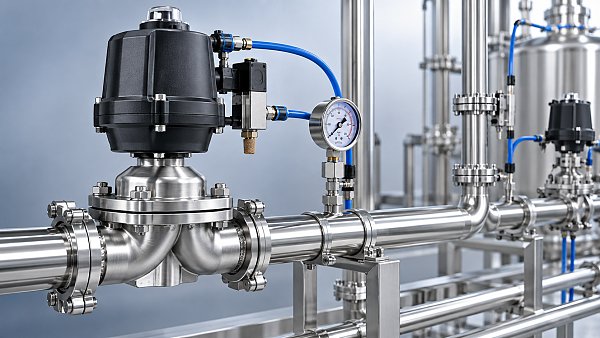
For technical evaluators, pneumatic valve technology is central to stable dosing control in demanding process environments. In chemical treatment, water processing, food systems, and energy applications, dosing accuracy depends on fast response, repeatability, and resistance to pressure or media disturbances. When valve design, actuator sizing, and smart positioner tuning work together, the result is tighter flow modulation, lower process risk, and more reliable quality control.
Why a Checklist Matters for Stable Dosing Control
Stable dosing rarely fails because of one isolated component. It usually degrades through small mismatches between valve trim, actuator force, instrument air quality, and control loop settings.
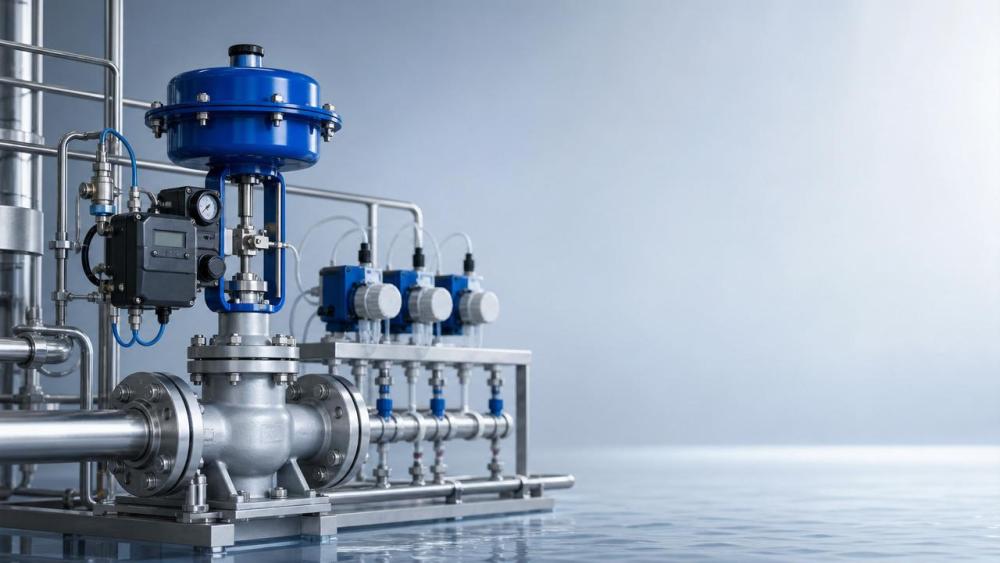
A checklist approach helps compare options using the same criteria. It also reduces the chance of selecting a valve that performs well on paper but becomes unstable under cavitation, flashing, corrosion, or cycling duty.
For the broader fluid machinery sector, this matters because dosing instability can affect pumps, separators, compressors, and downstream treatment stages. A precise valve improves both process consistency and asset protection.
Core Checklist for Evaluating Pneumatic Valve Technology
Use the following execution points to assess whether a valve package can support stable dosing control under real industrial conditions.
- Confirm flow characterization. Match equal percentage, linear, or custom trim curves to the real dosing profile, not only the nominal design point.
- Check low-opening stability. Verify that the valve can control smoothly at small travel positions where many dosing systems operate most often.
- Size the actuator correctly. Ensure sufficient thrust or torque under maximum differential pressure, friction changes, and fail-safe spring requirements.
- Review positioner intelligence. Use smart electro-pneumatic positioners with auto-calibration, diagnostics, and travel feedback for repeatable control performance.
- Evaluate deadband and hysteresis. Small control errors become large dosing deviations when packing friction, linkage looseness, or poor positioner tuning is ignored.
- Assess response speed. Measure step response and settling behavior, because fast opening with slow stabilization can still harm stable dosing control.
- Select trim materials for the medium. Corrosive chemicals, abrasive slurries, and high-purity fluids each demand different wetted materials and surface finishes.
- Inspect cavitation and flashing risk. In liquid dosing lines, poor pressure management can damage trim and destroy the repeatability expected from pneumatic valve technology.
- Verify seat leakage class. Dosing applications often require tight shutoff during batch transitions, cleaning cycles, or interlocked emergency conditions.
- Control air supply quality. Dry, clean, and stable instrument air is essential for actuator reliability, positioner accuracy, and predictable travel response.
- Check installed gain, not catalog gain. Piping losses, pump behavior, and operating range can change actual controllability after installation.
- Integrate diagnostics early. Travel signatures, cycle counts, and air consumption trends reveal wear before dosing drift becomes a production problem.
How Pneumatic Valve Technology Supports Different Applications
Chemical Dosing and Corrosive Media
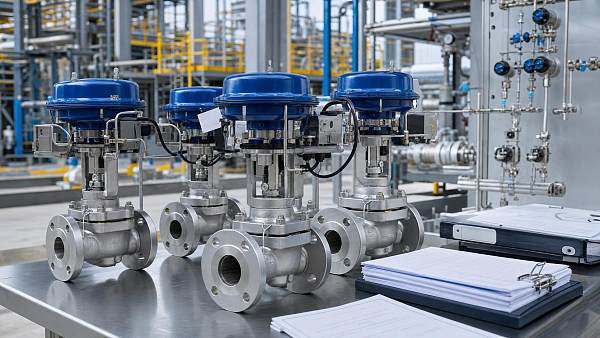
In chemical injection systems, pneumatic valve technology must balance corrosion resistance with precise low-flow throttling. Alloy choice, diaphragm or globe design, and trim geometry all influence long-term control accuracy.
Smart positioners add value by compensating for friction changes over time. This is especially important when aggressive media slowly alter packing behavior or seat contact conditions.
Water Treatment and Membrane Systems
In water treatment, stable dosing control affects pH adjustment, coagulant addition, antiscalant injection, and membrane protection. Small oscillations can upset downstream filtration or reverse osmosis performance.
Here, pneumatic control valves should maintain repeatability during long continuous runs. Air quality management and periodic signature testing help sustain dosing accuracy across seasonal load changes.
High-Temperature and High-Pressure Process Lines
In power, refining, and thermal process service, the challenge is not only precision but survivability. Temperature swings and high differential pressure can distort trim behavior and actuator performance.
Advanced pneumatic valve technology uses robust body design, hardened trims, and positioner diagnostics to maintain dosing control where conventional assemblies lose repeatability.
Food, Pharma, and Clean Utility Systems
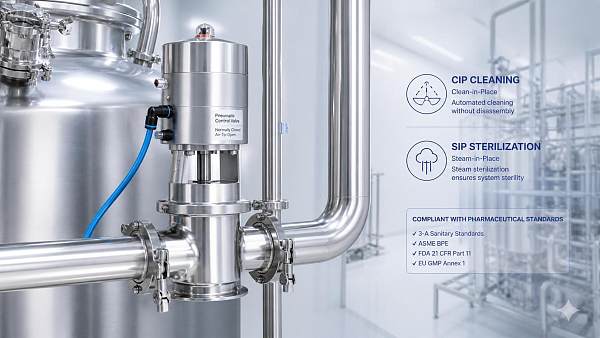
Clean applications demand accurate dosing without contamination risk. Surface finish, cleanability, elastomer compatibility, and shutoff integrity become as important as valve response.
For these systems, choose valve packages that combine sanitary construction with fine control resolution. Stable dosing control protects batch consistency and reduces rework or waste.
Commonly Overlooked Risks
Ignoring Rangeability Limits
A valve sized for peak flow may become unstable at normal dosing rates. If the plug travels only within a narrow low-lift zone, resolution and repeatability often collapse.
Treating the Positioner as an Accessory
The positioner is a control element, not a minor add-on. Poor calibration, weak feedback quality, or missing diagnostics can undermine otherwise strong pneumatic valve technology.
Missing Interaction with Upstream Pumps
Dosing stability depends on the whole fluid path. Pump pulsation, suction variation, and pressure transients can force the valve into constant correction and premature wear.
Overlooking Instrument Air Quality
Wet or contaminated air causes sticky motion, internal corrosion, and erratic travel. Many unstable dosing complaints begin in the air system rather than the valve body.
Skipping Lifecycle Diagnostics
A valve can pass commissioning and still drift months later. Without trend data, small increases in deadband or air consumption remain invisible until process quality is affected.
Practical Execution Recommendations
- Map the real operating window, including minimum flow, normal flow, peak flow, pressure drop, temperature, and upset conditions.
- Request installed performance data, not only catalog Cv values, actuator force tables, and ideal bench response claims.
- Test the complete assembly with positioner, air set, and tubing layout that matches field installation conditions.
- Set acceptance criteria for hysteresis, deadband, response time, shutoff class, and repeatability before final selection.
- Use diagnostic baselines at startup, then compare travel and air consumption trends during maintenance intervals.
- Coordinate valve selection with pump, piping, and control loop design to avoid solving one instability by creating another.
Conclusion and Next Actions
Effective pneumatic valve technology is not defined by actuator type alone. Stable dosing control comes from the combined quality of trim selection, actuator sizing, smart positioner performance, material compatibility, and lifecycle diagnostics.
In fluid-intensive industries, this checklist-based method improves evaluation consistency and reduces hidden control risk. It also supports better integration across pumps, filtration systems, compressor-driven air networks, and automated process lines.
As a next step, compare each candidate valve package against the checklist above using real operating data. That practical review will show which solution can deliver stable dosing control with the lowest long-term performance uncertainty.
Related News
 Which valve technology standards apply to pneumatic diaphragm valves?Process Control ArchitectValve technology standards for pneumatic diaphragm valves: explore design, testing, actuator safety, hygienic compliance, and specification guidance for reliable selection.
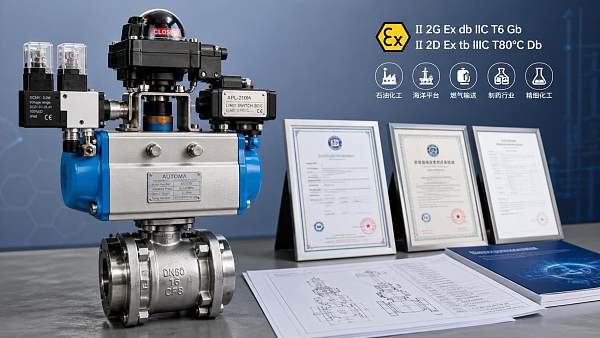
 How to verify certification requirements for explosion proof pneumatic valvesProcess Control ArchitectExplosion proof pneumatic valves certification explained: learn how to verify markings, ATEX/IECEx scope, accessory compliance, and supplier documents to avoid inspection delays and safety risks.
 How to Choose Pneumatic Control Valves for Pharmaceutical Plants With CIP and SIP RequirementsProcess Control ArchitectPneumatic control valves for pharmaceutical plants must handle CIP and SIP with hygienic design, stable control, and full documentation. Learn how to choose compliant, reliable valve packages.
 CBP Tightens Entry Rules for Pneumatic Diaphragm ValvesProcess Control ArchitectPneumatic diaphragm valves face tighter CBP entry rules from Aug 1, 2026. Learn the new material declaration and ISO 15848-2 filing requirements to reduce hold and re-export risk.
 SABIC Sets ISO 21872-2 Rule for Diaphragm ValvesProcess Control ArchitectSABIC sets ISO 21872-2 rule for diaphragm valves, making SASO-accredited certification mandatory for active tenders. Learn how this impacts suppliers, procurement teams, and PO readiness.
 EN 14895:2026 Sets New CE Bar for Diaphragm ValvesProcess Control ArchitectEN 14895:2026 raises the CE compliance bar for diaphragm valves. Learn what changes by 2027, who must re-certify, and how to avoid EU customs and delivery risks.
 Pneumatic Valve Technology Supplier Checklist: Performance Risks to Review Before OrderingProcess Control ArchitectPneumatic valve technology supplier selection affects uptime, air efficiency, and lifecycle cost. Review key performance risks, support proof, and pre-order checks before you buy.
 EU Updates EN 14382 for Pneumatic Diaphragm ValvesProcess Control ArchitectEU Updates EN 14382 for Pneumatic Diaphragm Valves: learn how stricter leakage, aggressive-media testing, and elastomer traceability rules may affect EU customs, tenders, and supplier compliance.
 Control Valve Price: What Changes Total Cost?Process Control ArchitectControl valve price varies with materials, pressure class, trim, actuator, and certification. Learn how to compare quotes, avoid hidden costs, and choose the right value before ordering.
 Pneumatic Valve Technology Trends in 2026: Smarter Control, Lower Air Loss, Better ReliabilityProcess Control ArchitectPneumatic valve technology in 2026 delivers smarter control, lower air loss, and stronger reliability. Explore key trends, diagnostics, and efficiency gains driving better plant performance.
 Pneumatic Valve Technology: Common Failure RisksProcess Control ArchitectPneumatic valve technology failure risks explained: discover causes of sticking, leakage, slow response, and drift to improve uptime and maintenance efficiency.
 Process Control Valves: Selection Risks That Raise Maintenance CostsProcess Control ArchitectProcess control valves can quietly drive maintenance costs. Learn key selection risks—sizing, trim, materials, actuators—and how to improve uptime and lifecycle value.