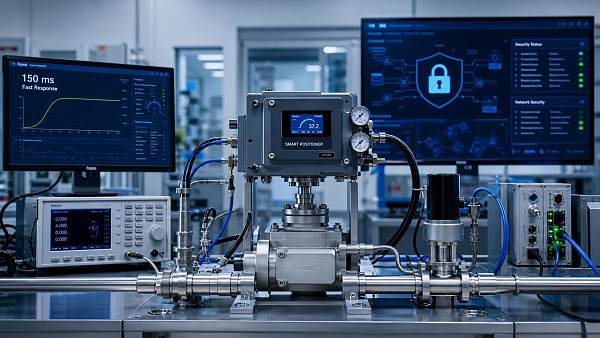
CBP Ends $800 Exemption, Raising Valve Costs




Image placement plan
Place one image after this planning note to illustrate customs processing, cross-border parcel clearance, or precision control components affected by the CBP rule change.
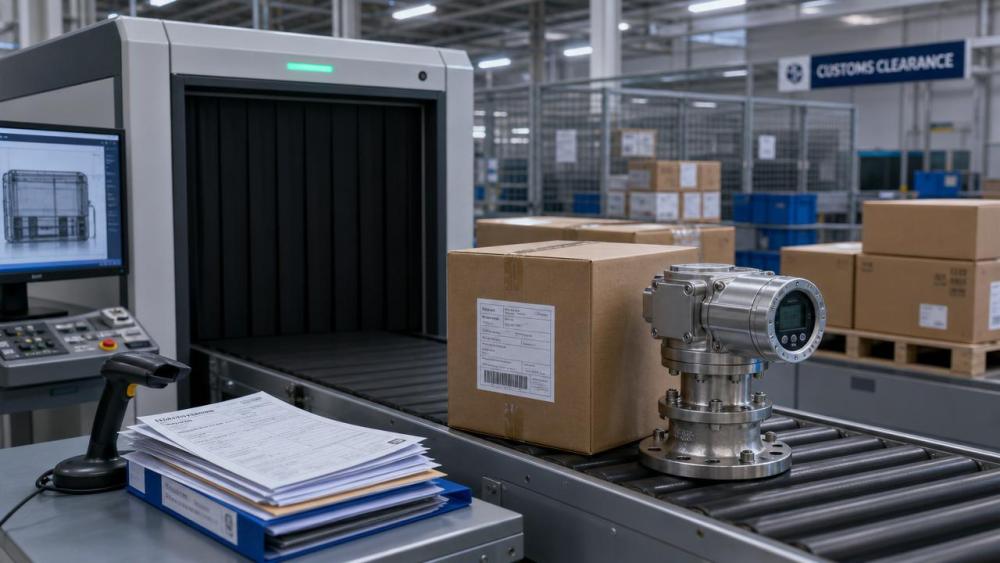
On May 2, 2026, U.S. Customs and Border Protection, or CBP, formally ended the duty-free de minimis treatment for commercial parcels valued under $800 from mainland China and Hong Kong, affecting direct-to-North-America shipments of precision control components such as Smart Valve Positioners because all parcels must now pay duties and leave the T86 simplified clearance channel.
What Has Been Confirmed by the Rule Change
According to the provided event summary, CBP ended the de minimis exemption for commercial parcels under $800 from mainland China and Hong Kong on May 2, 2026. As a result, all such parcels are subject to duties and are no longer processed through the T86 simplified clearance route.
The provided information identifies Smart Valve Positioners as an affected product category. These precision control components often have unit prices in the $200 to $700 range. For direct shipments to North America, customs clearance time is expected to extend to 5 to 8 business days, while total costs are expected to rise by 110%.
Where the Pressure Reaches Across the Industrial Chain
Direct trading companies face higher landed-cost exposure
Direct trading companies are affected because the previous duty-free treatment for qualifying low-value parcels is no longer available for the stated origin scope. The impact appears in quotation, order confirmation, customs declaration, duty payment, and customer delivery commitments. These companies may need to pay closer attention to landed-cost calculation, parcel-level documentation, tariff treatment, and whether customer-facing delivery promises still match the new 5 to 8 business day clearance window.
Raw material and component procurement teams need tighter planning
Raw material and component procurement companies may be affected when their sourcing, replenishment, or sample shipments depend on small-parcel cross-border flows linked to precision control products. From an industry perspective, the cost increase can influence purchase timing, minimum order planning, and spare-part availability. Procurement teams may need to monitor whether duty payments, longer clearance, and customs documentation requirements change internal inventory buffers or supplier delivery schedules.
Processing and manufacturing companies may see schedule friction
Processing and manufacturing companies that build, calibrate, assemble, or integrate Smart Valve Positioners into broader control systems may feel pressure in production scheduling and customer delivery coordination. The reason is not a change in the technical function of the product, but a change in the trade clearance route and cost structure for direct shipments. Business links that may be affected include production planning, pre-shipment documentation, after-sales replacement dispatch, and coordination between technical specifications and commercial delivery terms.
Supply chain service providers must adjust clearance workflows
Supply chain service providers, including logistics coordinators and customs-related service partners, are affected because parcels previously handled under a simplified channel must now move through a more duty-focused clearance process. The operational impact may appear in data collection, customs filing preparation, duty settlement, parcel tracking, and exception handling. What deserves closer attention is whether service providers can keep buyers informed about clearance progress, duty exposure, and revised delivery expectations without overstating certainty.
Operational Priorities for Companies Shipping Smart Valve Positioners
Recheck compliance documents before dispatch
Companies should review product descriptions, declared values, customs classification information, and supporting trade documents before shipment. Since the provided change removes the T86 simplified clearance route for the stated parcels, incomplete or inconsistent documentation may create avoidable delays in a clearance process that is already expected to take longer.
Update pricing around duties and total delivered cost
The event summary states that total costs are expected to rise by 110% for direct-to-North-America orders in the affected scenario. Companies handling Smart Valve Positioners should therefore avoid quoting only the product price and freight cost. A more practical approach is to clarify duty responsibility, customs-related charges, and delivery terms at the quotation and order-confirmation stage.
Align delivery schedules with the 5 to 8 business day clearance window
Because clearance time is expected to extend to 5 to 8 business days, procurement plans and customer commitments should be adjusted accordingly. This is especially relevant for precision control components used in maintenance, project commissioning, or replacement demand, where a delay in one component can affect downstream installation or service planning.
Strengthen traceability for after-sales and replacement shipments
Smart Valve Positioners are precision control components, so after-sales replacement and technical support shipments may require clear traceability between the product, order, service request, and customs documents. Companies should maintain consistent records to support duty handling, customer communication, and quality follow-up if delivery timing changes under the new clearance environment.
Industry Reading: A Small-Parcel Rule With Larger Effects
Analysis shows that this change is best understood as a trade-rule adjustment rather than a product-specific technical regulation. The confirmed rule change does not alter the technical performance requirements of Smart Valve Positioners, but it changes the economic and procedural conditions under which low-value commercial parcels move into the U.S. market from the stated origins.
From an industry perspective, the most important shift is that cost and compliance are becoming more visible in small-parcel trade. Products priced between $200 and $700 previously fit naturally into low-value parcel workflows. Once duty payment and non-T86 clearance become mandatory, buyers and sellers may need to treat even small orders with the same discipline normally applied to higher-value industrial shipments.
Observably, the change may also influence how companies design North America delivery models. This is an analytical observation, not a confirmed outcome. Companies may compare direct parcel shipment, consolidated shipment, local inventory preparation, and clearer duty allocation in contracts, depending on their order frequency and customer service requirements.
A Measured Conclusion for Industrial Buyers and Sellers
The termination of the $800 de minimis treatment for affected parcels marks a clear increase in customs and cost pressure for direct shipments of Smart Valve Positioners to North America. The confirmed impact is concentrated in duty exposure, removal from the T86 simplified clearance channel, longer clearance time, and higher total cost expectations.
A rational industry view is that companies should respond through documentation discipline, pricing transparency, delivery-plan adjustment, and closer coordination with supply chain service providers. The final business impact will depend on how detailed customs implementation, buyer requirements, and market responses develop after the rule change.
Information Basis and Items to Monitor
This article is based on the user-provided news title, event date, and event summary. Specific official source links were not provided in the input and should be verified continuously.
For ongoing monitoring, relevant source types may include CBP announcements, customs clearance guidance, broker advisories, tariff and declaration requirements, buyer tender documents, certification execution practices, and industry feedback on delivery time and cost changes.
Related News
 How fluid control digitalization improves valve maintenance planningProcess Control ArchitectFluid control digitalization helps teams prioritize valve maintenance, reduce unplanned downtime, and improve reliability with actionable condition data.
 How smart valve positioners improve process control valve accuracyProcess Control ArchitectDiscover how smart positioners improve process control valve accuracy, reduce friction-related errors, enhance stability, and enable predictive maintenance.
 How to evaluate a valve automation supplier before placing an orderProcess Control ArchitectChoose a valve automation supplier with confidence. Learn how to assess engineering capability, compatibility, testing, lead times, and lifecycle support before ordering.
 How Does Industrial Automation Change Valve Specification Requirements?Process Control ArchitectHow does industrial automation change valve specification needs? Discover smarter sizing, diagnostics, protocols, fail-safe design, and lifecycle strategies for reliable control.
 Retrofit vs replacement automation: which option minimizes downtime?Process Control ArchitectRetrofit vs replacement automation: compare downtime, integration risk, lifecycle costs, and phased execution to protect uptime and modernize with confidence.
 When smart pneumatic control valves improve water treatment stabilityProcess Control ArchitectSmart pneumatic control valves for water treatment improve flow precision, dosing consistency, diagnostics, and plant stability. Learn how to select the right solution.
 When predictive maintenance for process valves pays off in plant operationsProcess Control ArchitectPredictive maintenance for process valves can cut downtime, reduce energy loss, and boost reliability. Learn when it pays off in plant operations—and how to justify the investment.
 Revised EN 14382:2026 Adds EMC Immunity Test for Smart Valve Positioners in EU ExportsProcess Control ArchitectEN 14382:2026 now mandates EMC immunity testing for Smart Valve Positioners, reshaping EU export compliance for valve OEMs and integrators. Learn what changed and how to prepare.
 FDA Tightens Import Rules for Smart Valve PositionersProcess Control ArchitectSmart valve positioners now face stricter FDA import rules. Learn how IEC 61508 SIL2 or UL 61508 documentation affects U.S. clearance, suppliers, and compliance planning.
 EN 14382:2026 Raises EU Entry Bar for Smart PositionersProcess Control ArchitectEN 14382:2026 raises the EU entry bar for Smart Valve Positioners with a 150 ms step response cap and IEC 62443-4-2 cybersecurity checks. Learn what exporters, buyers, and compliance teams must do before Nov 1, 2026.
 High-Precision Stainless Steel Control Valves for Corrosive Process LinesProcess Control ArchitectHigh-precision control valves stainless steel solutions improve corrosion resistance, flow stability, and safety in demanding process lines. Discover how to reduce downtime and boost control accuracy.
 How a Valve Performance Consultant Improves Uptime and Control AccuracyProcess Control ArchitectValve performance consultant insights to improve uptime, control accuracy, and energy efficiency. Learn how targeted diagnostics solve hidden valve issues across process systems.