Fluid Control Equipment Selection for Stable Processes




Choosing the right fluid control equipment is a critical project decision that affects process stability, energy consumption, maintenance risk, and long-term plant reliability. For project managers and engineering leads, every pump, valve, compressor, and separation unit must align with operating conditions, control accuracy, lifecycle cost, and future digitalization needs. This guide outlines practical selection priorities to help teams reduce downtime, avoid oversizing, improve efficiency, and build resilient fluid systems that support stable industrial processes from commissioning through full-scale operation.
In multi-discipline projects, fluid control equipment is rarely an isolated purchase. It influences civil layout, electrical load, automation logic, spare parts strategy, commissioning duration, and operational risk for 10–20 years.
FCSM views pumps, valves, compressors, and separation systems as the circulation and breathing network of industrial facilities. Selection should therefore combine hydraulic performance, process control, energy efficiency, and maintainability from the first design review.
Define Process Duty Before Selecting Fluid Control Equipment
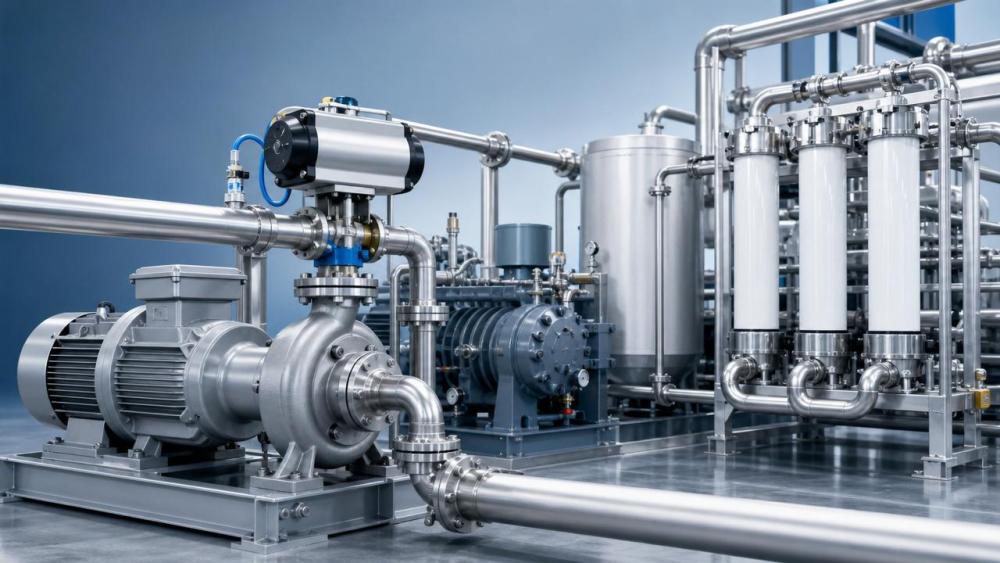
The first selection mistake is asking vendors for equipment before the duty profile is stable. A pump or valve sized from incomplete data may operate outside its efficient range within months.
Project teams should define at least 6 baseline conditions: normal flow, minimum flow, maximum flow, inlet pressure, discharge pressure, temperature, and fluid composition. For batch plants, operating cycles matter as much as peak capacity.
Match equipment type to actual industrial duty
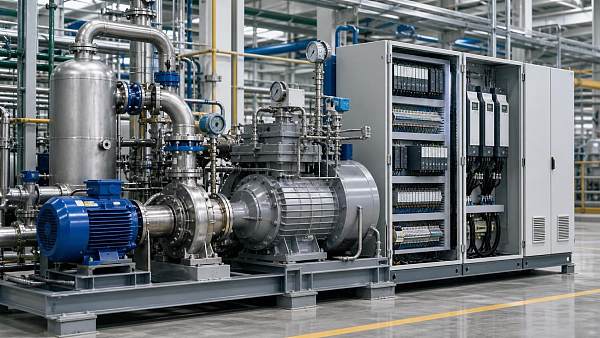
Centrifugal pumps suit continuous transfer at moderate pressure, while high-pressure plunger pumps serve SWRO, hydrotesting, and injection applications where pressure may exceed hundreds of bars.
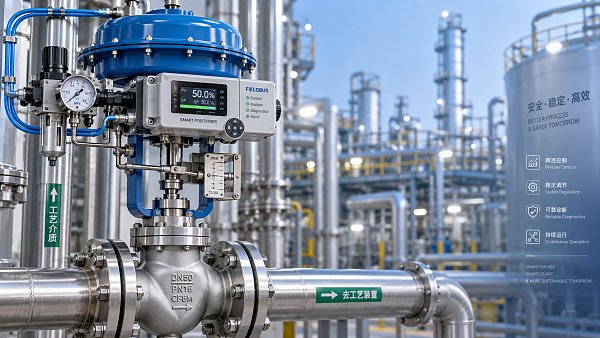
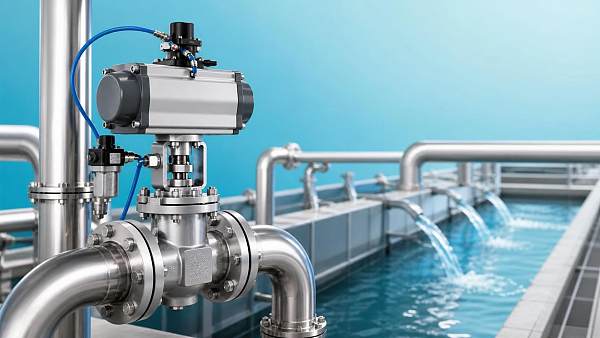
Smart pneumatic control valves are chosen for throttling accuracy and response stability. Air compressor systems must match plant air demand, pressure band, dew point, and automation load variation.
Industrial filtration and separation equipment requires different thinking. Instead of only flow rate, engineers must examine particle size, membrane recovery, slurry concentration, backwash frequency, and ZLD requirements.
The table below provides a practical mapping framework for common fluid control equipment decisions during feasibility, basic engineering, and procurement evaluation.
The key conclusion is simple: equipment type should follow process behavior, not a catalog preference. Stable operation starts when hydraulic data, automation targets, and maintenance access are reviewed together.
Minimum data package for vendor inquiry
- Operating cases: minimum, normal, maximum, startup, emergency, and cleaning mode.
- Fluid data: density, viscosity, vapor pressure, solids content, corrosive elements, and temperature range.
- Site limits: noise, footprint, hazardous area classification, ambient temperature, and utilities.
- Control needs: accuracy tolerance, response time, remote monitoring, and integration protocol.
For critical services, a 2–4 week technical clarification period is often more valuable than rushing purchase orders. It reduces revision loops during fabrication and commissioning.
Evaluate Performance, Efficiency, and Control Stability
Fluid control equipment should be evaluated across 3 connected dimensions: process performance, energy behavior, and controllability. A unit that meets flow but destabilizes the loop is not truly fit for service.
Oversizing remains a frequent project error. A pump selected with an excessive safety margin may require throttling, operate away from BEP, and increase lifecycle energy cost for years.
Use lifecycle cost, not purchase price alone
For rotating equipment, electricity can represent a dominant operating cost over a 5–10 year period. A slightly higher-efficiency pump or compressor may be justified when annual running hours exceed 4,000.
Project managers should request motor efficiency class, expected kW at rated duty, part-load curves, and recommended variable frequency control. These details support both decarbonization targets and budget defense.
Check control valve authority and loop behavior
Control valves require more than matching line size. Engineers should verify pressure drop allocation, cavitation index, noise level, rangeability, leakage class, and actuator safety action.
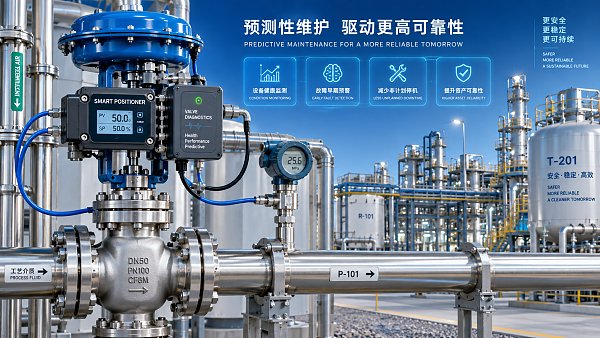
A properly selected smart pneumatic valve can help maintain stable flow within tight tolerances, often using diagnostic feedback from positioners to identify stiction, air leakage, or trim wear.
Recommended performance review checklist
- Confirm the hydraulic curve intersects the duty point without continuous end-range operation.
- Review NPSH margin for pumps, especially with warm, volatile, or low-suction-head liquids.
- Verify compressor pressure band and receiver sizing against 1-minute and 5-minute demand peaks.
- Evaluate valve noise, flashing, cavitation, and required shutoff class before final trim selection.
- Assess filtration differential pressure limits and cleaning frequency under worst feed conditions.
This 5-step review avoids a narrow purchase-price decision. It also gives engineering leads a defensible basis for comparing technically different proposals.
Control Materials, Reliability, and Maintenance Risk
Reliability depends heavily on material selection and maintenance practicality. Fluid control equipment exposed to chloride, abrasive solids, high temperature, or cyclic pressure needs careful engineering beyond nominal ratings.
For corrosive media, material selection may include stainless steel, duplex stainless steel, alloy materials, lined components, or engineered polymers. The correct choice depends on concentration, pH, temperature, and cleaning chemicals.
Design for maintainability from day one
A reliable machine that cannot be accessed safely becomes a site problem. Allow clearance for cartridge seals, valve actuators, compressor filters, membrane modules, and lifting points.
Critical facilities often apply N+1 redundancy for pumps or compressors. For example, 2 duty units plus 1 standby unit can protect output during planned maintenance.
Where continuous operation is required, consider bypass lines, isolation valves, drain points, sample ports, and online differential pressure indicators. These features cost less during design than after installation.
The following matrix helps project managers discuss reliability requirements with process, mechanical, electrical, and maintenance teams before purchase approval.
This matrix shows that maintenance risk is often predictable. The strongest proposals explain failure modes, service intervals, spare parts, and inspection points, not only rated capacity.
Documentation that should not be optional
- Data sheets, performance curves, arrangement drawings, and terminal point lists.
- Installation, operation, and maintenance manuals for site technicians.
- Recommended spare parts for commissioning, 1-year operation, and 2-year operation.
- Inspection and test plan, including hydrostatic, functional, vibration, or performance checks when applicable.
Complete documentation improves handover quality. It also reduces dependence on individual engineers when the plant enters routine operation and staff changes occur.
Integrate Digitalization and Predictive Maintenance
Modern fluid control equipment increasingly includes sensors, positioners, variable speed drives, and communication interfaces. Digital readiness should be specified during procurement, not added after startup.
Useful monitoring points include vibration, bearing temperature, motor current, discharge pressure, valve travel deviation, compressor load state, dew point, and filtration differential pressure.
Specify data that operators can act on
Not every signal improves reliability. Project teams should prioritize alarms and trends that support decisions within hours or days, such as rising vibration or increasing membrane pressure drop.
A practical predictive maintenance plan can start with 10–20 high-value tags per skid. More complex analytics can be added after stable baseline data is collected for 3–6 months.
Digital selection points for project specifications
- Confirm communication options such as Modbus, Profibus, Ethernet-based protocols, or 4–20 mA signals.
- Define alarm thresholds for pressure, temperature, vibration, current, and differential pressure.
- Request diagnostics for smart valve positioners, including travel history and deviation warnings.
- Plan historian tags and naming conventions before factory acceptance testing.
Digitalization delivers value only when linked to maintenance workflow. A vibration alert should trigger inspection, lubrication review, alignment check, or planned replacement before failure occurs.
Build a Procurement Process That Reduces Project Risk
Strong procurement is a technical governance process. For complex fluid control equipment, commercial comparison should follow a disciplined evaluation of compliance, exclusions, lifecycle cost, and delivery risk.
A typical procurement path includes 5 stages: specification freeze, vendor inquiry, technical clarification, commercial comparison, and factory acceptance. Skipping clarification often creates change orders later.
Avoid common buying mistakes
One common mistake is comparing proposals by tag price while ignoring motor efficiency, included instrumentation, coating scope, testing level, spare parts, or commissioning support.
Another mistake is accepting vague lead times. Project managers should request delivery windows in weeks, key sub-supplier dependencies, and required document review cycles.
Practical bid evaluation criteria
- Technical compliance: duty point, materials, control logic, testing, and site constraints.
- Energy impact: motor size, efficiency class, part-load behavior, and operating hours.
- Reliability support: spare parts, maintenance access, redundancy options, and service response.
- Digital readiness: diagnostics, communication protocols, data quality, and integration effort.
- Delivery certainty: drawing schedule, inspection hold points, packaging, and shipment sequence.
For large packages, teams may use weighted scoring. A balanced model could allocate 40% to technical compliance, 25% to lifecycle cost, 20% to delivery confidence, and 15% to service support.
Connect commissioning requirements to the purchase order
Commissioning should be considered before equipment arrives. Define flushing, pressure testing, loop tuning, rotation checks, lubrication, dry run conditions, and acceptance criteria in advance.
For integrated skids, factory acceptance testing can shorten site troubleshooting. Even a 1–2 day witnessed test may reveal wiring, instrument calibration, or control sequence issues.
When to Seek Specialist Intelligence Support
Project teams benefit from external technical intelligence when duties are unusual, suppliers propose conflicting solutions, or lifecycle cost is difficult to compare across different equipment architectures.
FCSM focuses on the strategic links among centrifugal pumps, plunger pumps, pneumatic control valves, compressor systems, and separation technologies across global process industries.
Questions FCSM-style analysis can help answer
- Is the proposed fluid control equipment aligned with real operating cases, or is it oversized?
- Where are the highest cavitation, noise, fouling, pressure pulsation, or energy risks?
- Which digital monitoring points should be specified before the automation package is finalized?
- How should energy-efficient pumps and compressors support low-carbon factory targets?
For project managers, the value is not more information, but better decision sequencing. Correct early choices reduce engineering rework, procurement disputes, and startup delays.
Stable processes depend on fluid control equipment selected around real duty, controllability, material risk, lifecycle cost, and digital maintenance needs. Pumps move the process, valves stabilize it, compressors energize it, and separation systems protect quality and compliance.
If your project involves complex fluid transfer, compressed air, high-pressure pumping, valve automation, or wastewater separation, FCSM can support sharper technical comparison and more resilient system planning. Contact us to discuss product details, request a tailored selection framework, or explore more fluid control solutions for your next industrial project.
Related News
 How fluid control digitalization improves valve maintenance planningProcess Control ArchitectFluid control digitalization helps teams prioritize valve maintenance, reduce unplanned downtime, and improve reliability with actionable condition data.
 How smart valve positioners improve process control valve accuracyProcess Control ArchitectDiscover how smart positioners improve process control valve accuracy, reduce friction-related errors, enhance stability, and enable predictive maintenance.
 How to evaluate a valve automation supplier before placing an orderProcess Control ArchitectChoose a valve automation supplier with confidence. Learn how to assess engineering capability, compatibility, testing, lead times, and lifecycle support before ordering.
 How Does Industrial Automation Change Valve Specification Requirements?Process Control ArchitectHow does industrial automation change valve specification needs? Discover smarter sizing, diagnostics, protocols, fail-safe design, and lifecycle strategies for reliable control.
 Retrofit vs replacement automation: which option minimizes downtime?Process Control ArchitectRetrofit vs replacement automation: compare downtime, integration risk, lifecycle costs, and phased execution to protect uptime and modernize with confidence.
 When smart pneumatic control valves improve water treatment stabilityProcess Control ArchitectSmart pneumatic control valves for water treatment improve flow precision, dosing consistency, diagnostics, and plant stability. Learn how to select the right solution.
 When predictive maintenance for process valves pays off in plant operationsProcess Control ArchitectPredictive maintenance for process valves can cut downtime, reduce energy loss, and boost reliability. Learn when it pays off in plant operations—and how to justify the investment.
 Revised EN 14382:2026 Adds EMC Immunity Test for Smart Valve Positioners in EU ExportsProcess Control ArchitectEN 14382:2026 now mandates EMC immunity testing for Smart Valve Positioners, reshaping EU export compliance for valve OEMs and integrators. Learn what changed and how to prepare.
 FDA Tightens Import Rules for Smart Valve PositionersProcess Control ArchitectSmart valve positioners now face stricter FDA import rules. Learn how IEC 61508 SIL2 or UL 61508 documentation affects U.S. clearance, suppliers, and compliance planning.
 EN 14382:2026 Raises EU Entry Bar for Smart PositionersProcess Control ArchitectEN 14382:2026 raises the EU entry bar for Smart Valve Positioners with a 150 ms step response cap and IEC 62443-4-2 cybersecurity checks. Learn what exporters, buyers, and compliance teams must do before Nov 1, 2026.
 High-Precision Stainless Steel Control Valves for Corrosive Process LinesProcess Control ArchitectHigh-precision control valves stainless steel solutions improve corrosion resistance, flow stability, and safety in demanding process lines. Discover how to reduce downtime and boost control accuracy.
 How a Valve Performance Consultant Improves Uptime and Control AccuracyProcess Control ArchitectValve performance consultant insights to improve uptime, control accuracy, and energy efficiency. Learn how targeted diagnostics solve hidden valve issues across process systems.